
Browse "Things"
-
Article
Heritage Conservation
Heritage conservation has assumed a place in contemporary Canadian society because it addresses certain desires, notably for tangible connections to our historical roots and a "sense of place" for those who despair the "anyplace" character of many communities.
"https://d3d0lqu00lnqvz.cloudfront.net/media/media/1ba0fe33-33a6-47ce-af79-eec3df963b06.jpg" // resources/views/front/categories/view.blade.php
https://d3d0lqu00lnqvz.cloudfront.net/media/media/1ba0fe33-33a6-47ce-af79-eec3df963b06.jpg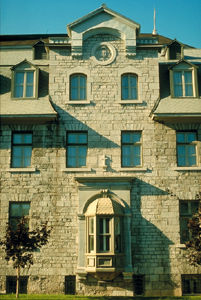
-
Article
Heritage Minutes
The Heritage Minutes collection is a bilingual series of history-focused public service announcements. Each 60-second short film depicts a significant person, event or story in Canadian history. They are produced by Historica Canada, the not-for-profit organization that also publishes this encyclopedia. First released in 1991, the Heritage Minutes have been shown on television, in cinemas and online. They have become a recognizable part of Canadian culture. The collection currently includes 107 episodes.
"https://d3d0lqu00lnqvz.cloudfront.net/media/media/ef617765-aea7-4495-8c0c-0be405231d56.jpg" // resources/views/front/categories/view.blade.php
https://d3d0lqu00lnqvz.cloudfront.net/media/media/ef617765-aea7-4495-8c0c-0be405231d56.jpg
-
Collection
Heritage Minutes
The Heritage Minutes collection is a bilingual series of history-focused public service announcements. Each 60-second short film depicts a significant person, event or story in Canadian history. They are produced by Historica Canada, the not-for-profit organization that also publishes this encyclopedia. First released in 1991, the Heritage Minutes have been shown on television, in cinemas and online. They have become a recognizable part of Canadian culture. The collection currently includes 100 episodes.
"https://d3d0lqu00lnqvz.cloudfront.net/media/media/1bfa3d45-2952-4f79-b7d4-4c6cb6601164.jpg" // resources/views/front/categories/view.blade.php
https://d3d0lqu00lnqvz.cloudfront.net/media/media/1bfa3d45-2952-4f79-b7d4-4c6cb6601164.jpg
-
Article
Heron
The heron (Ardeidae) family of birds comprises 60 species worldwide, 12 in Canada (including true herons, egrets, night herons and bitterns). Most herons are long-legged, long-necked wading birds which look for food (tiny fish, crustaceans, insects, amphibians and reptiles) in shallow fresh or salt water. They have long, rounded, rather broad wings and relatively short tails. They are distinguished from cranes by their position in flight, necks bent and heads supported between their shoulders. All have straight, rather long bills that distinguish them from ibises, which are similar in appearance but have long, curved bills.
"https://d3d0lqu00lnqvz.cloudfront.net/birdclassification/great-blue-heron.jpg" // resources/views/front/categories/view.blade.php
https://d3d0lqu00lnqvz.cloudfront.net/birdclassification/great-blue-heron.jpg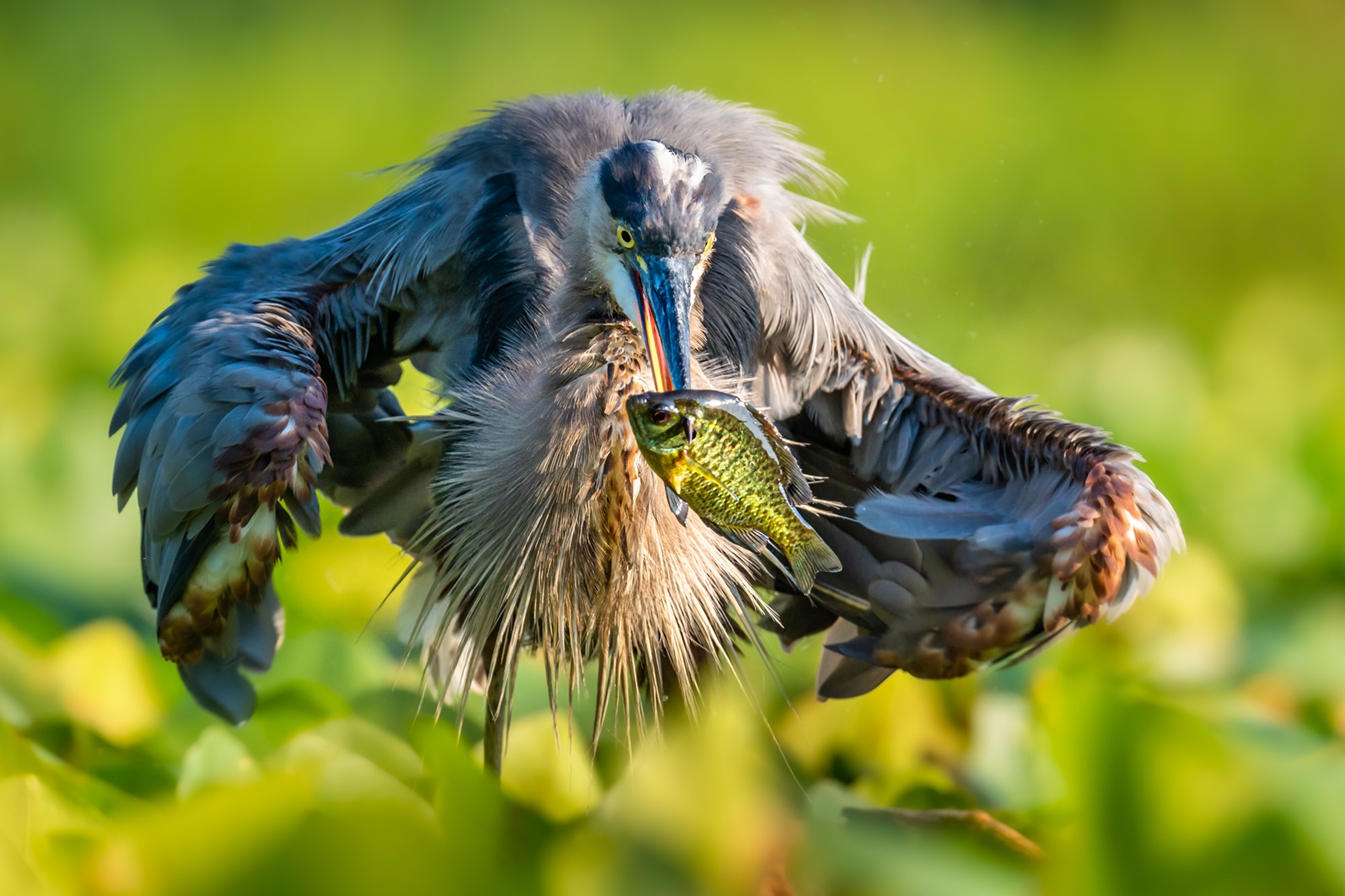
-
"https://d3d0lqu00lnqvz.cloudfront.net/media/media/2280041c-0f68-4bff-b9af-57d165727396.jpg" // resources/views/front/categories/view.blade.php
https://d3d0lqu00lnqvz.cloudfront.net/media/media/2280041c-0f68-4bff-b9af-57d165727396.jpg
-
Macleans
Hi-Tech Education Controversy
The handsome redbrick building, its flag snapping in the breeze, looks every bit the traditional schoolhouse.This article was originally published in Maclean's Magazine on August 26, 1996
"https://thecanadianencyclopedia.ca/images/tce_placeholder.jpg?v=e9dca980c9bdb3aa11e832e7ea94f5d9" // resources/views/front/categories/view.blade.php
https://thecanadianencyclopedia.ca/images/tce_placeholder.jpg?v=e9dca980c9bdb3aa11e832e7ea94f5d9
-
Article
Hiawatha Play
In 1900, the first performance of the Hiawatha Play was undertaken at Kensington Point in Desbarats, Ontario by members of Garden River First Nation. The play was developed by the Canadian Pacific Railway’s colonization agent Louis Olivier Armstrong and Anishinaabe leader George Kaboosa. The Hiawatha Play was performed seasonally in Desbarats from 1900 to 1905. It was relocated to Wayagamug, Michigan, where it was performed from 1905 to 1917 by Anishinaabe, Haudenosaunee and Odawa actors. It also toured, taking the performers to various locales in Canada, the United States, Great Britain and the Netherlands. Performances of the original play by Garden River actors occurred periodically in Sault Ste Marie and at Garden River until at least 1966. Contemporary interpretations of the Hiawatha Play were performed in 2006, 2007 and 2008 at Garden River.
"https://d3d0lqu00lnqvz.cloudfront.net/LOArmstrong/c002685.jpg" // resources/views/front/categories/view.blade.php
https://d3d0lqu00lnqvz.cloudfront.net/LOArmstrong/c002685.jpg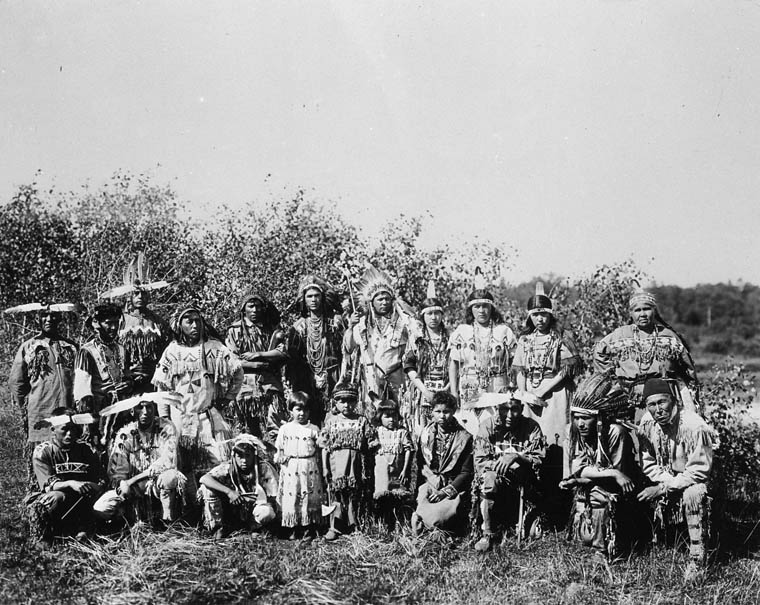
-
Article
Hibernia Case
On 19 May 1982 the governor-in-council asked the Supreme Court of Canada whether Canada (the federal government) or Newfoundland has the right to explore and exploit the mineral and other natural resources of the seabed and
"https://d3d0lqu00lnqvz.cloudfront.net/media/media/907d5cb9-10e4-4167-afe3-4f97dc6b39b2.jpg" // resources/views/front/categories/view.blade.php
https://d3d0lqu00lnqvz.cloudfront.net/media/media/907d5cb9-10e4-4167-afe3-4f97dc6b39b2.jpg
-
Macleans
Hibernia Rig Prepares to Drill
John Cabot could never have imagined anything like this. When the Anglo-Italian explorer arrived at the Grand Banks in 1497, the schools of codfish were so thick, they literally stopped his ships in the water.This article was originally published in Maclean's Magazine on March 3, 1997
"https://thecanadianencyclopedia.ca/images/tce_placeholder.jpg?v=e9dca980c9bdb3aa11e832e7ea94f5d9" // resources/views/front/categories/view.blade.php
https://thecanadianencyclopedia.ca/images/tce_placeholder.jpg?v=e9dca980c9bdb3aa11e832e7ea94f5d9
-
Article
High Arctic Weather Stations
High Arctic Weather Stations, managed by the Monitoring and Science Division, Prairie and Northern Region of Environment Canada, began as the Joint Arctic Weather Stations. The plan for a network of Arctic weather bases was approved by the US on 12 February 1946, and on 28 January 1947 Cabinet formally agreed to participate. Between 1947 and 1950, five sites were selected and built jointly by Canada and the US (at Eureka, Isachsen, Mould Bay, Resolute and Alert) to provide the data required for the understanding and prediction of meteorological phenomena on a hemispheric scale and, more specifically, to improve weather predictions for North America. The meteorological data collected is also used by forecasting offices, airlines, northern shipping, climatology studies and research.
"https://d3d0lqu00lnqvz.cloudfront.net/media/media/7d9ae9bd-0e9d-4d89-b8aa-b9c3b6f79d0c.jpg" // resources/views/front/categories/view.blade.php
https://d3d0lqu00lnqvz.cloudfront.net/media/media/7d9ae9bd-0e9d-4d89-b8aa-b9c3b6f79d0c.jpg
-
Macleans
High Cost of Healing
Despite how it may seem some days as the public tunes into the debate over health-care funding, governments in Canada have not turned off the tap. Canadians spent an estimated $76.6 billion on health care in 1997, up from $75.This article was originally published in Maclean's Magazine on June 15, 1998
"https://thecanadianencyclopedia.ca/images/tce_placeholder.jpg?v=e9dca980c9bdb3aa11e832e7ea94f5d9" // resources/views/front/categories/view.blade.php
https://thecanadianencyclopedia.ca/images/tce_placeholder.jpg?v=e9dca980c9bdb3aa11e832e7ea94f5d9
-
Article
High School (Secondary School)
The term "high school" applies to the academic institution that follows elementary school. The term "secondary school" is often used as an alternative term. High schools prepare students for post-secondary education and training or employment after graduation.
"https://thecanadianencyclopedia.ca/images/tce_placeholder.jpg?v=e9dca980c9bdb3aa11e832e7ea94f5d9" // resources/views/front/categories/view.blade.php
https://thecanadianencyclopedia.ca/images/tce_placeholder.jpg?v=e9dca980c9bdb3aa11e832e7ea94f5d9
-
Macleans
High-Tech Artificial Limbs
This article was originally published in Maclean’s magazine on March 13, 1995. Partner content is not updated. Adele Fifield was just 13 years old when a doctor told her that she had cancer in her knee - and that surgeons would have to amputate her left leg. "My initial reaction was disbelief," recalls Fifield. "For days, my ears seemed to ring from the shock.
"https://thecanadianencyclopedia.ca/images/tce_placeholder.jpg?v=e9dca980c9bdb3aa11e832e7ea94f5d9" // resources/views/front/categories/view.blade.php
https://thecanadianencyclopedia.ca/images/tce_placeholder.jpg?v=e9dca980c9bdb3aa11e832e7ea94f5d9
-
Article
High Technology
Technology, along with labour, capital, resources and management, is one of the essential components of industrial production. Most classes of industry require some technological input, but the amount varies widely among industrial sectors.
"https://thecanadianencyclopedia.ca/images/tce_placeholder.jpg?v=e9dca980c9bdb3aa11e832e7ea94f5d9" // resources/views/front/categories/view.blade.php
https://thecanadianencyclopedia.ca/images/tce_placeholder.jpg?v=e9dca980c9bdb3aa11e832e7ea94f5d9
-
Article
High Wines
Liquor adulterated for use in the fur trade. Fur traders who supplied liquor to the natives often diluted their brandy, rum, whisky, etc, with flavoured water. The term "high wines" is a misnomer, for the trade goods are not wines but spirits.
"https://thecanadianencyclopedia.ca/images/tce_placeholder.jpg?v=e9dca980c9bdb3aa11e832e7ea94f5d9" // resources/views/front/categories/view.blade.php
https://thecanadianencyclopedia.ca/images/tce_placeholder.jpg?v=e9dca980c9bdb3aa11e832e7ea94f5d9