
Browse "Things"
-
Macleans
Drug Trials Controversy
This article was originally published in Maclean’s magazine on December 21, 1998. Partner content is not updated.By enduring frequent blood transfusions and painful injections that allow a drug to be pumped into her body at night, 14-year-old Julie Vizza has survived a rare blood disease called thalassemia that leaves her body dangerously short of oxygen.This article was originally published in Maclean's Magazine on December 21, 1998
"https://thecanadianencyclopedia.ca/images/tce_placeholder.jpg?v=e9dca980c9bdb3aa11e832e7ea94f5d9" // resources/views/front/categories/view.blade.php
https://thecanadianencyclopedia.ca/images/tce_placeholder.jpg?v=e9dca980c9bdb3aa11e832e7ea94f5d9
-
Article
Drumheller Strike
The Drumheller Strike of 1925 1925, ushered in a period of rival or "dual" unionism in Alberta's coalfields. The Drumheller miners, rejecting wage cuts negotiated by the United Mine Workers, struck in June 1925.
"https://thecanadianencyclopedia.ca/images/tce_placeholder.jpg?v=e9dca980c9bdb3aa11e832e7ea94f5d9" // resources/views/front/categories/view.blade.php
https://thecanadianencyclopedia.ca/images/tce_placeholder.jpg?v=e9dca980c9bdb3aa11e832e7ea94f5d9
-
Article
Drumlin
Drumlins are smooth, half-egg-shaped or ellipsoidal hills which formed beneath Quaternary Glaciers. Drumlins [Gaelic druim, "hill"] were first described in Ireland. They lie parallel to the direction of ice movement, the blunt (stoss) end facing up-glacier, the lee sloping down-glacier. Drumlins may be up to 50 m high and several kilometres long, with an average length-to-width ratio of 2:1 to 3:1. Highly elongated drumlins are often called drumlinoids. Drumlins occur in broad fields or swarms, up-glacier from major end Moraines in Europe and North America. Swarms of several thousands occur in Nova Scotia, southern Ontario and the Thelon Plain of the Northwest Territories and Nunavut; smaller groups occur in most other provinces.
"https://d3d0lqu00lnqvz.cloudfront.net/lakesincanada/Glacial-Processes.jpg" // resources/views/front/categories/view.blade.php
https://d3d0lqu00lnqvz.cloudfront.net/lakesincanada/Glacial-Processes.jpg
-
Article
Dry Bean
Common bean refers to both bean plants grown solely for immature fleshy pods (garden or green bean) and those grown for dry seeds (dry bean).
"https://d3d0lqu00lnqvz.cloudfront.net/media/media/8e804f6a-faf5-40ac-966e-493d9162961b.jpg" // resources/views/front/categories/view.blade.php
https://d3d0lqu00lnqvz.cloudfront.net/media/media/8e804f6a-faf5-40ac-966e-493d9162961b.jpg
-
Article
Dry Fishery
That portion of the Newfoundland cod fishery in which the split and cleaned product was salted and dried on shore before being transported and sold was called the dry fishery.
"https://thecanadianencyclopedia.ca/images/tce_placeholder.jpg?v=e9dca980c9bdb3aa11e832e7ea94f5d9" // resources/views/front/categories/view.blade.php
https://thecanadianencyclopedia.ca/images/tce_placeholder.jpg?v=e9dca980c9bdb3aa11e832e7ea94f5d9
-
Article
Drybones Case
In R v. Drybones (1970), the Supreme Court of Canada ruled that a provision of the Indian Act was “inoperative” — meaning no longer valid or in effect — because it violated section 1(b) of the Canadian Bill of Rights, which guarantees equality before the law.
"https://thecanadianencyclopedia.ca/images/tce_placeholder.jpg?v=e9dca980c9bdb3aa11e832e7ea94f5d9" // resources/views/front/categories/view.blade.php
https://thecanadianencyclopedia.ca/images/tce_placeholder.jpg?v=e9dca980c9bdb3aa11e832e7ea94f5d9
-
Article
du Maurier Arts Ltd/Les Arts du Maurier Ltée
du Maurier Arts Ltd/Les Arts du Maurier Ltée (du Maurier Council for the Performing Arts/Conseil du Maurier des arts d'interpretation 1971-88, du Maurier Council for the Arts Ltd/Conseil des arts du Maurier Ltée, 1989-90).
"https://thecanadianencyclopedia.ca/images/tce_placeholder.jpg?v=e9dca980c9bdb3aa11e832e7ea94f5d9" // resources/views/front/categories/view.blade.php
https://thecanadianencyclopedia.ca/images/tce_placeholder.jpg?v=e9dca980c9bdb3aa11e832e7ea94f5d9
-
Article
Dubin Inquiry
Following the drug scandal at the 1988 OLYMPIC GAMES in Seoul, when Ben Johnson was stripped of his gold medal after testing positive for steroids, the federal government established the Commission of Inquiry Into the Use of Drugs and Banned Practices Intended to Increase Athletic Performance.
"https://thecanadianencyclopedia.ca/images/tce_placeholder.jpg?v=e9dca980c9bdb3aa11e832e7ea94f5d9" // resources/views/front/categories/view.blade.php
https://thecanadianencyclopedia.ca/images/tce_placeholder.jpg?v=e9dca980c9bdb3aa11e832e7ea94f5d9
-
Article
Ducks in Canada
Waterfowl with short legs, webbed feet and narrow, pointed wings are known as ducks. A few island species are flightless, but most are strong fliers and migratory (see migration). A race of the common eider (Somateria mollissima) of Hudson and James bays is nearly sedentary, even wintering in Hudson Bay. Ducks, geese and swans comprise a family (Anatidae) with 158 living or recently extinct species. Ducks have worldwide distribution, except for polar regions.
"https://d3d0lqu00lnqvz.cloudfront.net/media/media/473c32f2-43fb-4b28-adcf-d02c1c0811c1.jpg" // resources/views/front/categories/view.blade.php
https://d3d0lqu00lnqvz.cloudfront.net/media/media/473c32f2-43fb-4b28-adcf-d02c1c0811c1.jpg
-
Article
Ducks Unlimited Canada
Ducks Unlimited Canada (DUC) is a private, nonprofit organization dedicated to conserving, restoring and managing wetlands and their associated habitats for North America's waterfowl, other wildlife and people.
"https://d3d0lqu00lnqvz.cloudfront.net/media/media/34dceda6-da95-4a80-9845-97ae5ecc591f.jpg" // resources/views/front/categories/view.blade.php
https://d3d0lqu00lnqvz.cloudfront.net/media/media/34dceda6-da95-4a80-9845-97ae5ecc591f.jpg
-
Article
History of Duelling in Canada
A duel is a formal armed combat between two people in the presence of witnesses, to settle differences or a point of honour. Duels were recorded in New France as early as 1646. The last known duel in what is now Canada occurred in 1873 in St. John’s, Newfoundland. People fought duels in a variety of places: in locked rooms, in open fields or across tables. Most incidents ended without injury, but there were some fatal encounters. At least nine people died in New France, two in Lower Canada, five in Upper Canada, two in Nova Scotia, two in New Brunswick and one in Newfoundland. Authorities considered duelling a crime, and to kill in a duel was tantamount to murder (see also Homicide). However, the laws were irregularly enforced.
"https://d3d0lqu00lnqvz.cloudfront.net/HistoryOfDuellingInCanada/DuellingPistols.jpg" // resources/views/front/categories/view.blade.php
https://d3d0lqu00lnqvz.cloudfront.net/HistoryOfDuellingInCanada/DuellingPistols.jpg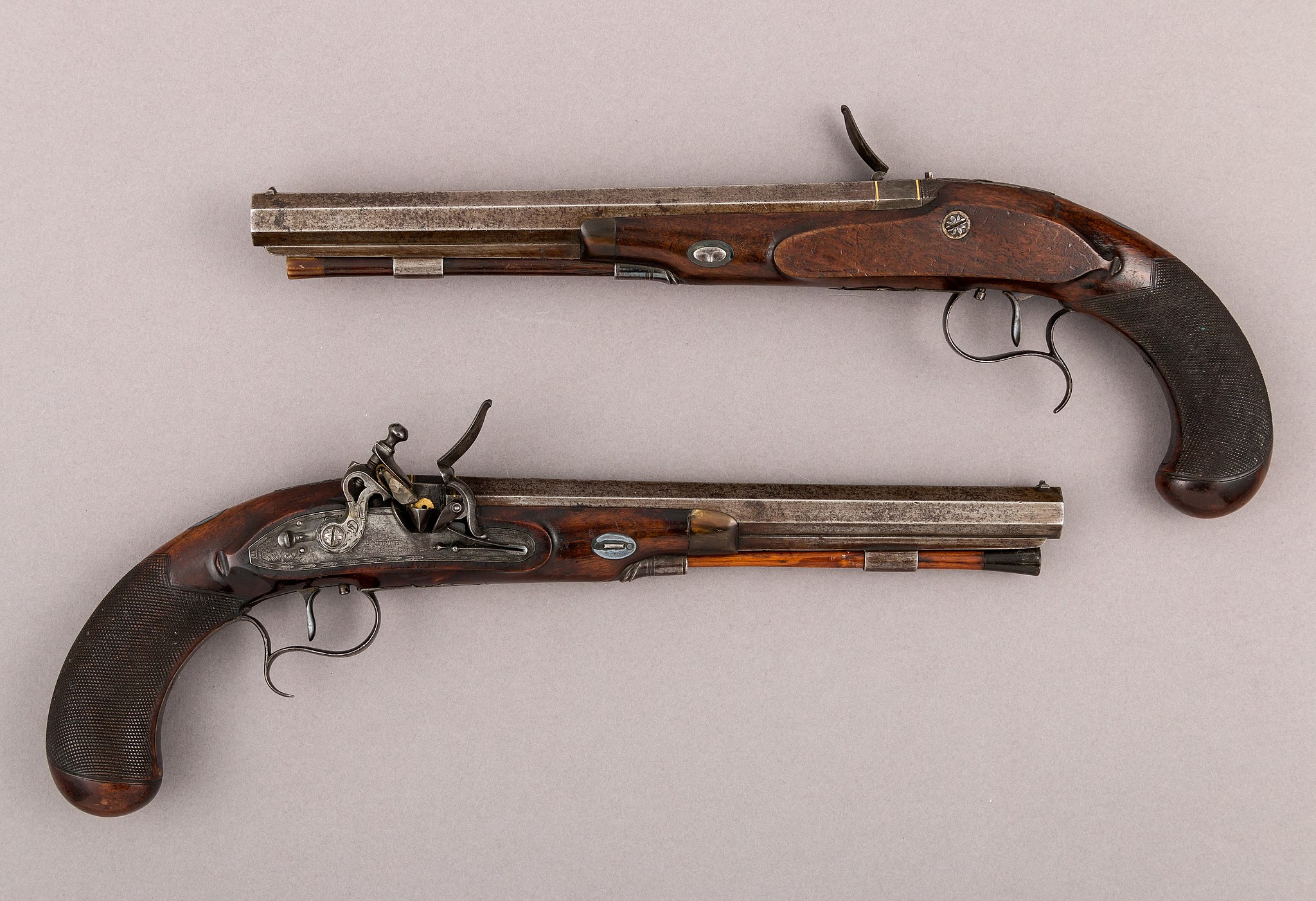
-
Article
Duffus, Romans, Kundzins, Rounsefell Ltd
Duffus, Romans, Kundzins, Rounsefell Ltd Duffus, Romans, Kundzins, Rounsefell Ltd, architects, Halifax, was founded in 1949 and has executed a variety of important commissions, including: the Nova Scotia Museum (1970), the Izaak Walton Killam Hospital for Children (1970), Historic Properties (1974), and the Library at Kings College (1991), all in Halifax; the Bedford Institute of Oceanography (1958, 1968, 1977), and the Alderney Gate Civic Centre (1990), both in Dartmouth, NS; and the Valley Regional Hospital...
"https://thecanadianencyclopedia.ca/images/tce_placeholder.jpg?v=e9dca980c9bdb3aa11e832e7ea94f5d9" // resources/views/front/categories/view.blade.php
https://thecanadianencyclopedia.ca/images/tce_placeholder.jpg?v=e9dca980c9bdb3aa11e832e7ea94f5d9
-
Article
Dugout Canoe
A dugout canoe was a common type of canoe, traditionally used by Indigenous peoples and early settlers wherever the size of tree growth made construction possible. The dugout canoe was most popular along the West Coast, where waters teeming with sea life—whales, seals, sea lions, salmon, halibut, herring, eulachon and shellfish—sustained a complex maritime culture. (See also Northwest Coast Indigenous Peoples in Canada.)
"https://d3d0lqu00lnqvz.cloudfront.net/media/media/bf947505-9d11-4814-8e02-371873d5aa8c.jpg" // resources/views/front/categories/view.blade.php
https://d3d0lqu00lnqvz.cloudfront.net/media/media/bf947505-9d11-4814-8e02-371873d5aa8c.jpg
-
Article
Duke Energy Corp
Duke Energy Corp is an integrated energy business involved in the transmission and distribution of NATURAL GAS and the generation and supply of electricity (see HYDROELECTRICITY). The company is headquartered in Charlotte, North Carolina, and has significant operations in Canada.
"https://thecanadianencyclopedia.ca/images/tce_placeholder.jpg?v=e9dca980c9bdb3aa11e832e7ea94f5d9" // resources/views/front/categories/view.blade.php
https://thecanadianencyclopedia.ca/images/tce_placeholder.jpg?v=e9dca980c9bdb3aa11e832e7ea94f5d9
-
Article
Duke Street Records
Duke Street Records. Independent Toronto label established by Andrew Hermant in 1984 as a division of PAJA Company Ltd. Under Hermant's direction as president it has pursued an ambitious, if eclectic, recording policy devoted exclusively to Canadian musicians.
"https://thecanadianencyclopedia.ca/images/tce_placeholder.jpg?v=e9dca980c9bdb3aa11e832e7ea94f5d9" // resources/views/front/categories/view.blade.php
https://thecanadianencyclopedia.ca/images/tce_placeholder.jpg?v=e9dca980c9bdb3aa11e832e7ea94f5d9