
Browse "Things"
-
Article
Dorion School Bus–Train Crash
A collision between a school bus and a freight train on 7 October 1966 killed 19 students from Cité-des-Jeunes secondary school near Vaudreuil, Quebec, and their bus driver. The crash is among the worst road disasters in Canadian history.
"https://thecanadianencyclopedia.ca/images/tce_placeholder.jpg?v=e9dca980c9bdb3aa11e832e7ea94f5d9" // resources/views/front/categories/view.blade.php
https://thecanadianencyclopedia.ca/images/tce_placeholder.jpg?v=e9dca980c9bdb3aa11e832e7ea94f5d9
-
Article
Dorothea Palmer
Dorothea Ferguson (née Palmer), birth control advocate, social worker (born 1908 in England; died 5 November 1992 in Ottawa, ON). Dorothea Palmer was arrested in 1936 for advertising birth control to women in a working-class neighbourhood in Ottawa. She was cleared of charges after a lengthy trial proved her work had been for the public good. Her acquittal was a major victory for the birth control movement in Canada.
"https://d3d0lqu00lnqvz.cloudfront.net/media/DorotheaPalmer/Dorothea Palmer.JPG" // resources/views/front/categories/view.blade.php
https://d3d0lqu00lnqvz.cloudfront.net/media/DorotheaPalmer/Dorothea Palmer.JPG
-
Article
Dorset Culture
The Dorset Palaeo-Inuit emerged at some point around 2,800 years ago (ca. 800 to 500 BCE). They persisted until 600 to 700 years ago (ca. 1300 to 1400 CE). Archaeologists generally separate this roughly 2,000-year period into three periods or traditions. These periods are called the Early Dorset (ca. 800 BCE to 1 CE), Middle Dorset (ca. 1 to 500 CE) and Late Dorset (ca. 500 to 1300-1400 CE). The timing and causes of their disappearance are still debated. However, it occurred only a few centuries after the arrival of the early Inuit (Thule). Early Inuit were culturally and genetically distinct from the Dorset (see also Geographical Distribution of the Dorset Culture). While there is significant debate regarding the validity of the Early-Middle-Late periods, there are a number of notable changes that should be considered. In any case, the Dorset period marks a significant shift from the lifeways of their Pre-Dorset ancestors.
"https://d3d0lqu00lnqvz.cloudfront.net/DorsetCulture/Dorset-winter-house-at-Skull-Island-1-Nunatsiavut_updated.jpg" // resources/views/front/categories/view.blade.php
https://d3d0lqu00lnqvz.cloudfront.net/DorsetCulture/Dorset-winter-house-at-Skull-Island-1-Nunatsiavut_updated.jpg
-
Article
'D'où viens-tu bergère?'
'D'où viens-tu bergère?' Christmas carol in the form of a dialogue between a shepherdess who describes the scene of the Nativity (verse) and a throng which plies her with questions (chorus).
"https://d3d0lqu00lnqvz.cloudfront.net/media/media/a8ac9316-d4be-451e-9801-1c4f6a329d71.jpg" // resources/views/front/categories/view.blade.php
https://d3d0lqu00lnqvz.cloudfront.net/media/media/a8ac9316-d4be-451e-9801-1c4f6a329d71.jpg
-
Article
Double Shuffle
After the George-Étienne Cartier-John A. MacDonald ministry in the Province of Canada was forced to resign on 29 July 1858, a Reform ministry was formed under George Brown and A.A. Dorion.
"https://thecanadianencyclopedia.ca/images/tce_placeholder.jpg?v=e9dca980c9bdb3aa11e832e7ea94f5d9" // resources/views/front/categories/view.blade.php
https://thecanadianencyclopedia.ca/images/tce_placeholder.jpg?v=e9dca980c9bdb3aa11e832e7ea94f5d9
-
Article
Douglas Fir
Douglas fir (Pseudotsuga menziesii) is an evergreen conifer of the pine family (Pinaceae). Six species of Pseudotsuga ("false hemlock") are recognized: two in western North America; four in China, Taiwan and Japan. Only P. menziesii occurs in Canada, along the West Coast, east into the Rocky Mountains and extending south to central Mexico. A coastal variety (var menziesii) may attain heights of 100 m and diameters of 2 m; an interior variety (var. glauca) is smaller.
"https://d3d0lqu00lnqvz.cloudfront.net/media/new_article_images/GeographyOfBC/DouglasFir.jpg" // resources/views/front/categories/view.blade.php
https://d3d0lqu00lnqvz.cloudfront.net/media/new_article_images/GeographyOfBC/DouglasFir.jpg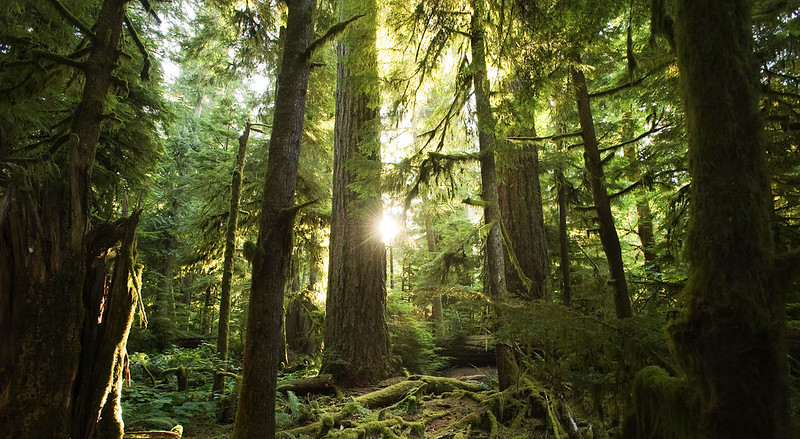
-
Article
Doukhobors
Doukhobors are a sect of Russian dissenters, many of whom now live in western Canada. They are known for a radical pacifism which brought them notoriety during the 20th century. Today, their descendants in Canada number approximately 30,000, with one third still active in their culture.
"https://d3d0lqu00lnqvz.cloudfront.net/DCI-images/1908-Doukhobours-final-rescale.jpg" // resources/views/front/categories/view.blade.php
https://d3d0lqu00lnqvz.cloudfront.net/DCI-images/1908-Doukhobours-final-rescale.jpg
-
Article
Music of the Doukhobors
Fundamentalist Christian sect of Russian origin. The tenets of the Doukhobors' simple faith held them apart from what they considered the idolatry, opulence, and corruption of the Russian Orthodox Church.
"https://thecanadianencyclopedia.ca/images/tce_placeholder.jpg?v=e9dca980c9bdb3aa11e832e7ea94f5d9" // resources/views/front/categories/view.blade.php
https://thecanadianencyclopedia.ca/images/tce_placeholder.jpg?v=e9dca980c9bdb3aa11e832e7ea94f5d9
-
Article
Dove
Dove is the name applied to certain species of the pigeon family, especially to those of smaller size.
"https://d3d0lqu00lnqvz.cloudfront.net/media/media/aef25c68-fffc-4656-849c-7f7924ae5b48.jpg" // resources/views/front/categories/view.blade.php
https://d3d0lqu00lnqvz.cloudfront.net/media/media/aef25c68-fffc-4656-849c-7f7924ae5b48.jpg
-
Article
Dower
Dower refers to a form of marital property right. In its ancient form dower entitled a widow to a life interest in a portion of the lands owned by her deceased husband. Widowers were accorded similar rights, known as "curtesy.
"https://thecanadianencyclopedia.ca/images/tce_placeholder.jpg?v=e9dca980c9bdb3aa11e832e7ea94f5d9" // resources/views/front/categories/view.blade.php
https://thecanadianencyclopedia.ca/images/tce_placeholder.jpg?v=e9dca980c9bdb3aa11e832e7ea94f5d9
-
Article
Dragonfly
Dragonfly, common name for robust carnivorous insects of order Odonata [Gk "toothed," referring to mouth parts].
"https://d3d0lqu00lnqvz.cloudfront.net/media/media/61b31847-6ec0-4449-80f4-4d16eb081624.jpg" // resources/views/front/categories/view.blade.php
https://d3d0lqu00lnqvz.cloudfront.net/media/media/61b31847-6ec0-4449-80f4-4d16eb081624.jpg
-
Article
Droughts in Canada
Drought is the condition of critically low water supply caused by persistently below-normal precipitation. Drought begins with decreased soil moisture as well as surface and underground water supplies that, in turn, lead to suppressed plant growth and restrictions in the use of surface and underground water supplies for domestic, municipal, agricultural and industrial purposes.
"https://d3d0lqu00lnqvz.cloudfront.net/media/media/ea2328a1-2ce9-4f2e-be69-d92cbfb2ae7a.jpg" // resources/views/front/categories/view.blade.php
https://d3d0lqu00lnqvz.cloudfront.net/media/media/ea2328a1-2ce9-4f2e-be69-d92cbfb2ae7a.jpg
-
Editorial
Drought in Palliser's Triangle
The following article is an editorial written by The Canadian Encyclopedia staff. Editorials are not usually updated.
"https://thecanadianencyclopedia.ca/images/tce_placeholder.jpg?v=e9dca980c9bdb3aa11e832e7ea94f5d9" // resources/views/front/categories/view.blade.php
https://thecanadianencyclopedia.ca/images/tce_placeholder.jpg?v=e9dca980c9bdb3aa11e832e7ea94f5d9
-
Article
Droulers-Tsiionhiakwatha Archaeological Site
The Droulers-Tsiionhiakwatha archaeological site is located in extreme southwest Québec, in Saint-Anicet in the Haut-Saint-Laurent area.
"https://d3d0lqu00lnqvz.cloudfront.net/media/media/9a4f5824-4fef-4ee0-8b04-92257d768832.jpg" // resources/views/front/categories/view.blade.php
https://d3d0lqu00lnqvz.cloudfront.net/media/media/9a4f5824-4fef-4ee0-8b04-92257d768832.jpg
-
Macleans
Drug Therapy for Strokes
This article was originally published in Maclean's Magazine on March 20, 2000. Partner content is not updated.One Saturday morning last November, Peggy Code collapsed outside a suburban Calgary mall. Helped to a nearby bench, the 64-year-old nurse realized she was drooling and that the entire left side of her body was insensate.
"https://thecanadianencyclopedia.ca/images/tce_placeholder.jpg?v=e9dca980c9bdb3aa11e832e7ea94f5d9" // resources/views/front/categories/view.blade.php
https://thecanadianencyclopedia.ca/images/tce_placeholder.jpg?v=e9dca980c9bdb3aa11e832e7ea94f5d9