
Browse "Things"
-
Article
Canada and the Digital Economy
The digital economy is the economic activity conducted through digital technologies such as the Internet. It is also called the Internet economy, the new economy or the web economy. Many scholars see the digital economy as the fourth industrial revolution. As of 2013, it consumed approximately 10 per cent of the world’s electricity. Many of the world’s biggest companies operate in the digital economy. A growing number of Canadians depend on it for their livelihood. In 2017, nearly 5 per cent of all jobs in Canada were in the digital economy. The gross domestic product (GDP) connected to it represented 5.5 per cent of Canada’s total economy — a bigger percentage than mining or oil and gas extraction. However, the often-hidden infrastructure of the digital economy brings new threats to the environment. The rise of cryptocurrencies could also dramatically change how people buy and sell things.
"https://d3d0lqu00lnqvz.cloudfront.net/media/new_article_images/DigitalEconomy/dreamstime_xl_94348813.jpg" // resources/views/front/categories/view.blade.php
https://d3d0lqu00lnqvz.cloudfront.net/media/new_article_images/DigitalEconomy/dreamstime_xl_94348813.jpg
-
Article
Dike
In geography and civil engineering, a dike is a barrier or ditch limiting or preventing the flow of water. Such barriers are also called levees. While a dam stretches across a waterway, a dike usually runs along its side. Dikes can form as a result of natural forces, but most are constructed by humans. The purpose of building a dike is usually to prevent flooding. New land can also be reclaimed by using dikes to drain wetlands or to push back the boundaries of a body of water.
"https://d3d0lqu00lnqvz.cloudfront.net/media/new_article_images/Dike/MuggsIslandDike.jpg" // resources/views/front/categories/view.blade.php
https://d3d0lqu00lnqvz.cloudfront.net/media/new_article_images/Dike/MuggsIslandDike.jpg
-
Article
Dinosaurs and Canada
Dinosaurs were a group of animals that dominated the land environments of every continent. They lived from the late Triassic period to the end of the Cretaceous period (225 to 65 million years ago). However, birds are the direct descendants of dinosaurs, meaning dinosaurs are still common today. Paleontologists have found at least 88 different species of dinosaurs in Canada (see also Dinosaurs Found in Canada). The primary site of these fossils is Dinosaur Provincial Park, Alberta. Well-known dinosaurs first named from Canadian specimens include Albertosaurus, Centrosaurus, Corythosaurus, Dromaeosaurus,Gorgosaurus, Lambeosaurus, Pachyrhinosaurus, Parasaurolophu sand Styracosaurus.
"https://d3d0lqu00lnqvz.cloudfront.net/TCEImages/Albertosaurus.jpg" // resources/views/front/categories/view.blade.php
https://d3d0lqu00lnqvz.cloudfront.net/TCEImages/Albertosaurus.jpg
-
Article
Dinosaur Eggs
Members of the Central Asiatic Expedition, led by the American Museum of Natural History, first recognized dinosaur eggs in Mongolia in the 1920s. Since then, paleontologists have discovered fossilized remains of dinosaur eggs at over 200 locations worldwide. These locations include sites in Africa, China, Europe, India, Korea, and the Americas. The first dinosaur eggs from North America were discovered in Montana in the late 1970s. In Canada, dinosaur eggshell fragments were initially found in the early 1980s. Complete dinosaur eggs were discovered in 1987 at a site in southern Alberta known as Devil’s Coulee.
"https://d3d0lqu00lnqvz.cloudfront.net/media/media/9d78aa4e-0856-4fac-97f9-c78676629ca4.jpg" // resources/views/front/categories/view.blade.php
https://d3d0lqu00lnqvz.cloudfront.net/media/media/9d78aa4e-0856-4fac-97f9-c78676629ca4.jpg
-
search.types.interactivemap
Dinosaur Fossils in Canada Interactive Map
The map below indicates the location of dinosaur fossils found in Canada. Click on the individual dinosaur icons to learn the name of the dinosaur identified at that location, the period during which it lived, as well as other information. (See also Dinosaurs and Canada.)
"https://d3d0lqu00lnqvz.cloudfront.net/dinomap_twcard.png" // resources/views/front/categories/view.blade.php
https://d3d0lqu00lnqvz.cloudfront.net/dinomap_twcard.png
-
Article
Dinosaur Hunting in Western Canada
Most early discoveries were made in artificial excavations, eg, rock quarries or coal mines.
"https://d3d0lqu00lnqvz.cloudfront.net/media/media/e8e23bed-66e7-4173-9e92-b61c0b06e940.jpg" // resources/views/front/categories/view.blade.php
https://d3d0lqu00lnqvz.cloudfront.net/media/media/e8e23bed-66e7-4173-9e92-b61c0b06e940.jpg
-
Article
Dinosaurs Found in Canada
Canada is home to some of the richest deposits of dinosaur fossils in the world (see also Dinosaurs and Canada). The vast majority of the dinosaurs discovered in Canada are from Alberta, where the rising Rocky Mountains at the end of the Cretaceous period and a network of ancient rivers provided the sediment necessary for burying and preserving their remains. The names of many of the 88 dinosaurs listed below pay homage to the province, including Albertosaurus sarcophagus, Edmontosaurus regalis and Ornithomimus edmontonicus. Others honour prominent people in Canadian paleontology, for example, Lambeosaurus for Lawrence Lambe, a paleontologist active at the turn of the 20th century, Epichirostenotes curriei for Philip Currie, a paleontologist and the founder of the Royal Tyrrell Museum and Borealopelta markmitchelli for Mark Mitchell, an RTM technician who spent 7,000 hours removing rock from the fossil.
"https://d3d0lqu00lnqvz.cloudfront.net/media/new_article_images/Thanatotheristes/ThanatotheristesKuether.jpg" // resources/views/front/categories/view.blade.php
https://d3d0lqu00lnqvz.cloudfront.net/media/new_article_images/Thanatotheristes/ThanatotheristesKuether.jpg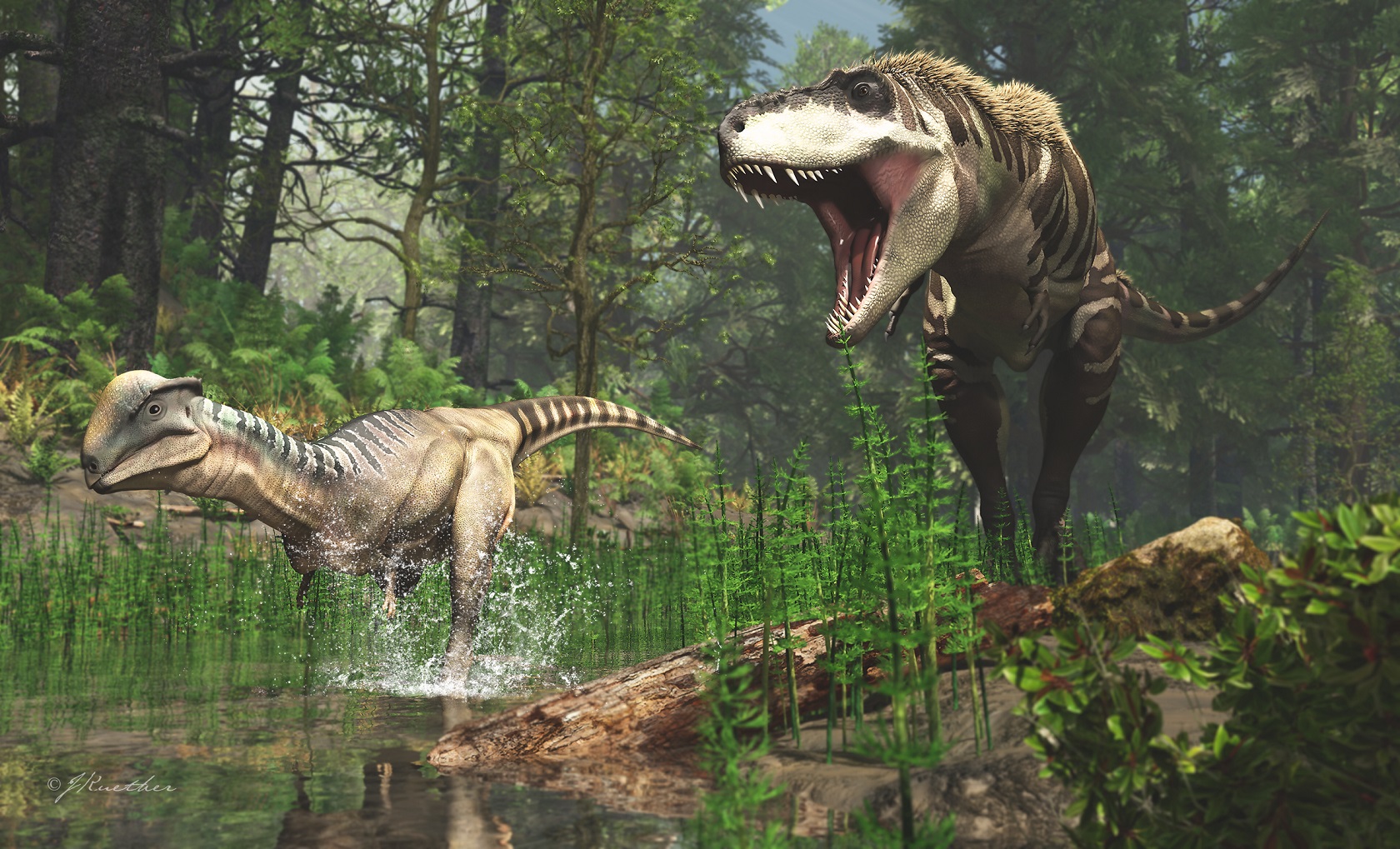
-
Article
Dionne Case
Dionne Case (1978), known as Re Public Service Board et al, Dionne et al, and Attorney General of Canada et al.
"https://thecanadianencyclopedia.ca/images/tce_placeholder.jpg?v=e9dca980c9bdb3aa11e832e7ea94f5d9" // resources/views/front/categories/view.blade.php
https://thecanadianencyclopedia.ca/images/tce_placeholder.jpg?v=e9dca980c9bdb3aa11e832e7ea94f5d9
-
Article
Diorama
Diorama, museum exhibit which creates the illusion of a natural or historic scene. Typically, mounted animals and preserved plants blend imperceptibly into a realistic background painting, simulating a natural habitat (the name habitat group is sometimes used).
"https://thecanadianencyclopedia.ca/images/tce_placeholder.jpg?v=e9dca980c9bdb3aa11e832e7ea94f5d9" // resources/views/front/categories/view.blade.php
https://thecanadianencyclopedia.ca/images/tce_placeholder.jpg?v=e9dca980c9bdb3aa11e832e7ea94f5d9
-
Article
Dioxin
The term dioxin applies to any of 75 chlorinated derivatives of dibenzo-p-dioxin. The various types of dioxin are quite different from one another, the greatest difference being in their toxicity.
"https://thecanadianencyclopedia.ca/images/tce_placeholder.jpg?v=e9dca980c9bdb3aa11e832e7ea94f5d9" // resources/views/front/categories/view.blade.php
https://thecanadianencyclopedia.ca/images/tce_placeholder.jpg?v=e9dca980c9bdb3aa11e832e7ea94f5d9
-
Article
Diplomatic and Consular Representations
When representation is established by one independent state in the capital city of another independent state, the senior representative is usually an ambassador and the establishment is called an embassy. The term ambassadress has been used to describe a female ambassador.
"https://thecanadianencyclopedia.ca/images/tce_placeholder.jpg?v=e9dca980c9bdb3aa11e832e7ea94f5d9" // resources/views/front/categories/view.blade.php
https://thecanadianencyclopedia.ca/images/tce_placeholder.jpg?v=e9dca980c9bdb3aa11e832e7ea94f5d9
-
Article
Dipper
The dipper (Cinclidae) family of birds comprises 5 species of birds known colloquially as water ouzel.
"https://d3d0lqu00lnqvz.cloudfront.net/media/media/e2eb8f1d-d403-4bf9-87d8-cda7c2ff2e86.jpg" // resources/views/front/categories/view.blade.php
https://d3d0lqu00lnqvz.cloudfront.net/media/media/e2eb8f1d-d403-4bf9-87d8-cda7c2ff2e86.jpg
-
Article
Direct-to-home Satellite Broadcasting
Direct-to-home (DTH) satellite broadcasting is a form of SATELLITE COMMUNICATION which offers consumers significantly more entertainment options than those offered by local cable companies.
"https://thecanadianencyclopedia.ca/images/tce_placeholder.jpg?v=e9dca980c9bdb3aa11e832e7ea94f5d9" // resources/views/front/categories/view.blade.php
https://thecanadianencyclopedia.ca/images/tce_placeholder.jpg?v=e9dca980c9bdb3aa11e832e7ea94f5d9
-
Article
Disability
Disability is defined by the World Health Organization (WHO) as the temporary, prolonged or permanent reduction or absence of the ability to perform certain commonplace activities or roles, sometimes referred to as activities of daily living.
"https://thecanadianencyclopedia.ca/images/tce_placeholder.jpg?v=e9dca980c9bdb3aa11e832e7ea94f5d9" // resources/views/front/categories/view.blade.php
https://thecanadianencyclopedia.ca/images/tce_placeholder.jpg?v=e9dca980c9bdb3aa11e832e7ea94f5d9
-
Article
Disability Rights Movement in Canada
The Canadian disability rights movement arose in the latter half of the 20th century. It includes multiple social movements that take a similar but distinct approach advocating civil rights for almost four million people with physical, sensory and cognitive impairments — nearly 14 per cent of the Canadian population.
"https://thecanadianencyclopedia.ca/images/tce_placeholder.jpg?v=e9dca980c9bdb3aa11e832e7ea94f5d9" // resources/views/front/categories/view.blade.php
https://thecanadianencyclopedia.ca/images/tce_placeholder.jpg?v=e9dca980c9bdb3aa11e832e7ea94f5d9