
Browse "Things"
-
Article
Deportation from Canada
Under the Constitution, the federal government has power, through immigration laws, to remove (or deport) foreign-born people from the country. The conditions for deportation have changed over the years, and deportation has been used for political as well as security purposes. Canadian deportation policy – often controversial – provides a window into the concerns of the state over the course of its history.
"https://d3d0lqu00lnqvz.cloudfront.net/media/media/2c3a8635-2510-4bad-b39f-1027e90d7b17.jpg" // resources/views/front/categories/view.blade.php
https://d3d0lqu00lnqvz.cloudfront.net/media/media/2c3a8635-2510-4bad-b39f-1027e90d7b17.jpg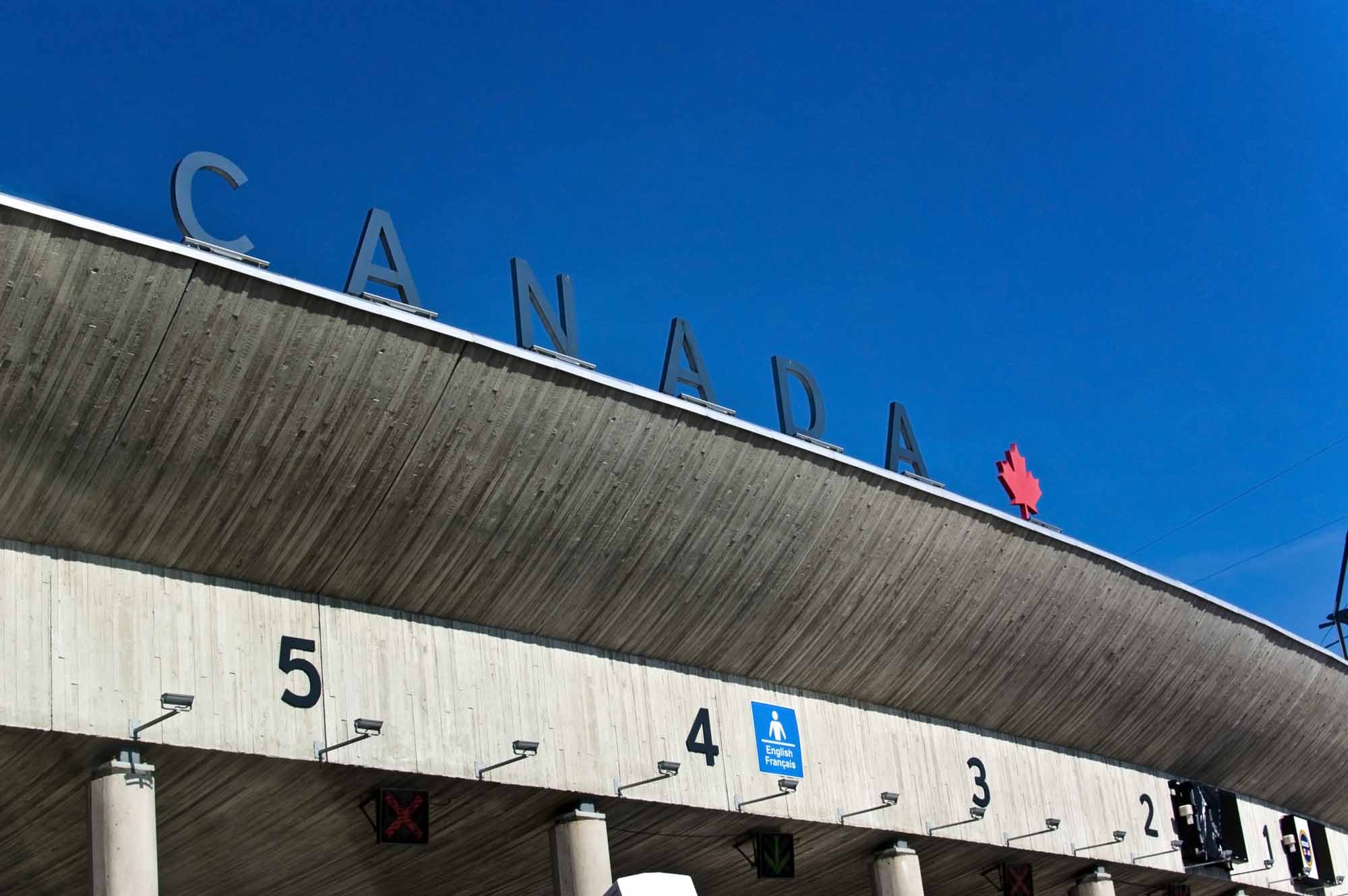
-
Macleans
Depression
This article was originally published in Maclean’s magazine on December 1, 1997. Partner content is not updated. The first serious bout was back in 1963, when he was attending Queen's University and, just before final exams, locked himself in his dorm room for two weeks.
"https://thecanadianencyclopedia.ca/images/tce_placeholder.jpg?v=e9dca980c9bdb3aa11e832e7ea94f5d9" // resources/views/front/categories/view.blade.php
https://thecanadianencyclopedia.ca/images/tce_placeholder.jpg?v=e9dca980c9bdb3aa11e832e7ea94f5d9
-
Article
Deputy Minister
A deputy minister is generally an officer of the public service appointed as managerial and administrative head of a department or ministry of the federal or provincial governments.
"https://thecanadianencyclopedia.ca/images/tce_placeholder.jpg?v=e9dca980c9bdb3aa11e832e7ea94f5d9" // resources/views/front/categories/view.blade.php
https://thecanadianencyclopedia.ca/images/tce_placeholder.jpg?v=e9dca980c9bdb3aa11e832e7ea94f5d9
-
Article
Des Sauvages, ou, Voyage de Samuel Champlain
Des Sauvages, ou, Voyage de Samuel Champlain (1603) records Champlain's first voyage to Canada as François Gravé du Pont's guest aboard La Bonne Renommée searching for the Northwest Passage.
"https://thecanadianencyclopedia.ca/images/tce_placeholder.jpg?v=e9dca980c9bdb3aa11e832e7ea94f5d9" // resources/views/front/categories/view.blade.php
https://thecanadianencyclopedia.ca/images/tce_placeholder.jpg?v=e9dca980c9bdb3aa11e832e7ea94f5d9
-
Article
Deschênes Commission
The Deschênes Commission (officially known as the Commission of Inquiry on War Criminals in Canada) was an independent commission of inquiry established by Prime Minister Brian Mulroney. Its purpose was to investigate accusations that alleged war criminals from the Second World War had found refuge and were living in Canada. The commission took a broad approach to its mandate, investigating war crimes as well as crimes against humanity. While war crimes had already been established as a specific kind of crime after the Second World War, crimes against humanity were not as clearly described, and therefore did not have a clear and defined punishment structure. The outcome of this report was to formalize crimes against humanity and create that framework. Specifically, the Criminal Code was amended so that war crimes would be offences under Canadian law regardless of Canada's involvement in said war. A two-part final report was completed and delivered at the end of 1986. The first part concluded that alleged Nazi war criminals were residing in Canada, but also that Canada lacked the legal means to prosecute those individuals. The second part of the report—that concerned with allegations against specific individuals—remains confidential.
"https://d3d0lqu00lnqvz.cloudfront.net/CanadianCriminalCases2.jpg" // resources/views/front/categories/view.blade.php
https://d3d0lqu00lnqvz.cloudfront.net/CanadianCriminalCases2.jpg
-
Article
Development Industry
Developers build and own all types of urban property, from high-rise apartments to industrial buildings and shopping centres.
"https://thecanadianencyclopedia.ca/images/tce_placeholder.jpg?v=e9dca980c9bdb3aa11e832e7ea94f5d9" // resources/views/front/categories/view.blade.php
https://thecanadianencyclopedia.ca/images/tce_placeholder.jpg?v=e9dca980c9bdb3aa11e832e7ea94f5d9
-
Article
Devon Island Miocene Fossils
FOSSIL bones were first discovered in 1978 in the rocks formed in the now vanished Haughton Lake.
"https://thecanadianencyclopedia.ca/images/tce_placeholder.jpg?v=e9dca980c9bdb3aa11e832e7ea94f5d9" // resources/views/front/categories/view.blade.php
https://thecanadianencyclopedia.ca/images/tce_placeholder.jpg?v=e9dca980c9bdb3aa11e832e7ea94f5d9
-
Article
Diabetes
Diabetes mellitus, commonly referred to as diabetes, is a disease in which the body either produces insufficient amounts of insulin or cannot use insulin properly. There are two main types of diabetes: type 1 and type 2. Treatment for the disease received a monumental breakthrough when a team of researchers at the University of Toronto (Sir Frederick Banting, Charles Best, John Macleod and James Collip) isolated insulin between 1921 and 1922. (See also The Discovery of Insulin.)
"https://d3d0lqu00lnqvz.cloudfront.net/media/media/350b6e59-1083-4f86-b24c-c0a1608e2fa0.jpg" // resources/views/front/categories/view.blade.php
https://d3d0lqu00lnqvz.cloudfront.net/media/media/350b6e59-1083-4f86-b24c-c0a1608e2fa0.jpg
-
Article
Diamond
Diamond is a crystallized form of carbon. While wide varieties of diamonds exist, they all have an isometric crystal structure. Diamond is very hard because the carbon atoms are very tightly packed and strongly held together. The vast majority of gem-quality diamonds used in jewellery are almost colourless or very slightly yellow. Fancy, intense yellow, green, orange, blue and pink diamonds are rare and very expensive (see Gemstone). Bort is composed of minutely crystalline grey to black diamonds that cannot be used as gems but can be used in drilling; when powdered, bort is used for cutting and polishing. Carbonado is a compact, opaque, dark grey to black mixture of microscopic diamond, graphite and amorphous carbon and is extremely hard. It is a natural polycrystalline form of diamond that is also used for industrial purposes. Diamond is the territorial gemstone of the Northwest Territories.
"https://d3d0lqu00lnqvz.cloudfront.net/media/media/1c5e002b-c29d-45d2-a47a-a0628acf2581.jpg" // resources/views/front/categories/view.blade.php
https://d3d0lqu00lnqvz.cloudfront.net/media/media/1c5e002b-c29d-45d2-a47a-a0628acf2581.jpg
-
Article
Diamonds of Canada
Diamonds of Canada, mined by Jacques Cartier's men at the mouth of Rivière du Cap-Rouge in 1541.
"https://thecanadianencyclopedia.ca/images/tce_placeholder.jpg?v=e9dca980c9bdb3aa11e832e7ea94f5d9" // resources/views/front/categories/view.blade.php
https://thecanadianencyclopedia.ca/images/tce_placeholder.jpg?v=e9dca980c9bdb3aa11e832e7ea94f5d9
-
Article
Dictionary of Canadian Biography/Dictionnaire biographique du Canada
Dictionary of Canadian Biography/Dictionnaire biographique du Canada is a multivolume, comprehensive reference work on the lives of people who have contributed to Canada's history in every field of endeavour.
"https://thecanadianencyclopedia.ca/images/tce_placeholder.jpg?v=e9dca980c9bdb3aa11e832e7ea94f5d9" // resources/views/front/categories/view.blade.php
https://thecanadianencyclopedia.ca/images/tce_placeholder.jpg?v=e9dca980c9bdb3aa11e832e7ea94f5d9
-
Article
Dieppe Raid
During the Second World War, on 19 August 1942, the Allies launched a major raid on the French coastal port of Dieppe. Operation Jubilee was the first Canadian Army engagement in the European theatre of the war, designed to test the Allies' ability to launch amphibious assaults against Adolf Hitler's "Fortress Europe." The raid was a disaster: more than 900 Canadian soldiers were killed, and thousands more were wounded and taken prisoner. Despite the bloodshed, the raid provided valuable lessons for subsequent Allied amphibious assaults on Africa, Italy and Normandy.
"https://d3d0lqu00lnqvz.cloudfront.net/media/media/98ce9487-a6b5-44be-bd1e-a65711432b95.jpg" // resources/views/front/categories/view.blade.php
https://d3d0lqu00lnqvz.cloudfront.net/media/media/98ce9487-a6b5-44be-bd1e-a65711432b95.jpg
-
Editorial
Dieppe: The Beaches of Hell
The following article is an editorial. Editorials are not usually updated.
"https://d3d0lqu00lnqvz.cloudfront.net/media/media/b426e7bf-e0d1-4d4b-a592-700a96ab8f4f.jpg" // resources/views/front/categories/view.blade.php
https://d3d0lqu00lnqvz.cloudfront.net/media/media/b426e7bf-e0d1-4d4b-a592-700a96ab8f4f.jpg
-
Article
Dietetics
Dietetics (from the Greek diaita, meaning "mode of life") has been implicated in the cause, cure and prevention of disease from earliest recorded history.
"https://thecanadianencyclopedia.ca/images/tce_placeholder.jpg?v=e9dca980c9bdb3aa11e832e7ea94f5d9" // resources/views/front/categories/view.blade.php
https://thecanadianencyclopedia.ca/images/tce_placeholder.jpg?v=e9dca980c9bdb3aa11e832e7ea94f5d9
-
Article
Diggity Archaeological Site
The Diggity archaeological site is located at the southeastern end of Spednic Lake, near the entrance to Palfrey Lake, in southwestern New Brunswick.
"https://d3d0lqu00lnqvz.cloudfront.net/media/media/5c63f682-2f7c-40a8-b0d4-287fd7865464.jpg" // resources/views/front/categories/view.blade.php
https://d3d0lqu00lnqvz.cloudfront.net/media/media/5c63f682-2f7c-40a8-b0d4-287fd7865464.jpg