Browse "Things"
-
Article
Cobalt
Cobalt (Co) is a brittle, hard, greyish-white magnetic metal that melts at 1495°C and that closely resembles iron and nickel. It is not found as a native element.
"https://thecanadianencyclopedia.ca/images/tce_placeholder.jpg?v=e9dca980c9bdb3aa11e832e7ea94f5d9" // resources/views/front/categories/view.blade.php
https://thecanadianencyclopedia.ca/images/tce_placeholder.jpg?v=e9dca980c9bdb3aa11e832e7ea94f5d9
-
Article
Cobourg and Peterborough Railway
One of the 2 earliest railway charters granted in Canada, the Cobourg Rail Road Co was incorporated in 1834 to build a railway from Cobourg northward to Peterborough across Rice Lake. The project was shelved until 1846, when it was revived as the Cobourg and Rice Lake Plank Road and Ferry Co. Samuel Gore built his plank road the 17 km to the lake, but it barely survived the first 2 winters.
"https://thecanadianencyclopedia.ca/images/tce_placeholder.jpg?v=e9dca980c9bdb3aa11e832e7ea94f5d9" // resources/views/front/categories/view.blade.php
https://thecanadianencyclopedia.ca/images/tce_placeholder.jpg?v=e9dca980c9bdb3aa11e832e7ea94f5d9
-
"https://thecanadianencyclopedia.ca/images/tce_placeholder.jpg?v=e9dca980c9bdb3aa11e832e7ea94f5d9" // resources/views/front/categories/view.blade.php
https://thecanadianencyclopedia.ca/images/tce_placeholder.jpg?v=e9dca980c9bdb3aa11e832e7ea94f5d9
-
Article
Cockroach
Cockroach, swift-running, flattened, oval-shaped insect belonging to order Dictyoptera.
"https://thecanadianencyclopedia.ca/images/tce_placeholder.jpg?v=e9dca980c9bdb3aa11e832e7ea94f5d9" // resources/views/front/categories/view.blade.php
https://thecanadianencyclopedia.ca/images/tce_placeholder.jpg?v=e9dca980c9bdb3aa11e832e7ea94f5d9
-
Article
Cod in Canada
Cod is the common name for fishes of the class Actinopterygii, order Gadiformes, family Gadidae. This family contains about 30 species of mostly bottom-living fishes found in cool seas. In Canada, about nine species occur in Atlantic waters, three in the Pacific and five in the Arctic. The family includes many important food fishes, e.g., Atlantic cod (Gadus morhua), haddock (genus Melanogrammus), pollock (Pollachius virens), Pacific cod (Gadus macrocephalus) and tomcods (genus Microgadus). Fishes recently removed from the family Gadidae include cusk, burbot, rocklings and lings (now family Lotidae) and hakes (now family Phycidae).
"https://d3d0lqu00lnqvz.cloudfront.net/cod/Gadus_morhua_-head.jpg" // resources/views/front/categories/view.blade.php
https://d3d0lqu00lnqvz.cloudfront.net/cod/Gadus_morhua_-head.jpg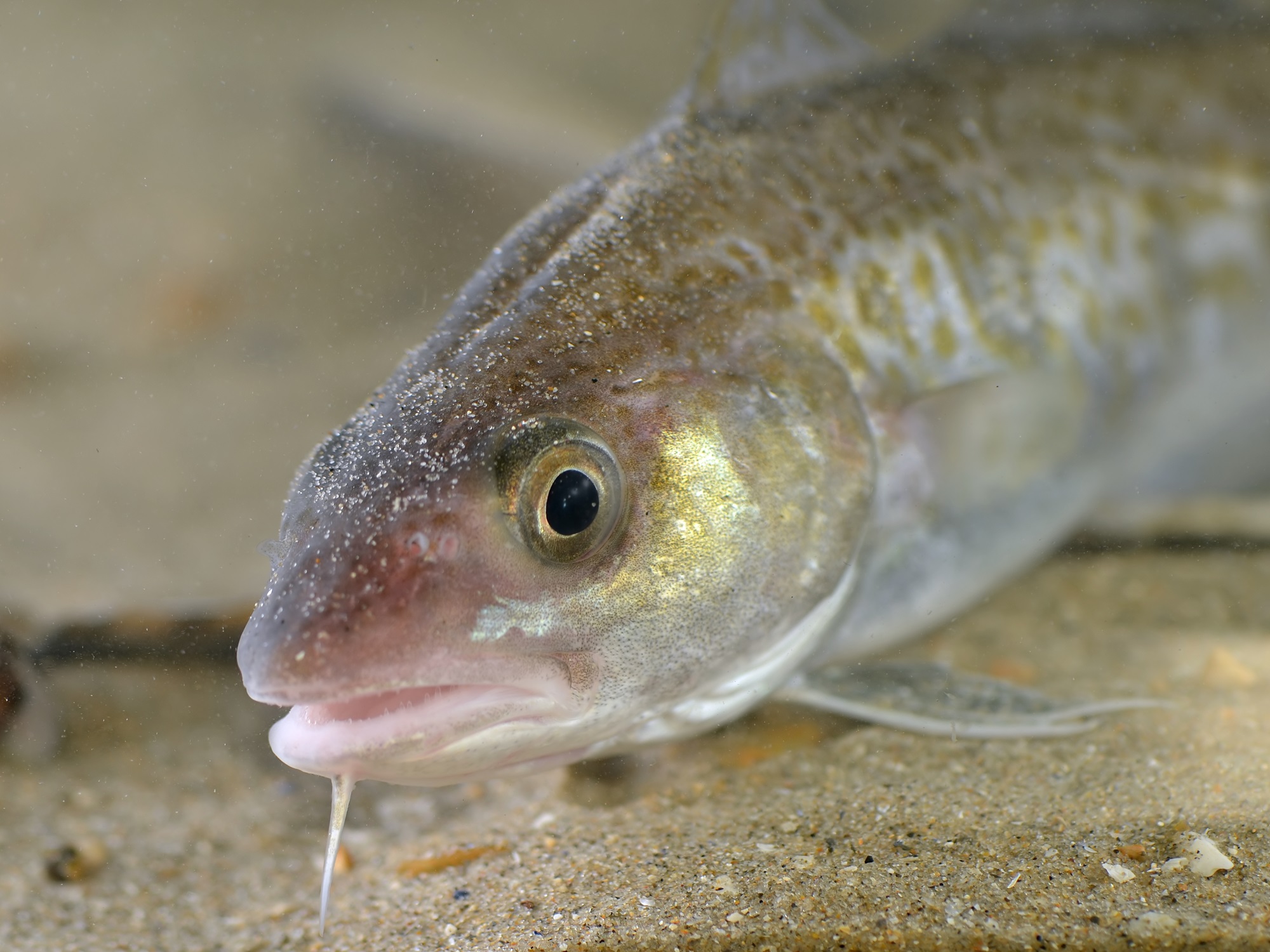
-
Article
Cod Liver Oil
Cod Liver Oil was in the past a primary source of vitamin A, essential for bone growth, health of skin and mucous membranes, and night vision. Today, many other preparations containing vitamin A are available. Before the 1920s, most cod liver oil came from Norwegian COD.
"https://thecanadianencyclopedia.ca/images/tce_placeholder.jpg?v=e9dca980c9bdb3aa11e832e7ea94f5d9" // resources/views/front/categories/view.blade.php
https://thecanadianencyclopedia.ca/images/tce_placeholder.jpg?v=e9dca980c9bdb3aa11e832e7ea94f5d9
-
Article
Cod Moratorium of 1992
On 2 July 1992, the federal government banned cod fishing along Canada’s east coast. This moratorium ended nearly five centuries of cod fishing in Newfoundland and Labrador. Cod had played a central role in the province’s economy and culture. The aim of the policy was to help restore cod stocks that had been depleted due to overfishing. (See also Fisheries.) Click here for definitions of key terms used in this article.
"https://d3d0lqu00lnqvz.cloudfront.net/media/new_article_images/CodMoratoriumof1992/Harbour_Grace_Douglas_Sprott_flickr.jpg" // resources/views/front/categories/view.blade.php
https://d3d0lqu00lnqvz.cloudfront.net/media/new_article_images/CodMoratoriumof1992/Harbour_Grace_Douglas_Sprott_flickr.jpg
-
Article
CODCO
After the Ontario performance, CODCO returned to Newfoundland and, following a run in St John's, toured the province.
"https://d3d0lqu00lnqvz.cloudfront.net/media/media/42343883-293c-4a2f-8065-8d52ffcf2e72.jpg" // resources/views/front/categories/view.blade.php
https://d3d0lqu00lnqvz.cloudfront.net/media/media/42343883-293c-4a2f-8065-8d52ffcf2e72.jpg
-
Article
Coins and Tokens
Coins are issued by governments for use as money. A quantity of coins issued at one time, or a series of coins issued under one authority, is called a coinage. Tokens are issued as a substitute for coinage, usually by private individuals or organizations such as merchants and banks. Canada’s complex political history has meant that Canadian numismatists have an astonishing variety of coins, coinages and tokens to collect and study.
"https://d3d0lqu00lnqvz.cloudfront.net/media/media/72a073bd-feef-4b66-90bd-02a278da1929.jpg" // resources/views/front/categories/view.blade.php
https://d3d0lqu00lnqvz.cloudfront.net/media/media/72a073bd-feef-4b66-90bd-02a278da1929.jpg
-
Article
Cold Places in Canada
During the prolonged darkness of winter, the air over the huge snow- and ice-covered surfaces of Canada may stagnate for weeks, radiating heat to outer space.
"https://d3d0lqu00lnqvz.cloudfront.net/media/media/4746fd27-236c-4c5b-a1e2-a5d87eba78b2.jpg" // resources/views/front/categories/view.blade.php
https://d3d0lqu00lnqvz.cloudfront.net/media/media/4746fd27-236c-4c5b-a1e2-a5d87eba78b2.jpg
-
Article
Canada and the Cold War
The Cold War refers to the period between the end of the Second World War and the collapse of the Soviet Union in 1991. During this time, the world was largely divided into two ideological camps — the United States-led capitalist “West” and the Soviet-dominated communist “East.” Canada aligned with the West. Its government structure, politics, society and popular perspectives matched those in the US, Britain, and other democratic countries. The global US-Soviet struggle took many different forms and touched many areas. It never became “hot” through direct military confrontation between the two main antagonists.
"https://d3d0lqu00lnqvz.cloudfront.net/media/new_article_images/CubanMissileCrisis/7322067464_e858ddfc17_z.jpg" // resources/views/front/categories/view.blade.php
https://d3d0lqu00lnqvz.cloudfront.net/media/new_article_images/CubanMissileCrisis/7322067464_e858ddfc17_z.jpg
-
Article
Cold-Weather Injuries
Hypothermia may be defined as a "lower than normal" body temperature. Normal body core temperature is 37.5°C. Mild hypothermia and shivering may occur at body temperatures as high as 36°C. Lower body temperatures are considered as moderate to severe hypothermia.
"https://d3d0lqu00lnqvz.cloudfront.net/media/media/b2c126bc-f950-48c0-92ec-f8df0d4d79b5.jpg" // resources/views/front/categories/view.blade.php
https://d3d0lqu00lnqvz.cloudfront.net/media/media/b2c126bc-f950-48c0-92ec-f8df0d4d79b5.jpg
-
Article
Collapse of the Peace River Bridge
The spectacular suspension bridge across the Peace River south of Fort St. John, British Columbia, was opened in the summer of 1943, replacing a ferry crossing on the Alaska Highway.
"https://thecanadianencyclopedia.ca/images/tce_placeholder.jpg?v=e9dca980c9bdb3aa11e832e7ea94f5d9" // resources/views/front/categories/view.blade.php
https://thecanadianencyclopedia.ca/images/tce_placeholder.jpg?v=e9dca980c9bdb3aa11e832e7ea94f5d9
-
Article
Collective Bargaining
Collective bargaining is a method of jointly determining working conditions between one or more employers on one side and organized employees on the other.
"https://thecanadianencyclopedia.ca/images/tce_placeholder.jpg?v=e9dca980c9bdb3aa11e832e7ea94f5d9" // resources/views/front/categories/view.blade.php
https://thecanadianencyclopedia.ca/images/tce_placeholder.jpg?v=e9dca980c9bdb3aa11e832e7ea94f5d9
-
Article
Collectivism
As the social evils of industrialization and urbanization unfolded in the later 19th century, many Canadians saw the basic problem as an excess of individualism.
"https://d3d0lqu00lnqvz.cloudfront.net/media/media/abbfb032-ed66-462e-a59f-9f2a91759898.jpg" // resources/views/front/categories/view.blade.php
https://d3d0lqu00lnqvz.cloudfront.net/media/media/abbfb032-ed66-462e-a59f-9f2a91759898.jpg