
Browse "Politics & Law"
-
Article
John Collins' Purchase
John Collins’ Purchase of 1785 is one of the oldest land agreements between Indigenous peoples and British authorities in Upper Canada (later Ontario). It concerned the use of lands extending from the northwestern end of Lake Simcoe to Matchedash Bay, an inlet off Georgian Bay in Lake Huron. The purpose was to provide the British with a protected inland water route between Lake Ontario and Lake Huron, away from potential American interference. This passage was necessary for trade and the resupply of British western outposts. John Collins’ Purchase is one of many agreements made during the late 18th and early 19th centuries, known as the Upper Canada Land Surrenders.
"https://d3d0lqu00lnqvz.cloudfront.net/UCLS/345446e9-d0d1-4626-9702-e214ca87a8a7.jpg" // resources/views/front/categories/view.blade.php
https://d3d0lqu00lnqvz.cloudfront.net/UCLS/345446e9-d0d1-4626-9702-e214ca87a8a7.jpg
-
Article
Johnson-Butler Purchase
The Johnson-Butler Purchase of 1787–88 (also known as the “Gunshot Treaty,” referring to the distance a person could hear a gunshot from the lake’s edge) is one of the earliest land agreements between representatives of the Crown and the Indigenous peoples of Upper Canada (later Ontario). It resulted in a large tract of territory along the central north shore of Lake Ontario being opened for settlement. These lands became part of the Williams Treaties of 1923. (See also Upper Canada Land Surrenders and Treaties with Indigenous Peoples in Canada.)
"https://d3d0lqu00lnqvz.cloudfront.net/UCLS/345446e9-d0d1-4626-9702-e214ca87a8a7.jpg" // resources/views/front/categories/view.blade.php
https://d3d0lqu00lnqvz.cloudfront.net/UCLS/345446e9-d0d1-4626-9702-e214ca87a8a7.jpg
-
Article
Joint Commission
Joint Commission, a mechanism used extensively by Britain and the US to settle bilateral disputes mainly of a technical nature.
"https://thecanadianencyclopedia.ca/images/tce_placeholder.jpg?v=e9dca980c9bdb3aa11e832e7ea94f5d9" // resources/views/front/categories/view.blade.php
https://thecanadianencyclopedia.ca/images/tce_placeholder.jpg?v=e9dca980c9bdb3aa11e832e7ea94f5d9
-
"https://thecanadianencyclopedia.ca/images/tce_placeholder.jpg?v=e9dca980c9bdb3aa11e832e7ea94f5d9" // resources/views/front/categories/view.blade.php
https://thecanadianencyclopedia.ca/images/tce_placeholder.jpg?v=e9dca980c9bdb3aa11e832e7ea94f5d9
-
Article
Jordan's Principle
Jordan’s Principle is a child-first principle that ensures First Nations children can access the same public services as other children in Canada. Jordan’s Principle is named for Jordan River Anderson, a young Cree boy who died at the age of five after waiting for home-based care that was approved when he was two but never arrived because of a financial dispute between the federal and provincial governments. Jordan’s Principle was put in place to ensure a tragedy like this never happens again.
"https://d3d0lqu00lnqvz.cloudfront.net/jordans-principle-logo.png" // resources/views/front/categories/view.blade.php
https://d3d0lqu00lnqvz.cloudfront.net/jordans-principle-logo.png
-
Macleans
Joudrie Charged
She was known in Calgary society as the "hostess with the mostest," but it may be some time before Joudrie is entertaining again. On Jan.This article was originally published in Maclean's Magazine on February 6, 1995
"https://thecanadianencyclopedia.ca/images/tce_placeholder.jpg?v=e9dca980c9bdb3aa11e832e7ea94f5d9" // resources/views/front/categories/view.blade.php
https://thecanadianencyclopedia.ca/images/tce_placeholder.jpg?v=e9dca980c9bdb3aa11e832e7ea94f5d9
-
Macleans
Joudrie Not Guilty
This article was originally published in Maclean’s magazine on May 20, 1996. Partner content is not updated. It was nearly 48 hours since the jury had begun its deliberations - and that followed more than two weeks of complex, emotion-packed testimony. And so when it finally came, the denouement of Dorothy Joudrie's attempted murder trial in Calgary late last week seemed all the more sudden.
"https://thecanadianencyclopedia.ca/images/tce_placeholder.jpg?v=e9dca980c9bdb3aa11e832e7ea94f5d9" // resources/views/front/categories/view.blade.php
https://thecanadianencyclopedia.ca/images/tce_placeholder.jpg?v=e9dca980c9bdb3aa11e832e7ea94f5d9
-
Article
Judges' Salaries (Reference)
The main question in dispute in the reference on judges' salaries (1997) concerned the financial security of judges of provincial courts. In this case the governments of Prince Edward Island, Manitoba and Alberta had reduced the salaries of their provincial court judges without prior consultation.
"https://thecanadianencyclopedia.ca/images/tce_placeholder.jpg?v=e9dca980c9bdb3aa11e832e7ea94f5d9" // resources/views/front/categories/view.blade.php
https://thecanadianencyclopedia.ca/images/tce_placeholder.jpg?v=e9dca980c9bdb3aa11e832e7ea94f5d9
-
Article
Judicial Committee of the Privy Council
The Judicial Committee of the Privy Council is a board of the British Privy Council. It was formed in 1833. In 1844, it was given jurisdiction over all of Britain’s colonial courts. People who had been judges in high courts in Britain served on the Judicial Committee, along with a sprinkling of judges from the Commonwealth. Their decisions were often criticized for favouring provincial powers over federal authority, especially in fields such as trade and commerce. The Judicial Committee served as the court of final appeal for Canada until 1949, when that role was given to the Supreme Court of Canada.
"https://d3d0lqu00lnqvz.cloudfront.net/media/media/7ac02b0f-118b-4ccb-b6dc-81f218b68954.jpg" // resources/views/front/categories/view.blade.php
https://d3d0lqu00lnqvz.cloudfront.net/media/media/7ac02b0f-118b-4ccb-b6dc-81f218b68954.jpg
-
Article
Judiciary in Canada
The judiciary is, collectively, the judges of the courts of law. It is the branch of government in which judicial power is vested. It is independent of the legislative and executive branches. Judges are public officers appointed to preside in a court of justice, to interpret and apply the laws of Canada. They are responsible for adjudicating personal, sensitive, delicate, and emotional disputes; and for resolving major social, economic, and political issues that arise within a legal context. As such, the judiciary helps mold the social fabric governing daily life.
"https://d3d0lqu00lnqvz.cloudfront.net/media/media/7ac02b0f-118b-4ccb-b6dc-81f218b68954.jpg" // resources/views/front/categories/view.blade.php
https://d3d0lqu00lnqvz.cloudfront.net/media/media/7ac02b0f-118b-4ccb-b6dc-81f218b68954.jpg
-
Article
Jurisprudence
The term "jurisprudence"means literally and traditionally "practical wisdom about law," the intellectual capacity to frame and apply laws according to sound theoretical principles. Nowadays, the term has several different meanings, all descendants of this classical sense.
"https://thecanadianencyclopedia.ca/images/tce_placeholder.jpg?v=e9dca980c9bdb3aa11e832e7ea94f5d9" // resources/views/front/categories/view.blade.php
https://thecanadianencyclopedia.ca/images/tce_placeholder.jpg?v=e9dca980c9bdb3aa11e832e7ea94f5d9
-
Article
Juvenile Delinquency
Juvenile delinquency, in social science, refers primarily to social acts of juveniles that are defined and evaluated as deviant or antisocial by legal or social norms and that are usually socially learned.
"https://thecanadianencyclopedia.ca/images/tce_placeholder.jpg?v=e9dca980c9bdb3aa11e832e7ea94f5d9" // resources/views/front/categories/view.blade.php
https://thecanadianencyclopedia.ca/images/tce_placeholder.jpg?v=e9dca980c9bdb3aa11e832e7ea94f5d9
-
Article
Juvenile Justice Systems
On 7 July 1982, Parliament enacted the Young Offenders Act (effective April 1984, some sections not until 1985), which the government claimed would bring about a long-overdue reform of Canada's juvenile justice system.
"https://thecanadianencyclopedia.ca/images/tce_placeholder.jpg?v=e9dca980c9bdb3aa11e832e7ea94f5d9" // resources/views/front/categories/view.blade.php
https://thecanadianencyclopedia.ca/images/tce_placeholder.jpg?v=e9dca980c9bdb3aa11e832e7ea94f5d9
-
Article
Kanesatake Resistance (Oka Crisis) (Plain-Language Summary)
In the summer of 1990, a resistance occurred in Kanesatake, Quebec. Nearby is a town called Oka. This event has many names – the Oka Crisis, the Kanesatake Resistance, and the Mohawk Resistance. The main participants were Kanyen'kehà:ka (Mohawk) protesters, the Quebec police, the RCMP, and the Canadian Army. It started when members of the Kanyen'kehà:ka community started protesting the expansion of a golf course and the building of townhouses. An Indigenous burial ground was on this land. The situation quickly became violent. One police officer was killed. He was a corporal in the Sûreté du Quebec. After this, the Canadian Army went to Kanesatake. The expansion ultimately was stopped. The federal government bought the disputed land. The resistance ended in late September. However, the land was not transferred to the Kanyen'kehà:ka. The resistance had lasting repercussions. This article is a plain-language summary of the Kanesatake Resistance (Oka Crisis). If you are interested in reading about this topic more in depth, please see our full-length entry, Kanesatake Resistance (Oka Crisis).
"https://d3d0lqu00lnqvz.cloudfront.net/media/media/af36926e-717c-45ef-91cc-f00a20c1faeb.jpg" // resources/views/front/categories/view.blade.php
https://d3d0lqu00lnqvz.cloudfront.net/media/media/af36926e-717c-45ef-91cc-f00a20c1faeb.jpg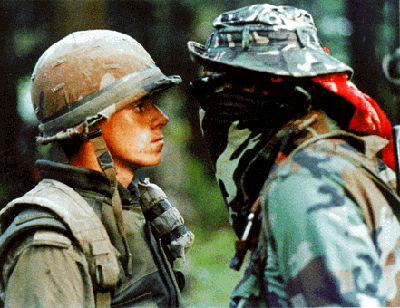
-
Article
Keegstra Case
Jim Keegstra was a secondary school teacher in rural Alberta who taught anti-Semitic propaganda to his students. He was charged with a hate crime in 1984 and was found guilty in 1985. However, Keegstra launched repeated appeals arguing that the Criminal Code violated his constitutionally guaranteed freedom of expression. The landmark case (R. v. Keegstra) tested the balance between the right to freedom of speech outlined in the Canadian Charter of Rights and Freedoms and the law’s limits on hate speech stipulated in the Criminal Code. The case came before the Supreme Court of Canada in 1990 and 1996. The Court ultimately ruled against Keegstra by deciding that Canada’s hate laws imposed a “reasonable limit” on a person’s freedom of expression.
"https://d3d0lqu00lnqvz.cloudfront.net/media/media/c813762a-d4db-4a05-b769-18eb4e9b7957.jpg" // resources/views/front/categories/view.blade.php
https://d3d0lqu00lnqvz.cloudfront.net/media/media/c813762a-d4db-4a05-b769-18eb4e9b7957.jpg