Browse "Business & Economics"
-
Article
Food Banks
In Canada, the term "food bank" is often used to describe any cache of food designated for charitable purposes.
"https://thecanadianencyclopedia.ca/images/tce_placeholder.jpg?v=e9dca980c9bdb3aa11e832e7ea94f5d9" // resources/views/front/categories/view.blade.php
https://thecanadianencyclopedia.ca/images/tce_placeholder.jpg?v=e9dca980c9bdb3aa11e832e7ea94f5d9
-
Article
Footwear Industry
Footwear industry, sector of Canada's MANUFACTURING industries that produces footwear to meet various needs, including specialized industrial footwear, functional footwear, cold-weather footwear, slippers, and dress, casual and athletic shoes for men, women and children.
"https://thecanadianencyclopedia.ca/images/tce_placeholder.jpg?v=e9dca980c9bdb3aa11e832e7ea94f5d9" // resources/views/front/categories/view.blade.php
https://thecanadianencyclopedia.ca/images/tce_placeholder.jpg?v=e9dca980c9bdb3aa11e832e7ea94f5d9
-
Article
Ford Motor Company of Canada Limited
Ford Motor Company of Canada, Limited, with head offices in Oakville, Ontario, is a major manufacturer and distributor of automobiles in Canada. First incorporated in Ontario in 1904, the Canadian company was reincorporated in 1911.
"https://thecanadianencyclopedia.ca/images/tce_placeholder.jpg?v=e9dca980c9bdb3aa11e832e7ea94f5d9" // resources/views/front/categories/view.blade.php
https://thecanadianencyclopedia.ca/images/tce_placeholder.jpg?v=e9dca980c9bdb3aa11e832e7ea94f5d9
-
Article
Four Seasons Hotels Ltd.
Four Seasons Hotels Ltd., headquartered in Toronto, owns and manages luxury hotels and resorts worldwide. Architect and builder Isadore Sharp founded the company in 1960.
"https://thecanadianencyclopedia.ca/images/tce_placeholder.jpg?v=e9dca980c9bdb3aa11e832e7ea94f5d9" // resources/views/front/categories/view.blade.php
https://thecanadianencyclopedia.ca/images/tce_placeholder.jpg?v=e9dca980c9bdb3aa11e832e7ea94f5d9
-
Article
Fowler Bauld & Mitchell (FBM)
Fowler Bauld & Mitchell Ltd. (FBM) is an architectural firm in practice since 1917, making it one of the oldest in Canada.
"https://d3d0lqu00lnqvz.cloudfront.net/media/media/c4abd553-01d0-40db-bd46-affc5fdf18b8.jpg" // resources/views/front/categories/view.blade.php
https://d3d0lqu00lnqvz.cloudfront.net/media/media/c4abd553-01d0-40db-bd46-affc5fdf18b8.jpg
-
Article
Franklin Legge Organ Co.
Franklin Legge Organ Co. Prominent organ builder in the first half of the 20th century.
"https://thecanadianencyclopedia.ca/images/tce_placeholder.jpg?v=e9dca980c9bdb3aa11e832e7ea94f5d9" // resources/views/front/categories/view.blade.php
https://thecanadianencyclopedia.ca/images/tce_placeholder.jpg?v=e9dca980c9bdb3aa11e832e7ea94f5d9
-
Article
Fraser River Gold Rush
In 1858, around 30,000 gold seekers flooded the banks of the Fraser River from Hope to just north of Lillooet in British Columbia’s first significant gold rush. Although it dissipated by the mid-1860s, the Fraser River Gold Rush had a significant impact on the area’s Indigenous peoples and resulted in the Fraser Canyon War. Fears that the massive influx of American miners would lead the United States to annex the non-sovereign British territory known as New Caledonia also resulted in the founding of British Columbia as a colony on 2 August 1858 (see The Fraser River Gold Rush and the Founding of British Columbia). By the mid-1860s, the Fraser Rush collapsed, and British Columbia sank into a recession.
"https://d3d0lqu00lnqvz.cloudfront.net/media/new_article_images/FraserCanyonWar/Fraser Canyon near Chapmans Bar, Daniel Marshall(1).jpg" // resources/views/front/categories/view.blade.php
https://d3d0lqu00lnqvz.cloudfront.net/media/new_article_images/FraserCanyonWar/Fraser Canyon near Chapmans Bar, Daniel Marshall(1).jpg.jpg)
-
Article
Frederick Harris Music Co. Limited
The Frederick Harris Music Co, Limited. Publishing firm founded in London ca 1900, established in Canada in 1910, and controlled 1944-91 by the University of Toronto, then by the Royal Conservatory of Music. Frederick Harris (ca 1866-1945) founded his catalogue on copyrights purchased from C.J.
"https://thecanadianencyclopedia.ca/images/tce_placeholder.jpg?v=e9dca980c9bdb3aa11e832e7ea94f5d9" // resources/views/front/categories/view.blade.php
https://thecanadianencyclopedia.ca/images/tce_placeholder.jpg?v=e9dca980c9bdb3aa11e832e7ea94f5d9
-
Article
Frontenac (Car)
After William Durant lost control of GENERAL MOTORS for the second time, he started Durant Motors, and a Canadian branch was established in the Toronto suburb of Leaside.
"https://thecanadianencyclopedia.ca/images/tce_placeholder.jpg?v=e9dca980c9bdb3aa11e832e7ea94f5d9" // resources/views/front/categories/view.blade.php
https://thecanadianencyclopedia.ca/images/tce_placeholder.jpg?v=e9dca980c9bdb3aa11e832e7ea94f5d9
-
Article
Fruit and Vegetable Industry
This important sector of Canada's FOOD AND BEVERAGE INDUSTRIES is made up of companies that process fruits and VEGETABLES.
"https://d3d0lqu00lnqvz.cloudfront.net/media/media/c5d66760-a348-43b1-af55-7b9263c442cb.jpg" // resources/views/front/categories/view.blade.php
https://d3d0lqu00lnqvz.cloudfront.net/media/media/c5d66760-a348-43b1-af55-7b9263c442cb.jpg
-
Article
Fruit Cultivation
Fruit growing is an important part of Canada’s food industry. Growing is usually restricted to areas where winter temperatures do not go much below -20°C.
"https://d3d0lqu00lnqvz.cloudfront.net/media/media/a2ab80b2-d4e9-4e51-aef5-dd1615e358f8.JPG" // resources/views/front/categories/view.blade.php
https://d3d0lqu00lnqvz.cloudfront.net/media/media/a2ab80b2-d4e9-4e51-aef5-dd1615e358f8.JPG
-
Article
Functionalism
FunctionalismFunctionalism is a concept of world order developed in the early 20th century by such writers as Leonard Woolf and David Mitrany, who argued that if nations joined in economic and social interdependence, and if national well-being depended upon the maintenance of peace, then war would be less likely. This theory influenced the founders of the UNITED NATIONS, with its specialized functional agencies and its organs for security and for economic and social questions. Canadians...
"https://thecanadianencyclopedia.ca/images/tce_placeholder.jpg?v=e9dca980c9bdb3aa11e832e7ea94f5d9" // resources/views/front/categories/view.blade.php
https://thecanadianencyclopedia.ca/images/tce_placeholder.jpg?v=e9dca980c9bdb3aa11e832e7ea94f5d9
-
Article
Fur Farming
Starting in the late 1880s a new industry developed in Canada, as animals of various species began to be bred in captivity for their fur. Foxes were first farmed on Prince Edward Island. In 1913, the Island counted 277 fox farms and by 1923, there were 448.
"https://thecanadianencyclopedia.ca/images/tce_placeholder.jpg?v=e9dca980c9bdb3aa11e832e7ea94f5d9" // resources/views/front/categories/view.blade.php
https://thecanadianencyclopedia.ca/images/tce_placeholder.jpg?v=e9dca980c9bdb3aa11e832e7ea94f5d9
-
Article
Fur Industry
The Canadian fur industry consists of companies that buy raw furs from trappers, dealers or fur-marketing companies (e.g., Hudson's Bay Company raw-fur auctions), send them to fur dressers and dyers in Toronto, match the skins and cut and sew them into garments. Most manufacturers make coats and most specialize in two or three types of fur only. Before the coat can be finished, it must go through a fur-cleaning process and some companies do only this. Some cleaners also maintain cold fur-storage vaults to house furs during the summer, but many retail furriers also have their own vaults. Fur factories are generally small, with 279 of the 280 factories employing fewer than 50 people; only one of the 280 operating factories employed more than 100 people in 1986. In that year there were 3,700 furriers in the manufacturing work force, with about 2950 in Quebec, 675 in Ontario and 75 in Manitoba. Almost all fur companies are Canadian owned; there is some foreign ownership, mainly American, in the retail sector and some Japanese investment in the manufacturing sector.
"https://d3d0lqu00lnqvz.cloudfront.net/media/media/a4d6e476-5e53-4126-9ee6-313b64235660.jpg" // resources/views/front/categories/view.blade.php
https://d3d0lqu00lnqvz.cloudfront.net/media/media/a4d6e476-5e53-4126-9ee6-313b64235660.jpg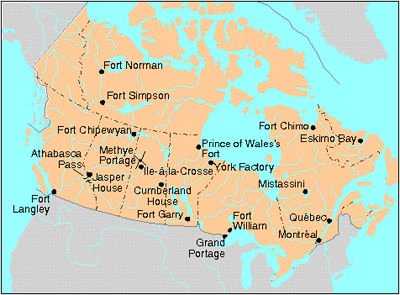
-
Article
Fur Trade in Canada
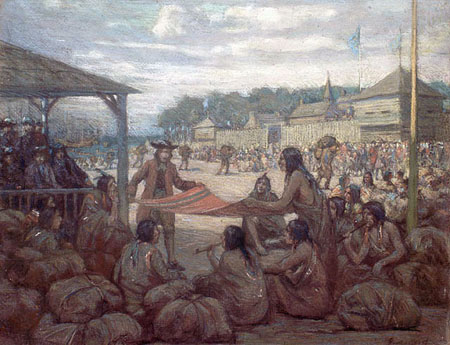
The fur trade was a vast commercial enterprise across the wild, forested expanse of what is now Canada. It was at its peak for nearly 250 years, from the early 17th to the mid-19th centuries. It was sustained primarily by the trapping of beavers to satisfy the European demand for felt hats. The intensely competitive trade opened the continent to exploration and settlement. It financed missionary work, established social, economic and colonial relationships between Europeans and Indigenous people, and played a formative role in the creation and development of Canada.This article is a full-length entry about the fur trade. For a plain-language summary, please see Fur Trade in Canada (Plain-Language Summary).
"https://d3d0lqu00lnqvz.cloudfront.net/media/media/e4ec1e55-01c2-4b77-a220-f05a84fd4c9c.jpg" // resources/views/front/categories/view.blade.php
https://d3d0lqu00lnqvz.cloudfront.net/media/media/e4ec1e55-01c2-4b77-a220-f05a84fd4c9c.jpg