
Browse "Places"
-
Macleans
Security Improved at 24 Sussex
Some things will have changed around the house by the time Prime Minister Jean Chrétien returns home to Ottawa on Nov. 19 from the Commonwealth heads of government meeting in New Zealand and his other travels in Asia.This article was originally published in Maclean's Magazine on November 20, 1995
"https://thecanadianencyclopedia.ca/images/tce_placeholder.jpg?v=e9dca980c9bdb3aa11e832e7ea94f5d9" // resources/views/front/categories/view.blade.php
https://thecanadianencyclopedia.ca/images/tce_placeholder.jpg?v=e9dca980c9bdb3aa11e832e7ea94f5d9
-
Article
Self-Governing First Nations in Yukon
There are 14 First Nations in Yukon. Eleven of these nations are self-governing, while the remaining three are governed under the Indian Act. The 11 self-governing First Nations have legislative and executive powers much like a province or territory. In 1993, they signed the Umbrella Final Agreement (UFA) with the governments of Canada and Yukon. The UFA served as the foundation for individual self-governing agreements made between each First Nation and the territorial and federal governments. These individual agreements were signed between 1993 and 2006. (See also Comprehensive Land Claims.) While the focus of this article is the 11 self-governing First Nations, the remaining three First Nations in Yukon are White River, Liard and Ross River.
"https://d3d0lqu00lnqvz.cloudfront.net/media/new_article_images/YukonFNs/UFAsigning.jpg" // resources/views/front/categories/view.blade.php
https://d3d0lqu00lnqvz.cloudfront.net/media/new_article_images/YukonFNs/UFAsigning.jpg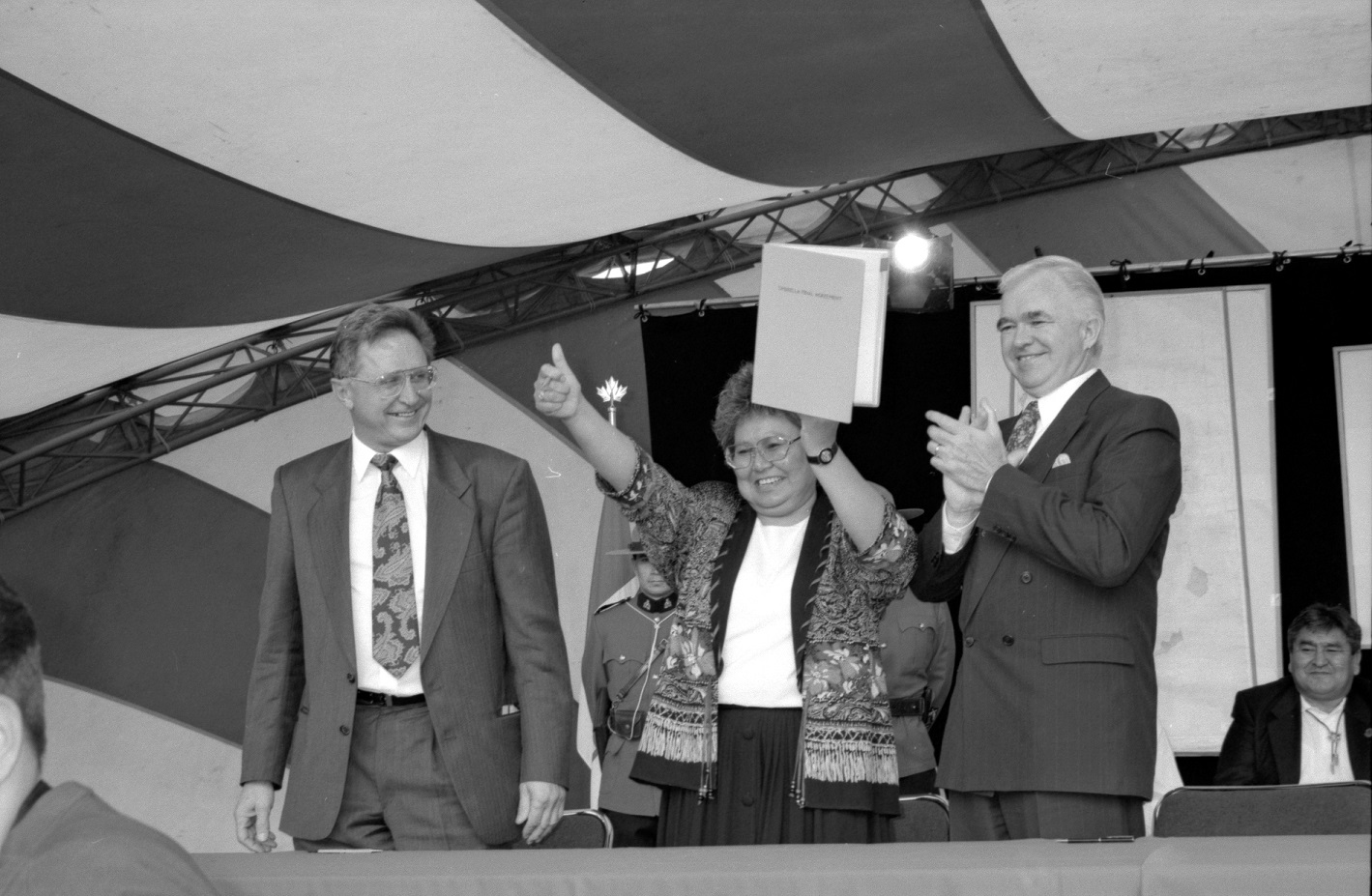
-
Article
Selkirk
Selkirk, Manitoba, incorporated as a town in 1882 and as a city in 1998, population 10,504 (2021 census), 10,278 (2016 census). The City of Selkirk is located on the west bank of the Red River, 29 km north of Winnipeg. The city was named after Thomas Douglas, Fifth Earl of Selkirk.
"https://thecanadianencyclopedia.ca/images/tce_placeholder.jpg?v=e9dca980c9bdb3aa11e832e7ea94f5d9" // resources/views/front/categories/view.blade.php
https://thecanadianencyclopedia.ca/images/tce_placeholder.jpg?v=e9dca980c9bdb3aa11e832e7ea94f5d9
-
Article
Selkirk Mountains
Selkirk Mountains are ranges in southeastern British Columbia between the Columbia River on the West and the valley of Kootenay Lake.
"https://d3d0lqu00lnqvz.cloudfront.net/media/media/ebac2147-4f0e-4324-844b-afdbfd364b52.jpg" // resources/views/front/categories/view.blade.php
https://d3d0lqu00lnqvz.cloudfront.net/media/media/ebac2147-4f0e-4324-844b-afdbfd364b52.jpg
-
Article
Selwyn Mountains
The northern Selwyn Mountains lie to the east of the Yukon-NWT border, and the southern section straddles the border south from the Macmillan Pass to the South Nahanni River.
"https://thecanadianencyclopedia.ca/images/tce_placeholder.jpg?v=e9dca980c9bdb3aa11e832e7ea94f5d9" // resources/views/front/categories/view.blade.php
https://thecanadianencyclopedia.ca/images/tce_placeholder.jpg?v=e9dca980c9bdb3aa11e832e7ea94f5d9
-
Article
Séminaire de Québec
Séminaire de Québec, an educational institution consisting of the Grand Séminaire and the Petit Séminaire. The former, fd 26 Mar 1663 by Mgr François de LAVAL, was to train priests and guarantee parish ministries and evangelization throughout the diocese. In 1665 it was affiliated with the Séminaire des Missions Étrangères de Paris.
"https://d3d0lqu00lnqvz.cloudfront.net/media/media/8b6b148e-044b-4ca9-a70a-2080d5773590.jpg" // resources/views/front/categories/view.blade.php
https://d3d0lqu00lnqvz.cloudfront.net/media/media/8b6b148e-044b-4ca9-a70a-2080d5773590.jpg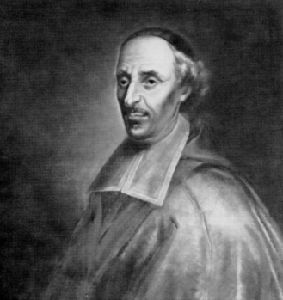
-
Article
Senneterre
Senneterre, Qué, Town, pop 2993 (2006c), 3275 (2001c), inc 1956. Senneterre is located 130 km east of ROUYN-NORANDA along the banks of the Rivière Bell in Québec's Abitibi-Témiscamingue region. It was
"https://thecanadianencyclopedia.ca/images/tce_placeholder.jpg?v=e9dca980c9bdb3aa11e832e7ea94f5d9" // resources/views/front/categories/view.blade.php
https://thecanadianencyclopedia.ca/images/tce_placeholder.jpg?v=e9dca980c9bdb3aa11e832e7ea94f5d9
-
Article
Sept-Îles
The first permanent European settlement dates from 1651: the Ange-Gardien mission founded by Father Jean de Quen. A trading and fishing post set up there in 1676 by Louis Jolliet was ceded in the 19th century to the Hudson's Bay Company.
"https://d3d0lqu00lnqvz.cloudfront.net/media/media/b58f3f0e-84bf-496f-92f5-a676522afa6c.jpg" // resources/views/front/categories/view.blade.php
https://d3d0lqu00lnqvz.cloudfront.net/media/media/b58f3f0e-84bf-496f-92f5-a676522afa6c.jpg
-
Article
Severn River
Severn River, 982 km long, rises in the wooded Shield country of northwestern Ontario and flows northeast through Severn Lake to Hudson Bay.
"https://thecanadianencyclopedia.ca/images/tce_placeholder.jpg?v=e9dca980c9bdb3aa11e832e7ea94f5d9" // resources/views/front/categories/view.blade.php
https://thecanadianencyclopedia.ca/images/tce_placeholder.jpg?v=e9dca980c9bdb3aa11e832e7ea94f5d9
-
Article
Sexsmith
Sexsmith, Alta, incorporated as a village in 1929 and as a town in 1979, population 2418 (2011c), 1969 (2006c). The Town of Sexsmith is 43 km north of GRANDE PRAIRIE on Highway 2. The district was first settled in 1911, with a post office called Sexsmith established in 1912.
"https://d3d0lqu00lnqvz.cloudfront.net/media/media/fb6ef2de-ba1b-4446-8c02-467e561b7fe5.jpg" // resources/views/front/categories/view.blade.php
https://d3d0lqu00lnqvz.cloudfront.net/media/media/fb6ef2de-ba1b-4446-8c02-467e561b7fe5.jpg
-
Article
Shaftesbury Hall
Shaftesbury Hall. The auditorium in Toronto's first YMCA, built at Queen and James streets in 1872 to designs by the architects Smith and Gemmel. The hall was on the ground floor with a direct entrance from the street, a double gallery, and a seating capacity of about 1700.
"https://thecanadianencyclopedia.ca/images/tce_placeholder.jpg?v=e9dca980c9bdb3aa11e832e7ea94f5d9" // resources/views/front/categories/view.blade.php
https://thecanadianencyclopedia.ca/images/tce_placeholder.jpg?v=e9dca980c9bdb3aa11e832e7ea94f5d9
-
Article
Shand House
Shand House in WINDSOR, NS, is an ornate Victorian residence built by Clifford and Henrie Shand in 1890 as a family home. Clifford Shand was a noted bicycle racer and the son of a Windsor furniture manufacturer, and the interior of the house reflects this association with fine woodworking.
"https://thecanadianencyclopedia.ca/images/tce_placeholder.jpg?v=e9dca980c9bdb3aa11e832e7ea94f5d9" // resources/views/front/categories/view.blade.php
https://thecanadianencyclopedia.ca/images/tce_placeholder.jpg?v=e9dca980c9bdb3aa11e832e7ea94f5d9
-
Article
Shaunavon
During the late 19th and early 20th centuries ranching was the primary activity in the area and from 1910 the ranchers were forced to share the land with grain farmers. In 1913 the CPR extended its line into the area and the Shaunavon site developed.
"https://thecanadianencyclopedia.ca/images/tce_placeholder.jpg?v=e9dca980c9bdb3aa11e832e7ea94f5d9" // resources/views/front/categories/view.blade.php
https://thecanadianencyclopedia.ca/images/tce_placeholder.jpg?v=e9dca980c9bdb3aa11e832e7ea94f5d9
-
Article
Shawinigan
After 1825 the government of Lower Canada had the territory of the Mauricie region surveyed. The first concessions were given out in 1831. Shawinigan was first the site of a waterslide (1852) built so that log booms could be sent downstream to Trois-Rivières.
"https://thecanadianencyclopedia.ca/images/tce_placeholder.jpg?v=e9dca980c9bdb3aa11e832e7ea94f5d9" // resources/views/front/categories/view.blade.php
https://thecanadianencyclopedia.ca/images/tce_placeholder.jpg?v=e9dca980c9bdb3aa11e832e7ea94f5d9
-
Article
Shawinigan-Sud
The name Shawinigan, of Algonquin origin, means "portage on the crest." This refers to the crest of rocks that had to be climbed in order to portage around the majestic waterfall.
"https://d3d0lqu00lnqvz.cloudfront.net/media/media/ea5fd025-22d0-40e2-9ee2-572d9a1f30f4.jpg" // resources/views/front/categories/view.blade.php
https://d3d0lqu00lnqvz.cloudfront.net/media/media/ea5fd025-22d0-40e2-9ee2-572d9a1f30f4.jpg