
Browse "Military"
-
Article
War Brides
The term “war brides” refers to women who married Canadian servicemen overseas and then immigrated to Canada after the world wars to join their husbands. The term became popular during the Second World War but is now also used to describe women who had similar experiences in the First World War. There are no official figures for war brides and their children during the First World War. In the Second World War, approximately 48,000 women married Canadian servicemen overseas. By 31 March 1948, the Canadian government had transported about 43,500 war brides and 21,000 children to Canada.
"https://d3d0lqu00lnqvz.cloudfront.net/media/new_article_images/WarBrides/War Bride.jpg" // resources/views/front/categories/view.blade.php
https://d3d0lqu00lnqvz.cloudfront.net/media/new_article_images/WarBrides/War Bride.jpg
-
Editorial
Arrival of the War Brides and their Children in Canada
The following article is an editorial written by The Canadian Encyclopedia staff. Editorials are not usually updated. Between 1942 and 1947, the Canadian government brought 47,783 "war brides” and their 21,950 children to Canada. Most of these women were from Great Britain, where Canadian forces had been based during the Second World War. Although the voyage and transition were difficult for many war brides, most persevered and grew to love their adopted homeland.
"https://d3d0lqu00lnqvz.cloudfront.net/media/media/398e8ba8-53e8-4f87-b127-b5020c4969b1.jpg" // resources/views/front/categories/view.blade.php
https://d3d0lqu00lnqvz.cloudfront.net/media/media/398e8ba8-53e8-4f87-b127-b5020c4969b1.jpg
-
Article
War Veterans
War Veterans Canadian humorist Stephen Leacock wrote of war veterans in 1938: "When the war ends they are welcomed home under arches of flowers with all the girls leaping for their necks, and within six months they are expected to vanish into thin air, keep out of the public house and give no trouble." The comment, made with another war imminent, summed up Canada's rather shabby treatment of veterans of the Great War of 1914-18....
"https://thecanadianencyclopedia.ca/images/tce_placeholder.jpg?v=e9dca980c9bdb3aa11e832e7ea94f5d9" // resources/views/front/categories/view.blade.php
https://thecanadianencyclopedia.ca/images/tce_placeholder.jpg?v=e9dca980c9bdb3aa11e832e7ea94f5d9
-
Article
Wilfred Curtis
Wilfred Austin Curtis, air marshal (b at Havelock, Ont 21 Aug 1893; d at Nassau, Bahamas 7 Aug 1977). As chief of the air staff 1947-53, Curtis presided over unprecedented peacetime growth in the RCAF.
"https://thecanadianencyclopedia.ca/images/tce_placeholder.jpg?v=e9dca980c9bdb3aa11e832e7ea94f5d9" // resources/views/front/categories/view.blade.php
https://thecanadianencyclopedia.ca/images/tce_placeholder.jpg?v=e9dca980c9bdb3aa11e832e7ea94f5d9
-
Article
Wop May
Wilfrid Reid (Wop) May, OBE, DFC, aviator, First World War flying ace (born 20 March 1896, in Carberry, Manitoba; died 21 June 1952 near Provo, UT). Wop May was an aviator who served as a fighter pilot in the First World War. May finished the war as a flying ace, credited with 13 victories, and was part of the dogfight in which the infamous Red Baron was gunned down. After the war, May became a renowned barnstormer (or stunt pilot) and bush pilot, flying small aircraft into remote areas in Northern Canada, often on daring missions. May flew in several historic flights, carrying medicine and aide to northern locations and assisting law enforcement in manhunts, including the hunt for Albert Johnson, the “Mad Trapper of Rat River” in 1932.
"https://d3d0lqu00lnqvz.cloudfront.net/media/new_article_images/WopMay/a059984-v8.jpg" // resources/views/front/categories/view.blade.php
https://d3d0lqu00lnqvz.cloudfront.net/media/new_article_images/WopMay/a059984-v8.jpg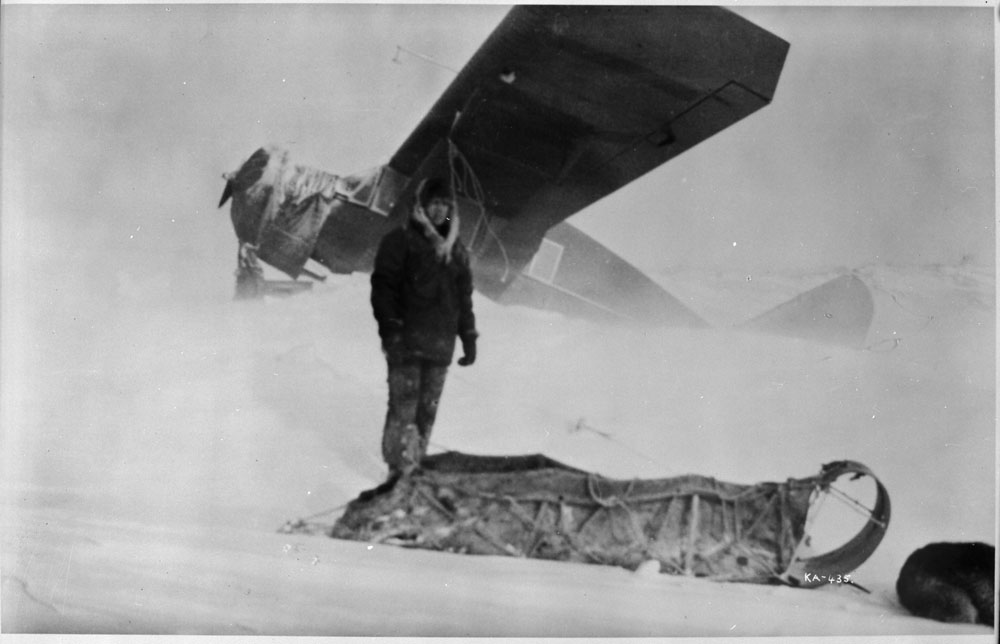
-
Article
Willard Bolduc
Willard John Bolduc, DFC, Indigenous air force officer, war hero (born 28 December 1915 in Chapleau, ON; died 7 June 1968 in Toronto, ON). Bolduc received the Distinguished Flying Cross (DFC) for his role as an air gunner during the Second World War.
"https://d3d0lqu00lnqvz.cloudfront.net/media/media/9fb65c63-3dd7-4071-904b-c2aa7a9d1e99.jpg" // resources/views/front/categories/view.blade.php
https://d3d0lqu00lnqvz.cloudfront.net/media/media/9fb65c63-3dd7-4071-904b-c2aa7a9d1e99.jpg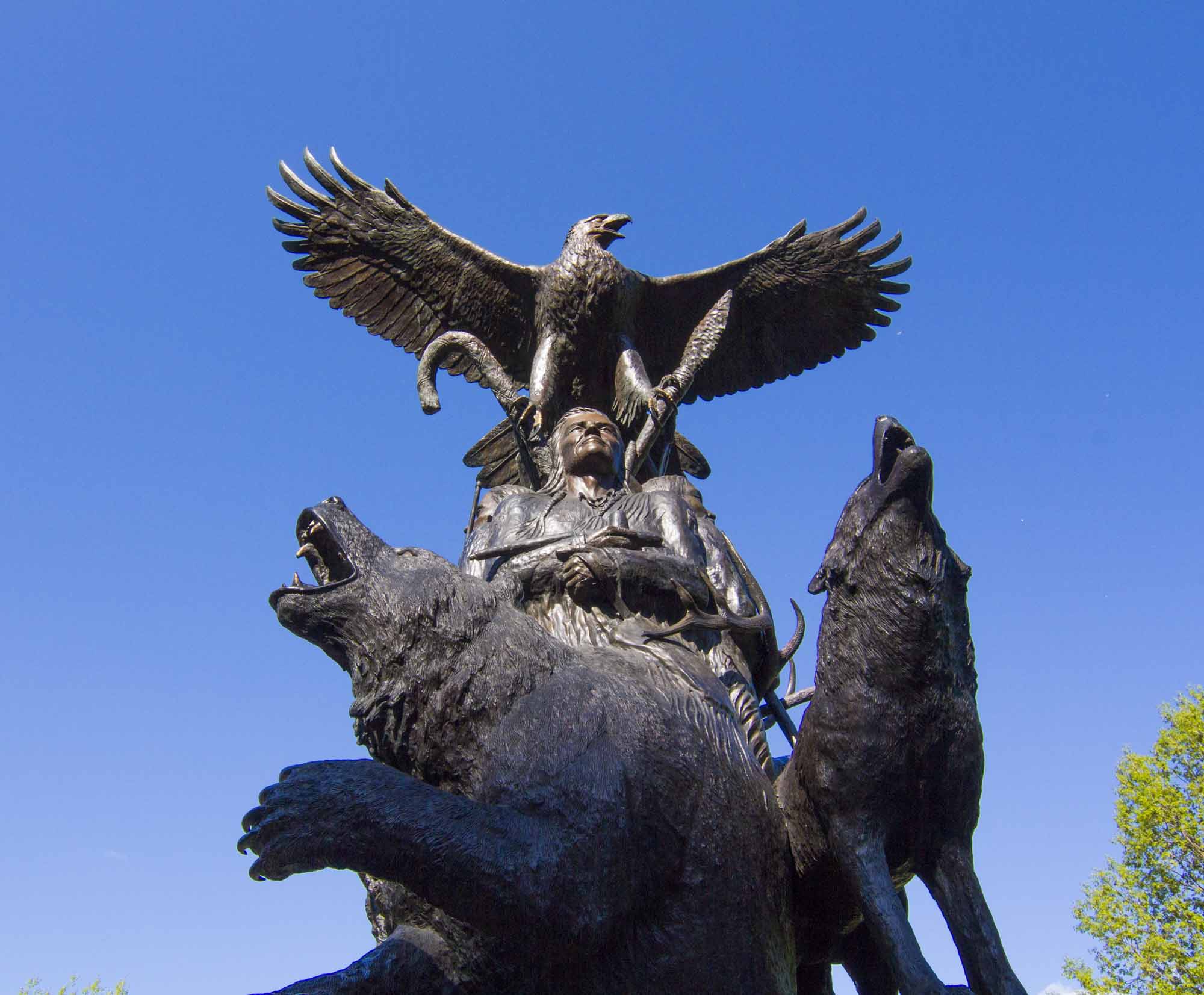
-
Article
William Andrew White
William Andrew White, Baptist minister and army chaplain (born 16 June 1874 in King and Queen Court House, VA; died 9 September 1936 in Halifax, NS). White was a leading member of the African Nova Scotian community. He was chaplain for the No. 2 Construction Battalion, making him one of the few Black officers in the Canadian Expeditionary Force during the First World War.
"https://d3d0lqu00lnqvz.cloudfront.net/media/home-page-images/Captain-William-A-White.jpg" // resources/views/front/categories/view.blade.php
https://d3d0lqu00lnqvz.cloudfront.net/media/home-page-images/Captain-William-A-White.jpg
-
Article
Billy Bishop
William Avery (Billy) Bishop Jr., VC, CB, DSO & Bar, MC, DFC, ED, First World War flying ace, author (born 8 February 1894 in Owen Sound, ON; died 11 September 1956 in Palm Beach, Florida). Billy Bishop was Canada’s top flying ace of the First World War; he was officially credited with 72 victories. During the Second World War, he played an important role in recruiting for the Royal Canadian Air Force and in promoting the British Commonwealth Air Training Plan.
"https://d3d0lqu00lnqvz.cloudfront.net/BillyBishop/BIshop-in-plane.jpg" // resources/views/front/categories/view.blade.php
https://d3d0lqu00lnqvz.cloudfront.net/BillyBishop/BIshop-in-plane.jpg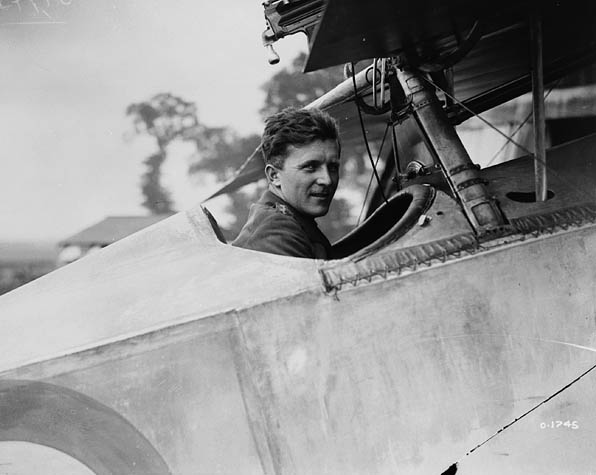
-
Article
William Claus
William Claus, government official, militia officer, military figure in the War of 1812 (b at Williamsburg, near present-day Amsterdam, NY, 8 Sep 1765; d at Niagara, Ont, 11 Nov 1826).
"https://thecanadianencyclopedia.ca/images/tce_placeholder.jpg?v=e9dca980c9bdb3aa11e832e7ea94f5d9" // resources/views/front/categories/view.blade.php
https://thecanadianencyclopedia.ca/images/tce_placeholder.jpg?v=e9dca980c9bdb3aa11e832e7ea94f5d9
-
Article
William Barker, VC
William George (Billy) Barker, VC, fighter pilot, war hero, businessman (born 3 November 1894 in Dauphin, MB; died 12 March 1930 in Ottawa, ON). One of Canada’s foremost First World War flying aces, Barker is, to date, the most highly decorated military serviceman in Canadian history.
"https://d3d0lqu00lnqvz.cloudfront.net/media/media/f864cf51-65b5-4803-85a1-a7908ffdc0aa.jpg" // resources/views/front/categories/view.blade.php
https://d3d0lqu00lnqvz.cloudfront.net/media/media/f864cf51-65b5-4803-85a1-a7908ffdc0aa.jpg
-
Article
William Grant Stairs
William Grant Stairs, explorer, soldier (b at Halifax 28 Feb 1863; d at Chinde, Mozambique 9 June 1892). He was discoverer of one source of the Nile, the Semliki River, and the first non-African to climb Mount Ruwenzori.
"https://thecanadianencyclopedia.ca/images/tce_placeholder.jpg?v=e9dca980c9bdb3aa11e832e7ea94f5d9" // resources/views/front/categories/view.blade.php
https://thecanadianencyclopedia.ca/images/tce_placeholder.jpg?v=e9dca980c9bdb3aa11e832e7ea94f5d9
-
Article
William Hamilton Merritt
William Hamilton Merritt, soldier, businessman, politician (b at Bedford, NY 3 July 1793; d at Cornwall, Canada W 5 July 1862). "A Projector," as he styled himself, he epitomized what John Beverley ROBINSON called the defining characteristic of American society, the "anticipating spirit.
"https://thecanadianencyclopedia.ca/images/tce_placeholder.jpg?v=e9dca980c9bdb3aa11e832e7ea94f5d9" // resources/views/front/categories/view.blade.php
https://thecanadianencyclopedia.ca/images/tce_placeholder.jpg?v=e9dca980c9bdb3aa11e832e7ea94f5d9
-
Article
William Howe Mulcaster
William Howe Mulcaster, Royal Navy officer, military figure in the WAR OF 1812 (b 1785; d at Dover, Kent, England, 2 Mar 1837). William Mulcaster joined the Royal Navy as a midshipman when he was 10 years old and immediately saw action against the French.
"https://thecanadianencyclopedia.ca/images/tce_placeholder.jpg?v=e9dca980c9bdb3aa11e832e7ea94f5d9" // resources/views/front/categories/view.blade.php
https://thecanadianencyclopedia.ca/images/tce_placeholder.jpg?v=e9dca980c9bdb3aa11e832e7ea94f5d9
-
Article
William Moss Landymore
William Moss Landymore, naval officer (born 31 July 1916 in Brantford, ON; died 27 November 2008 in Halifax, NS).
"https://thecanadianencyclopedia.ca/images/tce_placeholder.jpg?v=e9dca980c9bdb3aa11e832e7ea94f5d9" // resources/views/front/categories/view.blade.php
https://thecanadianencyclopedia.ca/images/tce_placeholder.jpg?v=e9dca980c9bdb3aa11e832e7ea94f5d9
-
Editorial
William Neilson Hall: Victoria Cross Recipient
The following article is an editorial written by The Canadian Encyclopedia staff. Editorials are not usually updated.
"https://d3d0lqu00lnqvz.cloudfront.net/media/media/d25ca343-03c5-42cf-aeb2-a290fb9f33d8.jpg" // resources/views/front/categories/view.blade.php
https://d3d0lqu00lnqvz.cloudfront.net/media/media/d25ca343-03c5-42cf-aeb2-a290fb9f33d8.jpg