Share on Facebook
 Share on X
 Share by Email
 Share on Google Classroom
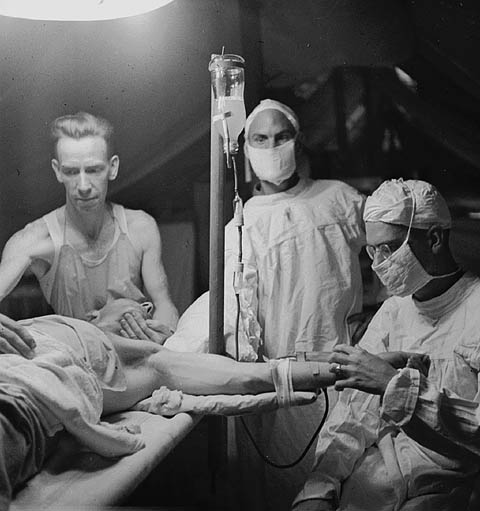
One of the most challenging aspects of military (and emergency) medicine is the stabilization of patients who have suffered traumatic injuries and severe blood loss. Canada has made significant contributions to the development of battlefield transfusions, including the popularization of blood transfusion in the First World War and the development of mobile transfusion units in the Spanish Civil War. Canada was also a leader in the production of freeze-dried blood serum during the Second World War. During the war in Afghanistan, Canadians established a walking blood bank at the Role 3 Multinational Medical Unit at Kandahar Airfield, where survival rates ranged from 95 to 98 percent. These developments reduced mortality rates and improved patient care during wartime and have improved trauma management in civilian contexts as well.
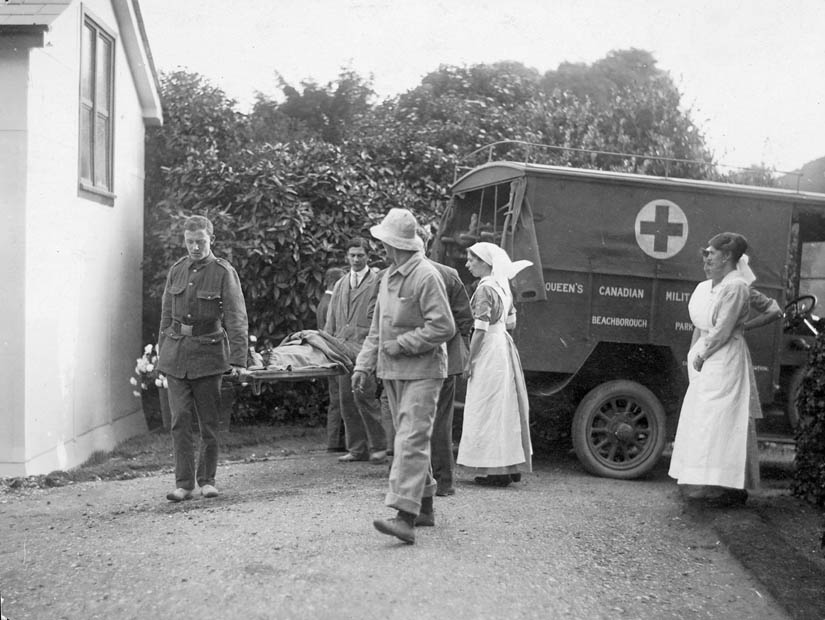
Blood Transfusion: First World War
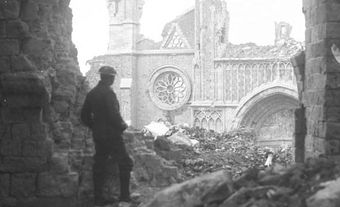
Around the time of the First World War, most British surgeons responded to severe blood loss by injecting saline solution. Saline infusion increased blood volume, but the diluted blood couldn’t restore normal functions, resulting in a rapid decline in the patient’s condition soon after injection. In American civilian practice, surgeons had developed successful blood transfusion techniques. The US didn’t enter the war until April 1917, though, and most Allied military units relied on the British method. This changed, however, thanks to the work of Canadian doctors, particularly L. Bruce Robertson.
Did you know?
Blood types A, B and C (later changed to O), were discovered in 1900, while type AB was discovered in 1902. The first transfusion using blood typing and crossmatching occurred in 1907.
Robertson graduated from the faculty of medicine at the University of Toronto in 1909, and later trained in New York and Boston, where he became familiar with blood transfusion techniques. He performed transfusions as a staff member of the Hospital for Sick Children in Toronto, which he joined in 1913, and published papers in Canadian and American medical journals. When war broke out in 1914, he immediately volunteered for service, as did many doctors and medical students in Canada.
Soon after arriving overseas in 1915, Robertson was seconded to a British medical unit in France. He immediately began performing transfusions, taking blood from soldiers with less serious injuries and transfusing it into patients with traumatic injuries. He also published papers about the technique in British medical journals during the war. British surgeons were impressed by the positive outcomes from blood transfusions, and by the end of the war the practice had replaced saline infusion. In 1919, the Surgeon General of the Royal Army Medical Corps referred to this change as “the main advance in treatment” during the war. “For the popularization of this method,” he wrote, “we are mainly indebted to our Canadian colleagues in France.”
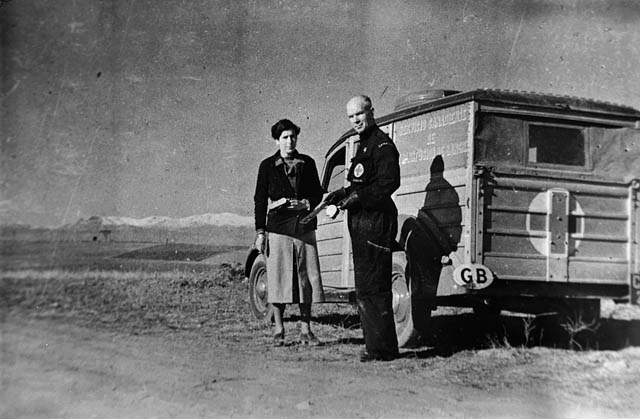
Mobile Blood Transfusion Unit: Spanish Civil War
Another Canadian innovation was the development of a front-line mobile blood transfusion unit by Dr. Norman Bethune during the Spanish Civil War. Bethune, like Robertson, had served during the First World War. As many other Canadian medical students did, he enlisted in the medical corps upon outbreak of the war and served as a stretcher-bearer. Bethune was injured at the Second Battle of Ypres in April 1915 and returned to Canada, where he completed his medical degree in 1916. He returned to military duty, serving in the Royal Navy’s seaplane carrier HMS Pegasus. After the war, he trained in the United Kingdom and then set up a private practice in the United States, where he contracted tuberculosis. In 1928, he became a thoracic surgeon at the Royal Victoria Hospital at McGill University in Montreal. Bethune became disillusioned by social disparities in the 1930s and joined the Communist Party in 1935.
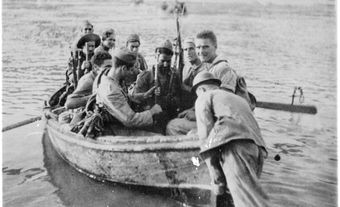
Bethune was one of approximately 1,700 Canadians who volunteered for the Republican cause during the Spanish Civil War. He arrived in Spain in November 1936 and in December created the Servicio Canadianse de Transfusion de Sangre (Canadian Blood Transfusion Service). Bethune established a centre for blood donors in Madrid and used a specialized vehicle with a kerosene-powered refrigerator, sterilizer and incubator to deliver blood products to the frontlines. Within five months, the unit was performing up to 100 transfusions per day across a front that stretched 1,000 km. The unit eventually grew to a fleet of five vehicles and 100 staff; by the end of the war, it had transfused around 5,000 units of blood.
Bethune’s unit was not the first mobile transfusion unit in Spain, as Dr. Frederic Duran i Jordà was running a mobile clinic two months before Bethune arrived. However, Bethune conceived the idea independently and the Canadian unit covered more territory. The efforts of the Canadian Blood Transfusion Service are estimated to have reduced mortality rates by 30 percent.
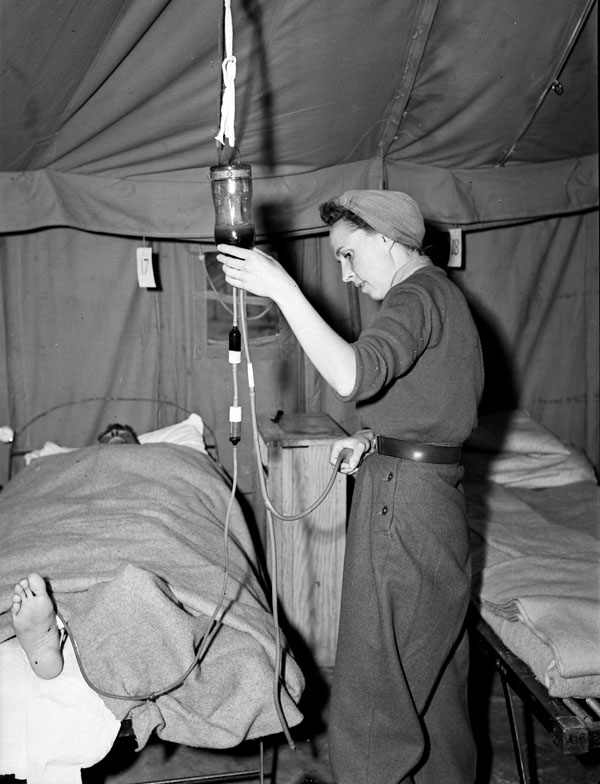
Freeze-Dried Blood Products: Second World War
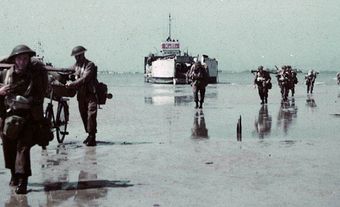
During the Second World War, field transfusion units often accompanied mobile surgical units. There were limitations, however, including the fact that blood could only be stored for about a week in a refrigerator. The sheer demand for blood during the war was also unsustainable. The development of freeze-dried blood products (plasma and serum) was therefore an important development in military medicine, as they could be used to increase blood volume and effectively treat shock.
When the war broke out, Dr. Charles Best, the co-discover of insulin, was working on a concentrated form of serum. His research was influenced by the work of American Dr. Charles R. Drew, who developed a technique for isolating and drying blood plasma. Serum is a component of blood plasma; the main difference between the two is that serum is allowed to clot before centrifuging, so contains few clotting proteins. An advantage of serum over plasma was the reduced risk of spontaneous clotting during prolonged storage. The focus was on volume expansion, and scientists may not have fully understood the importance of clotting factors when treating severe blood loss.
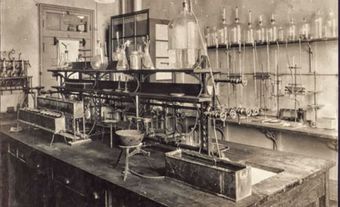
Best isolated the serum by allowing the blood to clot and then using suction and centrifugation. The serum was then filtered and tested before being transferred to bottles and frozen in a mixture of dry ice and alcohol. The resulting freeze-dried serum could be rehydrated with sterile distilled water as needed. This had obvious advantages for wartime, as freeze-dried serum is light and lasts a long time. Dried serum could also be stockpiled and quickly rehydrated, allowing medical personnel to stabilize patients who had suffered heavy blood loss.
Demand was high for freeze-dried serum and the federal government invested heavily in its production. Canadians made 2.5 million blood donations through the Red Cross Society of Canada, which were then sent to Connaught Laboratories in Toronto for processing. The plant ran 24 hours a day, seven days a week and produced 400,000 bottles of dried serum for Canadian and Allied forces during the war. Université de Montréal produced another 30,000 bottles.
By the end of the war, though, there was growing concern about the contamination of serum (and plasma) with blood-borne diseases. After an outbreak of hepatitis during the Korean War, freeze-dried serum and plasma programs were halted in North America. Recent advances in testing, pathogen reduction, and freeze-drying technology, however, have revived interest in freeze-dried blood products. Canadian Blood Services and the Canadian Armed Forces are therefore developing freeze-dried plasma for use in military and civilian contexts.
Walking Blood Bank: Afghanistan
The 21st century has seen a renewed focus on whole blood transfusions. This includes the use of “walking blood banks,” which ensure there is a pool of pre-screened donors available in an emergency. This approach was an important part of the medical response to conditions during the war in Afghanistan.
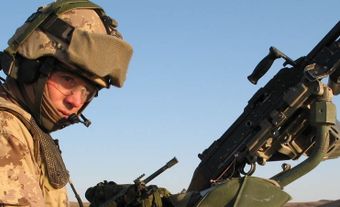
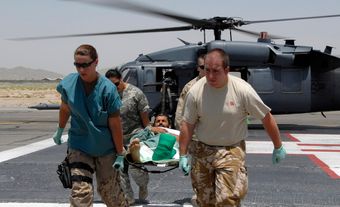
In 2006, Canada became responsible for the Role 3 Multinational Medical Unit at Kandahar Airfield. Thousands of Canadian and coalition troops were deployed in Kandahar between 2006 and 2011. Medical personnel treated many patients with complex trauma and significant blood loss, as the most common injuries were from IEDs, gunshot and artillery. Scientists now believe that in such cases, whole blood offers the best chance of survival, as it provides blood components in the correct proportions.
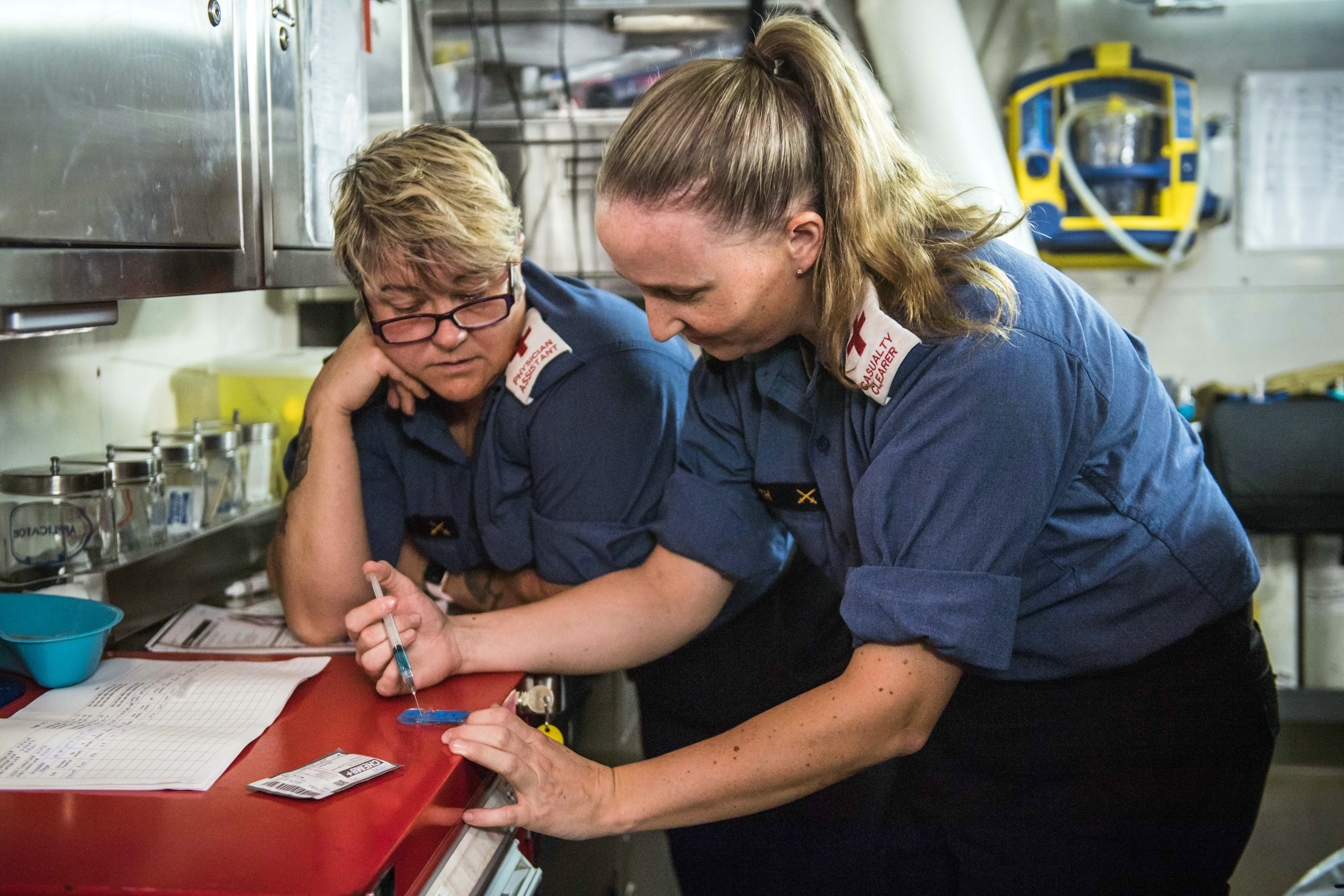
To address this need, the Canadian Armed Forces developed the Walking Donor program in collaboration with Canadian Blood Services. Through the program, soldiers were voluntarily screened by Canadian Blood Services before they were deployed to Afghanistan. Like regular blood donors, they were tested for blood type and transmissible diseases. Medical personnel in Kandahar could access this information and select suitable donors from troops at the base when necessary. The walking blood bank is considered an important contributing factor to the low mortality rates of coalition forces in Kandahar. Walking blood banks have been deployed in other military forces and theatres and are part of emergency planning for mass casualty events in civilian contexts.