Share on Facebook
 Share on X
 Share by Email
 Share on Google Classroom
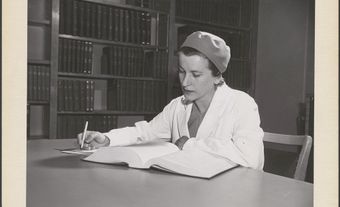
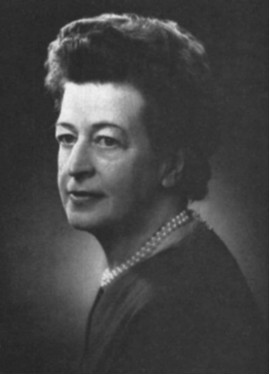
Eleanor Marguerite (née Hill) Venning, FRSC, chemist, research endocrinologist (born 16 March 1900 in Montreal, QC; died 21 June 1988 in Cornwall, ON). Eleanor Hill Venning's groundbreaking work transformed our understanding of how hormone levels affect health and disease. Before her discoveries, measuring steroid hormones in blood was challenging because they disappeared so rapidly from the circulation. In 1936, Venning and John Browne reported that steroid hormones were metabolized and accumulated in the urine as stable compounds. In 1937, Venning developed her gravimetric method to isolate the key product of progesterone metabolism – sodium pregnanediol glucuronide (now abbreviated as PdG), showing for the first time that steroid hormone byproducts could be measured in urine. Her talent of developing assays to precisely measure stable hormone metabolites that could be assayed in urine was a key breakthrough for clinical assessments. With colleagues, she also helped develop a more highly sensitive photoelectric colorimetric assay to study estrin (now known as estrogen) metabolism during pregnancy. Having the tools to study the key hormones of the estrous cycle became the foundation to define the health status of pregnancy. By coupling chemical expertise to clinical outcomes, Venning’s research contributions bridged the gap between clinical chemistry and maternal/fetal and menstrual cycle health.
Key Terms
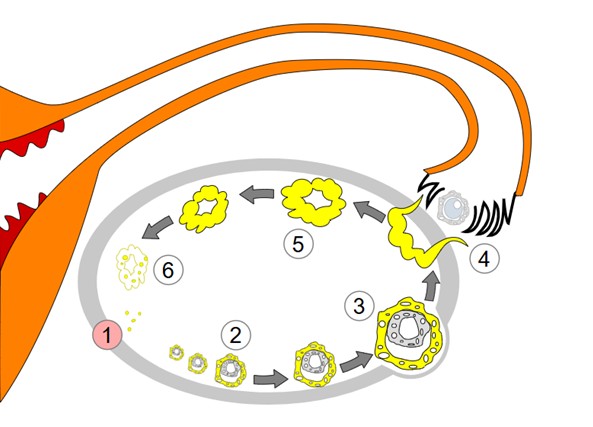
Pregnanediol — The breakdown product of progesterone. Measurement of the levels of pregnanediol indicates the stage of the menstrual cycle and the health of a pregnancy. During the luteal phase, the follicle transforms into the corpus luteum which produces the hormone progesterone.
Estrin — Estrin is the historical name for the class of hormones known as estrogen. Its brand name, Emmenin, isolated at first from human placenta and from human urine, was initially proposed by James Bertram Collip at McGill University and later commercialized by Ayerst, McKenna, and Harrison Ltd. for human estrin. Estrin isolated and purified from pregnant mare urine using the Method of Venning, Evelyn, Harkness, and Browne (1937), was also commercialized by Ayerst, McKenna, and Harrison Ltd and branded as Premarin.
Steroid Hormones — Steroid hormones are derived from cholesterol and are made in endocrine glands. These include progesterone/testosterone, the adrenal hormones cortisol (for stress) and aldosterone (for blood pressure and electrolyte maintenance).
Endocrine — Glands Endocrine glands are glands that secrete various hormones necessary for sustaining life. Steroid hormones are produced by the ovaries/testes, which secrete progesterone/testosterone, and by the adrenal glands, which secrete cortisol and aldosterone. Protein hormones include GLP1 which is secreted by endocrine cells of the intestine, and insulin which is secreted by the endocrine cells of the pancreas. The thyroid gland secretes the iodine-containing amino acid-derived hormones triiodothyronine (T3) and thyroxine (T4). The pituitary gland secretes growth hormone, prolactin, and other protein hormones including adrenocorticotropic hormone (ACTH) that regulates the production of cortisol from the adrenal cortex.
Family and Personal Life
Eleanor Marguerite Hill was the second of three children born to George William Hill and Elsie Annette Kent. Following his years of training abroad, the couple established themselves in the St. Louis Ward (now the Plateau-Mont-Royal) of Montreal, where he began his notable career as a sculptor. Hill’s Montreal sculptures include the Monument à Sir George-Étienne Cartier (1919), the Monument aux héros de la guerre des Boers (1907) and Le lion de Belfort (1897) monument.
During her studies in 1929, Eleanor Marguerite Hill married Edward Albert Venning in Montreal. Having immigrated from England in 1911, Edward Albert Venning served with the Canadian Expeditionary Force for a few months in 1917, until he was discharged for health reasons (see First World War). He became a Sun Life Assurance Company broker, with his office building facing monuments created by his father-in-law in Dominion Square (now Dorchester Square).
Education and Early Career
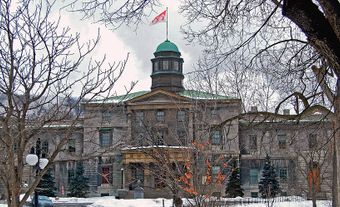
After graduating from Strathcona Academy in 1916, Eleanor Hill Venning successfully matriculated to gain admission to McGill University. She received her BA degree with honours in chemistry in 1920. That same year, Eleanor Hill Venning was one of six women to win the National Research Council Bursary for Scientific and Industrial Research, which supported her during her MSc in chemistry (1920-21).
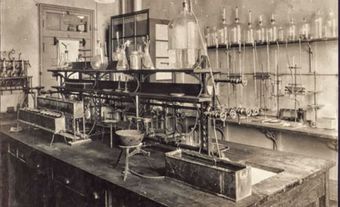
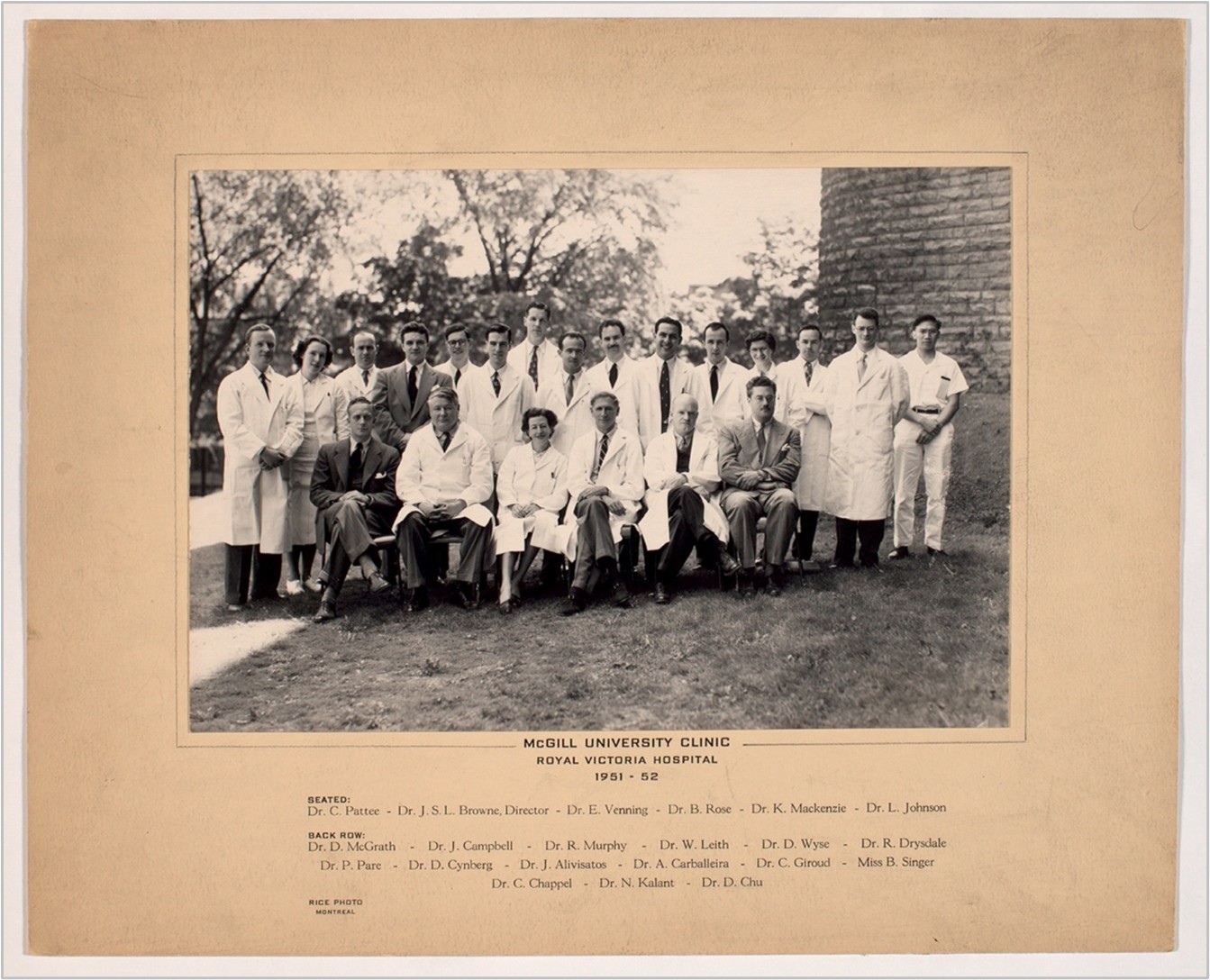
Between 1925 and 1933, Venning worked as a research assistant at the University Clinic of the Royal Victoria Hospital while pursuing her PhD in Experimental Medicine. Initially working in Dr. Edward Mason's metabolism lab in the Royal Victoria Hospital's older Ward S, she later transferred to the new endocrinology Labs to work with Cyril Norman Hugh Long as his first graduate student. When Hugh Long relocated to the University of Pennsylvania, Venning continued with and later obtained her PhD under the supervision of John Browne. Eleanor Hill Venning (1933) and Elizabeth Rhoda Grant (1932) were the first medical scientists to be awarded PhDs in Experimental Medicine from the Faculty of Graduate Studies at McGill University.
Career Highlights
Eleanor Hill Venning established her research career at the University Clinic of the Royal Victoria Hospital. The clinic's establishment in 1925 was assured through Sir William Osler's recommendation to the Rockefeller Foundation for funding and the recruitment of the renowned physician Dr. Jonathan Meakins by the then Dean, Dr. Charles F. Martin. Martin had also extended the invitation to James Bertram Collip to become chair of biochemistry in 1928. Collip succeeded Archibald B. Macallum, who was leaving his post as chair of biochemistry for retirement. Between 1928 and 1947, the Endocrine Group of the University Clinic was first led by Collip, the co-discoverer of insulin. When Collip stepped down as chair of biochemistry in 1941, he became chair of the newly established Institute of Endocrinology at McGill University, which integrated the Endocrine Group of the University Clinic. The Institute had its labs in the Strathcona Medical Building and across the street in the Royal Victoria Hospital where Venning and Browne were housed. In 1947, the University Clinic became academically part of McGill University’s Division of Experimental Medicine of the Faculty of Medicine with John Browne as the director and Venning heading the endocrinology laboratory. The University Clinic was at the forefront of full-time clinical investigation by academic research scientists.
By 1944, Venning was promoted from research fellow to assistant professor. In 1960, she was promoted to full professor in the Division of Experimental Medicine of the Faculty of Medicine. With this promotion, she became one of only two women at that time to become full professors in the Faculty of Medicine (joining Dr. Rae Chittick). On retirement in 1968, as a final recognition of her exceptional career, Venning was bestowed with the title of Professor Emerita — the first woman PhD medical researcher in the history of the Faculty of Medicine to receive this honour.
Key Discoveries
Throughout her scientific career, Eleanor Hill Venning was interested in metabolic pathways in health and disease. She developed an early interest in fat metabolism during her MSc studies. Later, her interest extended to the cholesterol-based steroid hormones and their metabolism, specifically through the analysis of urinary extracts in a variety of health and disease contexts, including pregnancy.
In 1937, Venning made an early breakthrough by isolating the breakdown product of progesterone – namely, sodium pregnandiol glucuronide (PdG) from urine. She developed a gravimetric method, known as the “Method of Venning,” that measured the purified metabolite by weight. Venning and Browne then used the assay to demonstrate that increasing amounts of PdG in urine coincided with the formation of the corpus luteum after ovulation. The corpus secretes an increasing amount of progesterone after an egg is discharged (ovulation) from the ovary, thereby indicating a functioning structure. This endocrine structure, formed from follicle remnants after ovulation, prepares the uterus for pregnancy. By isolating and measuring PdG in urine, Venning had developed a diagnostic tool for ovulation and pregnancy health.
Also in 1937, Venning, Evelyn, Harkness, and Browne used the Kober chemical reaction to measure the concentration of estrin metabolites in urine using a photoelectric colorimeter. Extending the work to extracts of pregnant mare urine eventually led to a U.S. Patent for the Company Ayerst, McKenna and Harrison in 1944.
In 1946, Venning, Kazmin and Bell developed an adrenal corticoid hormone assay to monitor corticoid hormone extracts in urine. The injection of the purified urine extract into mice quantitatively increased liver glycogen stores, enabling them to evaluate adrenal corticoid hormone activity. Also in 1946, Venning showed that adrenal corticoids increased during pregnancy in humans. In 1947, Venning and Browne confirmed that glycogenic corticoid levels were markedly increased in various clinical endocrine disorders. In 1949, Venning and colleagues expanded these studies to include glucocorticoid levels during neonatal development and physiological stress. In his autobiography, the late Roger Guillemin, who won the 1977 Nobel Prize in Physiology or Medicine, credits Venning and Browne with providing clinical evidence that the endocrine system responds to stress through a hypothalamus-pituitary-adrenal cortex pathway. This was key to later discoveries of the hypothalamus of the brain as the integrator of the stress response, thereby confirming the initial proposal by Hans Selye that the brain controlled the endocrine system, when he was at McGill University.
Venning's final research interest focused on how aldosterone levels change under physiological conditions, such as disease and pregnancy. By developing a more sensitive method than previously used to measure aldosterone in urine, Singer and Venning showed that cortisone reduced aldosterone levels, improving patients with kidney and heart disease. Using this assay, Venning and Dyrenfurth found that aldosterone levels increased significantly during pregnancy, then declined sharply after birth. They showed that during pregnancy, aldosterone is counterbalanced by progesterone's protective effects. In preeclampsia, they found that a chemical imbalance of aldosterone/progesterone exists, causing high blood pressure in pregnancy.
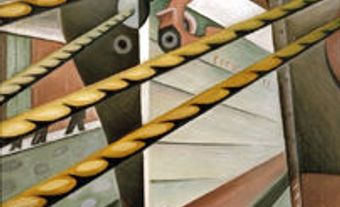
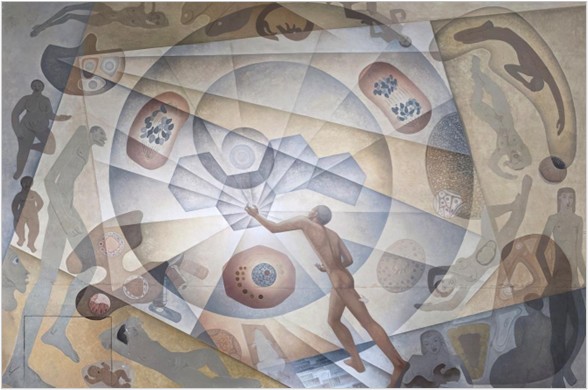
The mural entitled Endocrinology, painted by Marian Dale Scott in 1943 was commissioned by Venning's contemporary research scientist and collaborator, Hans Selye. The steroid hormone backbone structure in the centre dominates the mural. Several steroid-producing endocrine glands are depicted, including the ovary and the adrenal glands studied by Venning.
Collectively, Venning's work highlighted her talent as a chemist and research endocrinologist, transforming our understanding of the impact of steroidal hormones on health and disease.
Legacy and Later Life
Today, Eleanor Hill Venning's scientific legacy is reflected in the remarkable clinical and pharmaceutical success story that continues to impact women globally almost a century later. Her PdG discovery is still used today as the basis for testing ovarian progesterone surges during the menstrual cycle, thereby predicting ovulation and a woman's fertility status. Currently, test strips use antibodies to assess the progesterone metabolite in urine. The global market of fertility test strips is over $2 billion annually. The success of PdG in indicating pregnancy has been superseded today by urine strips that use antibodies to another pregnancy hormone, human chorionic gonadotrophin (hCG).
During her life, Venning broke multiple academic gender barriers by becoming one of the first graduate students to obtain a PhD in Experimental Medicine, to be promoted to full professor in the Faculty of Medicine, and to be named Director of the Endocrinology Laboratory of the University Clinic. A 1953 article in The Montreal Gazette reported that "Dr. Venning feels that being a woman was not an obstacle to pursue scientific research”. With the supportive environment of Hugh Long and, later, John Browne, she successfully achieved her academic and research goals through unwavering tenacity during a period when women's rights were difficult to attain.
Venning passed away in Cornwall, Ontario, in 1988 and is buried at the family plot in Mount Royal Cemetery in Montreal, Quebec.
Honours and Awards
- Governor, Children's Memorial Hospital (Montreal) (1948)
- Inaugural Annual Award of the Society of Obstetricians and Gynecologists of Canada (1951)
- Fellow, The New York Academy of Sciences (1953)
- Vice-President, Canadian Council of Physiologists (1953)
- Vice-President, Canadian Physiological Society (1953)
- President, Canadian Physiological Society (1954)
- Fellow, Royal Society of Canada (1955)
- Vice-President, The Endocrine Society (1957)
- Fred Conrad Koch Lifetime Achievement Award, Endocrine Society (1962)
- Canadian Centennial Medal (1967)