
Browse "Things"
-
Article
Tyrant Flycatchers in Canada
Tyrant flycatchers (family Tyrannidae) are a large, diverse bird family present in the Americas. The name flycatcher also refers to some members of the family Muscicapidae and a few other birds.
"https://d3d0lqu00lnqvz.cloudfront.net/tyrantflycatcher/eastern-phoebe.jpg" // resources/views/front/categories/view.blade.php
https://d3d0lqu00lnqvz.cloudfront.net/tyrantflycatcher/eastern-phoebe.jpg
-
Article
U-boat Operations in Canadian Waters
U-boat operations threatened Canada's sovereignty in the First and Second World Wars. German submarines (Unterseeboote) operated in Canadian (and American) waters during both world wars, targeting merchant vessels sailing alone or in convoy. Dozens of merchant ships were lost due to enemy action, as well as several Canadian warships, and hundreds lost their lives.
"https://d3d0lqu00lnqvz.cloudfront.net/U-Boats/survivors-HMCS-Esquimalt.jpg" // resources/views/front/categories/view.blade.php
https://d3d0lqu00lnqvz.cloudfront.net/U-Boats/survivors-HMCS-Esquimalt.jpg
-
Article
UFOs in Canada
For 45 years, the Canadian government investigated unidentified flying objects (UFOs). Several of its departments and agencies collected sighting reports of UFOs in Canadian airspace from 1950 to 1995. These investigations started during the Cold War, spurred by fears of Soviet incursions. What began as a military question eventually became a scientific one. From the start, however, the government was reluctant to study this topic. It devoted few resources to it, believing UFOs to be natural phenomena or the products of “delusional” minds. By contrast, many Canadian citizens were eager for information about UFOs. Citizens started their own investigations and petitioned the government for action. In 1995, due to budget cuts, the government stopped collecting reports altogether. For their part, citizen enthusiasts have continued to investigate UFOs.
"https://d3d0lqu00lnqvz.cloudfront.net/media/single_use_images/Michalak_sketch.jpg" // resources/views/front/categories/view.blade.php
https://d3d0lqu00lnqvz.cloudfront.net/media/single_use_images/Michalak_sketch.jpg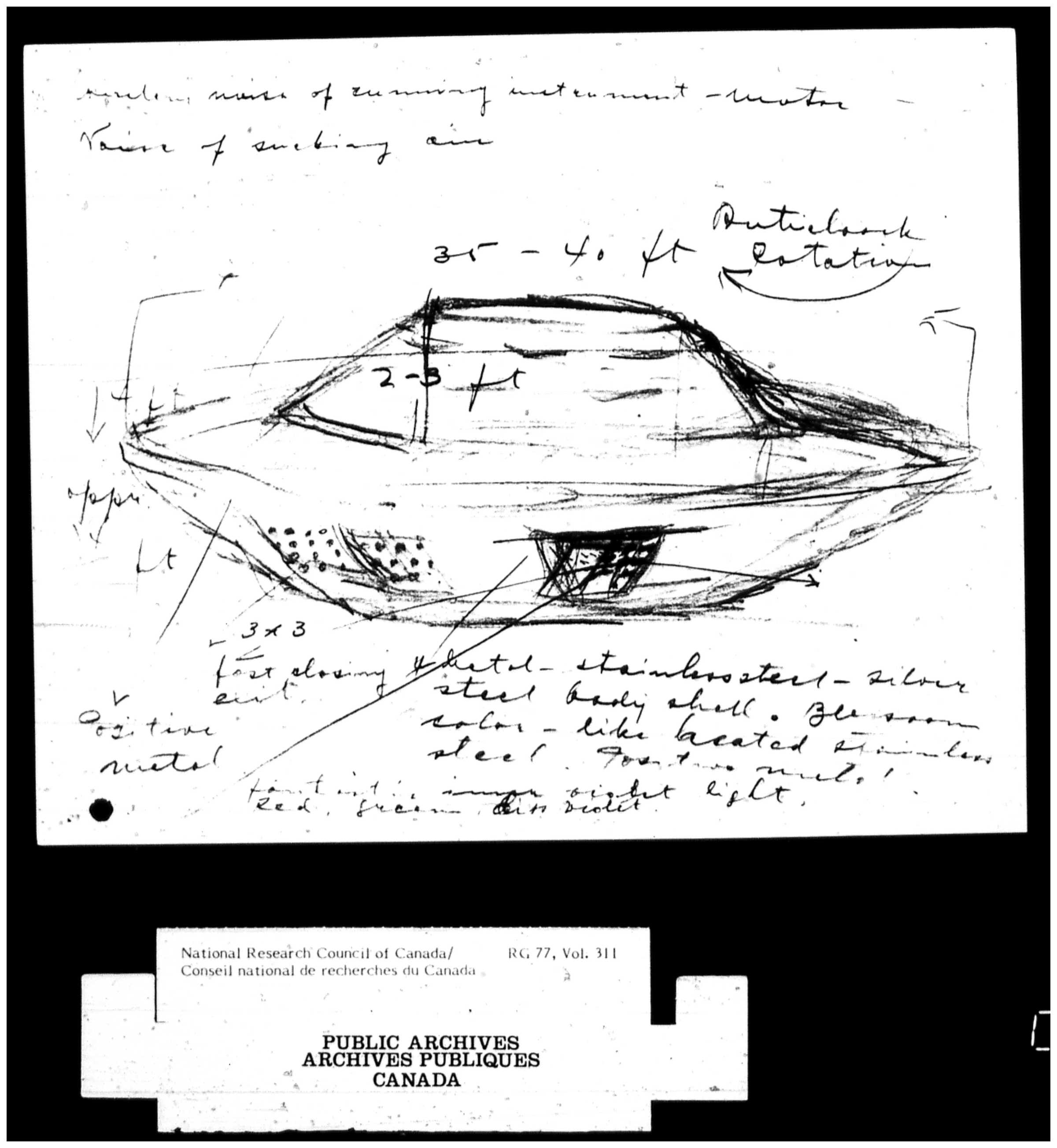
-
Article
Ukrainian Music in Canada
Towards the end of the 19th century large numbers of Ukrainians began to arrive in Canada; the majority settled in the Prairie provinces. By the late 1980s there were over 950,000 Ukrainian Canadians, the largest concentrations in Edmonton, Winnipeg, Toronto, and Montreal.
"https://thecanadianencyclopedia.ca/images/tce_placeholder.jpg?v=e9dca980c9bdb3aa11e832e7ea94f5d9" // resources/views/front/categories/view.blade.php
https://thecanadianencyclopedia.ca/images/tce_placeholder.jpg?v=e9dca980c9bdb3aa11e832e7ea94f5d9
-
Article
Ukrainian and Greek Orthodox church music
Ukrainian and Greek Orthodox church music. Ukrainian religious music was brought to Canada from Ukraine in the early 1890s with the first wave of immigration (the first Ukrainian Orthodox Church was erected in Gardenton, Man in 1899).
"https://thecanadianencyclopedia.ca/images/tce_placeholder.jpg?v=e9dca980c9bdb3aa11e832e7ea94f5d9" // resources/views/front/categories/view.blade.php
https://thecanadianencyclopedia.ca/images/tce_placeholder.jpg?v=e9dca980c9bdb3aa11e832e7ea94f5d9
-
Article
Ukrainian Cultural Heritage Village
The Ukrainian Cultural Heritage Village is a living history site, located 50 km east of Edmonton, Alberta, on the Yellowhead Highway near Elk Island National Park.
"https://d3d0lqu00lnqvz.cloudfront.net/media/media/29337e77-348f-4f57-ba2e-99208b0a8144.jpg" // resources/views/front/categories/view.blade.php
https://d3d0lqu00lnqvz.cloudfront.net/media/media/29337e77-348f-4f57-ba2e-99208b0a8144.jpg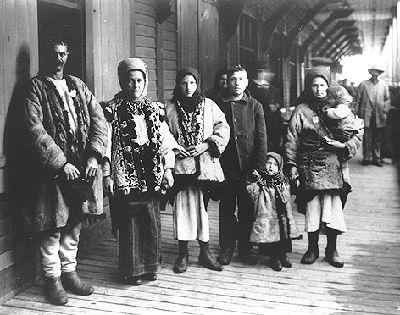
-
Article
Ukrainian Internment in Canada
Canada’s first national internment operations took place during the First World War, between 1914 and 1920. More than 8,500 men, along with some women and children, were interned by the Canadian government, which acted under the authority of the War Measures Act. Most internees were recent immigrants from the Austro-Hungarian, German and Ottoman empires, and mainly from the western Ukrainian regions of Galicia and Bukovyna. Some were Canadian-born or naturalized British subjects. They were held in 24 receiving stations and internment camps across the country — from Nanaimo, BC, to Halifax, Nova Scotia. Many were used as labour in the country’s frontier wilderness. Personal wealth and property were confiscated and much of it was never returned.
"https://d3d0lqu00lnqvz.cloudfront.net/media/media/6cfa6f0b-08c0-4ec8-a739-cb994b5c312d.jpg" // resources/views/front/categories/view.blade.php
https://d3d0lqu00lnqvz.cloudfront.net/media/media/6cfa6f0b-08c0-4ec8-a739-cb994b5c312d.jpg
-
Article
Ukrainian Shumka Dancers
The Ukrainian Shumka Dancers of Edmonton are perhaps the most well known of Canada's 230 Ukrainian dance groups and schools.
"https://d3d0lqu00lnqvz.cloudfront.net/media/media/2b1030e7-9160-4e72-8640-1dab30c76c36.jpg" // resources/views/front/categories/view.blade.php
https://d3d0lqu00lnqvz.cloudfront.net/media/media/2b1030e7-9160-4e72-8640-1dab30c76c36.jpg
-
Article
Ukrainian Writing
Ukrainian Writing in Canada began in the 1890s with the first major wave of UKRAINIANS. The first story was written in 1897 by Nestor Dmytriw while he was visiting Calgary, and the first poem in 1898 by Ivan Zbura near Edmonton.
"https://thecanadianencyclopedia.ca/images/tce_placeholder.jpg?v=e9dca980c9bdb3aa11e832e7ea94f5d9" // resources/views/front/categories/view.blade.php
https://thecanadianencyclopedia.ca/images/tce_placeholder.jpg?v=e9dca980c9bdb3aa11e832e7ea94f5d9
-
Editorial
Ukrainian Settlement in the Canadian Prairies
The following article is an editorial written by The Canadian Encyclopedia staff. Editorials are not usually updated.
"https://d3d0lqu00lnqvz.cloudfront.net/media/media/29337e77-348f-4f57-ba2e-99208b0a8144.jpg" // resources/views/front/categories/view.blade.php
https://d3d0lqu00lnqvz.cloudfront.net/media/media/29337e77-348f-4f57-ba2e-99208b0a8144.jpg
-
Article
Ultra Vires-Intra Vires
Ultra Vires-Intra Vires Ultra vires [Lat, "beyond the powers"] is used in CONSTITUTIONAL LAW by the courts who must decide the respective competences of Parliament and provincial legislatures.
"https://thecanadianencyclopedia.ca/images/tce_placeholder.jpg?v=e9dca980c9bdb3aa11e832e7ea94f5d9" // resources/views/front/categories/view.blade.php
https://thecanadianencyclopedia.ca/images/tce_placeholder.jpg?v=e9dca980c9bdb3aa11e832e7ea94f5d9
-
Article
Ultramontanism
Ultramontanism was a school of thought of the Catholic Church which promoted supreme papal authority in matters of spirituality and governance. Ultramontanism rejected modern ideals in favour of the supremacy of Catholicism and the Catholic Church in public life. This school of thought was particularly influent in the French-Canadian society during the 19th century and the beginning of the 20th century.
"https://d3d0lqu00lnqvz.cloudfront.net/media/media/69946f3c-6a50-4516-a665-8c412faf420d.jpg" // resources/views/front/categories/view.blade.php
https://d3d0lqu00lnqvz.cloudfront.net/media/media/69946f3c-6a50-4516-a665-8c412faf420d.jpg
-
Article
Umiak
Until recent times, the umiak — which means “open skin boat” in Inuktitut — was the primary method of summer transport for coastal Inuit , used for moving family and possessions to seasonal hunting areas and for whaling expeditions.
"https://thecanadianencyclopedia.ca/images/tce_placeholder.jpg?v=e9dca980c9bdb3aa11e832e7ea94f5d9" // resources/views/front/categories/view.blade.php
https://thecanadianencyclopedia.ca/images/tce_placeholder.jpg?v=e9dca980c9bdb3aa11e832e7ea94f5d9
-
Macleans
UN Chief Averts War with Iraq
For a diplomat, words are everything, and the world's top diplomat had reason to regret some of his last week. Kofi Annan, the United Nations' secretary general, was flying back from Baghdad after negotiating the arms-inspection deal that averted a new American attack on Iraq.This article was originally published in Maclean's Magazine on March 9, 1998
"https://thecanadianencyclopedia.ca/images/tce_placeholder.jpg?v=e9dca980c9bdb3aa11e832e7ea94f5d9" // resources/views/front/categories/view.blade.php
https://thecanadianencyclopedia.ca/images/tce_placeholder.jpg?v=e9dca980c9bdb3aa11e832e7ea94f5d9
-
Macleans
UN Conference on Women
No guest is so welcome in a friend's house that he will not become a nuisance after three days.This article was originally published in Maclean's Magazine on September 18, 1995
"https://thecanadianencyclopedia.ca/images/tce_placeholder.jpg?v=e9dca980c9bdb3aa11e832e7ea94f5d9" // resources/views/front/categories/view.blade.php
https://thecanadianencyclopedia.ca/images/tce_placeholder.jpg?v=e9dca980c9bdb3aa11e832e7ea94f5d9