Browse "Things"
-
Article
Tunnels
Unlike other mountainous countries such as Switzerland, and despite its size, Canada is not distinguished by well-known tunnels.
"https://thecanadianencyclopedia.ca/images/tce_placeholder.jpg?v=e9dca980c9bdb3aa11e832e7ea94f5d9" // resources/views/front/categories/view.blade.php
https://thecanadianencyclopedia.ca/images/tce_placeholder.jpg?v=e9dca980c9bdb3aa11e832e7ea94f5d9
-
Article
Tupiq
Historically, Inuit used a simple tent, known as a tupiq (the plural form is tupiit), while travelling or hunting during the summer months. Today, the traditional tupiq is rarely used (because modern variations have largely replaced it), but some Inuit elders and communities are working to keep the tupiq, and other Inuit traditions, alive. (See also Architectural History of Indigenous Peoples in Canada.)
"https://d3d0lqu00lnqvz.cloudfront.net/Tupiq/InuitFamilyTupiq1915.JPG" // resources/views/front/categories/view.blade.php
https://d3d0lqu00lnqvz.cloudfront.net/Tupiq/InuitFamilyTupiq1915.JPG
-
Article
TurboTrain
The United Aircraft Corporation’s TurboTrain (known in Canada as the CN Turbo or VIA Rail TurboTrain) was an early high-speed passenger train that operated in Canada, from 1968 to 1982. The TurboTrain was powered by a gas turbine engine and could attain a maximum speed of over 270 km/h, though it normally never exceeded 150 km/h. The TurboTrain operated on the Montreal–Toronto route, and under optimal conditions was supposed to complete the trip in less than four hours, though it often took about four and a half hours. Meant to revolutionize train travel in Canada, the TurboTrain suffered from technical problems in its first years of service and declining interest from travellers.
"https://d3d0lqu00lnqvz.cloudfront.net/cnturbtrain.jpg" // resources/views/front/categories/view.blade.php
https://d3d0lqu00lnqvz.cloudfront.net/cnturbtrain.jpg
-
Article
Turkish Music in Canada
Turkish immigration to North America is a recent phenomenon, occurring mainly after World War II. The main areas of settlement have been large cities such as Toronto, Montreal, and Vancouver, or industrial cities such as Hamilton and Brampton, Ont.
"https://thecanadianencyclopedia.ca/images/tce_placeholder.jpg?v=e9dca980c9bdb3aa11e832e7ea94f5d9" // resources/views/front/categories/view.blade.php
https://thecanadianencyclopedia.ca/images/tce_placeholder.jpg?v=e9dca980c9bdb3aa11e832e7ea94f5d9
-
Article
Turkish Canadians
Modern Turkey stretches from southeastern Europe into central Asia. It straddles part of Thrace, in the Balkan area, and Anatolia, which makes up the bulk of its territory. These two regions are separated by the Bosphorus, the Sea of Marmara and the Dardanelles, which link the Black Sea to the Mediterranean. In the 2016 Canadian census 63, 955 people reported Turkish origins (29, 885 single and 34, 065 multiple responses).
"https://d3d0lqu00lnqvz.cloudfront.net/media/new_article_images/TurkishCanadians/Turkish Canadians Fuad Sahin Julie Payette Order _of_Canada.jpg" // resources/views/front/categories/view.blade.php
https://d3d0lqu00lnqvz.cloudfront.net/media/new_article_images/TurkishCanadians/Turkish Canadians Fuad Sahin Julie Payette Order _of_Canada.jpg
-
Article
Turnip
Turnip (Brassica rapa, Rapifera Group), biennial vegetable belonging to the Cruciferae family and grown in all provinces as a root crop.
"https://d3d0lqu00lnqvz.cloudfront.net/media/media/8d38c5d8-4a56-4711-92af-1ef404715c83.jpg" // resources/views/front/categories/view.blade.php
https://d3d0lqu00lnqvz.cloudfront.net/media/media/8d38c5d8-4a56-4711-92af-1ef404715c83.jpg
-
Article
Turtle Species in Canada
Turtles are reptiles with a bony shell that belong to the order Testudines. Turtles have been very successful from an evolutionary standpoint and have persisted, relatively unchanged, since they first evolved more than 200 million years ago. Eight species of freshwater turtles and four species of sea turtles can be found in Canada. In addition, two species — the Pacific pond turtle and the eastern box turtle — are extirpated. This means that, while they continue to live in other parts of their range, they are no longer found in Canada. There are 14 extant taxonomic families of turtles worldwide, six of which are found in Canada: Chelydridae (snapping turtles), Trionychidae (softshell turtles), Kinosternidae (musk and mud turtles), Emydidae (pond and marsh turtles), Dermochelyidae (leatherback sea turtle) and Cheloniidae (hard-shelled sea turtles). In Canada, turtles are found from coast to coast, from the Atlantic Ocean to the Pacific Ocean, although they are absent from the territories in the North.
"https://d3d0lqu00lnqvz.cloudfront.net/media/media/329d62d9-ab1d-49a3-81bd-1bb8e80a059c.jpg" // resources/views/front/categories/view.blade.php
https://d3d0lqu00lnqvz.cloudfront.net/media/media/329d62d9-ab1d-49a3-81bd-1bb8e80a059c.jpg
-
Article
Turtle Island
For some Indigenous peoples, Turtle Island refers to the continent of North America. The name comes from various Indigenous oral histories that tell stories of a turtle that holds the world on its back. For some Indigenous peoples, the turtle is therefore considered an icon of life, and the story of Turtle Island consequently speaks to various spiritual and cultural beliefs. This article is a full-length entry about Turtle Island. For a plain-language summary, please see Turtle Island (Plain-Language Summary).
"https://d3d0lqu00lnqvz.cloudfront.net/media/new_article_images/dreamstime_xxl_54953777.jpg" // resources/views/front/categories/view.blade.php
https://d3d0lqu00lnqvz.cloudfront.net/media/new_article_images/dreamstime_xxl_54953777.jpg
-
Article
Turtle Island (Plain-Language Summary)
Turtle Island is another name for North America. The origin of the name comes from the Algonquian-and-Iroquoian-speaking peoples. They are from the Northeastern part of North America. The stories are about a turtle that carries the world on its back. It is a symbol for life, the earth, and Indigenous identity. It also shows a deep appreciation for nature. This article is a plain-language summary of Turtle Island. If you are interested in reading about this topic more in depth, please see our full-length entry, Turtle Island.
"https://d3d0lqu00lnqvz.cloudfront.net/media/new_article_images/dreamstime_xxl_54953777.jpg" // resources/views/front/categories/view.blade.php
https://d3d0lqu00lnqvz.cloudfront.net/media/new_article_images/dreamstime_xxl_54953777.jpg
-
Editorial
John Tuzo Wilson's Theory of Plate Tectonics
The following article is an editorial written by The Canadian Encyclopedia staff. Editorials are not usually updated.
"https://thecanadianencyclopedia.ca/images/tce_placeholder.jpg?v=e9dca980c9bdb3aa11e832e7ea94f5d9" // resources/views/front/categories/view.blade.php
https://thecanadianencyclopedia.ca/images/tce_placeholder.jpg?v=e9dca980c9bdb3aa11e832e7ea94f5d9
-
Macleans
TV and Kids' Violence
This article was originally published in Maclean’s magazine on June 17, 1996. Partner content is not updated. Nick Workman's favorite program is The X-Men, a cartoon featuring mutant superheroes with names like Gambit, Rogue and Wolverine - the latter a misanthropic man-beast whose razor-sharp claws have a hair trigger. "I like the action," says Nick. "I like it when they use their powers.
"https://thecanadianencyclopedia.ca/images/tce_placeholder.jpg?v=e9dca980c9bdb3aa11e832e7ea94f5d9" // resources/views/front/categories/view.blade.php
https://thecanadianencyclopedia.ca/images/tce_placeholder.jpg?v=e9dca980c9bdb3aa11e832e7ea94f5d9
-
Article
TVO
TVO (formerly TVOntario; also stylized in lowercase as tvo) is Ontario’s English-language public educational television broadcaster. Founded in September 1970, its flagship station, CICA-DT (channel 19), is located in Toronto. The station is required to be carried by all pay television providers in the province, and its content is streamed for free online. TVO is operated by the Ontario Educational Communications Authority (OECA), a crown corporation of the government of Ontario. Some of TVO’s best-known programs include Polka Dot Door, Today’s Special, Saturday Night at the Movies and The Agenda. A French-language sister station, La Chaîne française, was founded in 1987. It was renamed TFO (Télévision française de l’Ontario) in 1995.
"https://d3d0lqu00lnqvz.cloudfront.net/TVOntario_logo.svg.png" // resources/views/front/categories/view.blade.php
https://d3d0lqu00lnqvz.cloudfront.net/TVOntario_logo.svg.png
-
Macleans
TWA Flight 800 Disaster
Two thunderclaps on an otherwise still night, plummeting balls of flame in the sky, and seconds later, a return to a now-eerie silence.This article was originally published in Maclean's Magazine on July 29, 1996
"https://thecanadianencyclopedia.ca/images/tce_placeholder.jpg?v=e9dca980c9bdb3aa11e832e7ea94f5d9" // resources/views/front/categories/view.blade.php
https://thecanadianencyclopedia.ca/images/tce_placeholder.jpg?v=e9dca980c9bdb3aa11e832e7ea94f5d9
-
Article
Two-Spirit
Two-Spirit, a translation of the Anishinaabemowin term niizh manidoowag, refers to a person who embodies both a masculine and feminine spirit. The concept of two-spirit was first introduced by Elder Myra Laramee. Activist Albert McLeod helped develop the term in 1990 to broadly reference Indigenous peoples in the lesbian, gay, bisexual, transgender and queer (LGBTQ) community. Two-spirit is used by some Indigenous peoples to describe their gender, sexual and spiritual identity. (See also 2SLGBTQ+ Rights in Canada.)
"https://d3d0lqu00lnqvz.cloudfront.net/TwoSpirit/TwoSpiritCanadaPostStamp_resized.jpg" // resources/views/front/categories/view.blade.php
https://d3d0lqu00lnqvz.cloudfront.net/TwoSpirit/TwoSpiritCanadaPostStamp_resized.jpg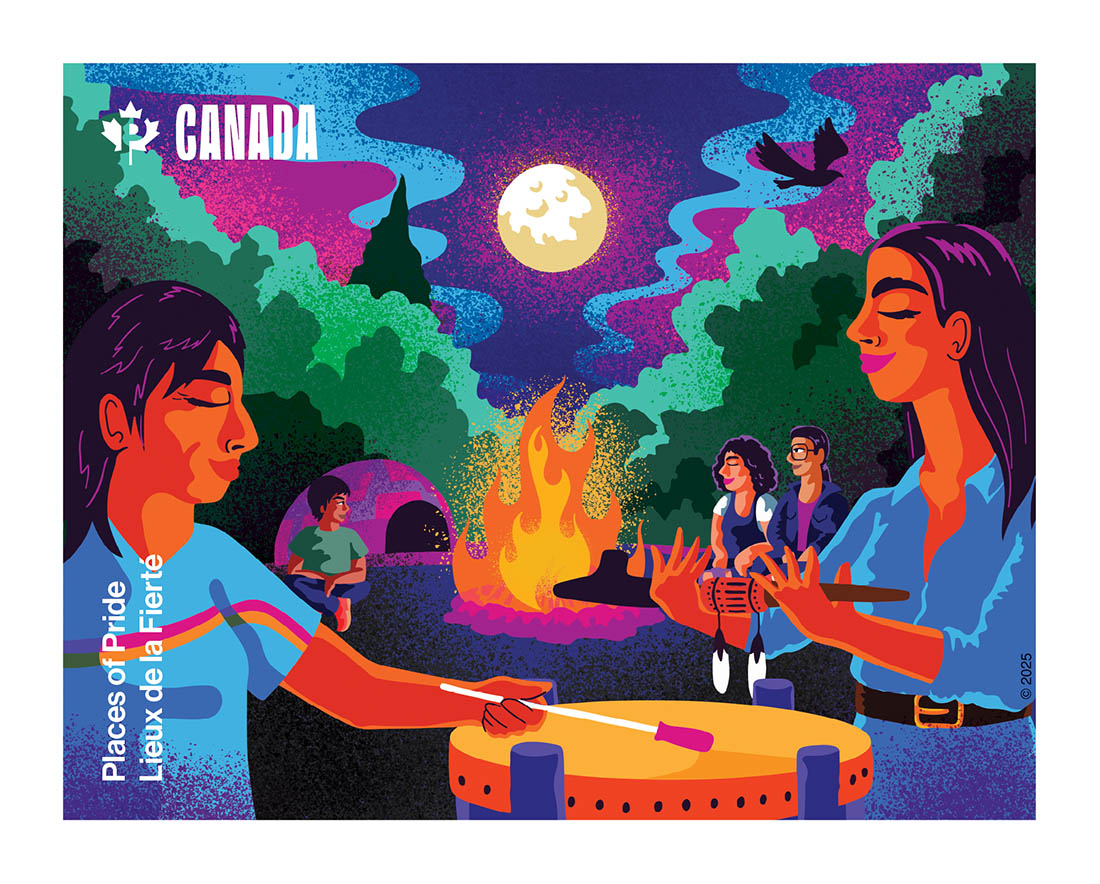
-
Article
Tyrannosaurus rex
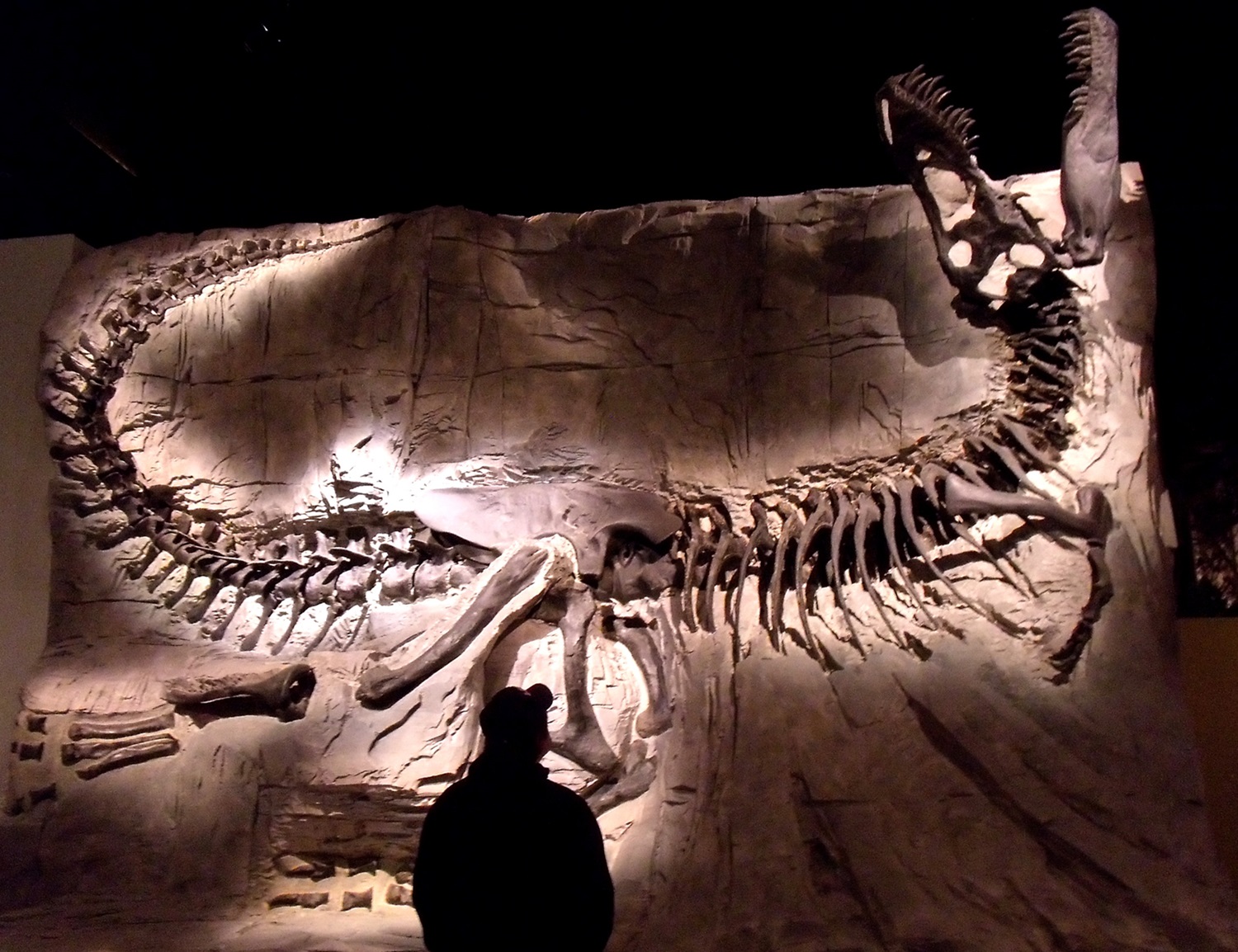
Tyrannosaurus rex is a species of very large, meat-eating dinosaur (theropod). It was one of the last non-avian dinosaurs, having lived at the very end of the Age of Dinosaurs between 68 and 66 million years ago. T. rex lived throughout the western interior of North America, from central Alberta and southern Saskatchewan in the north to Mexico in the south. It was the largest representative of a group of theropods called “tyrannosaurs,” which included relatives like Albertosaurus and Thanatotheristes. Three T. rex skeletons have been discovered in Canada, two in Alberta and one in Saskatchewan. The largest known T. rex skeleton was found in 1991 near the town of Eastend in southwestern Saskatchewan and is nicknamed “Scotty.” T. rex is the provincial fossil of Saskatchewan.
"https://d3d0lqu00lnqvz.cloudfront.net/tyrannosaurusrex/black-beauty.jpg" // resources/views/front/categories/view.blade.php
https://d3d0lqu00lnqvz.cloudfront.net/tyrannosaurusrex/black-beauty.jpg