
Browse "Things"
-
Article
Treaties 1 and 2 (Plain-Language Summary)
Several treaties were signed between the federal government and Indigenous peoples in Canada between 1871 and 1921. They are known as “Numbered Treaties.” The first two treaties were signed in 1871. Treaty 1 was signed by the Anishinaabe and Swampy Cree of southern Manitoba. Treaty 2 was signed by the Anishinaabe of southern Manitoba. The government and Indigenous peoples had different goals. The government wanted land for future immigrants. Indigenous peoples aimed to protect their lands and way of life. These treaties were controversial when they were made. They remain controversial today. This article is a plain-language summary of Treaties 1 and 2. If you are interested in reading about this topic more in depth, please see our full-length entry, Treaties 1 and 2.
"https://thecanadianencyclopedia.ca/images/tce_placeholder.jpg?v=e9dca980c9bdb3aa11e832e7ea94f5d9" // resources/views/front/categories/view.blade.php
https://thecanadianencyclopedia.ca/images/tce_placeholder.jpg?v=e9dca980c9bdb3aa11e832e7ea94f5d9
-
Article
Treaties with Indigenous Peoples in Canada (Plain-Language Summary)
Indigenous treaties in Canada are agreements made between the Crown and Indigenous peoples. These agreements typically concern land. Indigenous peoples agreed to share their land in exchange for payments and promises. Before Confederation, Britain controlled the treaty making process. After Confederation, the federal government took control of the treating making process. This article is a plain-language summary of Treaties with Indigenous Peoples in Canada. If you are interested in reading about this topic more in depth, please see our full-length entry, Treaties with Indigenous Peoples in Canada.
"https://d3d0lqu00lnqvz.cloudfront.net/media/media/122dc04b-d0a1-4551-a912-1bee8991746b.jpg" // resources/views/front/categories/view.blade.php
https://d3d0lqu00lnqvz.cloudfront.net/media/media/122dc04b-d0a1-4551-a912-1bee8991746b.jpg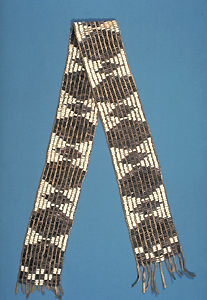
-
Article
Treaties with Indigenous Peoples in Newfoundland and Labrador
Treaties have been a principal mechanism for determining relationships between nations and can define rights, responsibilities and mutual obligations. In what is now Canada, Indigenous nations have created and maintained treaties with each other and Europeans for centuries. These treaties were meant to determine how to co-exist peacefully in a territory. They were not understood by Indigenous nations as a surrender of their sovereignty and identities to colonial powers (see also Treaties with Indigenous Peoples in Canada). Newfoundland and Labrador has historically not considered treaties with Indigenous peoples, despite being one of the first places of colonization in the Americas (see also Colonialism in Canada). This omission is primarily attributed to the province’s unique history, distinguishing it from the other Canadian provinces. Before joining Canada, Newfoundland did not have legal mechanisms for recognizing Indigenous nations. As a result, when joining Canada, Indigenous peoples were omitted from the Terms of Union (see also Newfoundland and Labrador and Confederation). In Newfoundland and Labrador, there are no federal or provincially recognized early treaties. However, historical documents and Indigenous histories show there are at least two treaties from the 18th century. Additionally, there are two modern treaties that cover land in Newfoundland and Labrador and several attempted or ongoing treaty negotiations.
"https://thecanadianencyclopedia.ca/images/tce_placeholder.jpg?v=e9dca980c9bdb3aa11e832e7ea94f5d9" // resources/views/front/categories/view.blade.php
https://thecanadianencyclopedia.ca/images/tce_placeholder.jpg?v=e9dca980c9bdb3aa11e832e7ea94f5d9
-
Macleans
Treating Schizophrenia
Inspired by the realization that schizophrenia is a biochemical brain disorder - and not, as doctors once believed, the result of family influences during childhood - a growing number of scientists are studying the disease.This article was originally published in Maclean's Magazine on January 30, 1995
"https://d3d0lqu00lnqvz.cloudfront.net/media/media/75d06d61-a6a4-4719-bc2b-5ff6be5bfed5.jpg" // resources/views/front/categories/view.blade.php
https://d3d0lqu00lnqvz.cloudfront.net/media/media/75d06d61-a6a4-4719-bc2b-5ff6be5bfed5.jpg
-
Article
Treaty 10
Treaty 10 is the 10th of the 11 Numbered Treaties. It was signed in 1906–07 by the Canadian government and Indigenous peoples in northern Saskatchewan and Alberta. Treaty 10 covers nearly 220,000 km2 of Saskatchewan and Alberta. The terms of Treaty 10 have had ongoing legal and socioeconomic impacts on Indigenous communities.
"https://d3d0lqu00lnqvz.cloudfront.net/media/media/22da8ac5-1905-4c28-ad2e-c9f55c67c7aa.jpg" // resources/views/front/categories/view.blade.php
https://d3d0lqu00lnqvz.cloudfront.net/media/media/22da8ac5-1905-4c28-ad2e-c9f55c67c7aa.jpg
-
Article
Treaty 11
Treaty 11 is the last of the Numbered Treaties signed on 22 August 1921 between First Nations and the Canadian government following Confederation, as Canada expanded its borders north and west. It covers more than 950,000 km2 of present-day Yukon, Northwest Territories and Nunavut. The First Nations involved were predominately Dene, and include the Gwich’in, Tlicho (Dogrib) and Sahtu. As with other Numbered Treaties, the government did not want to enter into treaty until its interests would be served by doing so; accordingly, Treaty 11 was only created in 1921, after oil and gas prospects in the Mackenzie region sparked its interests. However, hasty negotiations combined with weak implementation of the terms — particularly with regard to reserves and land claims — have led to considerable disagreement between the parties on what was meant by the treaty and which promises have not been fulfilled. As a result, many of the signatories to Treaty 11 have also been involved in the modern treaties process ( see Indigenous Peoples: Treaties).
"https://d3d0lqu00lnqvz.cloudfront.net/media/media/ec35153e-3722-48ad-b760-64812a063ffe.jpg" // resources/views/front/categories/view.blade.php
https://d3d0lqu00lnqvz.cloudfront.net/media/media/ec35153e-3722-48ad-b760-64812a063ffe.jpg
-
Article
Treaty 3
On 3 October 1873, some Saulteaux peoples (an Ojibwe people) and the Government of Canada signed Treaty 3, also known as the North-West Angle Treaty. This agreement provided the federal government access to Saulteaux lands in present-day northwestern Ontario and eastern Manitoba in exchange for various goods and Indigenous rights to hunting, fishing and natural resources on reserve lands. The terms and text of Treaty 3 set precedents for the eight Numbered Treaties that followed. (See also Treaties with Indigenous Peoples in Canada.) This article is a full-length entry about Treaty 3. For a plain-language summary, please see Treaty 3 (Plain-Language Summary).
"https://d3d0lqu00lnqvz.cloudfront.net/media/media/0c20f035-b4ff-4e0a-baad-b18906648db9.jpg" // resources/views/front/categories/view.blade.php
https://d3d0lqu00lnqvz.cloudfront.net/media/media/0c20f035-b4ff-4e0a-baad-b18906648db9.jpg
-
Article
Treaty 3 (Plain-Language Summary)
Treaty 3 was signed between the Anishinaabe and the Government of Canada in 1873. Treaty 3 is also known as the North-West Angle Treaty. The goal of the government was to gain access to land. The land was located in what is known now as northwestern Ontario and eastern Manitoba. The goal of the Anishinaabe was to preserve their way of life. Like the other numbered treaties, Treaty 3 remains controversial. This article is a plain-language summary of Treaty 3. If you are interested in reading about this topic more in depth, please see our full-length entry, Treaty 3.
"https://d3d0lqu00lnqvz.cloudfront.net/media/media/4913942c-18ec-4c1c-be27-6d74ec04cfbe.jpg" // resources/views/front/categories/view.blade.php
https://d3d0lqu00lnqvz.cloudfront.net/media/media/4913942c-18ec-4c1c-be27-6d74ec04cfbe.jpg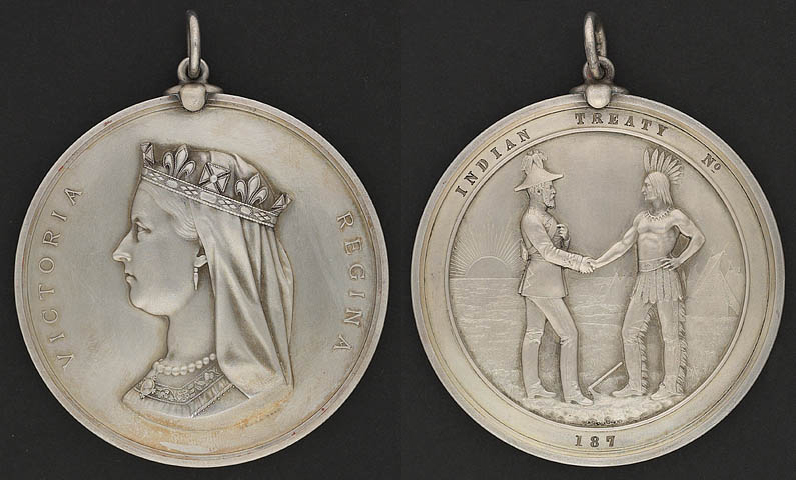
-
Article
Treaty 4
Treaty 4 — also known as the Qu'Appelle Treaty — was signed on 15 September 1874 at Fort Qu’Appelle, Saskatchewan. In exchange for payments, provisions and rights to reserve lands, Treaty 4 ceded Indigenous territory to the federal government. The majority of Treaty 4 lands are in present-day southern Saskatchewan. Small portions are in western Manitoba and southern Alberta. (See Numbered Treaties.) This article is a full-length entry about Treaty 4. For a plain-language summary, please see Treaty 4 (Plain-Language Summary).
"https://d3d0lqu00lnqvz.cloudfront.net/media/media/2bbbb770-33d9-4635-8dcf-bf1e5e84d4c1.jpg" // resources/views/front/categories/view.blade.php
https://d3d0lqu00lnqvz.cloudfront.net/media/media/2bbbb770-33d9-4635-8dcf-bf1e5e84d4c1.jpg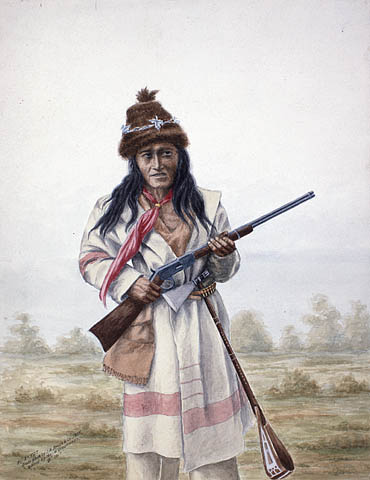
-
Article
Treaty 4 (Plain-Language Summary)
Treaty 4 was signed in 1874. This treaty is also known as the Qu’Appelle Treaty because it was signed at Fort Qu’Appelle, Saskatchewan. The treaty was signed by the federal government and the Cree and Saulteaux. Like all other Numbered Treaties, Indigenous peoples gave up much land to the government. Most of this land is located in southern Saskatchewan. As with the other Numbered Treaties, Treaty 4 remains controversial. This article is a plain-language summary of Treaty 4. If you are interested in reading about this topic more in depth, please see our full-length entry, Treaty 4.
"https://d3d0lqu00lnqvz.cloudfront.net/media/media/4913942c-18ec-4c1c-be27-6d74ec04cfbe.jpg" // resources/views/front/categories/view.blade.php
https://d3d0lqu00lnqvz.cloudfront.net/media/media/4913942c-18ec-4c1c-be27-6d74ec04cfbe.jpg
-
Article
Treaty 5
Treaty 5 — also known as the Winnipeg Treaty — was signed in 1875–76 by the federal government, Ojibwe peoples and the Swampy Cree of Lake Winnipeg . Treaty 5 covers much of present-day central and northern Manitoba, as well as portions of Saskatchewan and Ontario. The terms of Treaty 5 have had ongoing legal and socioeconomic impacts on Indigenous communities (see Numbered Treaties; Indigenous Peoples: Treaties). This article is a full-length entry about Treaty 5. For a plain-language summary, please see Treaty 5 (Plain-Language Summary).
"https://d3d0lqu00lnqvz.cloudfront.net/media/media/18a4376f-d188-4b93-826c-d4b2e5c02ee7.jpg" // resources/views/front/categories/view.blade.php
https://d3d0lqu00lnqvz.cloudfront.net/media/media/18a4376f-d188-4b93-826c-d4b2e5c02ee7.jpg
-
Article
Treaty 5 (Plain-Language Summary)
Treaty 5 is also known as the Winnipeg Treaty. It was signed by Ojibwe and Swampy Cree communities around Lake Winnipeg in 1875 and 1876. Treaty 5 covers much of Manitoba and parts of Saskatchewan and Ontario. This article is a plain-language summary of Treaty 5. If you are interested in reading about this topic more in depth, please see our full-length entry, Treaty 5.
"https://d3d0lqu00lnqvz.cloudfront.net/media/media/4913942c-18ec-4c1c-be27-6d74ec04cfbe.jpg" // resources/views/front/categories/view.blade.php
https://d3d0lqu00lnqvz.cloudfront.net/media/media/4913942c-18ec-4c1c-be27-6d74ec04cfbe.jpg
-
Article
Treaty 6
Treaty 6 was signed by Crown representatives and Cree, Assiniboine and Ojibwe leaders on 23 August 1876 at Fort Carlton , Saskatchewan, and on 9 September 1876 at Fort Pitt, Saskatchewan. The treaty boundaries extend across central portions of present-day Alberta and Saskatchewan. This is the full-length entry about Treaty 6. For a plain-language summary, please see Treaty 6 (Plain-Language Summary).
"https://d3d0lqu00lnqvz.cloudfront.net/media/media/2a58e580-6da4-4fd4-b1fe-dc1357c14c36.jpg" // resources/views/front/categories/view.blade.php
https://d3d0lqu00lnqvz.cloudfront.net/media/media/2a58e580-6da4-4fd4-b1fe-dc1357c14c36.jpg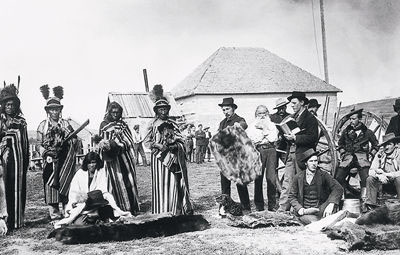
-
Article
Treaty 6 (Plain-Language Summary)
Treaty 6 was created in 1876. It is a treaty between the federal government and Indigenous peoples on the Prairies. Cree, Assiniboine and Ojibwe leaders signed the treaty. Treaty 6 territory is located in Alberta and Saskatchewan. This article is a plain-language summary of Treaty 6. If you are interested in reading about this topic in more depth, please see our full-length entry, Treaty 6.
"https://d3d0lqu00lnqvz.cloudfront.net/media/media/2a58e580-6da4-4fd4-b1fe-dc1357c14c36.jpg" // resources/views/front/categories/view.blade.php
https://d3d0lqu00lnqvz.cloudfront.net/media/media/2a58e580-6da4-4fd4-b1fe-dc1357c14c36.jpg
-
Article
Treaty 7
Treaty 7 is the last of the Numbered Treaties made between the Government of Canada and the Plains First Nations (see Indigenous Peoples: Plains). It was signed on 22 September 1877 by five First Nations: the Siksika (Blackfoot), Kainai (Blood), Piikani (Peigan), Stoney-Nakoda, and Tsuut’ina (Sarcee). Different understandings of the treaty’s purpose, combined with significant culture and language barriers and what some have argued were deliberate attempts to mislead the First Nations on the part of the government negotiators, have led to ongoing conflicts and claims. This article is a full-length entry about Treaty 7. For a plain-language summary, please see Treaty 7 (Plain-Language Summary).
"https://d3d0lqu00lnqvz.cloudfront.net/media/media/0729607a-735a-424b-a138-3e76e6053763.jpg" // resources/views/front/categories/view.blade.php
https://d3d0lqu00lnqvz.cloudfront.net/media/media/0729607a-735a-424b-a138-3e76e6053763.jpg