Browse "Things"
-
Article
Transgender Archives at the University of Victoria
The Transgender Archives at the University of Victoria is believed to be the largest collection of historical documents and materials related to transgender research and activism in the world (see Historical Sources). Aaron Devor, chair of Transgender Studies at the University of Victoria, is the founder and subject matter expert of the archives, which officially opened in 2011. The archives aim to preserve the history and research of transgender people and other gender-diverse peoples. (See also 2SLGBTQ+ Rights in Canada; Two-Spirit; Queer Culture.)
"https://d3d0lqu00lnqvz.cloudfront.net/media/media/6483ddf2-6bee-4d0b-a2b1-142ae795176c.jpg" // resources/views/front/categories/view.blade.php
https://d3d0lqu00lnqvz.cloudfront.net/media/media/6483ddf2-6bee-4d0b-a2b1-142ae795176c.jpg
-
Article
Transport Canada
Transport Canada is the federal government department responsible for the regulation and administration of transportation policies, programs and services to promote the safety and efficiency of the national transportation system.
"https://thecanadianencyclopedia.ca/images/tce_placeholder.jpg?v=e9dca980c9bdb3aa11e832e7ea94f5d9" // resources/views/front/categories/view.blade.php
https://thecanadianencyclopedia.ca/images/tce_placeholder.jpg?v=e9dca980c9bdb3aa11e832e7ea94f5d9
-
Article
Transportation in Canada
The importance of transportation to a trading nation as vast as Canada cannot be underestimated. The great distances between mines, farms, forests and urban centres make efficient transport systems essential to the economy so that natural and manufactured goods can move freely through domestic and international markets (see International Trade). Transportation has and will continue to play an important role in the social and political unity of Canada. This article is a full-length entry about transportation in Canada. For a plain-language summary, please see Transportation in Canada (Plain-Language Summary).
"https://d3d0lqu00lnqvz.cloudfront.net/media/media/03ae2829-72d0-4f75-af16-4c9ed5946266.jpg" // resources/views/front/categories/view.blade.php
https://d3d0lqu00lnqvz.cloudfront.net/media/media/03ae2829-72d0-4f75-af16-4c9ed5946266.jpg
-
Collection
Transportation
Transportation refers to the movement of people, natural resources and manufactured goods from one place to another. There are five principal modes of transportation in Canada: water, rail, motor carrier, air and pipeline. Canada’s history is tied to the history and development of transportation. The construction of the Canadian Pacific Railway connected Canada from coast to coast and played a role in the expansion of Confederation. Transportation continues to contribute to Canada’s economy by facilitating...
"https://d3d0lqu00lnqvz.cloudfront.net/media/media/c1bf1c65-a118-4b73-9ee5-5f9dccbd8ab8.jpg" // resources/views/front/categories/view.blade.php
https://d3d0lqu00lnqvz.cloudfront.net/media/media/c1bf1c65-a118-4b73-9ee5-5f9dccbd8ab8.jpg
-
Article
Transportation Agencies
The 2 major categories of government activities in transportation are administration and development of public policies, which includes the regulation of transport activities and the investment and operation of transport services and facilities.
"https://thecanadianencyclopedia.ca/images/tce_placeholder.jpg?v=e9dca980c9bdb3aa11e832e7ea94f5d9" // resources/views/front/categories/view.blade.php
https://thecanadianencyclopedia.ca/images/tce_placeholder.jpg?v=e9dca980c9bdb3aa11e832e7ea94f5d9
-
Article
Transportation Association of Canada
The Transportation Association of Canada (TAC) is a non-profit association that provides a neutral forum for discussing technical issues related to road and highway infrastructure and urban transportation. It brings together governments, private companies, academic institutions and other organizations in Canada. The non-partisan association’s mission is “to work together to share ideas, build knowledge, promote best practices, foster leadership, and encourage bold transportation solutions.”
"https://d3d0lqu00lnqvz.cloudfront.net/media/new_article_images/TransportationAssociationofCanada/Ucal-Henri Dandurand.jpg" // resources/views/front/categories/view.blade.php
https://d3d0lqu00lnqvz.cloudfront.net/media/new_article_images/TransportationAssociationofCanada/Ucal-Henri Dandurand.jpg
-
Article
Music about Transportation
Of the various means of travel by land, sea, and air, only the railways, with the rhythmic clickety-clack of the wheels and the scream of the locomotive whistle, have provided an obvious subject for imitation in music.
"https://thecanadianencyclopedia.ca/images/tce_placeholder.jpg?v=e9dca980c9bdb3aa11e832e7ea94f5d9" // resources/views/front/categories/view.blade.php
https://thecanadianencyclopedia.ca/images/tce_placeholder.jpg?v=e9dca980c9bdb3aa11e832e7ea94f5d9
-
Article
Transportation in Canada (Plain-Language Summary)
Transportation involves moving of people, natural resources and goods from one place to another. Transportation is an important part of Canada’s economy. It allows trade goods to move between mines, farms, cities and countries. (See also International Trade). Transportation is part of Canada’s history. It helped build social and political unity. It continues to connect people and regions across the country. This article is a plain-language summary of transportation. If you are interested in reading about this topic more in depth, please see our full-length entry, Transportation in Canada.
"https://d3d0lqu00lnqvz.cloudfront.net/transportation/locomotive.jpg" // resources/views/front/categories/view.blade.php
https://d3d0lqu00lnqvz.cloudfront.net/transportation/locomotive.jpg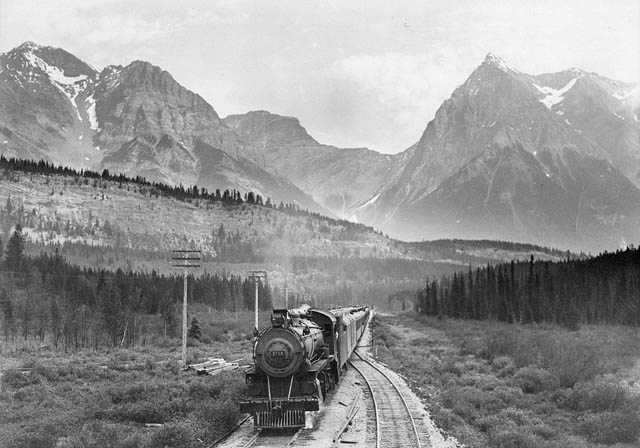
-
Article
Transportation in the North
Inuit and subarctic Indigenous peoples have traversed the North since time immemorial. Indigenous knowledge and modes of transportation helped early European explorers and traders travel and survive on these expanses. Later settlement depended to an extraordinary degree on the development of transportation systems. Today, the transportation connections of northern communities vary from place to place. While the most remote settlements are often only accessible by air, some have road, rail and marine connections. These are often tied to industrial projects such as mines.
"https://d3d0lqu00lnqvz.cloudfront.net/media/media/c6523c8a-095a-441a-9aee-d4be0dc564b8.jpg" // resources/views/front/categories/view.blade.php
https://d3d0lqu00lnqvz.cloudfront.net/media/media/c6523c8a-095a-441a-9aee-d4be0dc564b8.jpg
-
Article
Transportation Regulation
Transportation regulation is administered by all levels of government (federal, provincial, municipal) and covers prices, conditions and levels of service, and the operating authority of transport units.
"https://thecanadianencyclopedia.ca/images/tce_placeholder.jpg?v=e9dca980c9bdb3aa11e832e7ea94f5d9" // resources/views/front/categories/view.blade.php
https://thecanadianencyclopedia.ca/images/tce_placeholder.jpg?v=e9dca980c9bdb3aa11e832e7ea94f5d9
-
Article
Travels and Adventures in Canada and the Indian Territories between the Years 1760 and 1776
Travels and Adventures in Canada and the Indian Territories between the Years 1760 and 1776 (New York, 1809; Toronto, 1901) was written by Alexander Henry (the elder), one of the first Britons to venture into western Indigenous territory after the defeat of the French at Québec.
"https://thecanadianencyclopedia.ca/images/tce_placeholder.jpg?v=e9dca980c9bdb3aa11e832e7ea94f5d9" // resources/views/front/categories/view.blade.php
https://thecanadianencyclopedia.ca/images/tce_placeholder.jpg?v=e9dca980c9bdb3aa11e832e7ea94f5d9
-
Article
Travois
A travois, from the French word travail, “to work,” was a device used for transportation by the Plains Indigenous peoples. Drawn by horses or dogs, the travois carried people’s goods to and from hunting sites and temporary settlements.
"https://d3d0lqu00lnqvz.cloudfront.net/media/media/cb51fb80-deaf-46a4-a9ad-b5bca1c5fc04.jpg" // resources/views/front/categories/view.blade.php
https://d3d0lqu00lnqvz.cloudfront.net/media/media/cb51fb80-deaf-46a4-a9ad-b5bca1c5fc04.jpg
-
Article
Treason
Treason is probably the oldest and most serious offence in political society, with the possible exception of murder. The earliest English treason legislation, which dates from 1351, is the basis of all treason legislation in the English-speaking world. Originally, treason meant an attack upon the person or life of the monarch. But as the state became more important than its sovereign, treason came to indicate any act directed at the overthrow of the government or against the security of the state. Anyone participating in a rebellion or an unsuccessful revolution is technically guilty of treason, although only the leaders tend to be prosecuted. Conversely, it is not uncommon for the leaders of a successful revolution to try former opponents for treason.
"https://thecanadianencyclopedia.ca/images/tce_placeholder.jpg?v=e9dca980c9bdb3aa11e832e7ea94f5d9" // resources/views/front/categories/view.blade.php
https://thecanadianencyclopedia.ca/images/tce_placeholder.jpg?v=e9dca980c9bdb3aa11e832e7ea94f5d9
-
Article
Treasury Board
The Treasury Board, the only statutory committee of CABINET (thus formally a PRIVY COUNCIL committee), was created in 1867. The president of the Treasury Board chairs a board which comprises the finance minister and 4 other ministers appointed by the governor-in-council.
"https://thecanadianencyclopedia.ca/images/tce_placeholder.jpg?v=e9dca980c9bdb3aa11e832e7ea94f5d9" // resources/views/front/categories/view.blade.php
https://thecanadianencyclopedia.ca/images/tce_placeholder.jpg?v=e9dca980c9bdb3aa11e832e7ea94f5d9
-
Article
Treaties 1 and 2
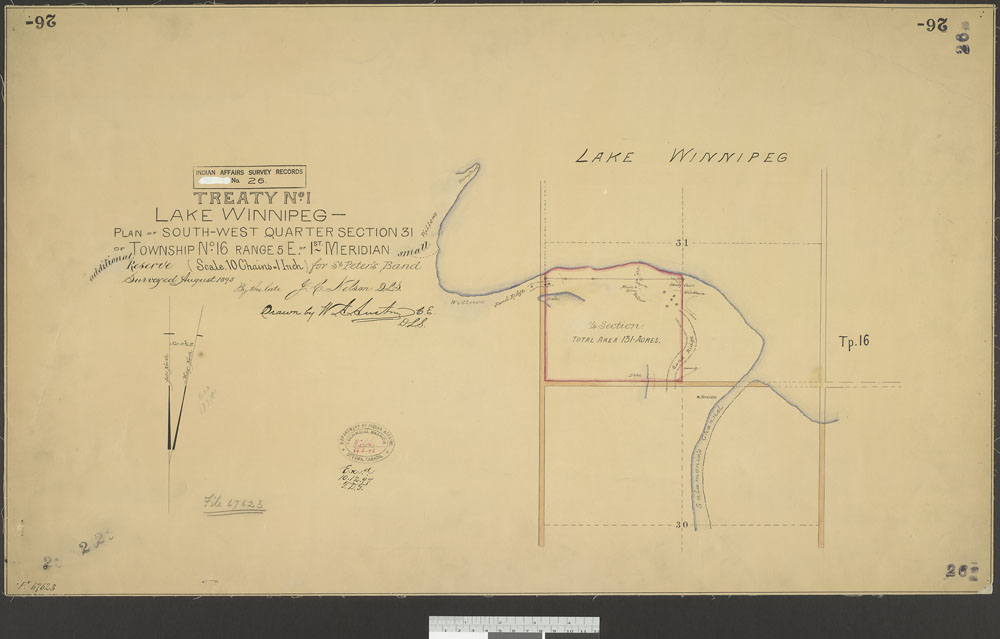
Treaties 1 and 2 were the first of 11 Numbered Treaties negotiated between 1871 and 1921. Treaty 1 was signed 3 August 1871 between Canada and the Anishinabek and Swampy Cree of southern Manitoba. Treaty 2 was signed 21 August 1871 between Canada and the Anishinaabe of southern Manitoba (see Eastern Woodlands Indigenous Peoples). From the perspective of Canadian officials, treaty making was a means to facilitate settlement of the West and the assimilation of Indigenous peoples into Euro-Canadian society (see Treaties with Indigenous Peoples in Canada). Indigenous peoples sought to protect their traditional lands and livelihoods while securing assistance in transitioning to a new way of life. Treaties 1 and 2 encapsulate these divergent aims, leaving a legacy of unresolved issues due to the different understandings of their Indigenous and Euro-Canadian participants. This article is a full-length entry about Treaties 1 and 2. For a plain-language summary, please see Treaties 1 and 2 (Plain-Language Summary).
"https://d3d0lqu00lnqvz.cloudfront.net/media/media/d1c2f761-fbf1-4630-915e-9196456f8635.jpg" // resources/views/front/categories/view.blade.php
https://d3d0lqu00lnqvz.cloudfront.net/media/media/d1c2f761-fbf1-4630-915e-9196456f8635.jpg