
Browse "Things"
-
Macleans
Thomson Sells His Newspapers
This article was originally published in Maclean’s magazine on February 28, 2000. Partner content is not updated. It was an empire built upon scratchy radio stations, weekly newspapers and the hardscrabble mentality of Northern Ontario in the midst of the Great Depression. Founder Roy Thomson was like nothing Canada had ever produced.
"https://thecanadianencyclopedia.ca/images/tce_placeholder.jpg?v=e9dca980c9bdb3aa11e832e7ea94f5d9" // resources/views/front/categories/view.blade.php
https://thecanadianencyclopedia.ca/images/tce_placeholder.jpg?v=e9dca980c9bdb3aa11e832e7ea94f5d9
-
Article
Thoroughbred Racing
On the one hand, horse racing is viewed as a sport of the wealthy, based on the traditions of a long and valued history. On the other hand, it has its shady side, associated with gambling and complemented by the rich subculture of its citizens on the back stretch.
"https://d3d0lqu00lnqvz.cloudfront.net/media/media/279bdafe-34ea-4047-83b1-1a8afdf89f86.jpg" // resources/views/front/categories/view.blade.php
https://d3d0lqu00lnqvz.cloudfront.net/media/media/279bdafe-34ea-4047-83b1-1a8afdf89f86.jpg
-
Article
Thrasher
Thrashers (Mimidae) are a small family of slender, long-tailed, medium-sized, insectivorous and frugivorous birds with loud, musical, repetitive songs.
"https://d3d0lqu00lnqvz.cloudfront.net/media/media/0b04d7e6-d80a-4290-8760-e575afc17c1b.jpg" // resources/views/front/categories/view.blade.php
https://d3d0lqu00lnqvz.cloudfront.net/media/media/0b04d7e6-d80a-4290-8760-e575afc17c1b.jpg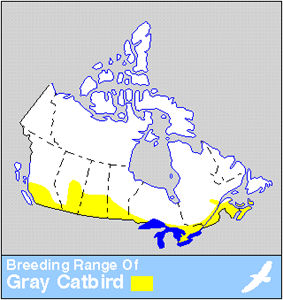
-
Article
Three Day Road
Joseph Boyden’s first novel, Three Day Road, made him one of Canada’s most prominent writers of fiction. It won multiple awards and drew attention to an overlooked aspect of Canada’s history, namely the role Indigenous people played in Canada’s military history. Inspired by the story of Anishnaabe First World War sniper Francis Pegahmagabow, Three Day Road follows a wounded soldier’s journey home. The novel parallels the death that hangs over the battlefields of the First World War with the destruction of traditional Indigenous cultures. The book won the McNally Robinson Aboriginal Book of the Year Award, the Rogers Writers’ Trust Fiction Prize and the Amazon.ca/Books in Canada First Novel Award.
"https://d3d0lqu00lnqvz.cloudfront.net/media/media/fbaaf78a-2198-4b0d-afa8-6f8ded590c2a.jpg" // resources/views/front/categories/view.blade.php
https://d3d0lqu00lnqvz.cloudfront.net/media/media/fbaaf78a-2198-4b0d-afa8-6f8ded590c2a.jpg
-
Article
Thrips
Thrips, order Thysanoptera (Gk for "fringe-wings"), are among the smallest insects, being slender and usually less than 2 mm long.
"https://thecanadianencyclopedia.ca/images/tce_placeholder.jpg?v=e9dca980c9bdb3aa11e832e7ea94f5d9" // resources/views/front/categories/view.blade.php
https://thecanadianencyclopedia.ca/images/tce_placeholder.jpg?v=e9dca980c9bdb3aa11e832e7ea94f5d9
-
Macleans
Throne Speech 1996
As Prime Minister Jean Chrétien's government tried to evoke a new era of Canadian team spirit in the House of Commons last week, it was no coincidence that the one premier who came to listen was Captain Canada himself.This article was originally published in Maclean's Magazine on March 11, 1996
"https://thecanadianencyclopedia.ca/images/tce_placeholder.jpg?v=e9dca980c9bdb3aa11e832e7ea94f5d9" // resources/views/front/categories/view.blade.php
https://thecanadianencyclopedia.ca/images/tce_placeholder.jpg?v=e9dca980c9bdb3aa11e832e7ea94f5d9
-
Macleans
Throne Speech 1997
This article was originally published in Maclean's Magazine on October 6, 1997
"https://thecanadianencyclopedia.ca/images/tce_placeholder.jpg?v=e9dca980c9bdb3aa11e832e7ea94f5d9" // resources/views/front/categories/view.blade.php
https://thecanadianencyclopedia.ca/images/tce_placeholder.jpg?v=e9dca980c9bdb3aa11e832e7ea94f5d9
-
Article
Thrush
Thrushes (Muscicapidae) are a very large family comprising about 450 species of small passerines (perching birds) ranging 11-33 cm in length.
"https://thecanadianencyclopedia.ca/images/tce_placeholder.jpg?v=e9dca980c9bdb3aa11e832e7ea94f5d9" // resources/views/front/categories/view.blade.php
https://thecanadianencyclopedia.ca/images/tce_placeholder.jpg?v=e9dca980c9bdb3aa11e832e7ea94f5d9
-
Article
Early Inuit (Thule Culture)
Early Inuit groups from northern Alaska moved into the Eastern North American Arctic (i.e., Canada and Greenland) around 800 years ago (ca. 1200 CE). In roughly a century, some of these early Inuit groups rapidly migrated across what’s now the Northwest Territories, Nunavut and Greenland. By roughly the 15th century CE, early Inuit groups lived throughout the Eastern Arctic. The early Inuit are distinct from the Dorset and Pre-Dorset. Although where they lived slightly changed throughout time, these early Inuit represent the direct ancestors of Inuit today.
"https://d3d0lqu00lnqvz.cloudfront.net/media/media/1124de9a-74b2-4dfb-9f8a-f096ecccab6b.jpg" // resources/views/front/categories/view.blade.php
https://d3d0lqu00lnqvz.cloudfront.net/media/media/1124de9a-74b2-4dfb-9f8a-f096ecccab6b.jpg
-
Article
Early Inuit (Thule) Winter House
The early Inuit (Thule) were an Indigenous people who began to occupy the Arctic, from Alaska to Greenland, around 1000 CE. In the winter, the early Inuit used a house built partially into the ground to keep them warm for long periods of time. One striking feature of this structure was the roof, which was sometimes made of whalebone. (See also Architectural History of Indigenous Peoples in Canada.)
"https://d3d0lqu00lnqvz.cloudfront.net/ThuleHouse.jpg" // resources/views/front/categories/view.blade.php
https://d3d0lqu00lnqvz.cloudfront.net/ThuleHouse.jpg
-
Article
Thunderbird
Thunderbird is a supernatural creature prominent in many Indigenous traditional stories. The thunderbird plays varying roles in different Indigenous traditions. Traditional stories of the thunderbird exist in cultures from the Pacific Northwest, the plains, and the eastern regions of what is now Canada (see also Northwest Coast Indigenous Peoples in Canada; Plains Indigenous Peoples in Canada).
"https://d3d0lqu00lnqvz.cloudfront.net/media/media/0c7246ce-04d4-4027-9907-07156a5ba0d6.jpg" // resources/views/front/categories/view.blade.php
https://d3d0lqu00lnqvz.cloudfront.net/media/media/0c7246ce-04d4-4027-9907-07156a5ba0d6.jpg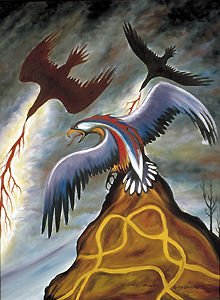
-
Article
Thunderstorm
Thunderstorms usually occur on summer afternoons. While a thunderstorm typically affects a given locality for only an hour or so during its passage overhead, the entire lifetime may be as long as 6-10 hours, along a pathway of several hundred kilometres.
"https://thecanadianencyclopedia.ca/images/tce_placeholder.jpg?v=e9dca980c9bdb3aa11e832e7ea94f5d9" // resources/views/front/categories/view.blade.php
https://thecanadianencyclopedia.ca/images/tce_placeholder.jpg?v=e9dca980c9bdb3aa11e832e7ea94f5d9
-
Article
Tick
Ticks are small, bloodsucking arachnids that live as external parasites on terrestrial mammals, birds, amphibians and reptiles. Ticks belong to the order Ixodida, a group of parasitic mites in the superorder Parasitiformes. This superorder also includes the varroa mite, a destructive parasite of honeybees. About 900 tick species are known worldwide, of which 48 have been found in Canada. Although they are most diverse in tropical regions, ticks continue to be significant pests to humans and other mammals as far north as the Canadian tundra.
"https://d3d0lqu00lnqvz.cloudfront.net/tick/Female-Black-Legged-Tick-on-Leaf.jpg" // resources/views/front/categories/view.blade.php
https://d3d0lqu00lnqvz.cloudfront.net/tick/Female-Black-Legged-Tick-on-Leaf.jpg
-
Article
Tidal Energy
Tidal energy is a largely untapped, renewable energy source based largely on lunar gravitation. While the potential of tidal hydroelectricity has long been recognized, compared to river dams, tidal power projects are expensive because massive structures must be built in difficult saltwater environments.
"https://d3d0lqu00lnqvz.cloudfront.net/media/media/20ec66d0-4579-4f2a-942d-5bb87ded61be.jpg" // resources/views/front/categories/view.blade.php
https://d3d0lqu00lnqvz.cloudfront.net/media/media/20ec66d0-4579-4f2a-942d-5bb87ded61be.jpg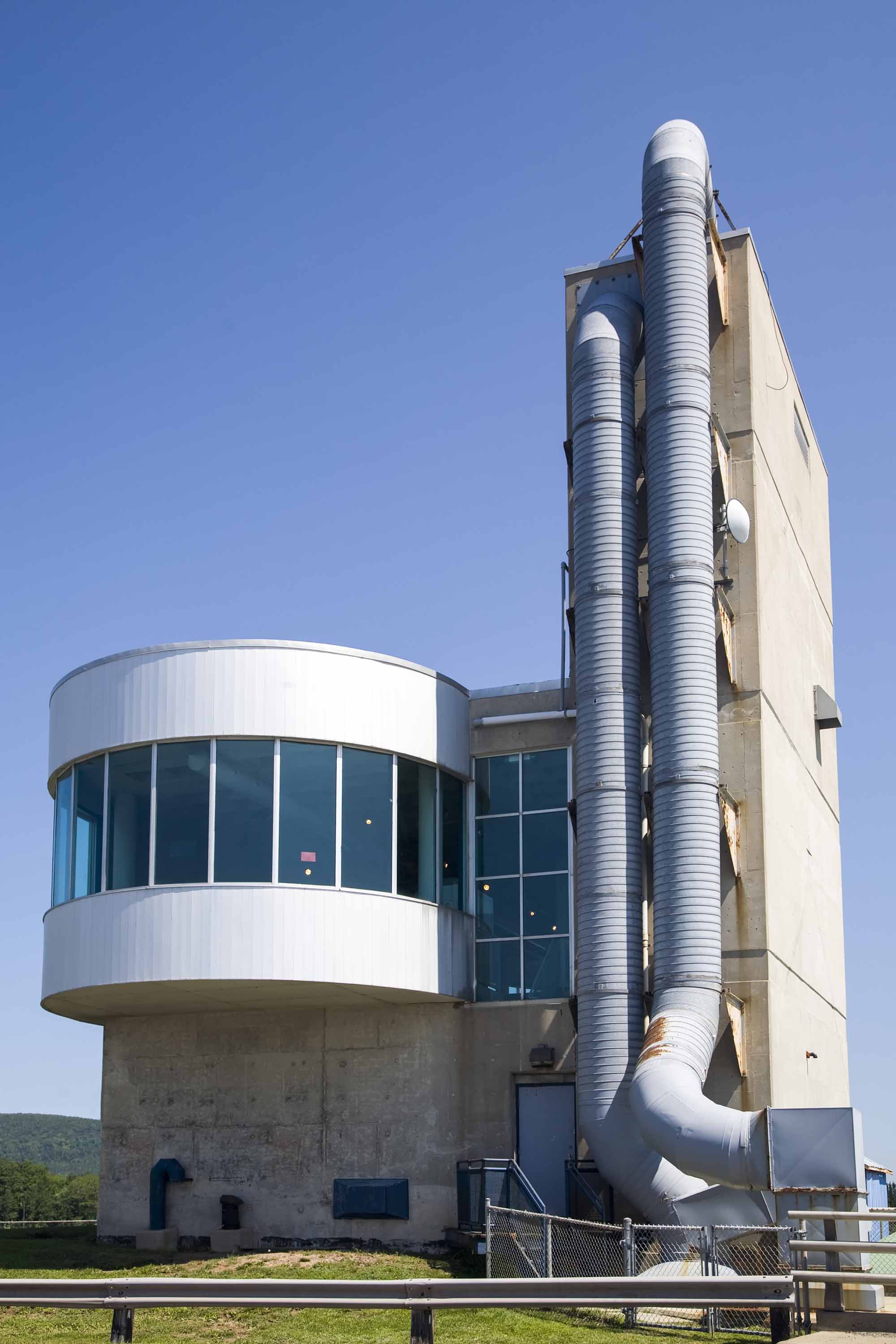
-
Article
Tide
The Earth is actually not in orbit around the sun but around the centre of mass of the Earth-sun system. Since all parts of the Earth move in the same orbit, they experience the same acceleration, but only at the Earth's centre is this acceleration exactly balanced by the sun's gravitation.
"https://d3d0lqu00lnqvz.cloudfront.net/media/media/989a9feb-532c-452f-829d-b5fecf83d434.jpg" // resources/views/front/categories/view.blade.php
https://d3d0lqu00lnqvz.cloudfront.net/media/media/989a9feb-532c-452f-829d-b5fecf83d434.jpg