
Browse "Things"
-
Article
The Royal Canadian Dragoons
The Royal Canadian Dragoons (RCD) is the senior of three regular armoured regiments in the Canadian Army. The regiment was established in 1883 as a cavalry unit. Since then, it has served in major conflicts at home and overseas, including the North-West Rebellion, Boer War, First and Second World Wars and, more recently, the war in Afghanistan. The Dragoons have also served in peace operations in Egypt, Cyprus, Somalia and the Balkans. The regiment has been based at CFB Petawawa, Ontario, since 1987. It is currently part of 2nd Canadian Mechanized Brigade Group, 4th Canadian Division. A detached squadron serves at CFB Gagetown, New Brunswick.
"https://d3d0lqu00lnqvz.cloudfront.net/Dragoons/Dragoons_1891.jpg" // resources/views/front/categories/view.blade.php
https://d3d0lqu00lnqvz.cloudfront.net/Dragoons/Dragoons_1891.jpg
-
Article
The Battle of York
A crushing defeat for the British in the War of 1812, the sacking of York began on the morning of 27 April 1813. At dawn, a flotilla of 16 American ships under Commodore Isaac Chauncey made its way to the capital of Upper Canada, York (Toronto). Landing to the west, the Americans suppressed the small group of warriors defending the shore, while knocking out the town's meagre batteries. The American force of approximately 1,700 men easily assumed control. With the fort poorly defended by an undersized garrison of 700 soldiers and backed by an unenthusiastic (indeed, almost wholly absent) militia, the British general, Sir Roger Hale Sheaffe, retreated. He left behind two local militia officers to negotiate the terms of surrender.
"https://d3d0lqu00lnqvz.cloudfront.net/media/media/SirIsaacBrockShip.jpg" // resources/views/front/categories/view.blade.php
https://d3d0lqu00lnqvz.cloudfront.net/media/media/SirIsaacBrockShip.jpg
-
Article
Seven Years’ War (Plain-Language Summary)
The Seven Years’ War (1756–63) was the first global war. In North America, Britain and France fought each other with the help of Indigenous allies. At the end of the war, France gave Canada (Quebec) and Ile Royale (Cape Breton) to Britain, among other territories. This is the reason that Canada has a British monarch but three founding peoples — French, British and Indigenous. This article is a plain-language summary of the Seven Years’ War. If you are interested in reading about this topic more in depth, please see our full-length entry, Seven Years’ War.
"https://d3d0lqu00lnqvz.cloudfront.net/JamesWolfe/Benjamin_West_DeathofGeneralWolfe.jpg" // resources/views/front/categories/view.blade.php
https://d3d0lqu00lnqvz.cloudfront.net/JamesWolfe/Benjamin_West_DeathofGeneralWolfe.jpg
-
Article
The Sheepdogs
Saskatoon blues rockers the Sheepdogs were plucked from obscurity in 2011 when they won a Rolling Stone contest. On 18 August 2011, they became the first unsigned band ever featured on the cover of the famed music magazine. The Sheepdogs have since released seven studio albums and won four Juno Awards, including New Group of the Year, Single of the Year and Rock Album of the Year in 2012. They have had two platinum albums and two platinum singles (“I Don’t Know” and “Feeling Good”) in Canada.
"https://d3d0lqu00lnqvz.cloudfront.net/5903251013_19c82ef745_o.jpg" // resources/views/front/categories/view.blade.php
https://d3d0lqu00lnqvz.cloudfront.net/5903251013_19c82ef745_o.jpg
-
Article
Shelburne Race Riots
On 26 July 1784, a mob of Loyalist settlers stormed the home of a Black preacher in Shelburne, Nova Scotia. They were armed with hooks and chains seized from ships in the harbour. The confrontation ignited a wave of violence in Shelburne County that lasted approximately 10 days. The majority of the attacks targeted the county’s free Black population. The Shelburne Riot has been described as the first race riot in North America. (See also British North America.)
"https://d3d0lqu00lnqvz.cloudfront.net/media/media/be13527b-b76d-408a-afca-30acbd4f7bfc.png" // resources/views/front/categories/view.blade.php
https://d3d0lqu00lnqvz.cloudfront.net/media/media/be13527b-b76d-408a-afca-30acbd4f7bfc.png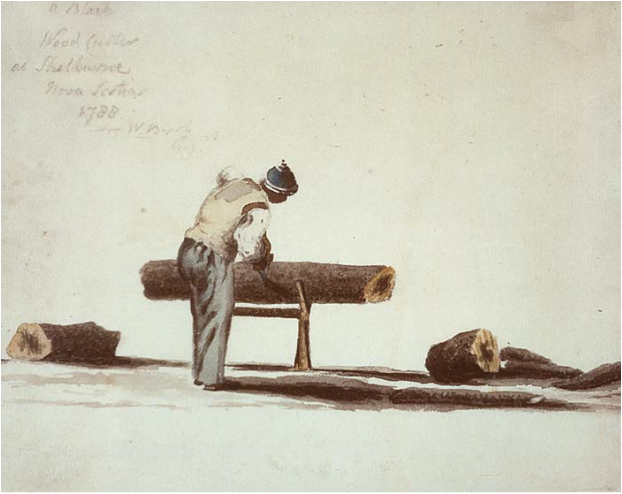
-
Macleans
The sick day scam
Costly sick-day banks and chronic absenteeism. It’s time to rein in this public sector perk.This article was originally published in Maclean's Magazine on July 8, 2013
"https://thecanadianencyclopedia.ca/images/tce_placeholder.jpg?v=e9dca980c9bdb3aa11e832e7ea94f5d9" // resources/views/front/categories/view.blade.php
https://thecanadianencyclopedia.ca/images/tce_placeholder.jpg?v=e9dca980c9bdb3aa11e832e7ea94f5d9
-
Macleans
The Spread of SARS
IT WAS NOT what health-care officials had hoped for, to say the least. Only a week earlier, one of Health Canada's leading authorities on infectious diseases had speculated that SARS - severe acute respiratory syndrome - might actually be "easy to control.This article was originally published in Maclean's Magazine on April 7, 2003
"https://thecanadianencyclopedia.ca/images/tce_placeholder.jpg?v=e9dca980c9bdb3aa11e832e7ea94f5d9" // resources/views/front/categories/view.blade.php
https://thecanadianencyclopedia.ca/images/tce_placeholder.jpg?v=e9dca980c9bdb3aa11e832e7ea94f5d9
-
Article
The Stampeders
The Stampeders. Rock band formed in Calgary in 1964 as a sextet, the Rebounds.
"https://thecanadianencyclopedia.ca/images/tce_placeholder.jpg?v=e9dca980c9bdb3aa11e832e7ea94f5d9" // resources/views/front/categories/view.blade.php
https://thecanadianencyclopedia.ca/images/tce_placeholder.jpg?v=e9dca980c9bdb3aa11e832e7ea94f5d9
-
Article
Editorial: The Stanley Flag and the “Distinctive Canadian Symbol”
The following article is an editorial written by The Canadian Encyclopedia staff. Editorials are not usually updated. Prime Minister Lester Pearson and John Matheson, one of his Liberal Members of Parliament, are widely considered the fathers of the Canadian flag. Their names were front and centre in 2015 during the tributes and celebrations to mark the 50th anniversary of the flag’s creation. But the role played by George Stanley is often lost in the story of how this iconic symbol came to be.
"https://d3d0lqu00lnqvz.cloudfront.net/media/media/a9adffc5-8796-4968-ac52-ab33df0fe6eb.jpg" // resources/views/front/categories/view.blade.php
https://d3d0lqu00lnqvz.cloudfront.net/media/media/a9adffc5-8796-4968-ac52-ab33df0fe6eb.jpg
-
Editorial
The Northwest Passage: From Myth to Reality
The following article is an editorial written by The Canadian Encyclopedia staff. Editorials are not usually updated.
"https://thecanadianencyclopedia.ca/images/tce_placeholder.jpg?v=e9dca980c9bdb3aa11e832e7ea94f5d9" // resources/views/front/categories/view.blade.php
https://thecanadianencyclopedia.ca/images/tce_placeholder.jpg?v=e9dca980c9bdb3aa11e832e7ea94f5d9
-
Article
The Study of Working Class History
The Canadian worker has been a neglected figure in Canadian history. Workers have contributed in many ways to the development of Canadian society, but the history of working people — their families, communities and work places — has only gradually become part of our view of the past and an important component of understanding how we came to occupy our present.
"https://d3d0lqu00lnqvz.cloudfront.net/media/media/b80125b4-aa4c-4ba7-93ee-b529174ca74b.jpg" // resources/views/front/categories/view.blade.php
https://d3d0lqu00lnqvz.cloudfront.net/media/media/b80125b4-aa4c-4ba7-93ee-b529174ca74b.jpg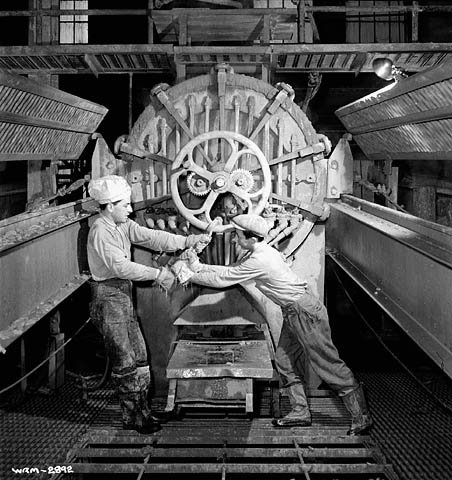
-
Article
The Tragically Hip
The Tragically Hip have been called “the most Canadian band in the world” by the BBC. The New York Times described them as “the band that for many has come closest to defining [Canada]’s cultural identity.” Between 1987 and 2016, they cemented themselves as the most popular Canadian band ever — despite having limited success outside the country. Their records have sold over 6 million copies in Canada. Nine of the band’s 13 studio albums topped the Canadian sales chart. The Hip amassed 46 Juno Award nominations and 16 trophies, including three each for Entertainer of the Year and Group of the Year, three for Rock Album of the Year and one for Album of the Year. They also received the Juno’s Humanitarian Award and were inducted into the Canadian Music Hall of Fame and Canada’s Walk of Fame. After lead singer and lyricist Gord Downie announced he had terminal brain cancer in 2016, the band undertook a farewell tour that rivetted much of the country. Downie was named the Canadian Press Newsmaker of the Year in 2016 and 2017 — the first entertainer to receive the honour.
"https://d3d0lqu00lnqvz.cloudfront.net/media/media/4f532598-0d92-4792-b97d-dfb8aa849b65.jpg" // resources/views/front/categories/view.blade.php
https://d3d0lqu00lnqvz.cloudfront.net/media/media/4f532598-0d92-4792-b97d-dfb8aa849b65.jpg
-
Editorial
Editorial: John Humphrey, Eleanor Roosevelt and the Universal Declaration of Human Rights
The following article is an editorial written by The Canadian Encyclopedia staff. Editorials are not usually updated. In 1946, John Humphrey became director of the United Nations Division on Human Rights, and Eleanor Roosevelt was named the United States representative to the UN’s Commission on Human Rights. Humphrey was an obscure Canadian law professor. Roosevelt was the world’s most celebrated woman. For two years, they collaborated on the creation of one of the modern world’s great documents: the Universal Declaration of Human Rights. It was adopted on 10 December 1948.
"https://d3d0lqu00lnqvz.cloudfront.net/media/media/6afcc1db-4a9a-4e2f-9a50-ad1981f54caf.jpg" // resources/views/front/categories/view.blade.php
https://d3d0lqu00lnqvz.cloudfront.net/media/media/6afcc1db-4a9a-4e2f-9a50-ad1981f54caf.jpg
-
Article
The Valente Case
The A judge of the Provincial Court of Ontario declared that he had no jurisdiction to hear a case under the Highway Traffic Act of Ontario because he did not preside over an independent court in the sense of s11(d) of the Canadian Charter of Rights and Freedoms.
"https://thecanadianencyclopedia.ca/images/tce_placeholder.jpg?v=e9dca980c9bdb3aa11e832e7ea94f5d9" // resources/views/front/categories/view.blade.php
https://thecanadianencyclopedia.ca/images/tce_placeholder.jpg?v=e9dca980c9bdb3aa11e832e7ea94f5d9
-
Article
The “Van Doos” and the Great War
As the only combatant unit in the Canadian Expeditionary Force (CEF) whose official language was French, the 22nd (French Canadian) Infantry Battalion, commonly referred to as the “Van Doos” (from vingt-deux, meaning twenty-two in French), was subject to more scrutiny than most Canadian units in the First World War.
"https://d3d0lqu00lnqvz.cloudfront.net/media/media/11751af0-ec83-4753-8f2b-bb38ed576b7f.jpg" // resources/views/front/categories/view.blade.php
https://d3d0lqu00lnqvz.cloudfront.net/media/media/11751af0-ec83-4753-8f2b-bb38ed576b7f.jpg