
Browse "Things"
-
Timelines
The Indian Act
The Indian Act is the principal law through which the federal government administers Indian status, local First Nations governments and the management of reserve land and communal monies. The Indian Act does not include Métis or Inuit peoples. The Act came into power on 12 April 1876. It consolidated a number of earlier colonial laws that sought to control and assimilate Indigenous peoples into Euro-Canadian culture. The Indian Act has been amended many times over...
"https://d3d0lqu00lnqvz.cloudfront.net/media/media/cbcd31d1-03f6-4fba-a45d-96ee89c4617d.jpg" // resources/views/front/categories/view.blade.php
https://d3d0lqu00lnqvz.cloudfront.net/media/media/cbcd31d1-03f6-4fba-a45d-96ee89c4617d.jpg
-
Article
The Internet and Music
The Internet began in the early 1970s as a "network of networks" involving several different US university and government computer systems. It quickly expanded to incorporate computer networks in other countries, including Canada.
"https://thecanadianencyclopedia.ca/images/tce_placeholder.jpg?v=e9dca980c9bdb3aa11e832e7ea94f5d9" // resources/views/front/categories/view.blade.php
https://thecanadianencyclopedia.ca/images/tce_placeholder.jpg?v=e9dca980c9bdb3aa11e832e7ea94f5d9
-
Article
The Iroquois Nationals and the 2010 World Lacrosse Championships
The Iroquois Nationals are a lacrosse team representing the Haudenosaunee Confederacy, which crosses the Canada-US border. It is the only First Nations team officially sanctioned to compete in any sport internationally. While this gives the team a unique distinction, it is also at the heart of an ongoing controversy that has resulted in the Nationals forfeiting games due to disputes over the legitimacy of the passports they use to travel internationally.
"https://d3d0lqu00lnqvz.cloudfront.net/Iroquois_passport.png" // resources/views/front/categories/view.blade.php
https://d3d0lqu00lnqvz.cloudfront.net/Iroquois_passport.png
-
Article
The Journey of Nishiyuu (The Journey of the People)
Between 16 January and 25 March 2013, six Cree youths and their guide walked 1,600 km from Whapmagoostui First Nation, the northernmost Cree village in Quebec on Hudson Bay, to Parliament Hill in Ottawa in support of the Idle No More movement. They called the trek “The Journey of Nishiyuu,” which is Cree for “people.” Known as the Nishiyuu Walkers, the group attracted national media attention and inspired Indigenous youth to be the force of change in their lives and communities. (See also Indigenous Women Activists in Canada and Indigenous Political Organization and Activism in Canada.)
"https://d3d0lqu00lnqvz.cloudfront.net/media/media/00339332-5ac9-4b3b-8578-b7200b7db6fc.jpg" // resources/views/front/categories/view.blade.php
https://d3d0lqu00lnqvz.cloudfront.net/media/media/00339332-5ac9-4b3b-8578-b7200b7db6fc.jpg
-
Article
The Last Spike
The Last Spike was the final and ceremonial railway spike driven into the Canadian Pacific Railway (CPR) track by company director Donald Smith on the morning of 7 November 1885. The ceremony marked the completion of the transcontinental CPR and was a muted affair at which a group of company officials and labourers gathered at Craigellachie near Eagle Pass in the interior of British Columbia. One of about 30 million iron spikes used in the construction of the line, the Last Spike came to symbolize more than the completion of a railway. Contemporaries and historians have viewed the Last Spike — as well as the iconic photographs of the event — as a moment when national unity was realized.
"https://d3d0lqu00lnqvz.cloudfront.net/media/media/1f3712f0-f1ac-4fba-a093-ff4c7cfec856.jpg" // resources/views/front/categories/view.blade.php
https://d3d0lqu00lnqvz.cloudfront.net/media/media/1f3712f0-f1ac-4fba-a093-ff4c7cfec856.jpg
-
"https://d3d0lqu00lnqvz.cloudfront.net/media/media/a4e59d7a-0581-47a1-a5ff-60757732f349.jpg" // resources/views/front/categories/view.blade.php
https://d3d0lqu00lnqvz.cloudfront.net/media/media/a4e59d7a-0581-47a1-a5ff-60757732f349.jpg
-
Article
The Lost Villages
The Lost Villages are nine Canadian communities that were destroyed through the unprecedented land expropriation and construction of the St. Lawrence Seaway and Power Project in the 1950s.
"https://d3d0lqu00lnqvz.cloudfront.net/media/media/1c940fd1-3163-44f3-b0d8-4320c8b71fb7.jpg" // resources/views/front/categories/view.blade.php
https://d3d0lqu00lnqvz.cloudfront.net/media/media/1c940fd1-3163-44f3-b0d8-4320c8b71fb7.jpg
-
Article
"The Maple Leaf Forever"
“The Maple Leaf Forever” is a patriotic song composed by Alexander Muir (words and music) in October 1867, the year of Confederation. Next to "O Canada," which it predates by 13 years, “The Maple Leaf Forever” has been the most popular patriotic song composed in Canada. For generations, it and “God Save the King” were the de facto national anthems in English Canada. However, due to its British colonial perspective, the song did not become popular among French Canadians. As “O Canada” emerged as the official national anthem in the latter half of the 20th century, the popularity of “The Maple Leaf Forever” waned among English Canadians, although it was somewhat reinvigorated by a new version performed by Anne Murray in 1999 and Michael Bublé in 2010.
"https://d3d0lqu00lnqvz.cloudfront.net/Portrait_of_Alexander_Muir-_1830-1906_OHQ-PICTURES-S-R-723.jpg" // resources/views/front/categories/view.blade.php
https://d3d0lqu00lnqvz.cloudfront.net/Portrait_of_Alexander_Muir-_1830-1906_OHQ-PICTURES-S-R-723.jpg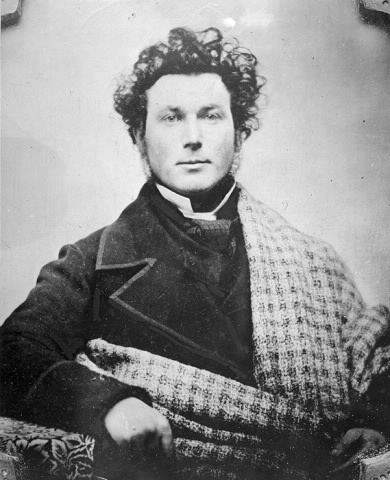
-
Editorial
The Life and Meaning of Everett Klippert
The following article is an editorial written by The Canadian Encyclopedia staff. Editorials are not usually updated. Everett George Klippert (1926–1996) was a popular Calgary bus driver who was jailed for homosexuality from 1960 to 1964, and from 1965 to 1971. An unlikely martyr, he shunned the spotlight. Klippert was once described as “Canada’s most famous homosexual” due to his unjust prison sentences, which ultimately led to the decriminalization of homosexuality in Canada.
"https://d3d0lqu00lnqvz.cloudfront.net/media/media/d5d0ce81-9f5e-4938-8c53-1fdaee0b6c39.jpg" // resources/views/front/categories/view.blade.php
https://d3d0lqu00lnqvz.cloudfront.net/media/media/d5d0ce81-9f5e-4938-8c53-1fdaee0b6c39.jpg
-
Article
The Memory Project
The Memory Project is a bilingual program whose mandate is to record and share the stories of veterans and currently serving Canadian Forces members. The Memory Project has two branches: a speakers bureau and an archive. The program aims to preserve Canada’s military history through the voices of those who serve. In addition to the speakers bureau and archive, the Memory Project creates free, bilingual educational materials, including videos, podcasts, and learning tools for classroom use, using oral testimony. The Memory Project is an initiative of the not-for-profit organization Historica Canada (publisher of The Canadian Encyclopedia and maker of the Heritage Minutes) and made possible with funding from the Government of Canada through the departments of Canadian Heritage and Veterans Affairs.
"https://d3d0lqu00lnqvz.cloudfront.net/media/media/b5d10d9d-bc08-4d55-969d-32c81691fbeb.jpg" // resources/views/front/categories/view.blade.php
https://d3d0lqu00lnqvz.cloudfront.net/media/media/b5d10d9d-bc08-4d55-969d-32c81691fbeb.jpg
-
Article
Montréal Biodôme
Opened in 1992 and located in the former Olympic velodrome, the Montréal Biodôme is part of the “Space for Life” network, which includes Montréal’s Insectarium, Planetarium and Botanical Garden.
"https://d3d0lqu00lnqvz.cloudfront.net/media/media/602331f5-435c-42b0-848e-0be2945dce57.jpg" // resources/views/front/categories/view.blade.php
https://d3d0lqu00lnqvz.cloudfront.net/media/media/602331f5-435c-42b0-848e-0be2945dce57.jpg
-
Article
Montréal Insectarium
Opened on 7 February 1990, the Montréal Insectarium is part of the “Space for Life” network, which includes Montréal’s Biodome, Planetarium and Botanical Garden.
"https://d3d0lqu00lnqvz.cloudfront.net/media/media/34dcd770-a882-419d-91b2-c4ca29f2fbdd.jpg" // resources/views/front/categories/view.blade.php
https://d3d0lqu00lnqvz.cloudfront.net/media/media/34dcd770-a882-419d-91b2-c4ca29f2fbdd.jpg
-
Article
Montreal Olympics
In 1976, Montreal became the first Canadian city to host the Olympic Games. The XXIst Olympiad, held from 17 July to 1 August 1976, included memorable performances from many athletes, including Romanian gymnast Nadia Comaneci and American decathlete Caitlyn Jenner. Although Canada did not win a gold medal at the Games, the Canadian team won 11 medals in total —more than double the number of medals won at each of the previous two Olympic Games. The Olympic facilities, while costly, became Montreal landmarks and many are still used for training and competition.
"https://d3d0lqu00lnqvz.cloudfront.net/media/media/e4a2fa0e-506a-404c-a765-b1bb950e2ba3.jpg" // resources/views/front/categories/view.blade.php
https://d3d0lqu00lnqvz.cloudfront.net/media/media/e4a2fa0e-506a-404c-a765-b1bb950e2ba3.jpg
-
Article
The Mynah Birds
The Mynah Birds were a short-lived Canadian rhythm and blues (R&B) band active in Toronto in the mid-1960s. It featured several musicians who went on to have successful careers, most notably Canadian rock icon Neil Young, Nick St. Nicholas and Goldy McJohn of Steppenwolf, Bruce Palmer of Buffalo Springfield, and American R&B pop star Rick James. The Mynah Birds were signed to Motown Records and recorded under the direction of Smokey Robinson. They were not commercially successful or widely known while they were active, but they are a prime example of the eclecticism of Toronto’s Yorkville music scene in the 1960s.
"https://d3d0lqu00lnqvz.cloudfront.net/media/media/f89fba9f-6a12-4134-bc15-7f43d9eb080b.jpg" // resources/views/front/categories/view.blade.php
https://d3d0lqu00lnqvz.cloudfront.net/media/media/f89fba9f-6a12-4134-bc15-7f43d9eb080b.jpg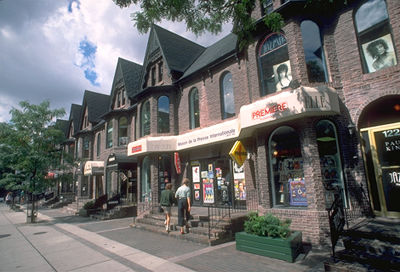
-
Article
The Nancy and the War of 1812
The Nancy was a schooner built in 1789 at the then-British port of Detroit, by a Montréal shipbuilding company under the supervision of John Richardson (whose daughter's and wife's names were Nancy).
"https://thecanadianencyclopedia.ca/images/tce_placeholder.jpg?v=e9dca980c9bdb3aa11e832e7ea94f5d9" // resources/views/front/categories/view.blade.php
https://thecanadianencyclopedia.ca/images/tce_placeholder.jpg?v=e9dca980c9bdb3aa11e832e7ea94f5d9