Browse "Things"
-
Editorial
The First Telegraph in Canada
The following article is an editorial written by The Canadian Encyclopedia staff. Editorials are not usually updated.
"https://d3d0lqu00lnqvz.cloudfront.net/media/media/d728ded5-05be-48c5-8097-f08db72cac00.jpg" // resources/views/front/categories/view.blade.php
https://d3d0lqu00lnqvz.cloudfront.net/media/media/d728ded5-05be-48c5-8097-f08db72cac00.jpg
-
Editorial
The First Thanksgiving in North America
The following article is an editorial written by The Canadian Encyclopedia staff. Editorials are not usually updated. It has become common knowledge that the first Thanksgiving in North America was held by Sir Martin Frobisher and his crew in Nunavut in 1578. There are those — mainly Americans upset by the thought of having their holiday co-opted — who argue that it wasn't a “real” Thanksgiving. I would counter that Frobisher had reason to give thanks, and that giving thanks was an important aspect of Elizabethan society, so it would have been a natural thing for him and his men to do.
"https://d3d0lqu00lnqvz.cloudfront.net/media/media/c07fc308-7b63-421f-8b08-2c821321ba57.jpg" // resources/views/front/categories/view.blade.php
https://d3d0lqu00lnqvz.cloudfront.net/media/media/c07fc308-7b63-421f-8b08-2c821321ba57.jpg
-
Editorial
Editorial: The Canadian Flag, Distinctively Our Own
The following article is an editorial written by The Canadian Encyclopedia staff. Editorials are not usually updated. On 15 February 1965, at hundreds of ceremonies across the country and around the world, the red and white Maple LeafFlag was raised for the first time. In Ottawa, 10,000 people gathered on a chilly, snow-covered Parliament Hill. At precisely noon, the guns on nearby Nepean Point sounded as the sun broke through the clouds. An RCMP constable, 26-year-old Joseph Secours, hoisted the National Flag of Canadato the top of a specially-erected white staff. A sudden breeze snapped it to attention.
"https://d3d0lqu00lnqvz.cloudfront.net/media/media/59917f0c-b633-43e2-bb85-3d0ded55dc95.jpg" // resources/views/front/categories/view.blade.php
https://d3d0lqu00lnqvz.cloudfront.net/media/media/59917f0c-b633-43e2-bb85-3d0ded55dc95.jpg
-
Editorial
Editorial: Baldwin, LaFontaine and Responsible Government
The following article is an editorial written by The Canadian Encyclopedia staff. Editorials are not usually updated. The Baldwin–LaFontaine government of 1848 has been called the “great ministry.” In addition to establishing responsible government, it had an incomparable record of legislation. It established a public school system and finalized the founding of the University of Toronto. It set up municipal governments and pacified French-Canadian nationalism after a period of unrest. Responsible government did not transform Canada overnight into a fully developed democracy. But it was an important milestone along the road to political autonomy. Most importantly, it provided an opportunity for French Canadians to find a means for their survival through the British Constitution. The partnership and friendship between Baldwin and LaFontaine were brilliant examples of collaboration that have been all too rare in Canadian history.
"https://d3d0lqu00lnqvz.cloudfront.net/media/media/ba6bdff6-574a-4697-ac95-afdcc5ddfcc9.jpg" // resources/views/front/categories/view.blade.php
https://d3d0lqu00lnqvz.cloudfront.net/media/media/ba6bdff6-574a-4697-ac95-afdcc5ddfcc9.jpg
-
Article
The Governor General's Foot Guards Band
The Governor General's Foot Guards Band, Ottawa. Volunteer militia band formed soon after the establishment of the regiment in 1872. Based on the personnel of the Ottawa Brigade Artillery Band, the ensemble made its debut 15 Jun 1872 under its first director, John C. Bonner.
"https://thecanadianencyclopedia.ca/images/tce_placeholder.jpg?v=e9dca980c9bdb3aa11e832e7ea94f5d9" // resources/views/front/categories/view.blade.php
https://thecanadianencyclopedia.ca/images/tce_placeholder.jpg?v=e9dca980c9bdb3aa11e832e7ea94f5d9
-
Editorial
The Great Crash of 1929 in Canada
The following article is an editorial written by The Canadian Encyclopedia staff. Editorials are not usually updated. In late October of 1929, terror seized the stock exchanges of North America. Capitalism’s speculative party, with its galloping share prices and its celebrity millionaires, came to an abrupt stop. The Great Crash, it was called, and it was followed by the Great Depression.
"https://d3d0lqu00lnqvz.cloudfront.net/media/media/cc8df85f-c925-4f6f-91e1-7403bcb85345.jpg" // resources/views/front/categories/view.blade.php
https://d3d0lqu00lnqvz.cloudfront.net/media/media/cc8df85f-c925-4f6f-91e1-7403bcb85345.jpg
-
Article
The Great Lone Land: A Narrative of Travel and Adventure in the North-West of America
The Great Lone Land: A Narrative of Travel and Adventure in the North-West of America, by William Francis Butler, appeared 1872 in London.
"https://d3d0lqu00lnqvz.cloudfront.net/media/media/5bcc63e6-dcea-4888-bd88-fb362897d235.jpg" // resources/views/front/categories/view.blade.php
https://d3d0lqu00lnqvz.cloudfront.net/media/media/5bcc63e6-dcea-4888-bd88-fb362897d235.jpg
-
Macleans
The Great War Haunts Us Still
IT'S BEEN 90 YEARS now since the Guns of August began to fire, and the smoke has yet to clear from the world they made. The fault lines of modern history - from the quagmire in Iraq through Yugoslavia's implosion to the Cold War and beyond - all branch back to the cataclysm of 1914-1918.This article was originally published in Maclean's Magazine on November 8, 2004
"https://thecanadianencyclopedia.ca/images/tce_placeholder.jpg?v=e9dca980c9bdb3aa11e832e7ea94f5d9" // resources/views/front/categories/view.blade.php
https://thecanadianencyclopedia.ca/images/tce_placeholder.jpg?v=e9dca980c9bdb3aa11e832e7ea94f5d9
-
Article
The Gutenberg Galaxy: The Making of Typographical Man
The Gutenberg Galaxy: The Making of Typographical Man, by Marshall McLuhan (Toronto 1962), is a brilliantly eclectic analysis in which McLuhan claims that print technology has modified the form of our perception, shifting and concentrating perceptual emphasis from the ear to the eye, with tremendous consequences for individuals and cultures.
"https://thecanadianencyclopedia.ca/images/tce_placeholder.jpg?v=e9dca980c9bdb3aa11e832e7ea94f5d9" // resources/views/front/categories/view.blade.php
https://thecanadianencyclopedia.ca/images/tce_placeholder.jpg?v=e9dca980c9bdb3aa11e832e7ea94f5d9
-
Article
Halifax Explosion and the CNIB
The 1917 Halifax Explosion is well-known as the biggest human-made explosion in the pre-atomic era. The event was also the largest mass-blinding in Canadian history and it played a crucial role in the founding of the Canadian National Institute for the Blind (CNIB). (See also Blindness and Visual Impairment.)
"https://d3d0lqu00lnqvz.cloudfront.net/media/media/f30038ca-9247-42a2-acb4-93cafefda81e.jpg" // resources/views/front/categories/view.blade.php
https://d3d0lqu00lnqvz.cloudfront.net/media/media/f30038ca-9247-42a2-acb4-93cafefda81e.jpg
-
Editorial
The Halifax Explosion of 1917
The following article is an editorial written by The Canadian Encyclopedia staff. Editorials are not usually updated.
"https://thecanadianencyclopedia.ca/images/tce_placeholder.jpg?v=e9dca980c9bdb3aa11e832e7ea94f5d9" // resources/views/front/categories/view.blade.php
https://thecanadianencyclopedia.ca/images/tce_placeholder.jpg?v=e9dca980c9bdb3aa11e832e7ea94f5d9
-
Article
The Handmaid's Tale
Margaret Atwood’s sixth novel, The Handmaid's Tale (1985) is a chilling dystopian vision of the future. It is set in the Republic of Gilead, a totalitarian America in which fundamentalist Christians have killed the president and Congress and imposed a puritanical theocracy. The Handmaid's Tale portrays a loveless police state that oppresses women and regulates all aspects of human life with constant surveillance. The novel won the Governor General's Literary Award and the Arthur C. Clarke Award for Science Fiction Literature. It has sold more than eight million copies in English. The Washington Post’s Ron Charles called it “the most popular and influential feminist novel ever written.” It has been adapted into a feature film, an acclaimed opera, a ballet, an Emmy Award-winning television series and a graphic novel. The Testaments, a highly anticipated sequel written by Atwood, was published in September 2019. It was awarded the Booker Prize in a rare tie with Bernardine Evaristo’s Girl, Woman, Other.
"https://d3d0lqu00lnqvz.cloudfront.net/media/Twitter_Cards/Handmaid's Tale.jpg" // resources/views/front/categories/view.blade.php
https://d3d0lqu00lnqvz.cloudfront.net/media/Twitter_Cards/Handmaid's Tale.jpg
-
Editorial
The Heroism of William Jackman
The following article is an editorial written by The Canadian Encyclopedia staff. Editorials are not updated.On 9 October 1867, in Spotted Island Harbour, Labrador, Captain William Jackman secured his vessel ahead of a vicious storm and went ashore to visit his old friend, John Holwell. Before the day ended, events transpired that earned Jackman a place in Newfoundland history — and legend.
"https://d3d0lqu00lnqvz.cloudfront.net/media/media/ab2a7cfb-9c8d-4afb-81e1-d63780c50952.jpg" // resources/views/front/categories/view.blade.php
https://d3d0lqu00lnqvz.cloudfront.net/media/media/ab2a7cfb-9c8d-4afb-81e1-d63780c50952.jpg
-
Article
The History of Canadian Women in Sport
For hundreds of years, very few sports were considered appropriate for women, whether for reasons of supposed physical frailty, or the alleged moral dangers of vigorous exercise. Since the late 19th century, however, women in Canada have participated in a growing list of sports — not only those deemed graceful and feminine, but also the sweaty, rough-and-tumble games traditionally played only by men (e.g., hockey, boxing, soccer, rugby)
"https://d3d0lqu00lnqvz.cloudfront.net/media/media/9c27e9a9-7620-4f38-b10f-d79a6c7956ce.jpg" // resources/views/front/categories/view.blade.php
https://d3d0lqu00lnqvz.cloudfront.net/media/media/9c27e9a9-7620-4f38-b10f-d79a6c7956ce.jpg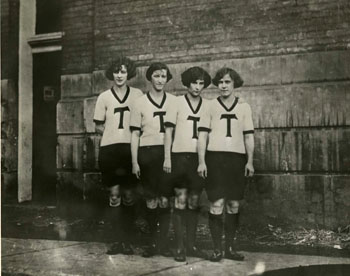
-
Article
Canadian Film History: 1896 to 1938
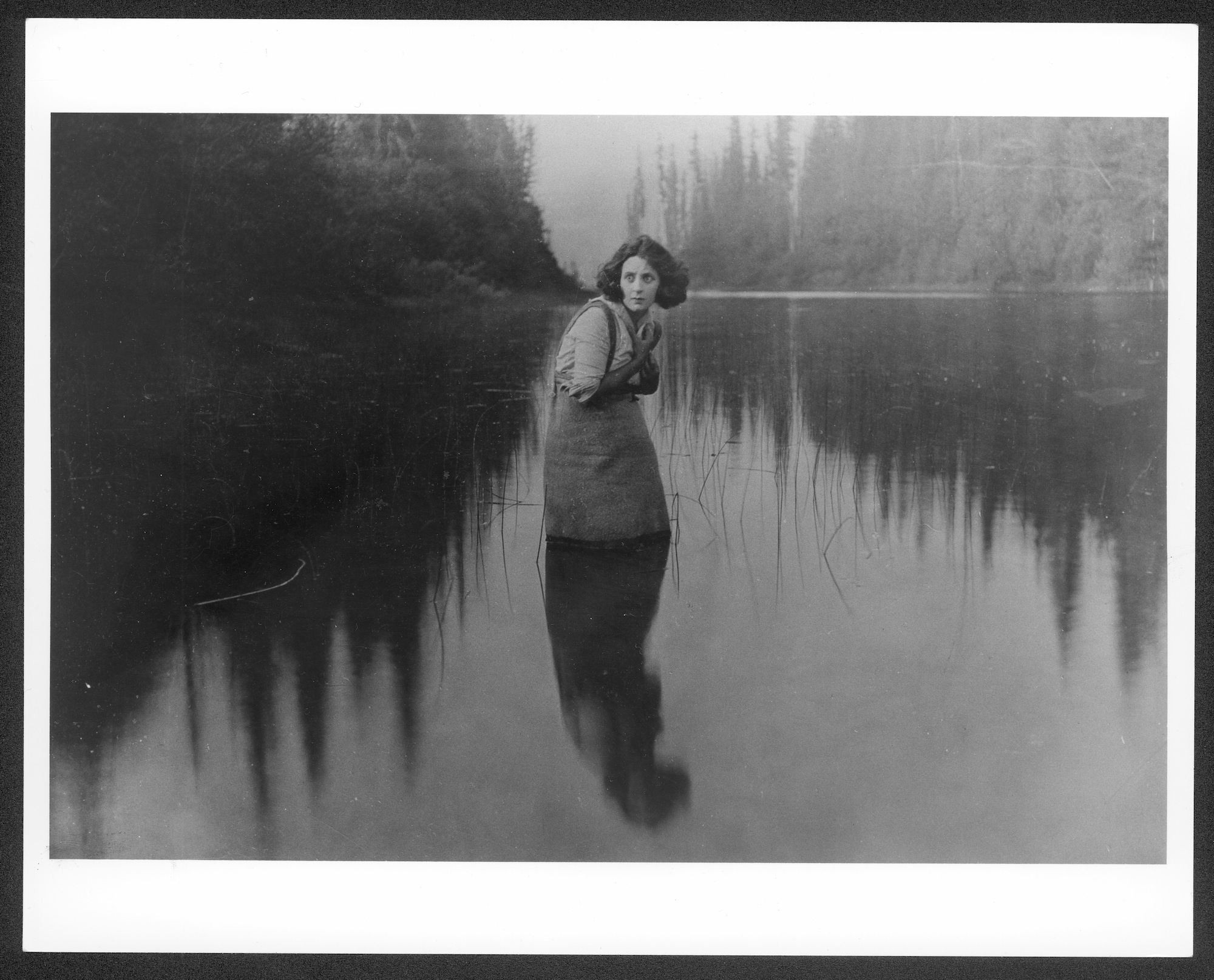
Filmmaking is a powerful form of cultural and artistic expression, as well as a highly profitable commercial enterprise. From a practical standpoint, filmmaking is a business involving large sums of money and a complex division of labour. This labour is involved, roughly speaking, in three sectors: production, distribution and exhibition. The history of the Canadian film industry has been one of sporadic achievement accomplished in isolation against great odds. Canadian cinema has existed within an environment where access to capital for production, to the marketplace for distribution and to theatres for exhibition has been extremely difficult. The Canadian film industry, particularly in English Canada, has struggled against the Hollywood entertainment monopoly for the attention of an audience that remains largely indifferent toward the domestic industry. The major distribution and exhibition outlets in Canada have been owned and controlled by foreign interests. The lack of domestic production throughout much of the industry’s history can only be understood against this economic backdrop. This article is one of four that surveys the history of the film industry in Canada. The entire series includes: Canadian Film History: 1896 to 1938; Canadian Film History: 1939 to 1973; Canadian Film History: 1974 to Present; Canadian Film History: Notable Films and Filmmakers 1980 to Present.
"https://d3d0lqu00lnqvz.cloudfront.net/media/media/1f440346-22dd-48de-951f-264baf7a7fc4.jpg" // resources/views/front/categories/view.blade.php
https://d3d0lqu00lnqvz.cloudfront.net/media/media/1f440346-22dd-48de-951f-264baf7a7fc4.jpg