
Browse "Things"
-
Article
The Breadwinner
The Breadwinner (2001) is the first book in a series of young adult novels set in Taliban-ruled Afghanistan by writer and activist Deborah Ellis. It was followed by Parvana’s Journey (2002), Mud City (2003) and the final book, My Name is Parvana (2012). Inspired by Ellis’s interviews with Afghan women in refugee camps, the series begins with 11-year-old Parvana, who must disguise herself as a boy to support her family after her father is arrested by the Taliban. It is a story of courage and empowerment and sheds light on the horrors of war, especially for the children caught in the crossfire. The Breadwinner was shortlisted for the Trillium Book Award, while Parvana’s Journey was shortlisted for the Governor General’s Literary Award. Nora Twomey’s animated adaptation of The Breadwinner (2017) received Academy Award and Golden Globe nominations for best animated feature, as well as four Canadian Screen Awards and numerous other honours.
"https://d3d0lqu00lnqvz.cloudfront.net/media/Twitter_Cards/the breadwinner.jpg" // resources/views/front/categories/view.blade.php
https://d3d0lqu00lnqvz.cloudfront.net/media/Twitter_Cards/the breadwinner.jpg
-
Article
The Bully Boys
Eric Walters’s The Bully Boys (2000) is a work of historical fiction for young adults. It follows Tom Roberts, a young farm boy who aids and observes Lieutenant James FitzGibbon and his mercenary soldiers during the War of 1812.
"https://d3d0lqu00lnqvz.cloudfront.net/media/new_article_images/EricWalters/528px-Eric_Walters_-_Eden_Mills_Writers_Festival_-_2016_(DanH-0627)_(cropped).jpg" // resources/views/front/categories/view.blade.php
https://d3d0lqu00lnqvz.cloudfront.net/media/new_article_images/EricWalters/528px-Eric_Walters_-_Eden_Mills_Writers_Festival_-_2016_(DanH-0627)_(cropped).jpg
-
Article
The Burning of Washington
In the final summer of the War of 1812, British presence in the Chesapeake region was strengthened in an effort to divert the American forces from the frontiers of Upper and Lower Canada.
"https://d3d0lqu00lnqvz.cloudfront.net/media/media/07db67ae-df36-4c64-b774-750df91b2db9.jpg" // resources/views/front/categories/view.blade.php
https://d3d0lqu00lnqvz.cloudfront.net/media/media/07db67ae-df36-4c64-b774-750df91b2db9.jpg
-
Article
The Canadian Armed Forces and Natural Disasters
Natural disasters have long been a part of the Canadian experience. Given the country’s geography, climate, vast forests and large bodies of water — coupled with climate change — natural disasters will continue to affect Canada. Since at least 1950, the Canadian Armed Forces (CAF) has helped communities respond to natural disasters, mobilizing its personnel, equipment and expertise to deal with floods, storms, wildfires and other events. The demand for military assistance has grown significantly since 2013.
"https://d3d0lqu00lnqvz.cloudfront.net/CAF-Disasters/CAF-Operation-Lentus-Ottawa-2019.jpg" // resources/views/front/categories/view.blade.php
https://d3d0lqu00lnqvz.cloudfront.net/CAF-Disasters/CAF-Operation-Lentus-Ottawa-2019.jpg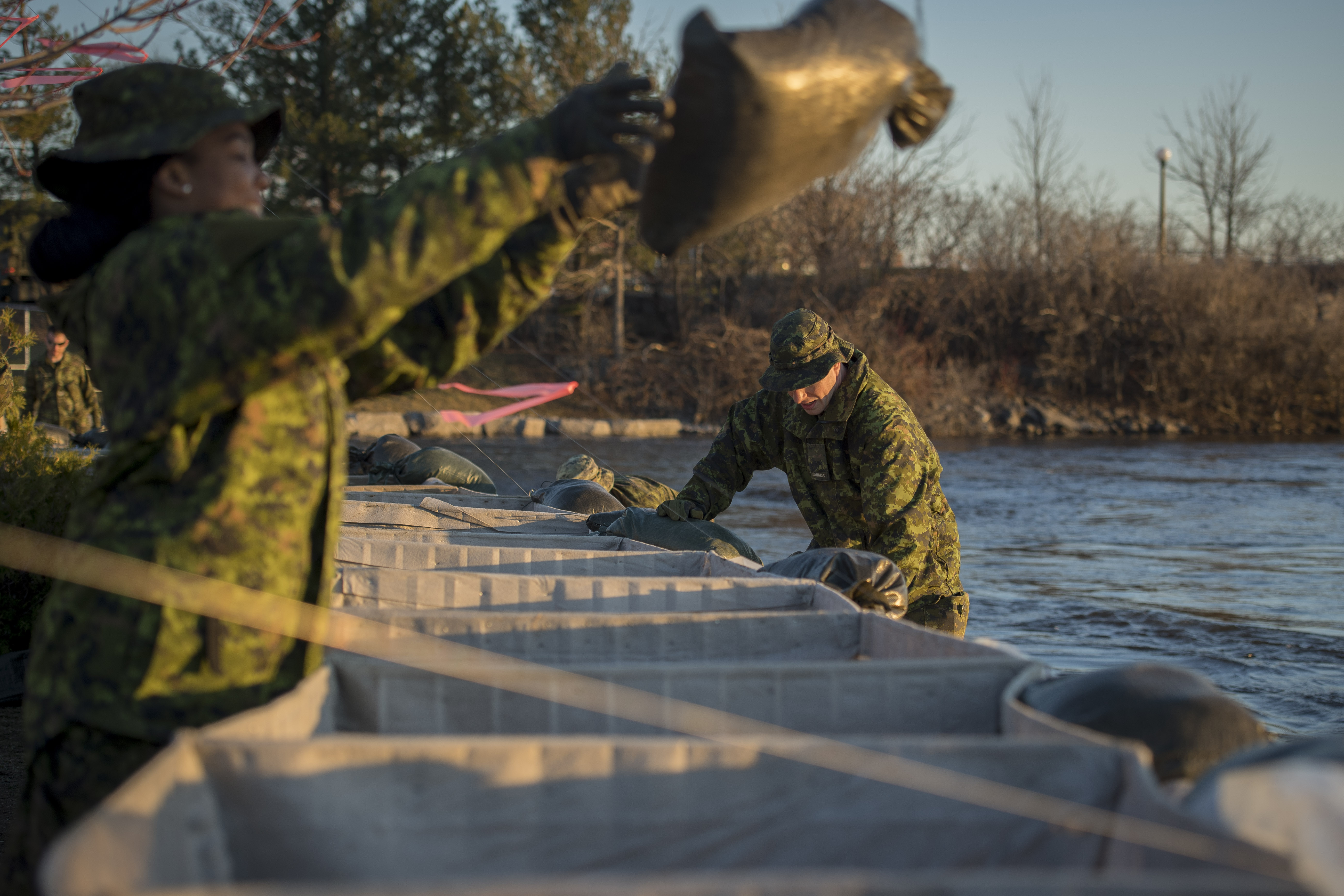
-
Editorial
Ken Taylor and the "Canadian Caper"
The following article is an editorial written by The Canadian Encyclopedia staff. Editorials are not usually updated.
"https://thecanadianencyclopedia.ca/images/tce_placeholder.jpg?v=e9dca980c9bdb3aa11e832e7ea94f5d9" // resources/views/front/categories/view.blade.php
https://thecanadianencyclopedia.ca/images/tce_placeholder.jpg?v=e9dca980c9bdb3aa11e832e7ea94f5d9
-
Article
The Canadian Great War Soldier
Canada, as part of the British Empire, found itself at war on 4 August 1914. Yet Canadians would decide the extent of their commitment to the war. With no air force, a puny navy, and a professional army of a mere 3,100 men, the soon-to-be Canadian Expeditionary Force (CEF) would consist of citizen soldiers from across the Dominion.
"https://d3d0lqu00lnqvz.cloudfront.net/media/media/b00ddf7f-b199-4bd3-95d9-41f5430c22bf.jpg" // resources/views/front/categories/view.blade.php
https://d3d0lqu00lnqvz.cloudfront.net/media/media/b00ddf7f-b199-4bd3-95d9-41f5430c22bf.jpg
-
Article
The Canadian Music Educator/LÉducateur de musique au Canada
The Canadian Music Educator 1959- / LÉducateur de musique au Canada 1976-8; Le Journal des éducateurs de musique au Canada 1978-9; Le Musicien éducateur au Canada 1979-. Official journal of the CMEA.
"https://thecanadianencyclopedia.ca/images/tce_placeholder.jpg?v=e9dca980c9bdb3aa11e832e7ea94f5d9" // resources/views/front/categories/view.blade.php
https://thecanadianencyclopedia.ca/images/tce_placeholder.jpg?v=e9dca980c9bdb3aa11e832e7ea94f5d9
-
Editorial
The Canadian Peacekeeping Tradition
The following article is an editorial written by The Canadian Encyclopedia staff. Editorials are not usually updated.
"https://d3d0lqu00lnqvz.cloudfront.net/media/media/60ad4bbe-5c2b-4bbb-bd25-be7af3c895d3.jpg" // resources/views/front/categories/view.blade.php
https://d3d0lqu00lnqvz.cloudfront.net/media/media/60ad4bbe-5c2b-4bbb-bd25-be7af3c895d3.jpg
-
Article
Canadian Science and Engineering Hall of Fame
The Canadian Science and Engineering Hall of Fame was a permanent exhibition at the Canada Science and Technology Museum. Founded in 1991, the Hall of Fame honoured individuals whose scientific or technological achievements have had long-term implications for Canadians. Canadian scientists and innovators inducted in the Hall of Fame, include Maude Abbott, Wilder Penfield, Sir Sandford Fleming, Hugh Le Caine and Elsie MacGill. The Hall of Fame was retired in 2017.
"https://thecanadianencyclopedia.ca/images/tce_placeholder.jpg?v=e9dca980c9bdb3aa11e832e7ea94f5d9" // resources/views/front/categories/view.blade.php
https://thecanadianencyclopedia.ca/images/tce_placeholder.jpg?v=e9dca980c9bdb3aa11e832e7ea94f5d9
-
Article
The Canadian War Museum: Exploring Canada's Military History
The Canadian War Museum, whose roots travel back to 1880, was the first national history museum, but it was also one of the most neglected of federal institutions. Its usual fate was pedestrian quarters, meagre financial resources, and a miniscule staff.
"https://d3d0lqu00lnqvz.cloudfront.net/media/media/964b41f7-a913-4186-8d4f-5950cf48ea1b.jpg" // resources/views/front/categories/view.blade.php
https://d3d0lqu00lnqvz.cloudfront.net/media/media/964b41f7-a913-4186-8d4f-5950cf48ea1b.jpg
-
Article
Charlottetown Accord
The Charlottetown Accord of 1992 was a failed attempt by Prime Minister Brian Mulroney and all 10 provincial premiers to amend the Canadian Constitution. The goal was to obtain Quebec’s consent to the Constitution Act, 1982. The Accord would have recognized Quebec as a distinct society; decentralized many federal powers to the provinces; addressed the issue of Indigenous self-government; and reformed the Senate and the House of Commons. The Accord had the approval of the federal government and all 10 provincial governments. But it was rejected by Canadian voters in a referendum on 26 October 1992.
"https://d3d0lqu00lnqvz.cloudfront.net/media/media/8d1b4b1d-ce97-42aa-99a7-f4e33c1f6b7a.jpg" // resources/views/front/categories/view.blade.php
https://d3d0lqu00lnqvz.cloudfront.net/media/media/8d1b4b1d-ce97-42aa-99a7-f4e33c1f6b7a.jpg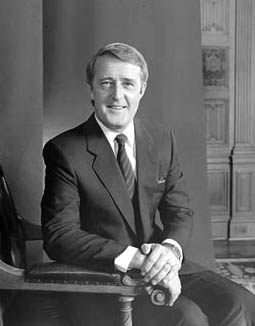
-
Article
Québec Values Charter
The contents of the Québec values charter were unveiled on 10 September 2013, by Bernard Drainville, a member of Pauline Marois’ Parti Québécois government and Minister responsible for Democratic Institutions and Active Citizenship. The goal of this highly anticipated charter was the creation of a secular society — a society in which religion and the state are completely separate. The result of numerous controversies in the media and in Québec society regarding reasonable accommodation, the charter encouraged religious neutrality by means of five “proposals.” One of the proposals was a ban on the wearing of any visible symbol indicating a religious affiliation, including a turban, hijab or kippah, by public servants when they are providing services to the public. The charter sparked controversy in Québec and divided the Québécois. On 7 November 2013, Drainville officially tabled the bill (Bill 60) in Québec’s National Assembly.
"https://d3d0lqu00lnqvz.cloudfront.net/media/media/aa124fea-cca4-4d56-8176-2b8fa9c2da28.jpg" // resources/views/front/categories/view.blade.php
https://d3d0lqu00lnqvz.cloudfront.net/media/media/aa124fea-cca4-4d56-8176-2b8fa9c2da28.jpg
-
Article
The Charter of the Forest
The 1217 Charter of the Forest (Carta de Foresta) is a companion document to the Magna Carta of 1215.
"https://d3d0lqu00lnqvz.cloudfront.net/media/media/12f085dc-bd2e-4629-b64e-74e579809d83.jpg" // resources/views/front/categories/view.blade.php
https://d3d0lqu00lnqvz.cloudfront.net/media/media/12f085dc-bd2e-4629-b64e-74e579809d83.jpg
-
Article
Quebec Film History: 1896 to 1969
This entry presents an overview of Quebec cinema, from its beginnings in the silent film era to the burgeoning of a distinctly Quebec cinema in the 1960s. It highlights the most important films, whether in terms of box office success or international acclaim, and covers both narrative features and documentaries. It also draws attention to an aspect of filmmaking that still has difficulty finding its place: women’s cinema.
"https://d3d0lqu00lnqvz.cloudfront.net/media/media/3b079b6b-0ea3-47b4-8e14-62d48630fb39.jpg" // resources/views/front/categories/view.blade.php
https://d3d0lqu00lnqvz.cloudfront.net/media/media/3b079b6b-0ea3-47b4-8e14-62d48630fb39.jpg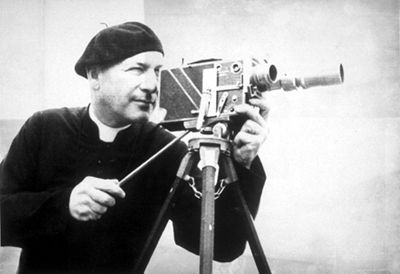
-
Article
The Clarity Act (Bill C-20)
The Clarity Act (Bill C-20) “gives effect to the requirement for clarity set out by the Supreme Court of Canada in the Quebec Secession Reference.” It was introduced in 1999 by the Liberal government of Prime Minister Jean Chrétien and faced considerable opposition by several groups, namely the House of Commons, the Quebec government and the Quebec Cree. The Act was given royal assent on 29 June 2000.
"https://thecanadianencyclopedia.ca/images/tce_placeholder.jpg?v=e9dca980c9bdb3aa11e832e7ea94f5d9" // resources/views/front/categories/view.blade.php
https://thecanadianencyclopedia.ca/images/tce_placeholder.jpg?v=e9dca980c9bdb3aa11e832e7ea94f5d9