
Browse "Things"
-
Article
The 519
The 519 — formerly called The 519 Church Street Community Centre — is located at 519 Church Street in Toronto’s gay village. It has evolved from a neighbourhood-led preservation effort into one of Canada’s most significant 2SLGBTQ+ community centres. Community-controlled from its founding in 1975, it quickly grew into a major hub for social services, activism and grassroots organizing after opening its doors in 1976. The 519 helped to establish Toronto’s Church and Wellesley neighbourhood as a centre of 2SLGBTQ+ community life. It is one of four 2SLGBTQ+ spaces featured in Canada Post's 2026 Places of Pride stamp collection, issued on 9 June 2026.
"https://d3d0lqu00lnqvz.cloudfront.net/The519ChurchStreetCommunityCentre.jpg" // resources/views/front/categories/view.blade.php
https://d3d0lqu00lnqvz.cloudfront.net/The519ChurchStreetCommunityCentre.jpg
-
Article
The Acadian Flag
The Acadian flag, also called the flag of Acadia or the starred tricolour, consists of three vertical stripes of blue, white and red, with the star of the Virgin Mary in the blue stripe. In 1884, during the second National Convention of the Acadians in Miscouche, Prince Edward Island, the flag was chosen as one of the Acadian symbols. Today, the star and the colours of the flag can be found in the logos of a number of associations and groups linked to Acadians or their language.
"https://d3d0lqu00lnqvz.cloudfront.net/media/AcadianFlag/dreamstime_xl_84910685.jpg" // resources/views/front/categories/view.blade.php
https://d3d0lqu00lnqvz.cloudfront.net/media/AcadianFlag/dreamstime_xl_84910685.jpg
-
Article
The Great War in the Air
Airplanes became an important part of modern warfare during the First World War (1914–18). Aircraft technology developed rapidly and by war’s end, airplanes were involved in reconnaissance, artillery spotting, air-to-air combat, strafing ground targets, anti-submarine warfare, tactical and strategic bombing and home defence. More than 20,000 Canadians served in British flying services (Royal Flying Corps, Royal Naval Air Service and Royal Air Force) during the war. Approximately 1,400 were killed or died from wounds or accidents. Canada did not have an air force during the First World War; a single-plane Canadian Aviation Corps was established in 1914, but never saw service and soon disbanded. Later, on 5 August 1918, two Canadian Air Force squadrons were formed in Britain, but were disbanded the next year when the British cut off funding. The Royal Canadian Naval Air Service was formed in September 1918 but lasted only three months before the war ended. Canada would not have a permanent air force until 1924 (see Royal Canadian Air Force).
"https://d3d0lqu00lnqvz.cloudfront.net/media/media/f864cf51-65b5-4803-85a1-a7908ffdc0aa.jpg" // resources/views/front/categories/view.blade.php
https://d3d0lqu00lnqvz.cloudfront.net/media/media/f864cf51-65b5-4803-85a1-a7908ffdc0aa.jpg
-
Article
The Apprenticeship of Duddy Kravitz
The Apprenticeship of Duddy Kravitz is Mordecai Richler’s fourth and best-known novel. Published in 1959, it tells the story of a young Jewish man from Montreal who is obsessed with acquiring status, money and land. Bitingly satirical, it is a landmark Canadian novel. It established Richler as an international literary figure and sparked an interest in Canadian literature both at home and abroad. It also drew criticism from those who felt the main character embodied anti-Semitic stereotypes. Richler also received several awards and an Oscar nomination for his screenplay for the 1974 feature film adaptation, co-written with Lionel Chetwynd and directed by Ted Kotcheff.
"https://d3d0lqu00lnqvz.cloudfront.net/media/media/b127f3da-c0b7-45d1-be4a-73e9d2103fd9.jpg" // resources/views/front/categories/view.blade.php
https://d3d0lqu00lnqvz.cloudfront.net/media/media/b127f3da-c0b7-45d1-be4a-73e9d2103fd9.jpg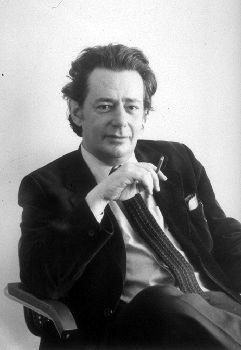
-
Article
The Army Show
The Army Show. At first a musical revue produced during World War II for the Canadian army, and later the operational name for entertainment units serving with the army.
"https://thecanadianencyclopedia.ca/images/tce_placeholder.jpg?v=e9dca980c9bdb3aa11e832e7ea94f5d9" // resources/views/front/categories/view.blade.php
https://thecanadianencyclopedia.ca/images/tce_placeholder.jpg?v=e9dca980c9bdb3aa11e832e7ea94f5d9
-
Article
The Ashkenaz Festival
The Ashkenaz Foundation is a community-based non-profit organization dedicated to fostering an increased awareness of Yiddish and Jewish culture through the arts. Ashkenaz places equal emphasis on the need for preservation and innovation within this cultural milieu.
"https://d3d0lqu00lnqvz.cloudfront.net/media/media/fbe857f5-6095-4a09-9eab-2d578f7e872e.jpg" // resources/views/front/categories/view.blade.php
https://d3d0lqu00lnqvz.cloudfront.net/media/media/fbe857f5-6095-4a09-9eab-2d578f7e872e.jpg
-
Editorial
The Assassination of Thomas D'Arcy McGee
The following article is an editorial written by The Canadian Encyclopedia staff. Editorials are not usually updated. It is the greatest murder mystery in Canadian political history. Thomas D’Arcy McGee, Father of Confederation and outspoken opponent of the Fenians, was assassinated on an Ottawa street in the early hours of Tuesday, 7 April 1868.
"https://d3d0lqu00lnqvz.cloudfront.net/media/media/4a74eaf5-4691-4b89-9d50-e98da872ed41.jpg" // resources/views/front/categories/view.blade.php
https://d3d0lqu00lnqvz.cloudfront.net/media/media/4a74eaf5-4691-4b89-9d50-e98da872ed41.jpg
-
Editorial
André Laurendeau and the Royal Commission on Bilingualism and Biculturalism
The following article is an editorial written by The Canadian Encyclopedia staff. Editorials are not usually updated.
"https://d3d0lqu00lnqvz.cloudfront.net/media/media/9c18ebf1-d915-4554-8654-fb1cba462a3e.jpg" // resources/views/front/categories/view.blade.php
https://d3d0lqu00lnqvz.cloudfront.net/media/media/9c18ebf1-d915-4554-8654-fb1cba462a3e.jpg
-
Article
The Background: Summer Wildfires in Canada
Wildfires occur every summer. However, the scale and frequency of wildfires is increasing due to climate change. In 2023, for example, Canada experienced its worst wildfire season on record, with smoke billowing eastward as far as Europe. Over 6,000 wildfires burned at least 15 million hectares of land during 2023, resulting in an area of destruction larger than England. Here is the background on wildfires, from a Canadian perspective.
"https://d3d0lqu00lnqvz.cloudfront.net/media/media/cd1053ad-3a76-4373-8e6b-49b1e805fefa.jpg" // resources/views/front/categories/view.blade.php
https://d3d0lqu00lnqvz.cloudfront.net/media/media/cd1053ad-3a76-4373-8e6b-49b1e805fefa.jpg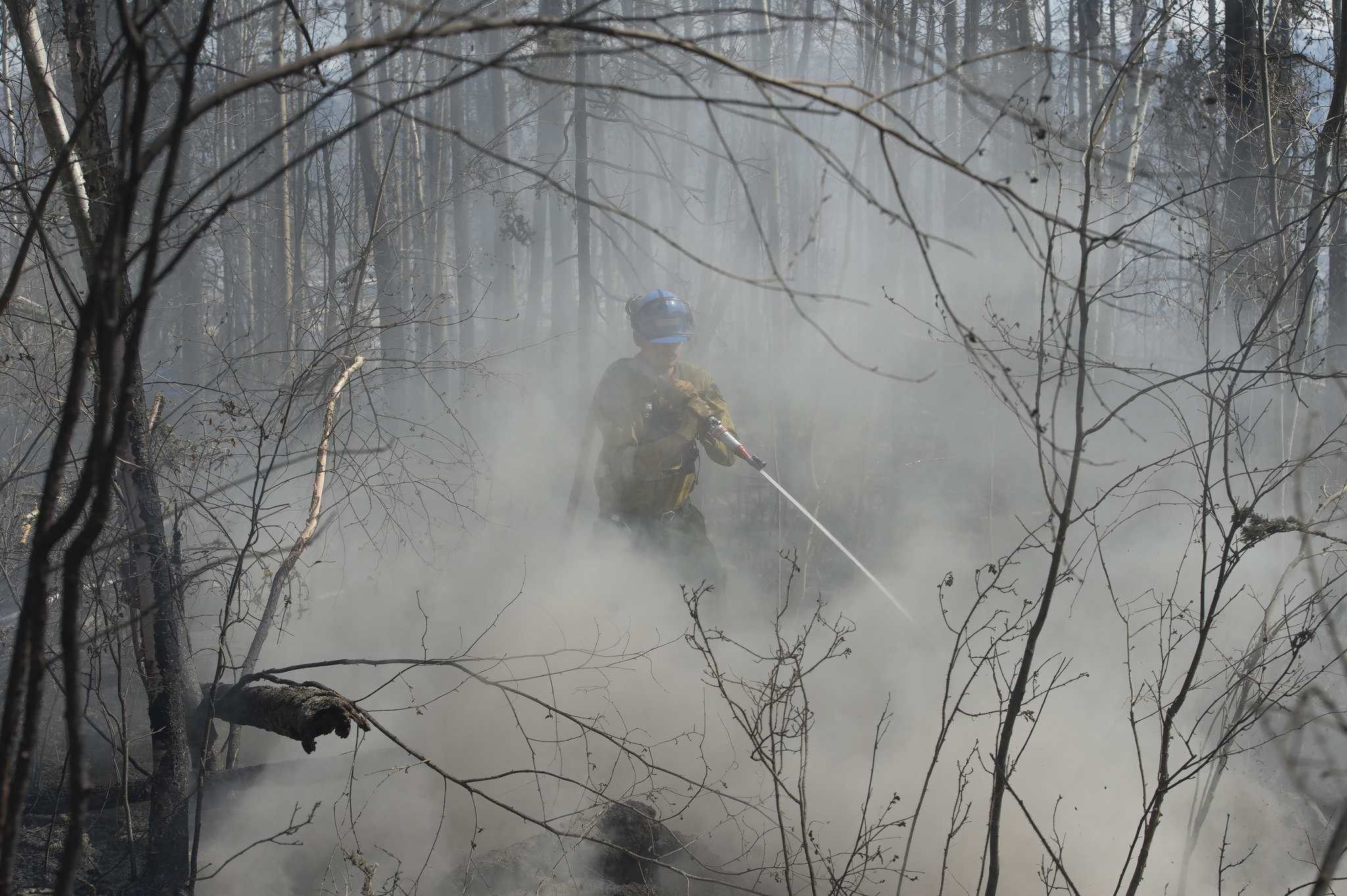
-
Article
The Battle of Ogdensburg
Prescott, located 112 kilometres downriver from Kingston, was an important transhipment point where merchantmen exchanged cargo with the bateaux from Montréal. Ogdensburg, New York, lay on the opposite shore.
"https://d3d0lqu00lnqvz.cloudfront.net/media/media/2cc6eb04-9958-4ee8-bd53-5e250021704c.jpg" // resources/views/front/categories/view.blade.php
https://d3d0lqu00lnqvz.cloudfront.net/media/media/2cc6eb04-9958-4ee8-bd53-5e250021704c.jpg
-
Article
Beaver Hall Group
The Beaver Hall Group (also known as the Beaver Hall Hill Group) was a group of artists (both male and female) who shared studio space at 305 Beaver Hall Hill in Montreal. A.Y. Jackson was the first president. The group, which had no manifesto, began exhibiting their works together in 1920. There is some disagreement about how long the group lasted. Most scholars agree that it disbanded in 1922 due to financial problems. Edwin Holgate described the Beaver Hall Group as a loose association of artists who had similar ideas and little money. Artists associated with the Beaver Hall Group focused mainly on figurative paintings. It was also one of the first artist groups in which women played key roles.
"https://thecanadianencyclopedia.ca/images/tce_placeholder.jpg?v=e9dca980c9bdb3aa11e832e7ea94f5d9" // resources/views/front/categories/view.blade.php
https://thecanadianencyclopedia.ca/images/tce_placeholder.jpg?v=e9dca980c9bdb3aa11e832e7ea94f5d9
-
Editorial
The Birth of the National Hockey League (NHL)
The following article is an editorial written by The Canadian Encyclopedia staff. Editorials are not usually updated.
"https://d3d0lqu00lnqvz.cloudfront.net/media/media/0c1d6d4a-74b4-4bcc-b0e0-7b97efe4145f.jpg" // resources/views/front/categories/view.blade.php
https://d3d0lqu00lnqvz.cloudfront.net/media/media/0c1d6d4a-74b4-4bcc-b0e0-7b97efe4145f.jpg
-
Editorial
William Lyon Mackenzie and the Founding of Toronto
The following article is an editorial written by The Canadian Encyclopedia staff. Editorials are not usually updated.
"https://thecanadianencyclopedia.ca/images/tce_placeholder.jpg?v=e9dca980c9bdb3aa11e832e7ea94f5d9" // resources/views/front/categories/view.blade.php
https://thecanadianencyclopedia.ca/images/tce_placeholder.jpg?v=e9dca980c9bdb3aa11e832e7ea94f5d9
-
Article
The Body Politic
The Body Politic was an influential Toronto-based monthly newspaper. Published from 1971 until 1987, it was the leading organ of Canada’s gay liberation and lesbian feminist movements. Read by gay activists around the world, the Body Politic challenged sexual orthodoxies, documented community resistance, and celebrated queer history and culture. It reported incidents of discrimination, police harassment and media homophobia, as well as activist efforts to pressure governments to change discriminatory laws. Complete issues of the newspaper formed the basis of the ArQuives, now one of the largest independent LGBTQ2 archives in the world.
"https://d3d0lqu00lnqvz.cloudfront.net/media/media/BodyPoliticTweetOnly.jpg" // resources/views/front/categories/view.blade.php
https://d3d0lqu00lnqvz.cloudfront.net/media/media/BodyPoliticTweetOnly.jpg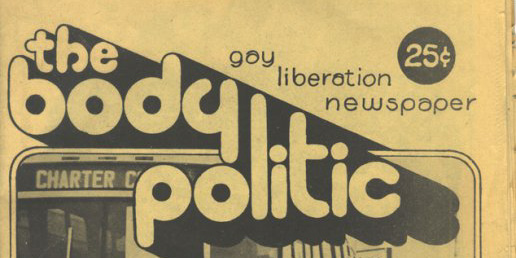
-
Article
The Book of Negroes
The document called the “Book of Negroes” is a British naval ledger that lists the names of Black Loyalists who fled to Canada during the American Revolutionary War (1775–83). It is also the title of Lawrence Hill’s third novel, which was published in 2007. (It was released in the United States, Australia and New Zealand under the title Someone Knows My Name.) A work of historical fiction, The Book of Negroes tells the story of Aminata Diallo, who is captured by slave traders in Africa and brought to America. Aminata’s story illustrates the physical, sexual, emotional, psychological, religious and economic violations of the slave trade. The novel has been translated into more than eight languages and has sold more than 800,000 copies worldwide. It won the Rogers Writers’ Trust Fiction Prize, the Commonwealth Writers’ Prize and the Commonwealth Prize for Best Book. It was also the first book to win both CBC Radio’s Canada Reads and Radio Canada’s Combat des livres.
"https://d3d0lqu00lnqvz.cloudfront.net/media/new_article_images/TheBookOfNegroes/48275821552_2b150a253f_c.jpg" // resources/views/front/categories/view.blade.php
https://d3d0lqu00lnqvz.cloudfront.net/media/new_article_images/TheBookOfNegroes/48275821552_2b150a253f_c.jpg