
Browse "Things"
-
Article
Tennis
Modern tennis almost certainly originated in France in the 11th century as a form of handball called le jeu de paume. The game, also called "court tennis" or "real tennis," was played on an indoor court - originally in a monastery - with a ball, and by 1500 a racquet was introduced.
"https://d3d0lqu00lnqvz.cloudfront.net/media/media/4a1b5adc-3316-4917-a8e5-3a14dc42a3bd.jpg" // resources/views/front/categories/view.blade.php
https://d3d0lqu00lnqvz.cloudfront.net/media/media/4a1b5adc-3316-4917-a8e5-3a14dc42a3bd.jpg
-
Article
Tenure
Generally, tenure is the holding of a secure position within an educational institution or system, although it can also refer to an individual's length of service in a particular position or system.
"https://thecanadianencyclopedia.ca/images/tce_placeholder.jpg?v=e9dca980c9bdb3aa11e832e7ea94f5d9" // resources/views/front/categories/view.blade.php
https://thecanadianencyclopedia.ca/images/tce_placeholder.jpg?v=e9dca980c9bdb3aa11e832e7ea94f5d9
-
Article
Termite
Termites are social insects of the infraorder Isoptera. They may be thought of as “social cockroaches,” as they evolved from their wood-eating cockroach ancestors approximately 200 million years ago.
"https://d3d0lqu00lnqvz.cloudfront.net/media/media/4be4a60c-706f-461e-864a-8092a1f88036.jpg" // resources/views/front/categories/view.blade.php
https://d3d0lqu00lnqvz.cloudfront.net/media/media/4be4a60c-706f-461e-864a-8092a1f88036.jpg
-
Article
Tern
The tern is a medium-sized bird of the gull family. Terns are usually grey and white; in spring and summer most species have a black cap. Similar to gulls in appearance, terns differ in having more pointed wings and usually a noticeably forked tail. Terns are more streamlined than gulls and fly more buoyantly. When feeding, most species dive into the water, which gulls rarely do.
"https://d3d0lqu00lnqvz.cloudfront.net/media/media/57646e15-f83e-46df-a681-c7f1214f0325.jpg" // resources/views/front/categories/view.blade.php
https://d3d0lqu00lnqvz.cloudfront.net/media/media/57646e15-f83e-46df-a681-c7f1214f0325.jpg
-
Article
Territorial Government in Canada
Under Canada’s federal system, the powers of government are shared between the federal government, provincial governments and territorial governments. The territories — Northwest Territories, Nunavut and Yukon — are governed by their respective governments. They receive their legislative authority (the ability to create laws) from the federal government. Ottawa has given territorial governments authority over public education, health and social services; as well as the administration of justice and municipal government. More and more of these powers have been handed down from the federal government in a process called devolution. Crown-Indigenous Relations and Northern Affairs Canada is the federal ministry responsible for the territories.
"https://d3d0lqu00lnqvz.cloudfront.net/media/media/b9f1e62c-f97e-49dc-ad8f-ef525846081d.jpg" // resources/views/front/categories/view.blade.php
https://d3d0lqu00lnqvz.cloudfront.net/media/media/b9f1e62c-f97e-49dc-ad8f-ef525846081d.jpg
-
Article
Terrorism and Canada
Terrorism is the use of violence or threats of violence by persons or groups against civilians or property. Terrorists use violence to try and achieve political ends. Terrorist activities include assassinations, bombings, hijackings and kidnappings. Some states use terror against their own or enemy populations. But this is not classified as terrorism under Canadian or international law. Terrorist is a politically charged term that carries highly negative connotations. Few violent extremists would accept the label. Instead, most describe themselves as fighters for freedom and justice.
"https://d3d0lqu00lnqvz.cloudfront.net/media/new_article_images/FLQ/CP2755756.jpg" // resources/views/front/categories/view.blade.php
https://d3d0lqu00lnqvz.cloudfront.net/media/new_article_images/FLQ/CP2755756.jpg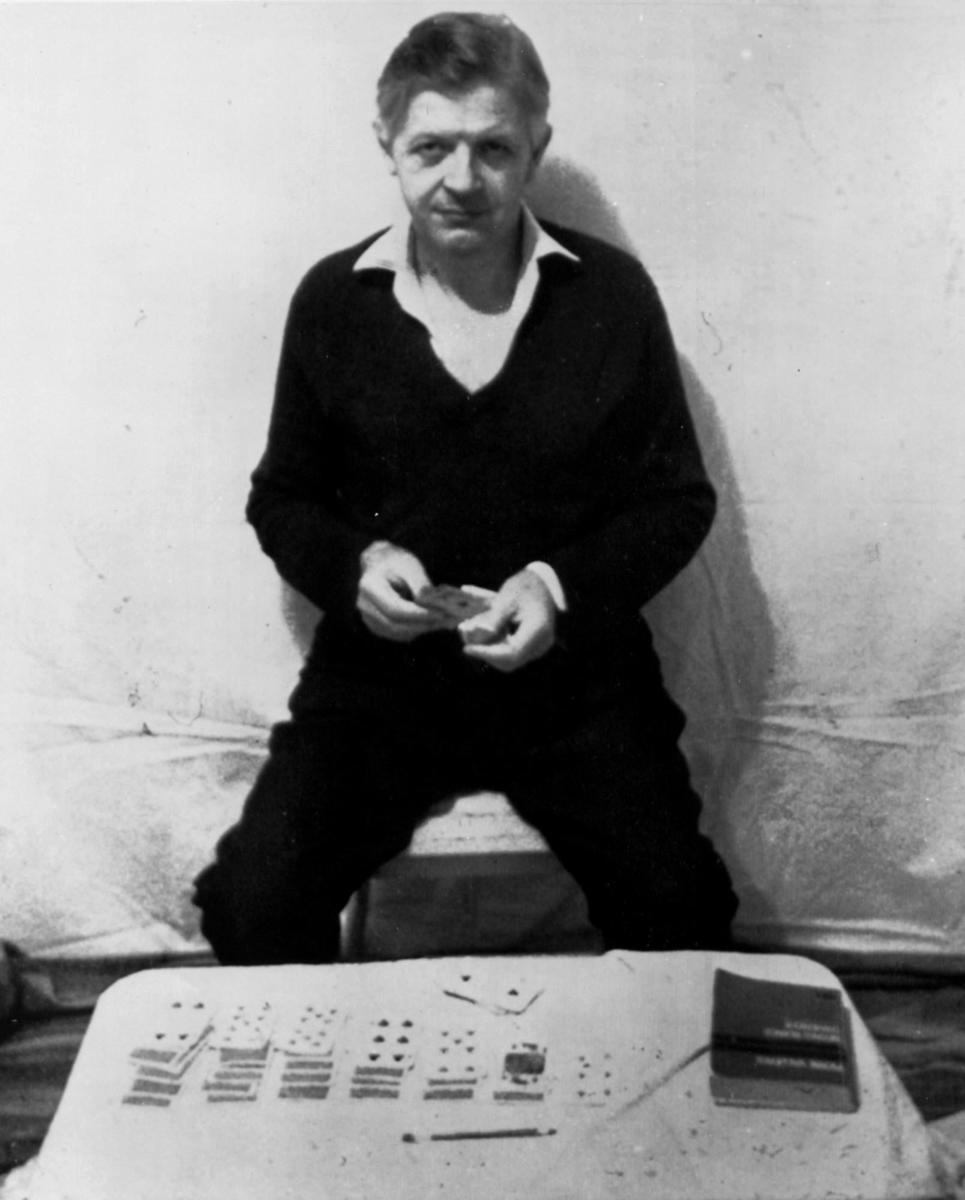
-
Macleans
Terrorism Summit
This article was originally published in Maclean’s magazine on March 25, 1996. Partner content is not updated.Terrorism is not a new curse. There was a time when the most fearsome terrorist of the day was "Carlos" Sanchez, better remembered by his flashier nom de guerre, The Jackal.This article was originally published in Maclean's Magazine on March 25, 1996
"https://thecanadianencyclopedia.ca/images/tce_placeholder.jpg?v=e9dca980c9bdb3aa11e832e7ea94f5d9" // resources/views/front/categories/view.blade.php
https://thecanadianencyclopedia.ca/images/tce_placeholder.jpg?v=e9dca980c9bdb3aa11e832e7ea94f5d9
-
Macleans
Terrorist Attack in Tel Aviv
This article was originally published in Maclean’s magazine on March 18, 1996. Partner content is not updated.In this holiest of lands, there is nothing particularly sacred about the intersection of King George and Dizengoff boulevards in downtown Tel Aviv. No prophets are buried on the spot. There are no slabs of ancient rock to be worshipped or fought over.This article was originally published in Maclean's Magazine on March 18, 1996
"https://thecanadianencyclopedia.ca/images/tce_placeholder.jpg?v=e9dca980c9bdb3aa11e832e7ea94f5d9" // resources/views/front/categories/view.blade.php
https://thecanadianencyclopedia.ca/images/tce_placeholder.jpg?v=e9dca980c9bdb3aa11e832e7ea94f5d9
-
Article
Texaco Canada Inc
Texaco Canada Inc Texaco Canada Inc was one of Canada's largest integrated petroleum companies, with world-scale conventional oil and natural gas production in Alberta; exploration programs in Canada's Western Basin and Beaufort Sea; and significant exploration in Canada's offshore as well as in Brazil and West Africa. Incorporated in 1927 as McColl-Frontenac Oil Co Ltd, the company became Texaco Canada Ltd in 1959. It adopted its present name in 1978 as a result of its...
"https://thecanadianencyclopedia.ca/images/tce_placeholder.jpg?v=e9dca980c9bdb3aa11e832e7ea94f5d9" // resources/views/front/categories/view.blade.php
https://thecanadianencyclopedia.ca/images/tce_placeholder.jpg?v=e9dca980c9bdb3aa11e832e7ea94f5d9
-
Article
Textile Industry
The textile industry includes establishments that convert synthetic and natural fibres into yarn, cloth, felt, etc, for use in MANUFACTURING clothing, upholstery, household linens, etc. The textile and CLOTHING INDUSTRIES together are among Canada's largest manufacturing-sector employers.
"https://thecanadianencyclopedia.ca/images/tce_placeholder.jpg?v=e9dca980c9bdb3aa11e832e7ea94f5d9" // resources/views/front/categories/view.blade.php
https://thecanadianencyclopedia.ca/images/tce_placeholder.jpg?v=e9dca980c9bdb3aa11e832e7ea94f5d9
-
Article
Thai Buddhist Temple - Wat Yanviriya
Wat Yanviriya was the first Thai BUDDHIST temple in Canada (wat means temple-monastery). In 1992 Lord Abbot Luang Phor Viriyang Sirintharo established Wat Yanviriya in a converted Christian church in East Vancouver.
"https://thecanadianencyclopedia.ca/images/tce_placeholder.jpg?v=e9dca980c9bdb3aa11e832e7ea94f5d9" // resources/views/front/categories/view.blade.php
https://thecanadianencyclopedia.ca/images/tce_placeholder.jpg?v=e9dca980c9bdb3aa11e832e7ea94f5d9
-
Article
Thalidomide in Canada
The drug thalidomide was developed in Germany in the 1950s and was first available in Canada in 1959. It was originally prescribed as a sedative but was also given to pregnant women for nausea relief. By the end of 1962, however, thalidomide had been withdrawn from markets worldwide, following reports of babies born with severe birth defects. The tragic consequences led to changes in drug licensing and regulation in Canada and other countries, including the US and UK. More than 10,000 children around the world were born with deformities caused by thalidomide; many died within months of birth. In Canada, more than 100 children were born with congenital malformations caused by thalidomide. In the 21st century, thalidomide was approved by Health Canada for the treatment of leprosy, multiple myeloma, and some autoimmune diseases.
"https://d3d0lqu00lnqvz.cloudfront.net/!feature-img-thumbnails/Frances-Oldham-Kelsey-tweet.jpg" // resources/views/front/categories/view.blade.php
https://d3d0lqu00lnqvz.cloudfront.net/!feature-img-thumbnails/Frances-Oldham-Kelsey-tweet.jpg
-
Article
Thanatotheristes
Thanatotheristes (pronounced tha-NAH-toe-THER-ist-ees) is a genus of large, meat-eating dinosaur (theropod). Thanatotheristes means “Reaper of Death,” reflecting the dinosaur’s position as the top predator in its ecosystem. Thanatotheristes lived approximately 79.5 million years ago, making it the oldest tyrannosaur from Canada, and one of the oldest in the world. Its close relative, Tyrannosaurus rex, appeared about 11 million years after Thanatotheristes. Thanatotheristes is also the most-recent tyrannosaur discovered in Canada — the last species was named in 1970. Ranchers John and Sandra De Groot found bone fragments along the Bow River, Alberta in 2008. The remains were recognized as a new species 10 years later by Jared Voris, a graduate student at the University of Calgary.
"https://d3d0lqu00lnqvz.cloudfront.net/media/new_article_images/Thanatotheristes/ThanatotheristesJCillustration.jpg" // resources/views/front/categories/view.blade.php
https://d3d0lqu00lnqvz.cloudfront.net/media/new_article_images/Thanatotheristes/ThanatotheristesJCillustration.jpg
-
Article
Thanksgiving in Canada
The first official, annual Thanksgiving in Canada was celebrated on 6 November 1879. However, Indigenous peoples in Canada have a history of celebrating the fall harvest that predates the arrival of European settlers. Sir Martin Frobisher and his crew are credited as the first Europeans to hold a Thanksgiving ceremony in North America, in 1578. They were followed by the inhabitants of New France under Samuel de Champlain in 1606. The feast featuring the uniquely North American turkey, squash and pumpkin was introduced to Nova Scotia in the 1750s. Loyalists who immigrated to Canada continued to practice an annual Thanksgiving dinner. It became common across Canada by the 1870s. In 1957, Thanksgiving was proclaimed an annual event to occur on the second Monday of October. It is an official statutory holiday in all provinces and territories except Prince Edward Island, New Brunswick, and Nova Scotia.
"https://d3d0lqu00lnqvz.cloudfront.net/media/media/c07fc308-7b63-421f-8b08-2c821321ba57.jpg" // resources/views/front/categories/view.blade.php
https://d3d0lqu00lnqvz.cloudfront.net/media/media/c07fc308-7b63-421f-8b08-2c821321ba57.jpg
-
Article
The 1969 Amendment and the (De)criminalization of Homosexuality
From the earliest days of colonization to 1969, sodomy laws made sex between men illegal in Canada. In addition, a law enacted in 1892 made “gross indecency” between men illegal. This included anything that indicated same-sex attraction, including simple touching, dancing and kissing. The law was extended to women in 1953. In 1969, however, sodomy and gross indecency laws were changed, making such acts legal under some circumstances. The parties involved had to be 21 years of age or older and conduct their affairs in private. Sodomy and gross indecency remained illegal outside of the home or if three or more individuals were involved or present. Thus, Canada’s Criminal Code continued to equate homosexuality with criminal behaviour under many circumstances.
"https://d3d0lqu00lnqvz.cloudfront.net/media/media/6483ddf2-6bee-4d0b-a2b1-142ae795176c.jpg" // resources/views/front/categories/view.blade.php
https://d3d0lqu00lnqvz.cloudfront.net/media/media/6483ddf2-6bee-4d0b-a2b1-142ae795176c.jpg