
Browse "Things"
-
Article
Team Handball
Team handball is also known as European or Olympic handball. The object is to score goals by passing and throwing a ball (slightly smaller than a soccer ball) into the opponents' goal. It is played indoors on a court similar in size to that for basketball, with teams of 7 players.
"https://thecanadianencyclopedia.ca/images/tce_placeholder.jpg?v=e9dca980c9bdb3aa11e832e7ea94f5d9" // resources/views/front/categories/view.blade.php
https://thecanadianencyclopedia.ca/images/tce_placeholder.jpg?v=e9dca980c9bdb3aa11e832e7ea94f5d9
-
Macleans
Tearing it up
Why Canada’s blazing start at this Olympics is happening in the newer, daredevil winter sportsThis article was originally published in Maclean's Magazine on February 24, 2014
"https://d3d0lqu00lnqvz.cloudfront.net/media/media/9253cc90-2587-467b-92b2-0b9dd9512b7d.jpg" // resources/views/front/categories/view.blade.php
https://d3d0lqu00lnqvz.cloudfront.net/media/media/9253cc90-2587-467b-92b2-0b9dd9512b7d.jpg
-
Article
"Tears Are Not Enough"
“Tears Are Not Enough” is a charity pop song written to support Ethiopian famine relief efforts in 1985. It was composed by David Foster (music), Bryan Adams and Jim Vallance (words), with additional French lyrics by Rachel Paiement. The song was produced by Foster and recorded by the ad hoc group Northern Lights, an unprecedented gathering of Canadian pop stars assembled by entertainment manager Bruce Allen. “Tears Are Not Enough” reached No. 1 on the Canadian pop chart and sold more than 300,000 copies, raising more than $3 million in famine relief by 1990.
"https://d3d0lqu00lnqvz.cloudfront.net/6181507006_731e3c976d_k.jpg" // resources/views/front/categories/view.blade.php
https://d3d0lqu00lnqvz.cloudfront.net/6181507006_731e3c976d_k.jpg
-
Article
Technical Education
From its origins in manual training "shop" and industrial arts, technical education has consisted of practical and applied subject matter that reflects the practices of current society.
"https://thecanadianencyclopedia.ca/images/tce_placeholder.jpg?v=e9dca980c9bdb3aa11e832e7ea94f5d9" // resources/views/front/categories/view.blade.php
https://thecanadianencyclopedia.ca/images/tce_placeholder.jpg?v=e9dca980c9bdb3aa11e832e7ea94f5d9
-
Macleans
Technical Marvels May Revolutionize Health Care
They're everywhere. Turn on the TV, pick up a newspaper or magazine, and the stories leap out: stem cells to heal the body's failing nervous system; transplanted wombs; the smaller-than-small world of nanotechnology; and yes, as in the previous story, the feverish quest for an artificial heart.This article was originally published in Maclean's Magazine on March 25, 2002
"https://thecanadianencyclopedia.ca/images/tce_placeholder.jpg?v=e9dca980c9bdb3aa11e832e7ea94f5d9" // resources/views/front/categories/view.blade.php
https://thecanadianencyclopedia.ca/images/tce_placeholder.jpg?v=e9dca980c9bdb3aa11e832e7ea94f5d9
-
Article
Technology in Canada
Technology is the manipulation of the physical world to achieve human goals. Technological knowledge is often embodied in physical objects such as tools. Technologies affect and are affected by the society that uses them — in Canada, for example, Indigenous peoples developed different types of canoes depending on the type of water being travelled. (See also Birchbark Canoe; Dugout Canoe.) Later, technology facilitated the colonization of the country through the development of agricultural tools, railroads and new forms of shelter. (See also Railway History in Canada.) Today, Canada remains at the forefront of technological development in areas including transportation, communications and energy.
"https://d3d0lqu00lnqvz.cloudfront.net/media/media/d42168e9-b088-44c8-8e61-25af2ac1ff3c.jpg" // resources/views/front/categories/view.blade.php
https://d3d0lqu00lnqvz.cloudfront.net/media/media/d42168e9-b088-44c8-8e61-25af2ac1ff3c.jpg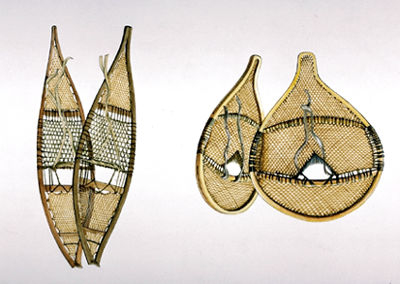
-
Macleans
Teen Describes Murders
This article was originally published in Maclean’s magazine on December 25, 1995. Partner content is not updated. Following their brutal murders in suburban Montreal last April, Frank Toope, a 75-year-old retired Anglican minister, and his wife, Jocelyn, 70, were uniformly praised by friends and former parishioners as a warm, caring and generous couple.
"https://thecanadianencyclopedia.ca/images/tce_placeholder.jpg?v=e9dca980c9bdb3aa11e832e7ea94f5d9" // resources/views/front/categories/view.blade.php
https://thecanadianencyclopedia.ca/images/tce_placeholder.jpg?v=e9dca980c9bdb3aa11e832e7ea94f5d9
-
Macleans
Teen Killing in Toronto
This article was originally published in Maclean’s magazine on November 29, 1999. Partner content is not updated. At the foot of Dmitri Baranovski's bed are some weights, a soccer ball, tennis rackets and - what his stepfather picked up at a garage sale to help him adjust to Canadian life - a football and two hockey sticks.
"https://thecanadianencyclopedia.ca/images/tce_placeholder.jpg?v=e9dca980c9bdb3aa11e832e7ea94f5d9" // resources/views/front/categories/view.blade.php
https://thecanadianencyclopedia.ca/images/tce_placeholder.jpg?v=e9dca980c9bdb3aa11e832e7ea94f5d9
-
Article
Telecommunications
Telecommunications is defined as the electronic communication of information over distance. In theory, this definition covers all forms of electronic communication and does not distinguish between different kinds of information: voice, data, text and video.
"https://thecanadianencyclopedia.ca/images/tce_placeholder.jpg?v=e9dca980c9bdb3aa11e832e7ea94f5d9" // resources/views/front/categories/view.blade.php
https://thecanadianencyclopedia.ca/images/tce_placeholder.jpg?v=e9dca980c9bdb3aa11e832e7ea94f5d9
-
Article
Telegraph
The telegraph (Gk, tele, meaning "far," and graphein,"to write") was conceived in 1837 in North America by Samuel Morse, and in Europe by the English partnership of William Cooke and Charles Wheatstone. It is a means of electrically transmitting encoded messages through the systematic opening and closing of electric circuits. The telegraph was introduced to Canada in 1846. (See also Telecommunications.)
"https://d3d0lqu00lnqvz.cloudfront.net/telegraph/cprtelegraphoffice.jpg" // resources/views/front/categories/view.blade.php
https://d3d0lqu00lnqvz.cloudfront.net/telegraph/cprtelegraphoffice.jpg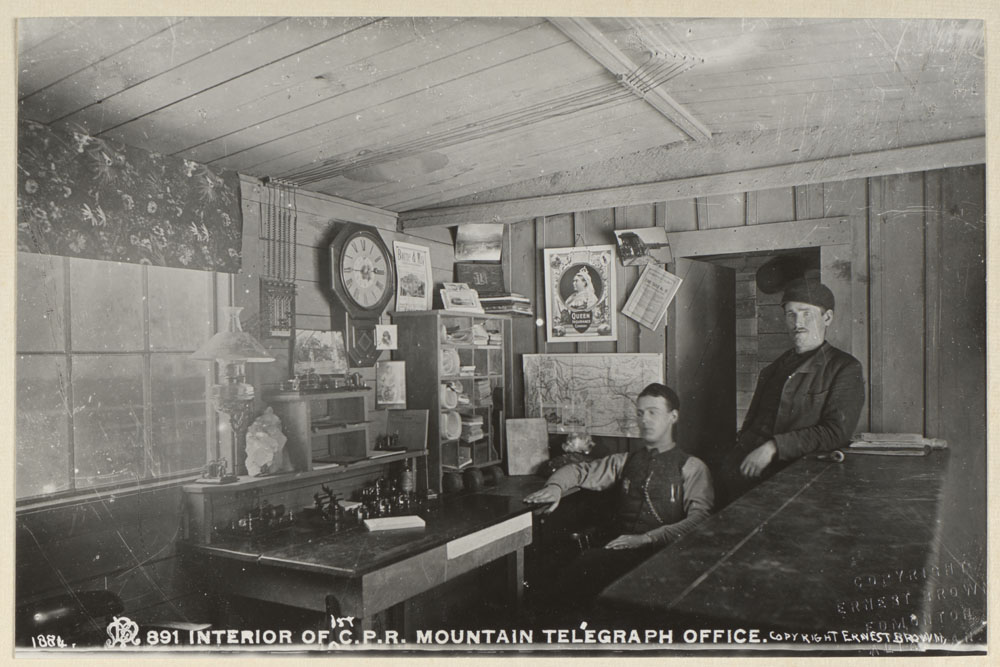
-
Article
Telephones
The invention of the TELEGRAPH (1837) by Samuel Morse and the telephone (1876) by Alexander Graham BELL were milestones in the quest to communicate over great distances with reliability, accuracy and speed.
"https://thecanadianencyclopedia.ca/images/tce_placeholder.jpg?v=e9dca980c9bdb3aa11e832e7ea94f5d9" // resources/views/front/categories/view.blade.php
https://thecanadianencyclopedia.ca/images/tce_placeholder.jpg?v=e9dca980c9bdb3aa11e832e7ea94f5d9
-
Article
Television
Overlaying these two perspectives is the reality that Canadians have long been among the world's most avid television viewers with tastes that do not necessarily discriminate between domestic and foreign content, or between entertainment and education.
"https://d3d0lqu00lnqvz.cloudfront.net/media/media/19954988-d8b9-48c4-b611-8619640190be.jpg" // resources/views/front/categories/view.blade.php
https://d3d0lqu00lnqvz.cloudfront.net/media/media/19954988-d8b9-48c4-b611-8619640190be.jpg
-
Article
Telidon
Telidon, a combination of the Greek words meaning "to know at a distance," was a waypoint en route to the Internet and was an early demonstration of how technology can provide on-demand access to information.
"https://thecanadianencyclopedia.ca/images/tce_placeholder.jpg?v=e9dca980c9bdb3aa11e832e7ea94f5d9" // resources/views/front/categories/view.blade.php
https://thecanadianencyclopedia.ca/images/tce_placeholder.jpg?v=e9dca980c9bdb3aa11e832e7ea94f5d9
-
Article
Temperance Movement in Canada
The temperance movement was an international social and political campaign of the 19th and early 20th centuries. It was based on the belief that drinking was responsible for many of society’s ills. It called for moderation or total abstinence from alcohol. This led to the legal prohibition of alcohol in many parts of Canada. The Canada Temperance Act (Scott Act) of 1878 gave local governments the “local option” to ban the sale of alcohol. In 1915 and 1916, all provinces but Quebec prohibited the sale of alcohol as a patriotic measure during the First World War. Most provincial laws were repealed in the 1920s in favour of allowing governments to control alcohol sales. Temperance societies were later criticized for distorting economic activity, and for encouraging drinking and organized crime.
"https://d3d0lqu00lnqvz.cloudfront.net/media/media/c0f20001-e566-4ebf-9c88-f1a5ae278291.jpg" // resources/views/front/categories/view.blade.php
https://d3d0lqu00lnqvz.cloudfront.net/media/media/c0f20001-e566-4ebf-9c88-f1a5ae278291.jpg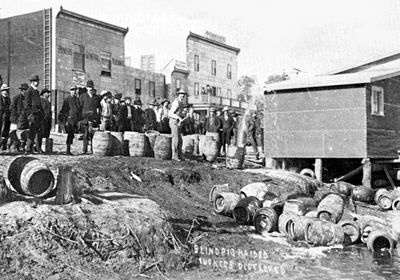
-
Article
Tenant League
Tenant League, popular name for the Tenant Union of Prince Edward Island, a militant agrarian movement fd 19 May 1864 in Charlottetown, PEI.
"https://thecanadianencyclopedia.ca/images/tce_placeholder.jpg?v=e9dca980c9bdb3aa11e832e7ea94f5d9" // resources/views/front/categories/view.blade.php
https://thecanadianencyclopedia.ca/images/tce_placeholder.jpg?v=e9dca980c9bdb3aa11e832e7ea94f5d9