
Browse "Things"
-
Article
Staple Thesis
The staple thesis is a theory that asserts that the export of natural resources, or staples, from Canada has a pervasive impact on the economy as well as on social and political systems. (See also International Trade.) Furthermore, different staples (fur, fish, timber, grain, oil, etc.) have differing impacts on rates of settlement, federal-provincial conflicts, etc. (See also Fur Trade in Canada; Timber Trade History.)
"https://d3d0lqu00lnqvz.cloudfront.net/media/media/e4ec1e55-01c2-4b77-a220-f05a84fd4c9c.jpg" // resources/views/front/categories/view.blade.php
https://d3d0lqu00lnqvz.cloudfront.net/media/media/e4ec1e55-01c2-4b77-a220-f05a84fd4c9c.jpg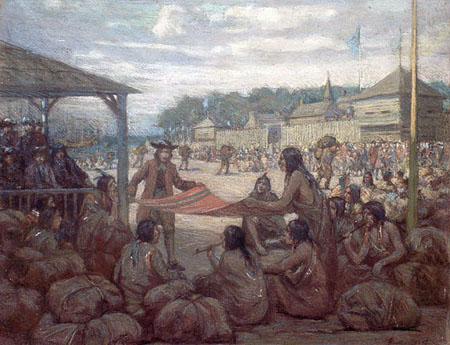
-
Article
Star
A star is a large, self-luminous sphere of hot gas held together by its own gravitational force.
"https://d3d0lqu00lnqvz.cloudfront.net/media/media/461444d8-5a54-4c23-804c-fc972ec569b2.jpg" // resources/views/front/categories/view.blade.php
https://d3d0lqu00lnqvz.cloudfront.net/media/media/461444d8-5a54-4c23-804c-fc972ec569b2.jpg
-
Article
Star Weekly
The Toronto Star Weekly began publication in April 1910 in Toronto. Founded by Joseph E. Atkinson, the Toronto Star Weekly was an attempt to create a Sunday newspaper. The Toronto Star Weekly changed its name to the Star Weekly in 1938. The newspaper ceased publication in 1973.
"https://thecanadianencyclopedia.ca/images/tce_placeholder.jpg?v=e9dca980c9bdb3aa11e832e7ea94f5d9" // resources/views/front/categories/view.blade.php
https://thecanadianencyclopedia.ca/images/tce_placeholder.jpg?v=e9dca980c9bdb3aa11e832e7ea94f5d9
-
Macleans
Starbucks Prepares to Invade Toronto
This article was originally published in Maclean’s magazine on January 22, 1996. Partner content is not updated. The staff is busy and the seats are nearly full at the Starbucks Coffee outlet on Toronto's Danforth Avenue, even though the windows are still papered over and a "Help Wanted" sign is taped to the front door.
"https://thecanadianencyclopedia.ca/images/tce_placeholder.jpg?v=e9dca980c9bdb3aa11e832e7ea94f5d9" // resources/views/front/categories/view.blade.php
https://thecanadianencyclopedia.ca/images/tce_placeholder.jpg?v=e9dca980c9bdb3aa11e832e7ea94f5d9
-
Article
Stare Decisis
Stare decisis [Latin, "let the decision stand"] refers to the doctrine of precedent, according to which the rules formulated by judges in earlier decisions are to be similarly applied in later cases.
"https://thecanadianencyclopedia.ca/images/tce_placeholder.jpg?v=e9dca980c9bdb3aa11e832e7ea94f5d9" // resources/views/front/categories/view.blade.php
https://thecanadianencyclopedia.ca/images/tce_placeholder.jpg?v=e9dca980c9bdb3aa11e832e7ea94f5d9
-
Article
Starfish
Starfish, or sea star, is a common marine animal found from seashore to ocean depths; 1600 species are known worldwide.
"https://d3d0lqu00lnqvz.cloudfront.net/media/media/4815042e-4596-4981-bf6f-7f7c000bdc53.jpg" // resources/views/front/categories/view.blade.php
https://d3d0lqu00lnqvz.cloudfront.net/media/media/4815042e-4596-4981-bf6f-7f7c000bdc53.jpg
-
Article
Starling
Starling is the common name for an Old World family (Sturnidae) of birds, comprising 114 principally tropical species.
"https://d3d0lqu00lnqvz.cloudfront.net/media/media/141f6759-3f84-40bc-ad54-869e0a6ebe39.jpg" // resources/views/front/categories/view.blade.php
https://d3d0lqu00lnqvz.cloudfront.net/media/media/141f6759-3f84-40bc-ad54-869e0a6ebe39.jpg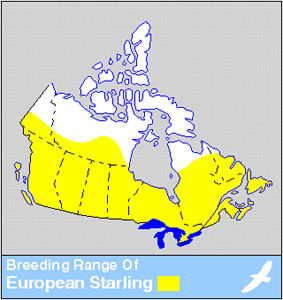
-
Article
Starmania
Starmania. Rock opera, lyrics by Luc Plamondon, music by French composer Michel Berger (b 1947, d 1992).
"https://thecanadianencyclopedia.ca/images/tce_placeholder.jpg?v=e9dca980c9bdb3aa11e832e7ea94f5d9" // resources/views/front/categories/view.blade.php
https://thecanadianencyclopedia.ca/images/tce_placeholder.jpg?v=e9dca980c9bdb3aa11e832e7ea94f5d9
-
Article
State
StateThe state is a broad concept that includes government as the seat of legitimate authority in a territory but also includes bureaucracy, judiciary, the ARMED FORCES and internal POLICE, structures of legislative assemblies and administration, public corporations, regulatory boards, and ideological apparatuses such as the education establishment and publicly owned media. The distinguishing characteristic of the state is its monopoly over the use of force in a given territory. The state as a concept in...
"https://thecanadianencyclopedia.ca/images/tce_placeholder.jpg?v=e9dca980c9bdb3aa11e832e7ea94f5d9" // resources/views/front/categories/view.blade.php
https://thecanadianencyclopedia.ca/images/tce_placeholder.jpg?v=e9dca980c9bdb3aa11e832e7ea94f5d9
-
Article
Station PAPA
Station PAPA Ocean Weather Station "P" is commonly called Station PAPA after the code word for the letter P in the phonetic alphabet used by radio operators. Station PAPA is located in the N Pacific Ocean (50° N, 145° W) and has a water depth of 4200 m.
"https://thecanadianencyclopedia.ca/images/tce_placeholder.jpg?v=e9dca980c9bdb3aa11e832e7ea94f5d9" // resources/views/front/categories/view.blade.php
https://thecanadianencyclopedia.ca/images/tce_placeholder.jpg?v=e9dca980c9bdb3aa11e832e7ea94f5d9
-
Article
Statistics
Statistics is the science concerned with the collection and analysis of numerical information to answer questions wisely. The term also refers to the numerical information that has been collected. Statistics has many applications in Canada, from government censuses and surveys, to decision making in industry, to medical research and technological innovation.
"https://thecanadianencyclopedia.ca/images/tce_placeholder.jpg?v=e9dca980c9bdb3aa11e832e7ea94f5d9" // resources/views/front/categories/view.blade.php
https://thecanadianencyclopedia.ca/images/tce_placeholder.jpg?v=e9dca980c9bdb3aa11e832e7ea94f5d9
-
Article
Statistics Canada
Statistics Canada is the nation’s central statistical agency. It was established in 1918 as the Dominion Bureau of Statistics and adopted its present name in 1971. Under the Statistics Act of that year, it has the responsibility to “collect, compile, analyse, abstract and publish statistical information relating to the commercial, industrial, financial, social, economic and general activities and condition of the people.” The agency works with government departments to develop integrated social and economic statistics for Canada and the provinces and territories. In addition, Statistics Canada is a scientific research organization that develops methodologies and techniques related to statistics and survey design. Click here for definitions of key terms used in this article.
"https://d3d0lqu00lnqvz.cloudfront.net/media/new_article_images/StatisticsCanada/Jean Talon Building.JPG" // resources/views/front/categories/view.blade.php
https://d3d0lqu00lnqvz.cloudfront.net/media/new_article_images/StatisticsCanada/Jean Talon Building.JPG
-
Macleans
StatsCan Reports on Women
Women now make up slightly more than half of all people living in Canada. In fact, in 1991, the last census year, 50.4 per cent of the total population was female, compared with 50.2 per cent in 1981 and 48.4 per cent in 1921.This article was originally published in Maclean's Magazine on August 21, 1995
"https://thecanadianencyclopedia.ca/images/tce_placeholder.jpg?v=e9dca980c9bdb3aa11e832e7ea94f5d9" // resources/views/front/categories/view.blade.php
https://thecanadianencyclopedia.ca/images/tce_placeholder.jpg?v=e9dca980c9bdb3aa11e832e7ea94f5d9
-
Article
Status of Women
The first European expeditions that came to Canada to explore and trade for furs did not include women.
"https://d3d0lqu00lnqvz.cloudfront.net/media/media/be832524-f521-4200-b242-3c702ae0f3c4.jpg" // resources/views/front/categories/view.blade.php
https://d3d0lqu00lnqvz.cloudfront.net/media/media/be832524-f521-4200-b242-3c702ae0f3c4.jpg
-
Article
Statute of Westminster, 1931
The Statute of Westminster is a British law that was passed on 11 December 1931. It was Canada’s all-but-final achievement of independence from Britain. It enacted recommendations from the Balfour Report of 1926, which had declared that Britain and its Dominions were constitutionally “equal in status.” The Statute of Westminster gave Canada and the other Commonwealth Dominions legislative equality with Britain. They now had full legal freedom except in areas of their choosing. The Statute also clarified the powers of Canada’s Parliament and those of the other Dominions. (See also Editorial: The Statute of Westminster, Canada’s Declaration of Independence.)
"https://d3d0lqu00lnqvz.cloudfront.net/media/media/fb8b6e92-b549-4842-8b58-76626f1e9087.jpg" // resources/views/front/categories/view.blade.php
https://d3d0lqu00lnqvz.cloudfront.net/media/media/fb8b6e92-b549-4842-8b58-76626f1e9087.jpg