
Browse "Things"
-
Article
Battle of Queenston Heights
The Battle of Queenston Heights was fought during the War of 1812 on 13 October 1812. One of the most famous battles of the war, the Battle of Queenston Heights was the struggle for a portion of the Niagara escarpment overlooking Queenston, where more than 1,000 American soldiers crossed into Upper Canada. Part of the American force reached the top, circled the British artillery position and forced the British from the Heights. General Isaac Brock, one of the most respected British military leaders of his day, was killed leading a counter-attack. Mohawk chiefs John Norton and John Brant and about 80 Haudenosaunee and Delaware warriors held back the Americans for hours — long enough for reinforcements to arrive so that the British could retain the crucial outpost.
"https://d3d0lqu00lnqvz.cloudfront.net/media/media/d60240b0-5df1-48c0-bd0f-e3c0fbc67705.jpg" // resources/views/front/categories/view.blade.php
https://d3d0lqu00lnqvz.cloudfront.net/media/media/d60240b0-5df1-48c0-bd0f-e3c0fbc67705.jpg
-
Article
Battle of Queenston Heights National Historic Site of Canada
The Battle of Queenston Heights National Historic Site commemorates a battle fought on 13 October 1812, when the British army and Canadian militia, assisted by First Nations allies, defeated an invading American army on the Niagara Escarpment overlooking the village of Queenston.
"https://d3d0lqu00lnqvz.cloudfront.net/media/media/d60240b0-5df1-48c0-bd0f-e3c0fbc67705.jpg" // resources/views/front/categories/view.blade.php
https://d3d0lqu00lnqvz.cloudfront.net/media/media/d60240b0-5df1-48c0-bd0f-e3c0fbc67705.jpg
-
Article
Battle of Restigouche
After the fall of Québec in 1759, an urgent appeal was sent to France for 4000 troops and food supplies. Not until Apr 19 did 5 merchant ships and a frigate leave Bordeaux with 400 troops and some supplies.
"https://thecanadianencyclopedia.ca/images/tce_placeholder.jpg?v=e9dca980c9bdb3aa11e832e7ea94f5d9" // resources/views/front/categories/view.blade.php
https://thecanadianencyclopedia.ca/images/tce_placeholder.jpg?v=e9dca980c9bdb3aa11e832e7ea94f5d9
-
Article
Battle of Ridgeway
The Battle of Ridgeway is also known as the Battle of Lime Ridge or Limestone Ridge. It was fought on the morning of 2 June 1866, near the village of Ridgeway and the town of Fort Erie in Canada West (present-day Ontario). Around 850 Canadian soldiers clashed with 750 to 800 Fenians — Irish American insurgents who had crossed the Niagara River from Buffalo, New York. It was the first industrial-era battle to be fought exclusively by Canadian troops and led entirely by Canadian officers. It was the last battle fought in Ontario against a foreign invasion force. The battlefield was designated a National Historic Site in 1921.
"https://d3d0lqu00lnqvz.cloudfront.net/media/media/1354ebca-0c98-466e-88d2-cbb9b2cabab1.jpg" // resources/views/front/categories/view.blade.php
https://d3d0lqu00lnqvz.cloudfront.net/media/media/1354ebca-0c98-466e-88d2-cbb9b2cabab1.jpg
-
Article
Battle of Saint-Charles
The Battle of Saint-Charles took place on 25 November 1837 in Saint-Charles, Quebec. The confrontation opposed the army (sent by the government of Lower Canada) and the Patriotes. The battle resulted in a defeat for the Patriotes. (See Rebellions of 1837–38.)
"https://thecanadianencyclopedia.ca/images/tce_placeholder.jpg?v=e9dca980c9bdb3aa11e832e7ea94f5d9" // resources/views/front/categories/view.blade.php
https://thecanadianencyclopedia.ca/images/tce_placeholder.jpg?v=e9dca980c9bdb3aa11e832e7ea94f5d9
-
Article
Battle of Saint-Denis
The Battle of Saint-Denis took place on 23 November 1837 in Saint-Denis, Quebec. The confrontation between the army (sent by the government of Lower Canada) and the Patriotes aimed to arrest the leaders of the latter. The battle lasted less than 24 hours and resulted in a victory for the Patriotes. (See Rebellions of 1837–38.)
"https://d3d0lqu00lnqvz.cloudfront.net/media/media/98cc7718-0c03-4d0c-b36a-297e5668a2ea.jpg" // resources/views/front/categories/view.blade.php
https://d3d0lqu00lnqvz.cloudfront.net/media/media/98cc7718-0c03-4d0c-b36a-297e5668a2ea.jpg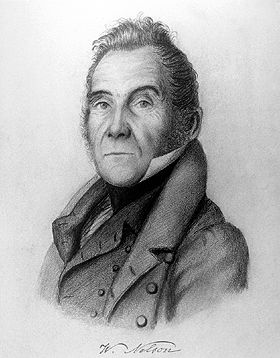
-
Article
Battle of St. Eloi Craters
The Battle of St. Eloi Craters was fought from 27 March to 16 April 1916 during the First World War.
"https://thecanadianencyclopedia.ca/images/tce_placeholder.jpg?v=e9dca980c9bdb3aa11e832e7ea94f5d9" // resources/views/front/categories/view.blade.php
https://thecanadianencyclopedia.ca/images/tce_placeholder.jpg?v=e9dca980c9bdb3aa11e832e7ea94f5d9
-
Article
Battle of Saint-Eustache
The Battle of Saint-Eustache was a battle that occurred between Patriote forces and British troops on 14 December 1837 during the first rebellion in Lower Canada. This third and final battle of this rebellion ended in crushing defeat for the Patriotes. On that day, some 300 to 600 rebels found themselves trapped in the village of Saint-Eustache, encircled by nearly 1500 redcoats. The Patriotes were forced to surrender after a bitter struggle in which 70 of their number died. The church of Saint-Eustache, in which they had taken refuge, still bears the scars from the cannonballs fired by the British artillery.
"https://d3d0lqu00lnqvz.cloudfront.net/Battle_of_Saint_Eustache/battle_saint_eustache_church.jpg" // resources/views/front/categories/view.blade.php
https://d3d0lqu00lnqvz.cloudfront.net/Battle_of_Saint_Eustache/battle_saint_eustache_church.jpg
-
Article
Battle of Sainte-Foy
On 28 April 1760, during the Seven Years’ War, the confrontation known as the battle of Sainte-Foy took place on the heights of Quebec City between the French and British armies. Seven thousand men under the command of French general François-Gaston de Lévis met 3,400 soldiers under the command of General James Murray in violent combat which ended with a major victory for the French. Following the battle, the French laid an unsuccessful siege to Quebec City and were eventually forced to retreat due to the arrival of British reinforcements on the St. Lawrence River.
"https://d3d0lqu00lnqvz.cloudfront.net/bataille-de-sainte-foy.jpg" // resources/views/front/categories/view.blade.php
https://d3d0lqu00lnqvz.cloudfront.net/bataille-de-sainte-foy.jpg
-
Article
Battle of Stoney Creek
The rather casual pace and attitude of the US forces provided an opportunity for the British. A local youth named Billy Green had gathered critical intelligence on the approaching US forces, including their location and disposition.
"https://d3d0lqu00lnqvz.cloudfront.net/media/media/cd94fe20-51df-49eb-ad0a-8333778ae2e8.jpg" // resources/views/front/categories/view.blade.php
https://d3d0lqu00lnqvz.cloudfront.net/media/media/cd94fe20-51df-49eb-ad0a-8333778ae2e8.jpg
-
Article
Battle of Stoney Creek National Historic Site of Canada
Stoney Creek National Historic Site commemorates a British victory over American forces at the Battle of Stoney Creek fought on 6 June 1813 in the settlement of Stoney Creek, now part of the city of Hamilton.
"https://d3d0lqu00lnqvz.cloudfront.net/media/media/cd94fe20-51df-49eb-ad0a-8333778ae2e8.jpg" // resources/views/front/categories/view.blade.php
https://d3d0lqu00lnqvz.cloudfront.net/media/media/cd94fe20-51df-49eb-ad0a-8333778ae2e8.jpg
-
Article
Canada and the Battle of the Atlantic
The Battle of the Atlantic, from 1939 to 1945, was the longest continuous battle of the Second World War. Canada played a key role in the Allied struggle for control of the North Atlantic, as German submarines worked furiously to cripple the convoys shipping crucial supplies to Europe. Victory was costly: more than 70,000 Allied seamen, merchant mariners and airmen lost their lives, including approximately 4,400 from Canada and Newfoundland. Many civilians also lost their lives, including 136 passengers of the ferry SS Caribou.This article is a full-length entry about the Battle of the Atlantic. For a plain-language summary, please see Canada and the Battle of the Atlantic (Plain-Language Summary).
"https://d3d0lqu00lnqvz.cloudfront.net/media/media/8cb80cb6-7ee5-4b1d-b742-922466dbc5f3.jpg" // resources/views/front/categories/view.blade.php
https://d3d0lqu00lnqvz.cloudfront.net/media/media/8cb80cb6-7ee5-4b1d-b742-922466dbc5f3.jpg
-
Article
Battle of the Châteauguay National Historic Site of Canada
The Battle of the Châteauguay National Historic Site commemorates the Battle of Châteauguay, a battle in the War of 1812 that took place on 26 October 1813.
"https://d3d0lqu00lnqvz.cloudfront.net/media/media/5f9964d3-d547-4911-8a4b-2d4a5414bf75.jpg" // resources/views/front/categories/view.blade.php
https://d3d0lqu00lnqvz.cloudfront.net/media/media/5f9964d3-d547-4911-8a4b-2d4a5414bf75.jpg
-
Article
Battle of the Gothic Line
In the Second World War, Canadians began fighting in Italy in July 1943. By the summer of 1944, the Allies had pushed German forces to one of their last defensive positions — a stretch of heavily fortified territory in northern Italy known as the Gothic Line. The main job of breaking the Line fell to the I Canadian Corps, which accomplished the task after a month of difficult combat, at a cost of more than 4,500 casualties. Although overshadowed by the Allied invasion of France, cracking the Gothic Line was among Canada's greatest feats of arms of the war.
"https://d3d0lqu00lnqvz.cloudfront.net/media/media/7228f4e4-083c-4b6e-80ae-91dcf7ae8d7c.jpg" // resources/views/front/categories/view.blade.php
https://d3d0lqu00lnqvz.cloudfront.net/media/media/7228f4e4-083c-4b6e-80ae-91dcf7ae8d7c.jpg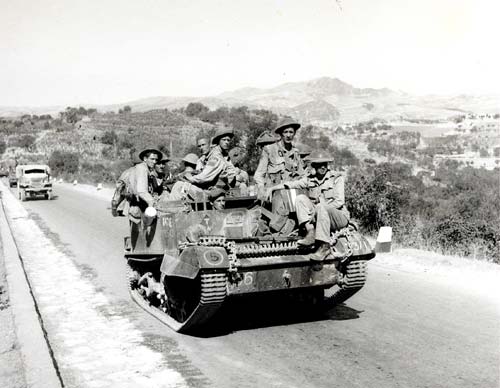
-
Article
Battle of the Plains of Abraham
The Battle of the Plains of Abraham (13 September 1759), also known as the Battle of Quebec, was a pivotal moment in the Seven Years’ War and in the history of Canada. A British invasion force led by General James Wolfe defeated French troops under the Marquis de Montcalm, leading to the surrender of Quebec to the British. Both commanding officers died from wounds sustained during the battle. The French never recaptured Quebec and effectively lost control of New France in 1760. At the end of the war in 1763 France surrendered many of its colonial possessions — including Canada — to the British. (This is the full-length entry about the Battle of the Plains of Abraham. For a plain-language summary, please see Battle of the Plains of Abraham (Plain-Language Summary).)
"https://d3d0lqu00lnqvz.cloudfront.net/media/media/ea7e8555-9481-4ebb-9585-dc9a4abd22d8.jpg" // resources/views/front/categories/view.blade.php
https://d3d0lqu00lnqvz.cloudfront.net/media/media/ea7e8555-9481-4ebb-9585-dc9a4abd22d8.jpg