Browse "Things"
-
Article
Slug
Slug is a common name for several terrestrial pulmonate and numerous marine gilled species of gastropod molluscs conspicuous by the lack of an exposed shell.
"https://d3d0lqu00lnqvz.cloudfront.net/media/media/51c710f6-6973-4da3-8a4a-d48caed18d86.jpg" // resources/views/front/categories/view.blade.php
https://d3d0lqu00lnqvz.cloudfront.net/media/media/51c710f6-6973-4da3-8a4a-d48caed18d86.jpg
-
Article
Small Claims Court
Small Claims Court, the common name of courts established by provincial legislation for civil matters involving small sums of money. In Québec, the upper limit of the small claims court is $7 000, but in the other provinces it is $1000, $2000 or $3000.
"https://thecanadianencyclopedia.ca/images/tce_placeholder.jpg?v=e9dca980c9bdb3aa11e832e7ea94f5d9" // resources/views/front/categories/view.blade.php
https://thecanadianencyclopedia.ca/images/tce_placeholder.jpg?v=e9dca980c9bdb3aa11e832e7ea94f5d9
-
Article
Small Presses
Traditionally the difference between small press publishers and trade publishers has been one of scale, purpose and ideology. Trade publishers are entrepreneurs with large operations, comprising many departments and geared to market books that will be profitable.
"https://thecanadianencyclopedia.ca/images/tce_placeholder.jpg?v=e9dca980c9bdb3aa11e832e7ea94f5d9" // resources/views/front/categories/view.blade.php
https://thecanadianencyclopedia.ca/images/tce_placeholder.jpg?v=e9dca980c9bdb3aa11e832e7ea94f5d9
-
Article
Small Presses in French
Small publishing houses are closely linked to the birth and growth of distinct Québec literature. Living on the fringe of the big houses (themselves dependent on the educational market), they publish and thus help assure the survival of certain types of more marginal material and ideas.
"https://thecanadianencyclopedia.ca/images/tce_placeholder.jpg?v=e9dca980c9bdb3aa11e832e7ea94f5d9" // resources/views/front/categories/view.blade.php
https://thecanadianencyclopedia.ca/images/tce_placeholder.jpg?v=e9dca980c9bdb3aa11e832e7ea94f5d9
-
Article
Smallpox in Canada
Smallpox is an infectious disease caused by the variola virus. The disease arrived in what is now Canada with French settlers in the early 17th century. Indigenous peoples had no immunity to smallpox, resulting in devastating infection and death rates. In 1768, arm-to-arm inoculation became more widely practised in North America. By 1800, advances in vaccination helped control the spread of smallpox. Public health efforts also reduced rates of infection. In the 20th century, Canadian scientists helped the World Health Organization eradicate smallpox. Eradication was achieved in 1979, but virus stocks still exist for research and safety reasons. Click here for definitions of key terms used in this article.
"https://d3d0lqu00lnqvz.cloudfront.net/media/new_article_images/Smallpox/Smallpox_victim.jpg" // resources/views/front/categories/view.blade.php
https://d3d0lqu00lnqvz.cloudfront.net/media/new_article_images/Smallpox/Smallpox_victim.jpg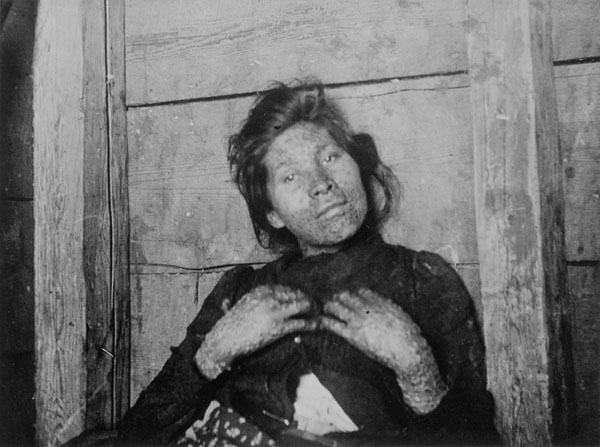
-
Article
Smelt
Smelt (Osmeridae) are a family of small, iridescent fishes of class Osteichthyes, found in coastal seas, streams and lakes of the northern hemisphere. Worldwide, six genera and thirteen species are known; in Canada, six genera and nine species. Rainbow smelt and capelin occur on all three coasts; pond smelt on the Arctic coast and drainage; pygmy smelt in Quebec and New Brunswick lakes; the others on the Pacific coast and drainage. Some smelts are marine fishes; some live in fresh water; others live in the sea but spawn in fresh water (anadromous). The family name derives from their characteristic, cucumber-like odour.
"https://d3d0lqu00lnqvz.cloudfront.net/media/media/8e96e384-01b8-4e53-a3be-0cfebd2bee83.jpg" // resources/views/front/categories/view.blade.php
https://d3d0lqu00lnqvz.cloudfront.net/media/media/8e96e384-01b8-4e53-a3be-0cfebd2bee83.jpg
-
Article
Smoking
Smoking is a universal health hazard. All forms of TOBACCO smoking are risky. Canadian consumption of cigarettes has been declining since the monitoring of smoking began in 1965, when an estimated 50% of adults smoked. In 1981 smoking prevalence had dropped below 40%.
"https://thecanadianencyclopedia.ca/images/tce_placeholder.jpg?v=e9dca980c9bdb3aa11e832e7ea94f5d9" // resources/views/front/categories/view.blade.php
https://thecanadianencyclopedia.ca/images/tce_placeholder.jpg?v=e9dca980c9bdb3aa11e832e7ea94f5d9
-
Article
Canada and the Smoot-Hawley Tariff Act
The Smoot-Hawley Tariff Act was passed in 1930 by the United States Congress. The Act legislated higher tariffs on agricultural and industrial products imported into the US. Named after two Republican lawmakers, Senator Reed Smoot (Utah) and Congressman Willis Hawley (Oregon), the Smoot-Hawley Tariff Act worsened the effects of the Great Depression and contributed to the collapse of international trade. Tariffs were reduced in 1935 but were not eliminated until the Canada-US Free Trade Agreement of 1988. (See Free Trade.)
"https://d3d0lqu00lnqvz.cloudfront.net/media/media/4b5beb76-524c-45d8-81fb-a0228fb51abf.jpg" // resources/views/front/categories/view.blade.php
https://d3d0lqu00lnqvz.cloudfront.net/media/media/4b5beb76-524c-45d8-81fb-a0228fb51abf.jpg
-
Article
Smuggling
Smuggling has always been an important issue of Canadian history and life and remains so to this day. With over 7000 km of shared border with the US, the opportunity to smuggle is ever-present. The provinces with a shared US border are not the only ones at risk.
"https://d3d0lqu00lnqvz.cloudfront.net/media/media/24ba1d7b-72f3-4d1f-9a7b-9ccf3d952f95.jpg" // resources/views/front/categories/view.blade.php
https://d3d0lqu00lnqvz.cloudfront.net/media/media/24ba1d7b-72f3-4d1f-9a7b-9ccf3d952f95.jpg
-
Article
Snail
Snail is the common name for members of several groups of gastropod molluscs. Snails inhabit all moist habitats, but most forms are marine.
"https://d3d0lqu00lnqvz.cloudfront.net/animalsonlyincanada/banff-springs-snail.jpg" // resources/views/front/categories/view.blade.php
https://d3d0lqu00lnqvz.cloudfront.net/animalsonlyincanada/banff-springs-snail.jpg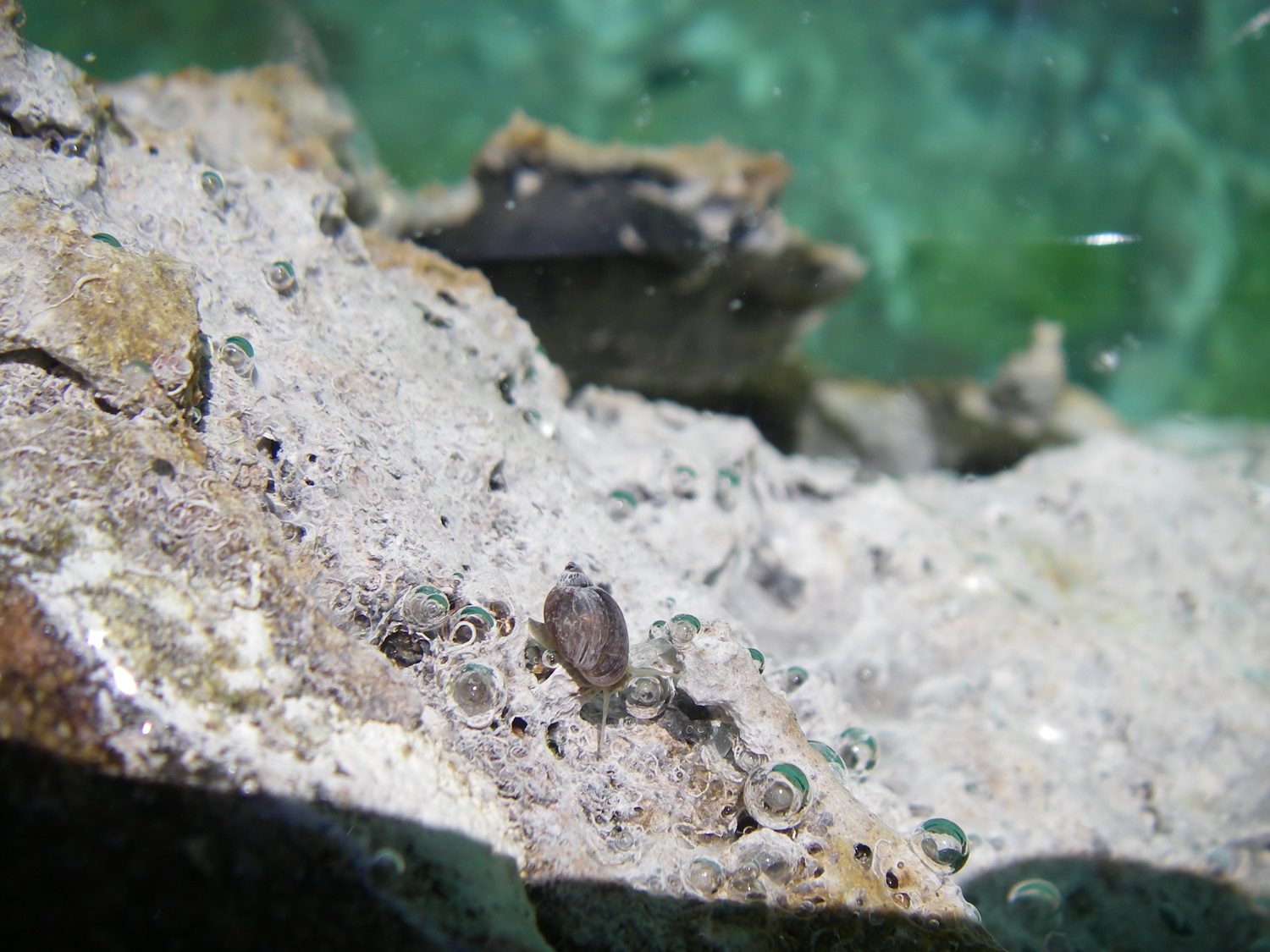
-
Article
Snake Species in Canada
A snake is a long, slender reptile of the suborder Serpentes, within the order Squamata (which also includes lizards). There are 25 species of snake currently found in Canada. In addition, one species, the timber rattlesnake, and one subspecies, the Pacific gophersnake, are extirpated. This means that, while they continue to live in other parts of their range, they are no longer found in Canada. Snake species in Canada belong to one of three taxonomic families: Boidae, Viperidae or Colubridae. Most species live in the southern part of the country; however, the common gartersnake can be found as far north as the 60th parallel, near Fort Smith, Northwest Territories.
"https://d3d0lqu00lnqvz.cloudfront.net/media/media/15a34f7a-129d-4b53-87e4-cea8bb9b67fa.jpg" // resources/views/front/categories/view.blade.php
https://d3d0lqu00lnqvz.cloudfront.net/media/media/15a34f7a-129d-4b53-87e4-cea8bb9b67fa.jpg
-
Article
Snapping Turtle
The snapping turtle (Chelydra serpentina) is a large freshwater turtle native to North America. In Canada, snapping turtles are indigenous to the southern portions of Saskatchewan, Manitoba, Ontario, Quebec, New Brunswick and Nova Scotia.
"https://d3d0lqu00lnqvz.cloudfront.net/media/new_article_images/SnappingTurtle/27109394592_7806ac9eb0_c.jpg" // resources/views/front/categories/view.blade.php
https://d3d0lqu00lnqvz.cloudfront.net/media/new_article_images/SnappingTurtle/27109394592_7806ac9eb0_c.jpg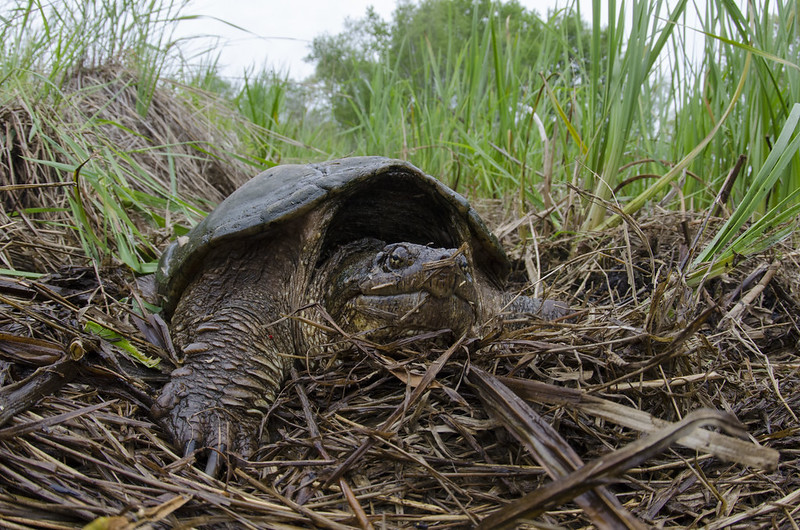
-
Article
AtkinsRéalis
AtkinsRéalis (formerly SNC-Lavalin) is a global engineering and construction firm based in Montreal, Quebec. It works in several industries including oil and gas, mining, cybersecurity and nuclear power. It also builds public and private infrastructure around the world. The company began in 1911 as an engineering consultant for power projects. In 1991, the original company, called SNC, merged with competitor Lavalin to become SNC-Lavalin. Since 2011, allegations of fraud and corruption on the part of SNC-Lavalin and several of its executives have plagued the company with scandal. In 2023, SNC-Lavalin changed its name and rebranded to AtkinsRéalis. Today the company employs over 30,000 people in several countries. In 2022, it registered $7.5 billion in revenue. In Canada, the company has received contracts to build major transit projects in cities including Toronto, Montreal and Vancouver. Worldwide, AtkinsRéalis oversees resource-extraction and infrastructure projects in North America, the Asia-Pacific region, Europe and the Middle East. Click here for definitions of key terms used in this article.
"https://d3d0lqu00lnqvz.cloudfront.net/media/new_article_images/SNCLavalin/dreamstime_xl_144110990.jpg" // resources/views/front/categories/view.blade.php
https://d3d0lqu00lnqvz.cloudfront.net/media/new_article_images/SNCLavalin/dreamstime_xl_144110990.jpg
-
Article
Snipe
Snipe is the name given to 19 species of small to medium-sized shorebirds (254–406 mm) of the sandpiper family. Like woodcocks, snipes have long bills with flexible tips and eyes set well back on the skull, allowing almost all-round vision.
"https://d3d0lqu00lnqvz.cloudfront.net/media/media/58b1f67e-84e1-4107-8882-d2fe8a0d4c9a.jpg" // resources/views/front/categories/view.blade.php
https://d3d0lqu00lnqvz.cloudfront.net/media/media/58b1f67e-84e1-4107-8882-d2fe8a0d4c9a.jpg
-
Article
SNOLAB
SNOLAB, an expanded version of the facility originally known as the Sudbury Neutrino Observatory, is a particle physics laboratory located in the Creighton Mine, about 12 kilometers west of Sudbury, Ontario. Situated approximately two kilometres below ground, the laboratory takes advantage of layers of Canadian Shield rock to protect sensitive experiments from high-energy particles which constantly bombard the Earth. SNOLAB currently hosts an array of particle physics experiments, along with experiments focused on the life sciences and quantum technology (see Physics). Work carried out at the lab in the 1990s and early 2000s, involving the subatomic particle known as the neutrino, led to a Nobel Prize in Physics, in 2015, for Canadian physicist Arthur B. McDonald. (See also Nobel Prizes and Canada.)
"https://d3d0lqu00lnqvz.cloudfront.net/SNOLAB/snolabbuilding.png" // resources/views/front/categories/view.blade.php
https://d3d0lqu00lnqvz.cloudfront.net/SNOLAB/snolabbuilding.png