
Browse "Things"
-
Article
Sixties Scoop
The “Sixties Scoop” refers to the large-scale removal or “scooping” of Indigenous children from their homes, communities and families of birth through the 1960s, and their subsequent adoption into predominantly non-Indigenous, middle-class families across the United States and Canada. This experience left many adoptees with a lost sense of cultural identity. The physical and emotional separation from their birth families continues to affect adult adoptees and Indigenous communities to this day. This article is a full-length entry about the Sixties Scoop. For a plain-language summary, please see Sixties Scoop (Plain-Language Summary).
"https://d3d0lqu00lnqvz.cloudfront.net/media/media/9fee628e-1ce5-4c82-9ebb-d5b2764b09c4.jpg" // resources/views/front/categories/view.blade.php
https://d3d0lqu00lnqvz.cloudfront.net/media/media/9fee628e-1ce5-4c82-9ebb-d5b2764b09c4.jpg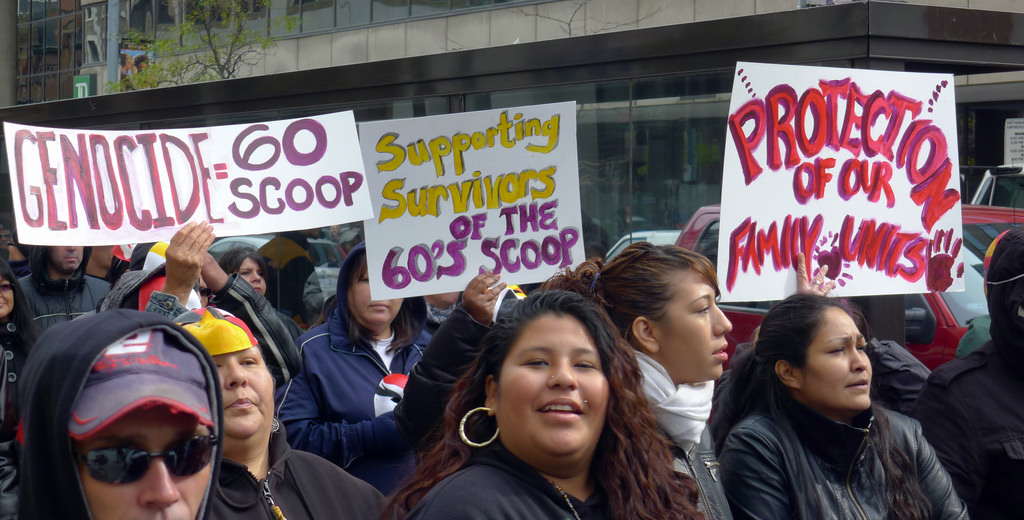
-
Article
Sixties Scoop (Plain-Language Summary)
The term “Sixties Scoop” refers to the large numbers of Indigenous children who were taken from their homes (scooped) throughout the 1960s. Most of these children were adopted by non-Indigenous families in Canada and the United States. The “Sixties Scoop” has left a lasting legacy on the children, families and communities involved. This article is a plain-language summary of the Sixties Scoop. If you are interested in reading about this topic more in depth, please see our full-length entry, Sixties Scoop.
"https://d3d0lqu00lnqvz.cloudfront.net/media/media/9fee628e-1ce5-4c82-9ebb-d5b2764b09c4.jpg" // resources/views/front/categories/view.blade.php
https://d3d0lqu00lnqvz.cloudfront.net/media/media/9fee628e-1ce5-4c82-9ebb-d5b2764b09c4.jpg
-
Editorial
Sixty Years On, Korean War Still Echoes
When is a war not a war? For the Korean War, the answer is not always clear. This year, 2013, marks the 60th anniversary of the ceasefire of a war that not everyone describes that way. It had ambiguous beginnings, more than 20 participating countries, and still no formal end. But some things are evident. This year, Historica Canada is commemorating this sometimes-forgotten but still-resonant period of our recent history, and Canada’s role therein. Our country sent more than 26,000 members of our military to the Korean “theatre.” More than 500 Canadians died, and another 1,000 were wounded; 32 became prisoners of war.
"https://thecanadianencyclopedia.ca/images/tce_placeholder.jpg?v=e9dca980c9bdb3aa11e832e7ea94f5d9" // resources/views/front/categories/view.blade.php
https://thecanadianencyclopedia.ca/images/tce_placeholder.jpg?v=e9dca980c9bdb3aa11e832e7ea94f5d9
-
Article
Ski Jumping
Although informal ski jumping had taken place for decades, the first officially measured jump (30.5 m) was made by Sondre Norheim in Norway in 1860. About 20 years later, Scandinavian miners and lumbermen brought the sport to western Canada, where it flourished.
"https://thecanadianencyclopedia.ca/images/tce_placeholder.jpg?v=e9dca980c9bdb3aa11e832e7ea94f5d9" // resources/views/front/categories/view.blade.php
https://thecanadianencyclopedia.ca/images/tce_placeholder.jpg?v=e9dca980c9bdb3aa11e832e7ea94f5d9
-
Article
Alpine Skiing
The birth of modern skiing in North America, nearly 1000 years later, can be credited to their direct descendants.
"https://d3d0lqu00lnqvz.cloudfront.net/media/media/422e8bec-0d3c-48b7-b19e-f4fd6cfaaa96.jpg" // resources/views/front/categories/view.blade.php
https://d3d0lqu00lnqvz.cloudfront.net/media/media/422e8bec-0d3c-48b7-b19e-f4fd6cfaaa96.jpg
-
Article
Cross-Country Skiing
Cross-country skiing is a derivative of skiing, whereby participants glide horizontally on a snow surface. In Canada, cross-country skiing has evolved from a means of winter transportation to a form of recreation enjoyed by nearly 4 million Canadians. For a few elite athletes, cross-country skiing provides an opportunity to compete at the Olympic level.
"https://d3d0lqu00lnqvz.cloudfront.net/media/media/c643faf9-957d-4927-8655-614dd850cf68.jpg" // resources/views/front/categories/view.blade.php
https://d3d0lqu00lnqvz.cloudfront.net/media/media/c643faf9-957d-4927-8655-614dd850cf68.jpg
-
Article
Skunk
The skunk is a carnivorous, cat-sized mammal. Skunks were previously considered as part of the weasel family (Mustelidae) but DNA research has placed them in their own family, Mephitidae. This animal is black in colour with conspicuous white stripes or spots. Adults average 54 centimetres long and weigh 1.6 kilograms. Two genera occur in Canada.
"https://d3d0lqu00lnqvz.cloudfront.net/media/media/034d1f13-755b-489b-ae6b-2f6912611488.jpg" // resources/views/front/categories/view.blade.php
https://d3d0lqu00lnqvz.cloudfront.net/media/media/034d1f13-755b-489b-ae6b-2f6912611488.jpg
-
Article
Sky
The sky appears its deepest blue when the air is dry and clean. Water vapour and dust scatter all colours of light, causing the blue to appear washed-out and pale.
"https://thecanadianencyclopedia.ca/images/tce_placeholder.jpg?v=e9dca980c9bdb3aa11e832e7ea94f5d9" // resources/views/front/categories/view.blade.php
https://thecanadianencyclopedia.ca/images/tce_placeholder.jpg?v=e9dca980c9bdb3aa11e832e7ea94f5d9
-
Article
SkyTrain
The SkyTrain is the rapid transit rail system serving Metro Vancouver, British Columbia. It uses mostly Advanced Light Rapid Transit (ALRT) technology, an automated rail system that operates mainly on a raised guideway, although some sections run underground or at street level. Regular service began 3 January 1986. The SkyTrain’s opening coincided with Expo 86, the world’s fair hosted by Vancouver as part of its 100th anniversary celebrations. The system is run by TransLink, the provincial transit agency for the South Coast of British Columbia. It was the world’s first driverless urban rail system. Now, it is one of the longest fully automated rapid transit systems in the world. The SkyTrain has three lines connecting 53 stations in seven municipalities. In 2018, it had more than 495,000 boardings per weekday, on average.
"https://d3d0lqu00lnqvz.cloudfront.net/media/media/82bd1d11-dffa-4919-8590-ae9ea87a523c.jpg" // resources/views/front/categories/view.blade.php
https://d3d0lqu00lnqvz.cloudfront.net/media/media/82bd1d11-dffa-4919-8590-ae9ea87a523c.jpg
-
Article
Slavery Abolition Act, 1833
An Act for the Abolition of Slavery throughout the British Colonies; for promoting the Industry of the manumitted slaves; and for compensating the Persons hitherto entitled to the Service of such Slaves (also known as the Slavery Abolition Act) received Royal Assent on 28 August 1833 and took effect 1 August 1834. The Act abolished enslavement in most British colonies, freeing over 800,000 enslaved Africans in the Caribbean and South Africa as well as a small number in Canada.
"https://d3d0lqu00lnqvz.cloudfront.net/media/media/9ea57f84-ae9c-45f6-97a9-ee077202abee.jpg" // resources/views/front/categories/view.blade.php
https://d3d0lqu00lnqvz.cloudfront.net/media/media/9ea57f84-ae9c-45f6-97a9-ee077202abee.jpg
-
Macleans
Slavery in Sudan
This article was originally published in Maclean’s magazine on April 10, 2000. Partner content is not updated. Like many a fellow nomad, Jongchol Dudi Mayar measures distance in days.
"https://thecanadianencyclopedia.ca/images/tce_placeholder.jpg?v=e9dca980c9bdb3aa11e832e7ea94f5d9" // resources/views/front/categories/view.blade.php
https://thecanadianencyclopedia.ca/images/tce_placeholder.jpg?v=e9dca980c9bdb3aa11e832e7ea94f5d9
-
Article
Enslavement of Indigenous People in Canada
To a tremendous extent, the enslavement of Indigenous peoples defines slavery in Canada. Fully two-thirds of the slaves in the colony of New France were Indigenous. After 1750, the number of Indigenous slaves brought into French Canada began to decline. When slavery was abolished in British colonies in 1834, Black slaves far outnumbered Indigenous slaves. (See also Black Enslavement in Canada.) The enslavement of Indigenous peoples is part of a dark legacy of colonization that has had implications on generations of Indigenous peoples in Canada and throughout North America.
"https://d3d0lqu00lnqvz.cloudfront.net/media/media/1ddef9e7-e3c5-4510-9e9c-e1994ac29434.jpg" // resources/views/front/categories/view.blade.php
https://d3d0lqu00lnqvz.cloudfront.net/media/media/1ddef9e7-e3c5-4510-9e9c-e1994ac29434.jpg
-
Article
Para Ice Hockey (Sledge Hockey)
Para ice hockey (also known as sledge hockey) is a version of ice hockey played by athletes with a lower-extremity disability. Players use a two-bladed sledge, as well as sticks with spikes at one end for propulsion and curved blades at the other end for shooting. Canada is a world power in the game and has won medals at all of the Paralympic Games except 2002 and 2010. In 2016, the International Paralympic Committee decided to rename and rebrand the sport under its jurisdiction. Since November 2016, sledge hockey has been officially known as para ice hockey.
"https://d3d0lqu00lnqvz.cloudfront.net/media/media/b8c0b918-95ee-45f0-a3b9-31dbff0e7f64.jpg" // resources/views/front/categories/view.blade.php
https://d3d0lqu00lnqvz.cloudfront.net/media/media/b8c0b918-95ee-45f0-a3b9-31dbff0e7f64.jpg
-
Article
Sleeping Car Porters in Canada
Sleeping car porters were railway employees who attended to passengers aboard sleeping cars. Porters were responsible for passengers’ needs throughout a train trip, including carrying luggage, setting up beds, pressing clothes and shining shoes, and serving food and beverages, among other services. The vast majority of sleeping car porters were Black men and the position was one of only a few job opportunities available to Black men in Canada. While the position carried respect and prestige for Black men in their communities, the work demanded long hours for little pay. Porters could be fired suddenly and were often subjected to racist treatment. Black Canadian porters formed the first Black railway union in North America (1917) and became members of the larger Brotherhood of Sleeping Car Porters in 1939. Both unions combatted racism and the many challenges that porters experienced on the job.
"https://d3d0lqu00lnqvz.cloudfront.net/media/new_article_images/SleepingCarPorters/L3D211046.jpg" // resources/views/front/categories/view.blade.php
https://d3d0lqu00lnqvz.cloudfront.net/media/new_article_images/SleepingCarPorters/L3D211046.jpg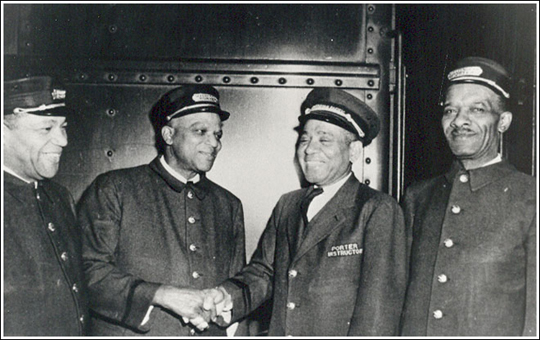
-
Article
Slovenian Music in Canada
The first substantial Canadian immigration from Slovenia (the northwestern region of the Kingdom of Serbs, Croats, and Slovenes, which was renamed Yugoslavia in 1929) occurred 1918-29. Peasants and labourers moved to Ontario, many becoming farmers on the Niagara peninsula.
"https://thecanadianencyclopedia.ca/images/tce_placeholder.jpg?v=e9dca980c9bdb3aa11e832e7ea94f5d9" // resources/views/front/categories/view.blade.php
https://thecanadianencyclopedia.ca/images/tce_placeholder.jpg?v=e9dca980c9bdb3aa11e832e7ea94f5d9