
Browse "Things"
-
Article
Second World War (WWII)
The Second World War was a defining event in Canadian history, transforming a quiet country on the fringes of global affairs into a critical player in the 20th century's most important struggle. Canada carried out a vital role in the Battle of the Atlantic and the air war over Germany and contributed forces to the campaigns of western Europe beyond what might be expected of a small nation of then only 11 million people. Between 1939 and 1945 more than one million Canadian men and women served full-time in the armed services. More than 43,000 were killed. Despite the bloodshed, the war against Germany and the Axis powers reinvigorated Canada's industrial base, elevated the role of women in the economy, paved the way for Canada's membership in NATO, and left Canadians with a legacy of proud service and sacrifice embodied in names such as Dieppe, Hong Kong, Ortona and Juno Beach. (This is the full-length entry about the Second World War. For a plain-language summary, please see Second World War (Plain-Language Summary).)
"https://d3d0lqu00lnqvz.cloudfront.net/media/media/0af6d870-3da6-4b91-b0d1-1b28501fd875.jpg" // resources/views/front/categories/view.blade.php
https://d3d0lqu00lnqvz.cloudfront.net/media/media/0af6d870-3da6-4b91-b0d1-1b28501fd875.jpg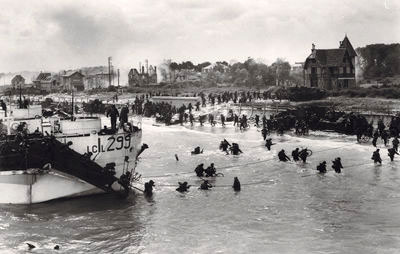
-
Article
Secondary Education
Originally established as schools offering a narrow, classical curriculum to the sons of gentlemen, SECONDARY SCHOOLS (also known as high schools) became coeducational, offering a widened variety of programs and courses to all children who had completed the elementary school program.
"https://thecanadianencyclopedia.ca/images/tce_placeholder.jpg?v=e9dca980c9bdb3aa11e832e7ea94f5d9" // resources/views/front/categories/view.blade.php
https://thecanadianencyclopedia.ca/images/tce_placeholder.jpg?v=e9dca980c9bdb3aa11e832e7ea94f5d9
-
Article
Secret Societies in Canada
Secret Societies Secret societies are sometimes seen as religious, philosophical or spiritual sects that confer upon their initiates a certain mystery; the mystery is patiently and meticulously maintained and gradually made accessible, in succeeding stages, through the performance of secret rites designed to purify the fortunate elect. At other times, secret societies are seen as seditious political organizations, clandestine economic associations, criminal groups, ideological movements with revolutionary intentions, or occult interest groups. They may also...
"https://d3d0lqu00lnqvz.cloudfront.net/media/media/d0ed9f42-220c-41cd-9b89-2f0b58d51f0c.jpg" // resources/views/front/categories/view.blade.php
https://d3d0lqu00lnqvz.cloudfront.net/media/media/d0ed9f42-220c-41cd-9b89-2f0b58d51f0c.jpg
-
Article
Section 94 BC Vehicle Act Reference
By virtue of par 94(2) of the Motor Vehicle Act of British Columbia, anyone who drives his vehicle without a valid permit or while his permit is suspended commits an infraction for which the minimum penalty is a prison sentence.
"https://thecanadianencyclopedia.ca/images/tce_placeholder.jpg?v=e9dca980c9bdb3aa11e832e7ea94f5d9" // resources/views/front/categories/view.blade.php
https://thecanadianencyclopedia.ca/images/tce_placeholder.jpg?v=e9dca980c9bdb3aa11e832e7ea94f5d9
-
Article
Section 98 Criminal Code
Section 98 was an offence in the CRIMINAL CODE of Canada from 1919 to 1936. The section was drafted in 1919 in response to the general labour unrest in the country, which culminated in the WINNIPEG GENERAL STRIKE.
"https://thecanadianencyclopedia.ca/images/tce_placeholder.jpg?v=e9dca980c9bdb3aa11e832e7ea94f5d9" // resources/views/front/categories/view.blade.php
https://thecanadianencyclopedia.ca/images/tce_placeholder.jpg?v=e9dca980c9bdb3aa11e832e7ea94f5d9
-
Article
Secularism in Quebec
The Quiet Revolution (1960–1970) gave rise to secularism within Quebec society. The latter became both secular by widening the separation between Church and State, as well as non-confessional by removing religion from institutions. However, the issue of secularism is still a matter for debate. In June 2019, the passage of the Act Respecting the Laicity of the State fueled many discussions about the place of religion in public domain.(This is the full-length article on secularism in Quebec. If you wish to read a plain-language summary, please see Secularism in Quebec (Plain-Language Summary).)
"https://d3d0lqu00lnqvz.cloudfront.net/media/new_article_images/Corridart/1059px-Pierre_Ayot,_La_croix_du_Mont-Royal_(réplique),_2016_(30216916871).jpg" // resources/views/front/categories/view.blade.php
https://d3d0lqu00lnqvz.cloudfront.net/media/new_article_images/Corridart/1059px-Pierre_Ayot,_La_croix_du_Mont-Royal_(réplique),_2016_(30216916871).jpg
-
Article
Secularism in Quebec (Plain-Language Summary)
Quebec society has changed significantly since the 1960s, especially regarding religion. Before that, the Catholic Church was everywhere, including, for example, in schools and hospitals. Religion was also at the core of a village's identity. But in the 1960s, Quebec began to change. Society shifted away from the Church and towards a secular state. Secularism means being neutral toward religion. A secular state excludes religion from government and does not endorse or favor any religion in particular. (This article is a plain-language summary. If you want to learn more about this subject, see our full article called Secularism in Quebec).
"https://thecanadianencyclopedia.ca/images/tce_placeholder.jpg?v=e9dca980c9bdb3aa11e832e7ea94f5d9" // resources/views/front/categories/view.blade.php
https://thecanadianencyclopedia.ca/images/tce_placeholder.jpg?v=e9dca980c9bdb3aa11e832e7ea94f5d9
-
Macleans
Security High for G8 Summit
"A revolution is not a dinner party, or writing an essay, or painting a picture, or doing embroidery; it cannot be so refined, so leisurely and gentle.This article was originally published in Maclean's Magazine on June 17, 2002
"https://thecanadianencyclopedia.ca/images/tce_placeholder.jpg?v=e9dca980c9bdb3aa11e832e7ea94f5d9" // resources/views/front/categories/view.blade.php
https://thecanadianencyclopedia.ca/images/tce_placeholder.jpg?v=e9dca980c9bdb3aa11e832e7ea94f5d9
-
Macleans
Security Improved at 24 Sussex
Some things will have changed around the house by the time Prime Minister Jean Chrétien returns home to Ottawa on Nov. 19 from the Commonwealth heads of government meeting in New Zealand and his other travels in Asia.This article was originally published in Maclean's Magazine on November 20, 1995
"https://thecanadianencyclopedia.ca/images/tce_placeholder.jpg?v=e9dca980c9bdb3aa11e832e7ea94f5d9" // resources/views/front/categories/view.blade.php
https://thecanadianencyclopedia.ca/images/tce_placeholder.jpg?v=e9dca980c9bdb3aa11e832e7ea94f5d9
-
Article
Sedge
Sedge is a grasslike plant common throughout temperate and cold regions. The genus name, Carex (family Cyperaceae), is probably derived from keiro, referring to the sharp leaf margins.
"https://d3d0lqu00lnqvz.cloudfront.net/media/media/e54d9ac1-e557-4493-aa21-0155fa62dd38.jpg" // resources/views/front/categories/view.blade.php
https://d3d0lqu00lnqvz.cloudfront.net/media/media/e54d9ac1-e557-4493-aa21-0155fa62dd38.jpg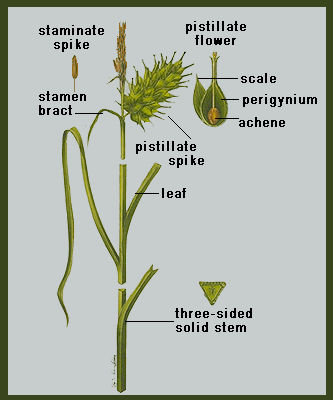
-
Article
Sedimentary Rock
Only about 5% of the Earth's crust is composed of sedimentary rocks, but they cover 70-75% of the exposed surface and contain many economically important minerals, as well as coal and petroleum.
"https://d3d0lqu00lnqvz.cloudfront.net/media/media/233c4490-07ce-414e-b2d5-e30602befc75.jpg" // resources/views/front/categories/view.blade.php
https://d3d0lqu00lnqvz.cloudfront.net/media/media/233c4490-07ce-414e-b2d5-e30602befc75.jpg
-
Article
Seed Plants
Seed plants are the most abundant and familiar component of Earth's vegetation, comprising an estimated 250,000–300,000 species. They outnumber all other plant groups, dominate the land, thrive in bodies of fresh water and are found to a limited extent in the oceans. They include the largest (giant sequoia) and oldest (bristlecone pine) living things, and encompass tiny water-meal scarcely 1 mm long and ephemeral annuals that survive only a few weeks. Seed plants share with other vascular plants (plants with woody conducting systems) basic organs (root, stem and leaf), cell types and tissues. In response to different environments, they have evolved many forms.
"https://d3d0lqu00lnqvz.cloudfront.net/plant/1_The-Sky-Above.jpg" // resources/views/front/categories/view.blade.php
https://d3d0lqu00lnqvz.cloudfront.net/plant/1_The-Sky-Above.jpg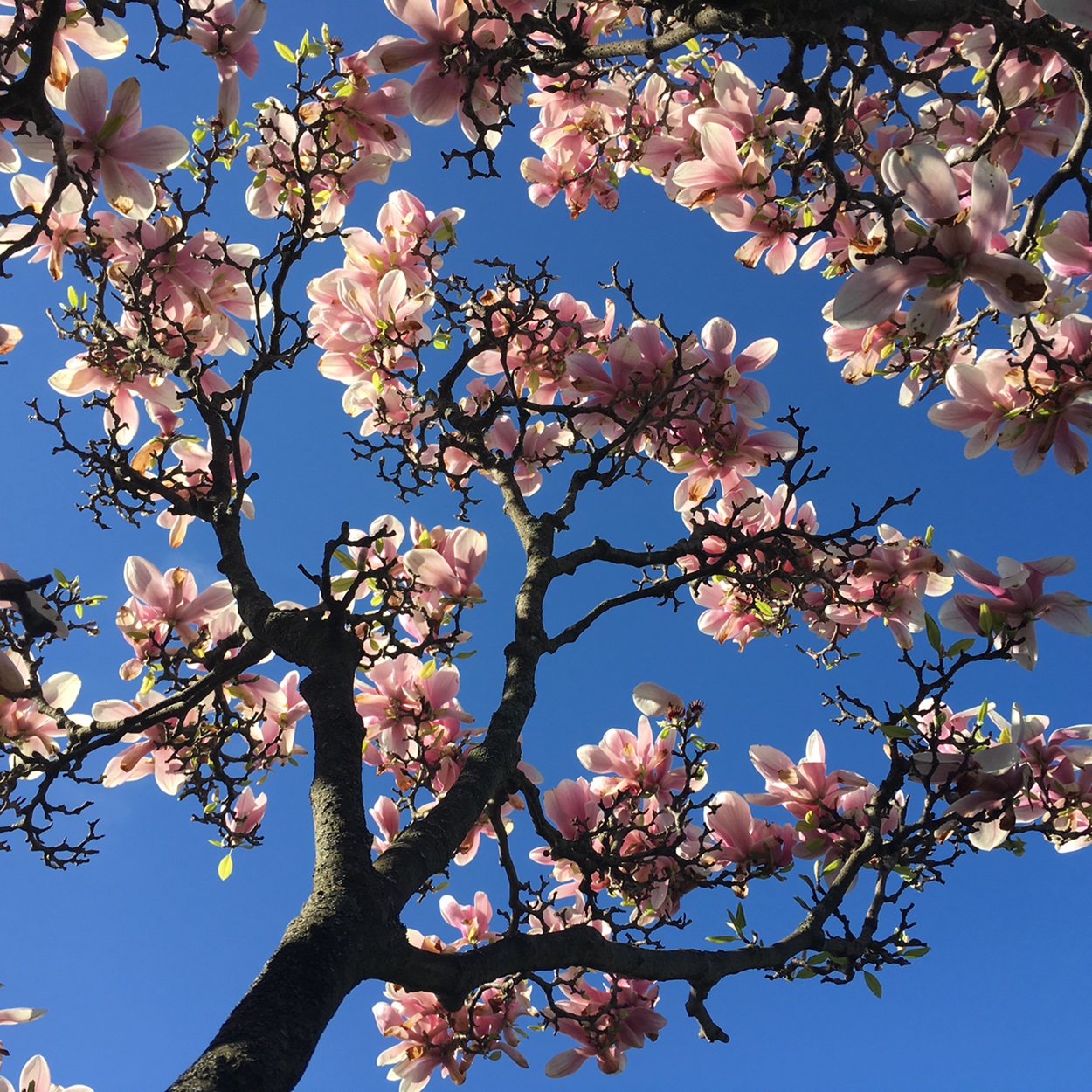
-
Macleans
Segal Enters Tory Leadership Race
The backroom boy is in. So is the dark horse. As expected, Hugh Segal, the consummate Tory fixer, announced his run for the federal party leadership last week, followed in short order by Brian Pallister, the former Manitoba cabinet minister.This article was originally published in Maclean's Magazine on June 22, 1998
"https://thecanadianencyclopedia.ca/images/tce_placeholder.jpg?v=e9dca980c9bdb3aa11e832e7ea94f5d9" // resources/views/front/categories/view.blade.php
https://thecanadianencyclopedia.ca/images/tce_placeholder.jpg?v=e9dca980c9bdb3aa11e832e7ea94f5d9
-
Article
Sei Whale
The sei whale (Balaenoptera borealis) is the third-largest baleen whale. These whales are found in Canada's Atlantic and Pacific oceans. Two subspecies of sei whales are recognized: a northern subspecies (Balaenoptera borealis borealis) and a southern subspecies (Balaenoptera borealis schlegelii). The sei whale is one of the fastest whales, reaching up to 55 km/h over short distances.
"https://d3d0lqu00lnqvz.cloudfront.net/seiwhale/Sei-Whale.jpg" // resources/views/front/categories/view.blade.php
https://d3d0lqu00lnqvz.cloudfront.net/seiwhale/Sei-Whale.jpg
-
Article
Seigneurial System
The seigneurial system was an institutional form of land distribution established in New France in 1627 and officially abolished in 1854. The Compagnie des Cent-Associés, which was granted ownership and legal and seigneurial rights over New France, from the Arctic to Florida, also obtained the right to allocate the land to its best advantage. The seigneurial system was based on the feudal system, which involved the personal dependency of censitaires (tenants) on the seigneur (see also Habitant).
"https://d3d0lqu00lnqvz.cloudfront.net/media/media/03b970d8-8c04-4534-938f-0cf5738ec6c3.jpg" // resources/views/front/categories/view.blade.php
https://d3d0lqu00lnqvz.cloudfront.net/media/media/03b970d8-8c04-4534-938f-0cf5738ec6c3.jpg