
Browse "Things"
-
Article
Saint Mary's University
Saint Mary's University, Halifax, was founded in 1802 to provide higher learning to young Catholic men. It is the oldest English-speaking, Roman-Catholic university in Canada. The Nova Scotia House of Assembly granted Saint Mary's its charter in 1841.
"https://thecanadianencyclopedia.ca/images/tce_placeholder.jpg?v=e9dca980c9bdb3aa11e832e7ea94f5d9" // resources/views/front/categories/view.blade.php
https://thecanadianencyclopedia.ca/images/tce_placeholder.jpg?v=e9dca980c9bdb3aa11e832e7ea94f5d9
-
Article
Saint Patrick’s Basilica
Saint Patrick’s Basilica is a minor basilica located in Montreal. It was constructed between 1843–47 as a parish church for Montreal’s growing Irish Catholic population (see Irish Canadians; Catholicism in Canada). The church was elevated to the status of a minor basilica in 1989. In addition to playing a significant religious and cultural role for the city of Montreal’s Irish community, Saint Patrick’s Basilica is recognized as the mother church for English-speaking Catholics in the city (see Canadian English; Languages in use in Canada).
"https://d3d0lqu00lnqvz.cloudfront.net/stpatricksbasilica/stpatrickschurchbynotman-son.jpg" // resources/views/front/categories/view.blade.php
https://d3d0lqu00lnqvz.cloudfront.net/stpatricksbasilica/stpatrickschurchbynotman-son.jpg
-
Article
St. Thomas University
St. Thomas University, in Fredericton, NB, evolved from the Roman Catholic school system in the province and more directly from Saint Michael's Academy in Chatham.
"https://thecanadianencyclopedia.ca/images/tce_placeholder.jpg?v=e9dca980c9bdb3aa11e832e7ea94f5d9" // resources/views/front/categories/view.blade.php
https://thecanadianencyclopedia.ca/images/tce_placeholder.jpg?v=e9dca980c9bdb3aa11e832e7ea94f5d9
-
Article
Salamander Species in Canada
Salamanders are tailed amphibians belonging to the order Caudata. There are around 800 known species worldwide; 22 are found in Canada. In addition to these species, the unisexual Ambystoma, a unique lineage of salamanders that does not conform to the typical definition of a species, are also found in Canada. Salamanders mainly live in the temperate regions of the Northern Hemisphere and tropical South and Central America. North America is home to more species of salamanders than anywhere else in the world. In Canada, salamanders are found from the Maritimes to British Columbia, and as far north as central Labrador and northern British Columbia; none have been recorded on the island of Newfoundland.
"https://d3d0lqu00lnqvz.cloudfront.net/SalamanderSpecies/SpottedSalamander.jpg" // resources/views/front/categories/view.blade.php
https://d3d0lqu00lnqvz.cloudfront.net/SalamanderSpecies/SpottedSalamander.jpg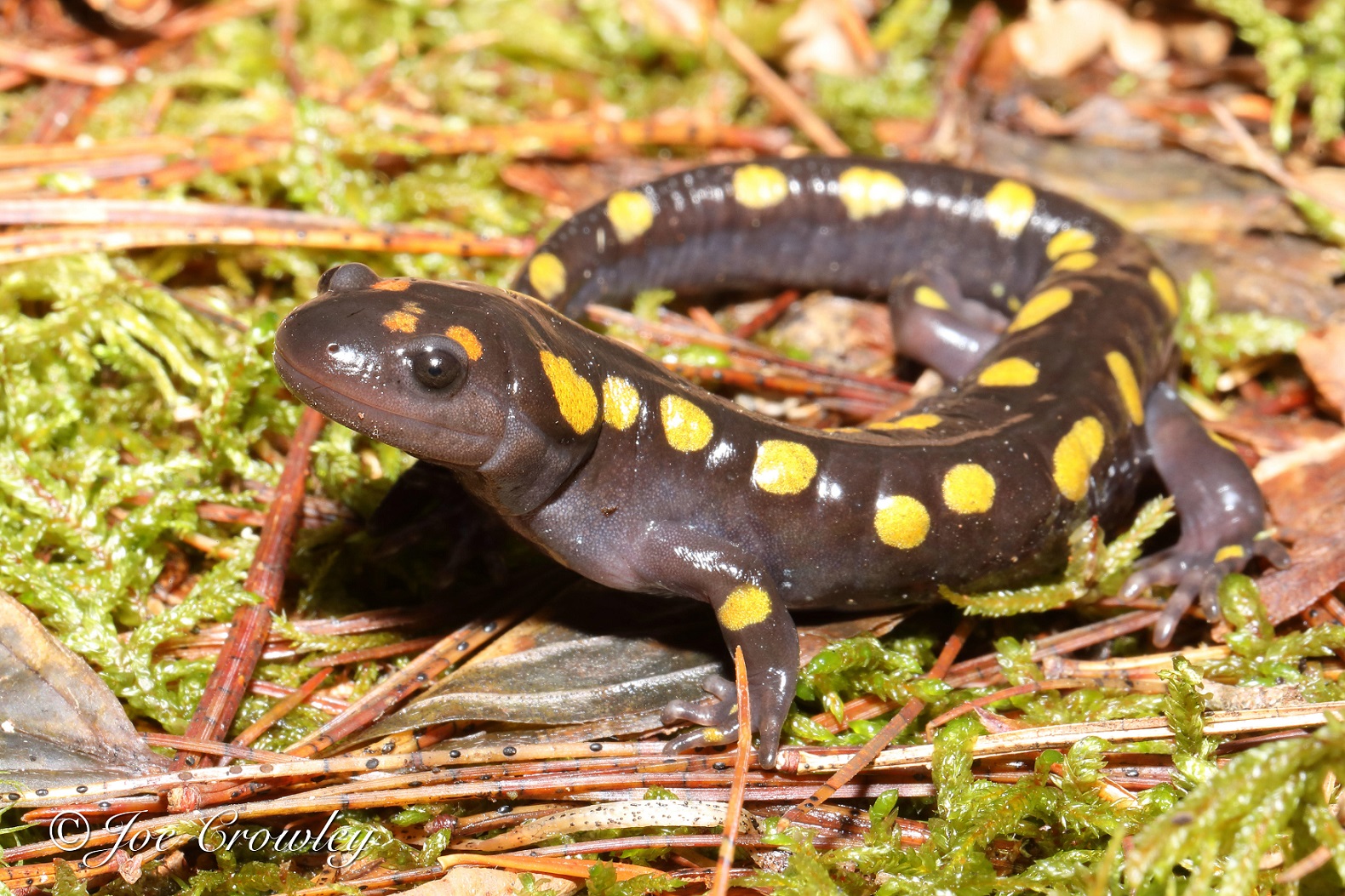
-
Article
Salish Woolly Dog
The Salish Woolly dog was an important part of Coast Salish life throughout southern Vancouver Island, the Strait of Georgia, and Washington State, as the dogs’ hair was used to weave clothing and blankets. Due to the increased presence of European settlers and their machine-spun sheep wool, the Salish Woolly dog population declined in the 1800s until its extinction around 1900.
"https://d3d0lqu00lnqvz.cloudfront.net/media/new_article_images/Salish-wooly-dog.jpg" // resources/views/front/categories/view.blade.php
https://d3d0lqu00lnqvz.cloudfront.net/media/new_article_images/Salish-wooly-dog.jpg
-
Article
Salmon
The salmon is a family of fish, Salmonidae [Lat salire, "to leap"], with soft fin rays, a short dorsal fin, an adipose (fatty) fin, and teeth in the jaws. The family includes salmon, trout and char of the subfamily Salmoninae, the graylings of the subfamily Thymallinae and the whitefishes of the subfamily Coregoninae. Salmonids are native to north temperate and subarctic waters. However, because of their tremendous sportfishing appeal, they have been introduced to all continents except Antarctica. Five genera of Salmoninae are recognized. Two are Eurasian, Brachymystax and Hucho. Three are found in both hemispheres, including Canada: Salmo, the trouts and the Atlantic salmon; Oncorhynchus, the Pacific salmon; and Salvelinus, the chars.
"https://d3d0lqu00lnqvz.cloudfront.net/media/media/e9b9b391-1dc4-48d3-bdb1-36e27a35cf6d.jpg" // resources/views/front/categories/view.blade.php
https://d3d0lqu00lnqvz.cloudfront.net/media/media/e9b9b391-1dc4-48d3-bdb1-36e27a35cf6d.jpg
-
Article
Salmonella
The OrganismThe organism that causes salmonella is a genus of bacteria of the family Enterobacteriaceae, members of which are commonly found in the intestinal tract of humans and other animals. It is named after D.E. Salmon, the American bacteriologist who described it in 1885.
"https://thecanadianencyclopedia.ca/images/tce_placeholder.jpg?v=e9dca980c9bdb3aa11e832e7ea94f5d9" // resources/views/front/categories/view.blade.php
https://thecanadianencyclopedia.ca/images/tce_placeholder.jpg?v=e9dca980c9bdb3aa11e832e7ea94f5d9
-
Article
Salt
Sodium chloride (NaCl), or common salt, is ubiquitous in the environment. In its solid form, salt crystallizes as colourless cubes and is called rock salt. Salt is also known to geologists as halite. Its crystal structure was the first to be determined by X-rays.
"https://thecanadianencyclopedia.ca/images/tce_placeholder.jpg?v=e9dca980c9bdb3aa11e832e7ea94f5d9" // resources/views/front/categories/view.blade.php
https://thecanadianencyclopedia.ca/images/tce_placeholder.jpg?v=e9dca980c9bdb3aa11e832e7ea94f5d9
-
Article
Salvation Army
The Salvation Army (sometimes referred to as the Sally Ann) officially began its work in Canada in London, Ont, on 1 June 1882. Introduced by fervent believers Mr and Mrs William Freer (Toronto), Jack Addie and Joe Ludgate (London), the Army corps was established in several Ontario towns.
"https://d3d0lqu00lnqvz.cloudfront.net/media/media/455f4c21-d47b-4e02-bd97-cf5c907a1651.jpg" // resources/views/front/categories/view.blade.php
https://d3d0lqu00lnqvz.cloudfront.net/media/media/455f4c21-d47b-4e02-bd97-cf5c907a1651.jpg
-
Article
Same-Sex Marriage in Canada
In 2003, Ontario and British Columbia became the first two provinces to legalize same-sex marriage. The federal Civil Marriage Act came into force on 20 July 2005, making same-sex marriage legal across Canada. Canada became the third country to permit same-sex marriages, after the Netherlands (2000) and Belgium (2003). Since then, all provinces in Canada have recognized same-sex marriages. Marriage itself falls under federal jurisdiction in Canada. But the provinces regulate the solemnization of marriage (the formal ceremony that is either civil or religious). They also grant marriage licenses. The Supreme Court has ruled that under the Charter of Rights and Freedoms, a religious official cannot be legally compelled to perform same-sex marriages if it is contrary to their religious beliefs.
"https://d3d0lqu00lnqvz.cloudfront.net/media/media/46a3c4ec-a503-4e72-bba8-c78f5fcd885a.jpg" // resources/views/front/categories/view.blade.php
https://d3d0lqu00lnqvz.cloudfront.net/media/media/46a3c4ec-a503-4e72-bba8-c78f5fcd885a.jpg
-
Article
Samson
Samson, first locomotive in North America to burn coal and the first to run over all-iron rails. Built in New Shildon, England, it was shipped to Pictou, NS, to haul coal from the Albion Mines 9.6 km over a tramway to Dunbar Point on Pictou Harbour.
"https://thecanadianencyclopedia.ca/images/tce_placeholder.jpg?v=e9dca980c9bdb3aa11e832e7ea94f5d9" // resources/views/front/categories/view.blade.php
https://thecanadianencyclopedia.ca/images/tce_placeholder.jpg?v=e9dca980c9bdb3aa11e832e7ea94f5d9
-
Article
Samuel Rabinovitch and the medical student strike of 1934
This article is currently being translated. It will be available shortly. Please check back at a later date or add it to your saved articles.
"https://d3d0lqu00lnqvz.cloudfront.net/emmanuelpersillierlachapelle/notredramehospitalonsherbrooke.jpg" // resources/views/front/categories/view.blade.php
https://d3d0lqu00lnqvz.cloudfront.net/emmanuelpersillierlachapelle/notredramehospitalonsherbrooke.jpg
-
Article
Sand and Gravel
Sand and gravel are unconsolidated, granular mineral materials produced by the natural disintegration of rock caused by weathering. The terms sand, gravel, clay and silt relate to grain size rather than composition. Sand is material passing through a number 4 (4.
"https://thecanadianencyclopedia.ca/images/tce_placeholder.jpg?v=e9dca980c9bdb3aa11e832e7ea94f5d9" // resources/views/front/categories/view.blade.php
https://thecanadianencyclopedia.ca/images/tce_placeholder.jpg?v=e9dca980c9bdb3aa11e832e7ea94f5d9
-
Article
Sandhill Crane
The sandhill crane (Antigone canadensis, formerly Grus canadensis) is a large bird in the family Gruidae. With an estimated population of over 650,000, sandhill cranes are the most abundant crane species in the world. They are divided into six subspecies: the migratory Canadian sandhill crane (Antigone canadensis rowani), lesser sandhill crane (Antigone canadensis canadensis) and greater sandhill crane (Antigone canadensis tabida), and the non-migratory Mississippi sandhill crane (Antigone canadensis pulla), Florida sandhill crane (Antigone canadensis pratensis) and Cuban sandhill crane (Antigone canadensis nesiotes). Of these, the Mississippi and Cuban sandhill cranes are considered endangered while the Florida sandhill crane is considered threatened.
"https://d3d0lqu00lnqvz.cloudfront.net/sandhillcrane/Sandhill-Crane-with-Young.jpg" // resources/views/front/categories/view.blade.php
https://d3d0lqu00lnqvz.cloudfront.net/sandhillcrane/Sandhill-Crane-with-Young.jpg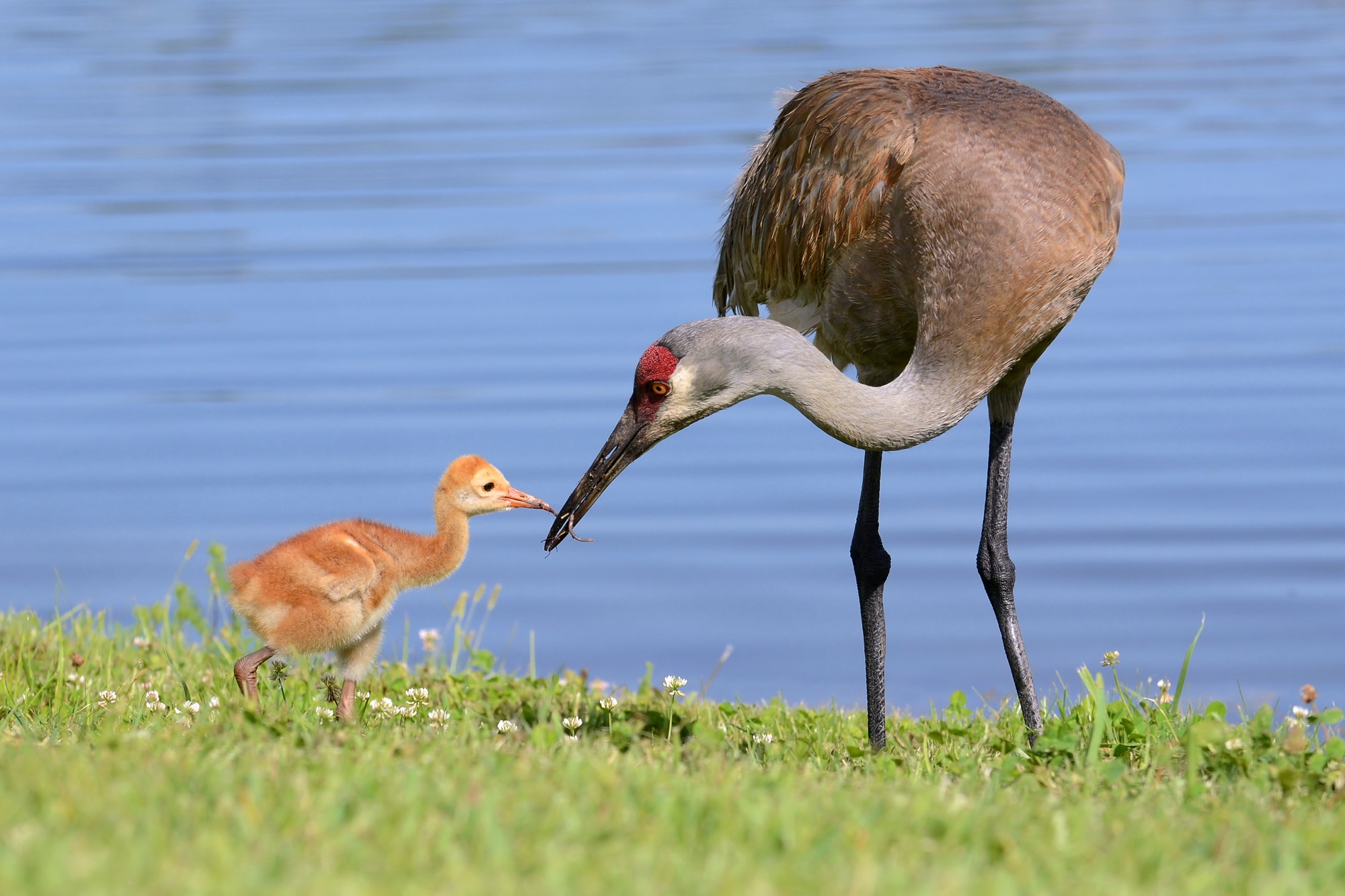
-
"https://d3d0lqu00lnqvz.cloudfront.net/media/media/db84b082-87bb-42fd-9a57-f102344d71fe.jpg" // resources/views/front/categories/view.blade.php
https://d3d0lqu00lnqvz.cloudfront.net/media/media/db84b082-87bb-42fd-9a57-f102344d71fe.jpg