Browse "Things"
-
Article
Repeal Movement
In 1867 many Nova Scotians were reluctant to endorse CONFEDERATION. In the elections of Sept 1867 anti-Confederates captured 36 of 38 seats in the local legislature, and 18 of 19 seats in the Dominion Parliament.
"https://thecanadianencyclopedia.ca/images/tce_placeholder.jpg?v=e9dca980c9bdb3aa11e832e7ea94f5d9" // resources/views/front/categories/view.blade.php
https://thecanadianencyclopedia.ca/images/tce_placeholder.jpg?v=e9dca980c9bdb3aa11e832e7ea94f5d9
-
Article
Representative Government
Representative government is a political system in which an elected assembly governs. Members of the assembly act as the people's representatives in government.
"https://d3d0lqu00lnqvz.cloudfront.net/media/media/b82af0bf-c28c-4f44-be97-09df6c7f769a.jpg" // resources/views/front/categories/view.blade.php
https://d3d0lqu00lnqvz.cloudfront.net/media/media/b82af0bf-c28c-4f44-be97-09df6c7f769a.jpg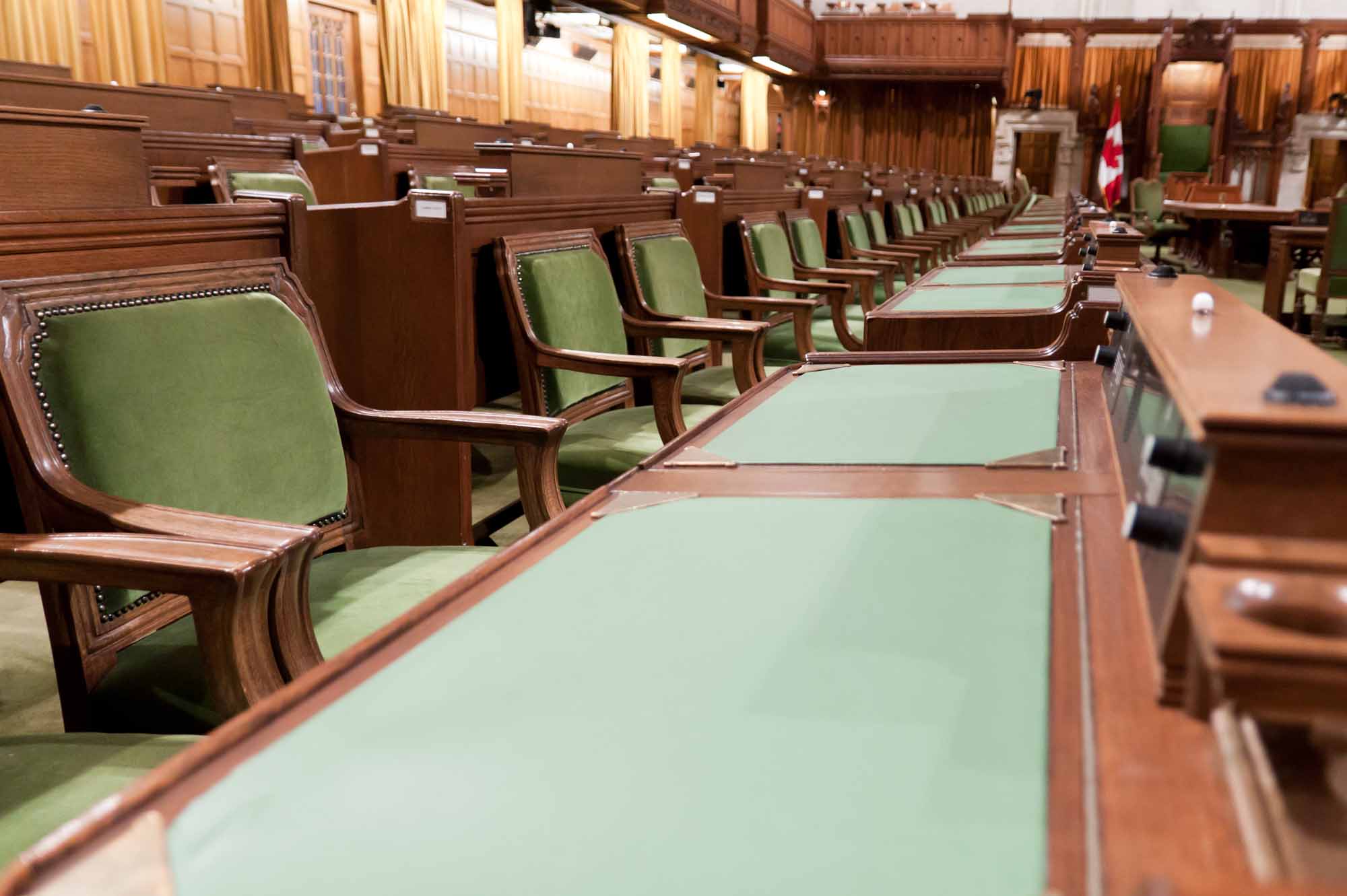
-
Article
Representing the Home Front: The Women of the Canadian War Memorials Fund
While they may not have had access to the battlefields, a number of Canadian women artists made their mark on the visual culture of the First World War by representing the home front. First among these were the women affiliated with the Canadian War Memorials Fund, Canada’s first official war art program. Founded in 1916, the stated goal of the Fund was to provide “suitable Memorials in the form of Tablets, Oil-Paintings, etc. […], to the Canadian Heroes and Heroines in the War.” Expatriates Florence Carlyle and Caroline Armington participated in the program while overseas. Artists Henrietta Mabel May, Dorothy Stevens, Frances Loringand Florence Wyle were commissioned by the Fund to visually document the war effort in Canada.
"https://d3d0lqu00lnqvz.cloudfront.net/media/media/c5bd4814-1974-4a38-b0bf-006c4ec26687.jpg" // resources/views/front/categories/view.blade.php
https://d3d0lqu00lnqvz.cloudfront.net/media/media/c5bd4814-1974-4a38-b0bf-006c4ec26687.jpg
-
Article
Reptiles in Canada
Reptiles are a group of vertebrate animals that, like mammals, produce an amniote egg, with extra-embryonic sacs for waste, yolk and protection, and often possess a shell, particularly if released by the female before development of the embryo is completed. DNA analysis has allowed comparison of the genes in common for living organisms, and new fossils have clarified the sequence of appearance of many features. Combined, these lines of research have produced changes from classical classification in which birds were regarded as most closely related to mammals primarily because they are both endothermic (able to maintain an internal body temperature). Now it is believed that each evolved this feature independently and that birds are derived from dinosaurs.
"https://d3d0lqu00lnqvz.cloudfront.net/turtlespeciesincanada/NorthernMapTurtleHatchling.jpg" // resources/views/front/categories/view.blade.php
https://d3d0lqu00lnqvz.cloudfront.net/turtlespeciesincanada/NorthernMapTurtleHatchling.jpg
-
Article
Reserve Force of Canada
The Reserve Force of Canada comprises part-time members of the ARMED FORCES, whose role is to augment and support the Regular Force. Compulsory universal military service for early settlers eventually became part-time, volunteer soldiering.
"https://thecanadianencyclopedia.ca/images/tce_placeholder.jpg?v=e9dca980c9bdb3aa11e832e7ea94f5d9" // resources/views/front/categories/view.blade.php
https://thecanadianencyclopedia.ca/images/tce_placeholder.jpg?v=e9dca980c9bdb3aa11e832e7ea94f5d9
-
Article
Reservoir
Reservoirs, as discussed here, do not include any type of subsurface reservoir structure that stores water, natural gas or oil.
"https://d3d0lqu00lnqvz.cloudfront.net/media/media/1c6f92bc-560d-45fe-a4b3-ee7504d34131.jpg" // resources/views/front/categories/view.blade.php
https://d3d0lqu00lnqvz.cloudfront.net/media/media/1c6f92bc-560d-45fe-a4b3-ee7504d34131.jpg
-
Article
Réservoir Gouin
Réservoir Gouin, 1570 km2, elev 404 m, max length 102 km, average depth 5 m, is a collection of hundreds of small lakes containing innumerable islands in south-central Québec, equidistant from Ottawa, Montréal and Québec City.
"https://thecanadianencyclopedia.ca/images/tce_placeholder.jpg?v=e9dca980c9bdb3aa11e832e7ea94f5d9" // resources/views/front/categories/view.blade.php
https://thecanadianencyclopedia.ca/images/tce_placeholder.jpg?v=e9dca980c9bdb3aa11e832e7ea94f5d9
-
Article
Manicouagan Reservoir
The Manicouagan Reservoir, 1,942 km2, elevation 360 m, is located in southeastern Quebec, about 140 km from the Labrador border. The second-largest natural lake in Quebec, it was created by a meteorite millions of years ago. The name “Manicouagan” is possibly of Innu origin and might mean “where there is bark” (for canoe making). The lake appears on Jonathan Carver’s map of Quebec (1776) as Lake Asturagamicook, and is shown to be drained by the Manicouagan or Black River.
"https://d3d0lqu00lnqvz.cloudfront.net/lakesincanada/Manicouagan-Reservoir.jpg" // resources/views/front/categories/view.blade.php
https://d3d0lqu00lnqvz.cloudfront.net/lakesincanada/Manicouagan-Reservoir.jpg
-
Timelines
Residential Schools
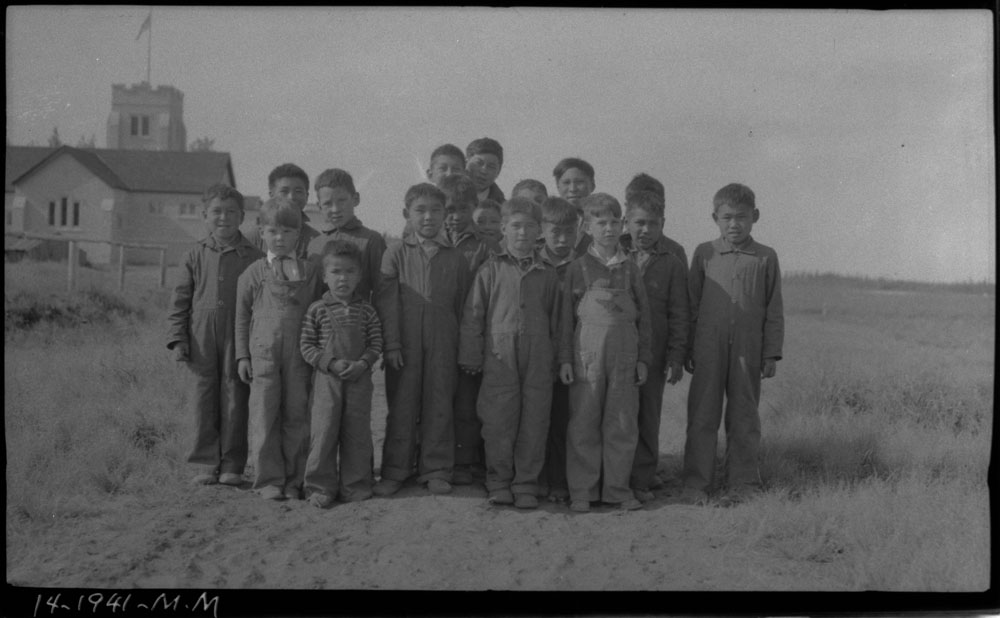
Residential schools were established by Christian churches and the federal government to assimilate Indigenous children into Euro-Canadian society.
"https://d3d0lqu00lnqvz.cloudfront.net/media/media/99d22b9f-bfac-4e55-9b21-4449f1db30c4.jpg" // resources/views/front/categories/view.blade.php
https://d3d0lqu00lnqvz.cloudfront.net/media/media/99d22b9f-bfac-4e55-9b21-4449f1db30c4.jpg
-
search.types.interactivemap
Residential Schools in Canada Interactive Map
The map below indicates the location of many residential schools in Canada. Click on individual points to learn a school’s name, religious denomination, opening and closing dates, and any other names by which the school was known. This map does not reflect every residential school that operated in the country. It only includes schools listed in the Indian Residential School Settlement Agreement and a similar agreement reached for survivors of schools in Newfoundland and Labrador. This means that schools that operated without the support of the federal government — as in schools run by a province, a religious order, or both — are not included on this map. Day schools, where many Indigenous students experienced treatment similar to that described at residential schools, are also not included.
"https://d3d0lqu00lnqvz.cloudfront.net/media/new_article_images/ResidentialSchoolMap/ResidentialSchoolMapScreenGrab.png" // resources/views/front/categories/view.blade.php
https://d3d0lqu00lnqvz.cloudfront.net/media/new_article_images/ResidentialSchoolMap/ResidentialSchoolMapScreenGrab.png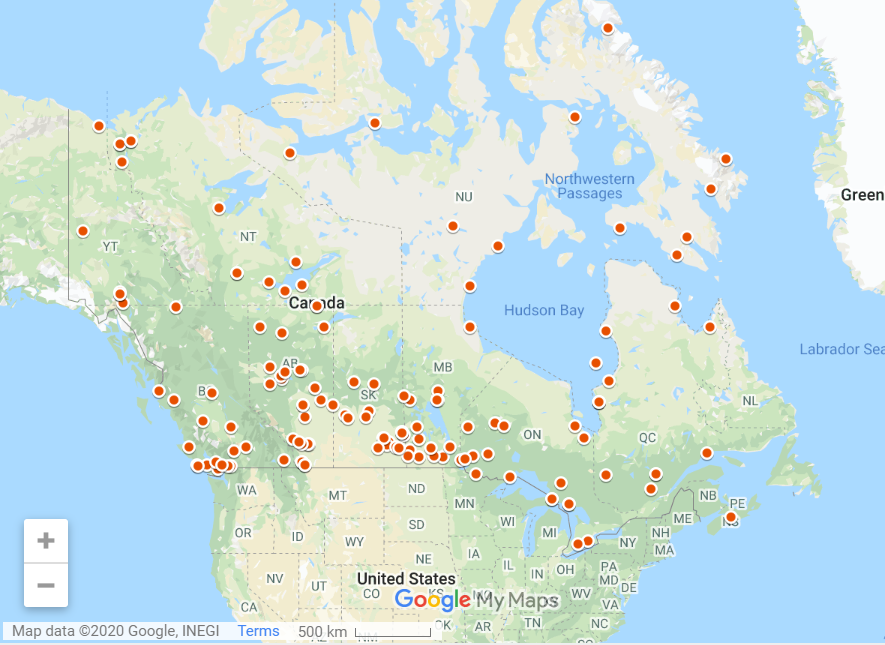
-
Article
Residential Schools in Canada (Plain-Language Summary)
In the early 1600s, Catholic nuns and priests established the first residential schools in Canada. In 1883, these schools began to receive funding from the federal government. That year, the Government of Canada officially authorized the creation of the residential school system. The main goal of the system was to assimilate Indigenous children into white, Christian society. (See also Inuit Experiences at Residential School and Métis Experiences at Residential School .) This article is a plain-language summary of residential schools in Canada. If you are interested in reading about this topic more in depth, please see our full-length entry, Residential Schools in Canada.
"https://d3d0lqu00lnqvz.cloudfront.net/media/media/8d3d94d2-cb82-47ad-97a5-a70b351c44e4.jpg" // resources/views/front/categories/view.blade.php
https://d3d0lqu00lnqvz.cloudfront.net/media/media/8d3d94d2-cb82-47ad-97a5-a70b351c44e4.jpg
-
Article
Residential Schools in Newfoundland and Labrador
Due to the unique history of Newfoundland and Labrador, Indigenous peoples in the province were not included under the Indian Act. Therefore, residential schools in Newfoundland and Labrador were separate from the federal residential school system outlined and enforced by the Indian Act. Newfoundland and Labrador residential schools were run by various non-governmental organizations before being partially funded by the federal government. Federal government funding started in 1949, when Newfoundland and Labrador joined Canada, and continued until 1980 (see also Newfoundland and Labrador and Confederation). Although a separate system, these schools caused harm to Indigenous students (e.g., cultural loss and physical and sexual abuse), like other residential schools across Canada.
"https://thecanadianencyclopedia.ca/images/tce_placeholder.jpg?v=e9dca980c9bdb3aa11e832e7ea94f5d9" // resources/views/front/categories/view.blade.php
https://thecanadianencyclopedia.ca/images/tce_placeholder.jpg?v=e9dca980c9bdb3aa11e832e7ea94f5d9
-
Article
Residential Segregation
Anthony Richmond, in Global Apartheid (1994), suggests that refugees, racism and the new world order are integrally tied to social spatial segregation of peoples. The word apartheid literally means "aparthood" (neighbour-hood), that is, the separation of people into different areas.
"https://thecanadianencyclopedia.ca/images/tce_placeholder.jpg?v=e9dca980c9bdb3aa11e832e7ea94f5d9" // resources/views/front/categories/view.blade.php
https://thecanadianencyclopedia.ca/images/tce_placeholder.jpg?v=e9dca980c9bdb3aa11e832e7ea94f5d9
-
Article
Residential Tenancies Act (Reference)
The Supreme Court of Canada (1996) held constitutionally valid the legislative provisions of the Residential Tenancies Act of Nova Scotia which empowered the director of residential letting to act as a mediator in order to settle differences between landlords and tenants.
"https://thecanadianencyclopedia.ca/images/tce_placeholder.jpg?v=e9dca980c9bdb3aa11e832e7ea94f5d9" // resources/views/front/categories/view.blade.php
https://thecanadianencyclopedia.ca/images/tce_placeholder.jpg?v=e9dca980c9bdb3aa11e832e7ea94f5d9
-
Article
Resistance and Residential Schools
Residential schools were government-sponsored religious schools that many Indigenous children were forced to attend. They were established to assimilate Indigenous children into Euro-Canadian culture. Indigenous parents and children did not simply accept the residential-school system. Indigenous peoples fought against – and engaged with – the state, schools and other key players in the system. For the duration of the residential-school era, parents acted in the best interests of their children and communities. The children responded in ways that would allow them to survive.
"https://d3d0lqu00lnqvz.cloudfront.net/ResistanceandResidentialSchools/a101771-v8.jpg" // resources/views/front/categories/view.blade.php
https://d3d0lqu00lnqvz.cloudfront.net/ResistanceandResidentialSchools/a101771-v8.jpg