
Browse "Things"
-
Article
Reciprocity
Reciprocity was a free trade agreement between the United States and Canada. It mutually reduced import duties and protective tariffs on certain goods exchanged between the two countries. It was in effect from 1854 to 1866 and was controversial at times on both sides of the border. It was replaced in 1878 by the Conservative Party’s protectionist National Policy. It involved levying tariffs on imported goods to shield Canadian manufacturers from American competition. A narrower reciprocity agreement was introduced in 1935 and expanded in 1938. However, it was suspended in 1948 after both countries signed the General Agreement on Tariffs and Trade (GATT).
"https://d3d0lqu00lnqvz.cloudfront.net/media/media/f8f2bab3-d387-4165-9fbc-617c30019b95.jpg" // resources/views/front/categories/view.blade.php
https://d3d0lqu00lnqvz.cloudfront.net/media/media/f8f2bab3-d387-4165-9fbc-617c30019b95.jpg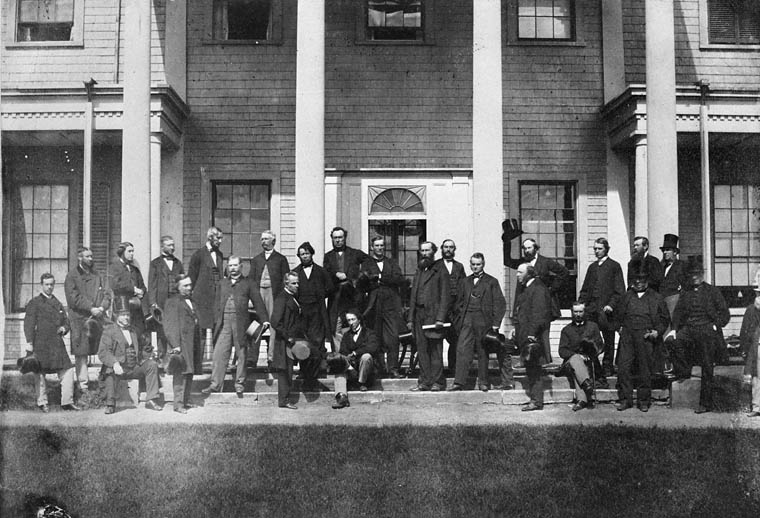
-
Article
Reciprocity (Plain-Language Summary)
Reciprocity was a free trade deal between the United States and Canada. (Reciprocity is when both sides give and receive.) The deal reduced import duties and tariffs on certain goods traded between the two countries. It was in effect from 1854 to 1866. It was at times a source of great controversy in both countries. It was replaced in 1878 by the National Policy. It was a more protectionist policy. It imposed tariffs on imported goods. This shielded manufacturers in Canada from US competition. A more limited reciprocity deal was reached in 1935. It ended in 1948 after both countries signed the General Agreement on Tariffs and Trade (GATT). This article is a plain-language summary of Reciprocity. If you would like to read about this topic in more depth, please see our full-length entry: Reciprocity.
"https://thecanadianencyclopedia.ca/images/tce_placeholder.jpg?v=e9dca980c9bdb3aa11e832e7ea94f5d9" // resources/views/front/categories/view.blade.php
https://thecanadianencyclopedia.ca/images/tce_placeholder.jpg?v=e9dca980c9bdb3aa11e832e7ea94f5d9
-
Collection
Reconciliation in Canada
In 2015, the Truth and Reconciliation Commission of Canada defined reconciliation as the process of “establishing and maintaining a mutually respectful relationship between Aboriginal and non-Aboriginal peoples in this country.” Reconciliation is often discussed in relation to the history of residential schools in Canada, but it’s also a way of addressing other events in Canadian history that had harmful effects on Indigenous peoples. It usually involves efforts to educate people about the history of colonization...
"https://d3d0lqu00lnqvz.cloudfront.net/MohawkInstitute/15054127924_92486c0870_o.jpg" // resources/views/front/categories/view.blade.php
https://d3d0lqu00lnqvz.cloudfront.net/MohawkInstitute/15054127924_92486c0870_o.jpg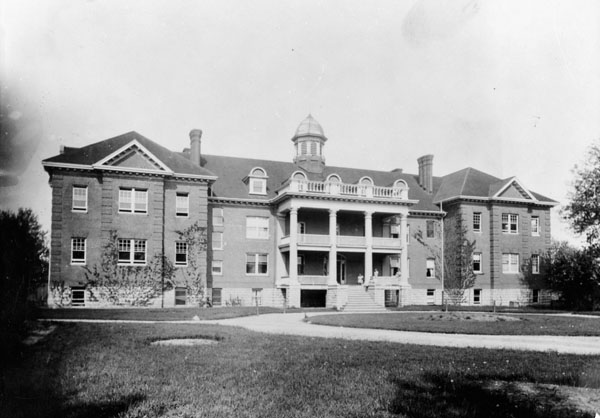
-
Article
Reconciliation in Canada (Plain-Language Summary)
The word reconciliation is used a lot in Canada. It is closely tied with Indigenous peoples. Indigenous peoples were harmed in many ways in the past. Children were abused in residential schools. Their languages and cultures were taken from them (see Genocide and Indigenous Peoples in Canada). The key goal of reconciliation is to heal the wounds of the past and make reparations for these wounds. Reconciliation also includes making a better future. In Canada, the process of reconciliation has only recently started. The process will continue for a long time. This article is a plain-language summary of Reconciliation in Canada. If you are interested in reading about this topic in more depth, please see our full-length entry, Reconciliation in Canada.
"https://d3d0lqu00lnqvz.cloudfront.net/10022750263_777cc2f581_k-1.jpg" // resources/views/front/categories/view.blade.php
https://d3d0lqu00lnqvz.cloudfront.net/10022750263_777cc2f581_k-1.jpg
-
Article
Reconstruction
Reconstruction is the process of readjustment to a peacetime economy following WWII. Many believed the end of the war would mean a return to the economic depression of the 1930s, with falling production and widespread unemployment.
"https://d3d0lqu00lnqvz.cloudfront.net/media/media/5b52b570-6e9b-476a-94a9-af4ca135ac51.jpg" // resources/views/front/categories/view.blade.php
https://d3d0lqu00lnqvz.cloudfront.net/media/media/5b52b570-6e9b-476a-94a9-af4ca135ac51.jpg
-
Article
Reconstruction Party of Canada
The Reconstruction Party of Canada was a Canadian political party that was active during the mid-1930s. It was mainly a federal party that contested the 1935 election. It also had a short-lived Alberta wing that contested the 1935 Alberta election. It was one of four new political parties created in Canada during the Great Depression. (The others were the Social Credit Party, the Co-operative Commonwealth Federation and Quebec’s Union Nationale). The right-wing party was isolationist, favoured workers’ rights and opposed the power of big business. It was founded by longtime Conservative Party MP and Cabinet minister Henry Herbert Stevens, who was known for his anti-immigrant views. The party won only one seat in 1935 — the Kootenay East riding that Stevens had held for years. The party was dissolved when Stevens rejoined the Conservatives in 1938.
"https://d3d0lqu00lnqvz.cloudfront.net/Henry_Herbert_Stevens.jpg" // resources/views/front/categories/view.blade.php
https://d3d0lqu00lnqvz.cloudfront.net/Henry_Herbert_Stevens.jpg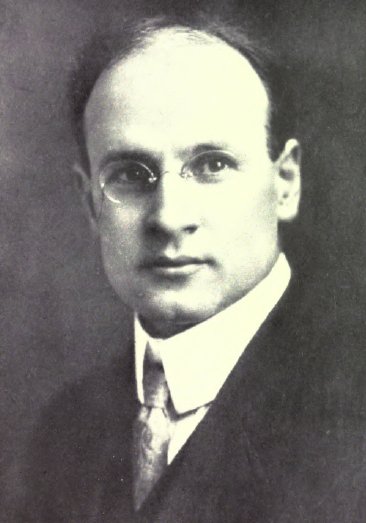
-
Article
Recorded sound production
The first recordings made in Canada were those made 17 May 1878 by the Governor-General, Lord Dufferin, and his guests at Rideau Hall in Ottawa. On 17 May 1878 Lady Dufferin wrote in her diary (My Canadian Journal 1872-1878, Toronto 1969, p 292): 'This morning we had an exhibition of the phonograph.
"https://d3d0lqu00lnqvz.cloudfront.net/media/media/36adf670-74e2-4d61-8023-1ba0f01592e7.jpg" // resources/views/front/categories/view.blade.php
https://d3d0lqu00lnqvz.cloudfront.net/media/media/36adf670-74e2-4d61-8023-1ba0f01592e7.jpg
-
Article
Recorded Sound Technology and its Impact
From the beginning, sound recording offered the consumer an unprecedented access to musical sound - an access virtually uninhibited by the constraints of skill, time, place, and social standing.
"https://d3d0lqu00lnqvz.cloudfront.net/media/media/3aed3424-2878-464f-a800-f1108a959920.jpg" // resources/views/front/categories/view.blade.php
https://d3d0lqu00lnqvz.cloudfront.net/media/media/3aed3424-2878-464f-a800-f1108a959920.jpg
-
Article
Red Coat Trail
A number of highways in southern Manitoba, Saskatchewan and Alberta roughly follow the original route. The ride was re-enacted in 1999, the 125th anniversary of the march.
"https://thecanadianencyclopedia.ca/images/tce_placeholder.jpg?v=e9dca980c9bdb3aa11e832e7ea94f5d9" // resources/views/front/categories/view.blade.php
https://thecanadianencyclopedia.ca/images/tce_placeholder.jpg?v=e9dca980c9bdb3aa11e832e7ea94f5d9
-
Article
Red Dress Day
Red Dress Day, also known as the National Day of Awareness for Missing and Murdered Indigenous Women and Girls and Two-Spirit People, is observed on May 5th. The day honours and brings awareness to the thousands of Indigenous women, girls and two-spirit people who have been subject to disproportionate violence in Canada. Red Dress Day was inspired by Métis artist Jaime Black’s REDress Project installation, in which she hung empty, red dresses to represent the missing and murdered women. Red dresses have become symbolic of the crisis as a result of her installation.
"https://d3d0lqu00lnqvz.cloudfront.net/media/media/998982f0-99eb-45b8-9f1f-23c2e1a648aa.jpg" // resources/views/front/categories/view.blade.php
https://d3d0lqu00lnqvz.cloudfront.net/media/media/998982f0-99eb-45b8-9f1f-23c2e1a648aa.jpg
-
Article
Canadian Red Ensign
The Canadian Red Ensign was the de facto Canadian national flag from 1868 until 1965. It was based on the ensign flown by British merchant ships since 1707. The three successive formal designs of the Canadian Red Ensign bore the Canadian coats of arms of 1868, 1921 and 1957. In 1891, it was described by the Governor General, Lord Stanley, as “the Flag which has come to be considered as the recognized Flag of the Dominion both afloat and ashore.” Though it was never formally adopted as Canada’s national flag, the Canadian Red Ensign represented Canada as a nation until it was replaced by the maple leaf design in 1965.
"https://d3d0lqu00lnqvz.cloudfront.net/media/media/93e237b6-8b57-4ca1-9efc-4760f74bb446.png" // resources/views/front/categories/view.blade.php
https://d3d0lqu00lnqvz.cloudfront.net/media/media/93e237b6-8b57-4ca1-9efc-4760f74bb446.png
-
Article
Red Fife Wheat
Red Fife is a bread wheat (Triticum aestivum) variety that David Fife and family began to grow in 1842 at their farm in Peterborough, Ontario. Its name is derived from the original red colour of the wheat kernel and the name of the farmer; this was a typical procedure for naming wheat in the mid-1800s.
"https://d3d0lqu00lnqvz.cloudfront.net/redfifewheat/redfifewheat.jpg" // resources/views/front/categories/view.blade.php
https://d3d0lqu00lnqvz.cloudfront.net/redfifewheat/redfifewheat.jpg
-
Article
Red River Cart
The Red River cart was a mode of transportation used by Métis people in the Prairies during the settlement of the West in the mid- to late-1800s to carry loads across distances. The name of the cart derives from the Red River, along which the Red River Colony (1812–70), inhabited mainly by Métis peoples, was settled. The Métis had their own Michif words for the cart, including aen wagon and aen charet.
"https://d3d0lqu00lnqvz.cloudfront.net/RedRiverCart/RedRiverCart1.jpg" // resources/views/front/categories/view.blade.php
https://d3d0lqu00lnqvz.cloudfront.net/RedRiverCart/RedRiverCart1.jpg
-
Article
Red River Colony
The Red River Colony, a key part of Manitoba's rich history, was a settlement on the Red and Assiniboine rivers whose boundaries crossed parts of what are now Manitoba and North Dakota. Founded in 1812 by Thomas Douglas, 5th Earl of Selkirk, the colony grew through times of extreme hardship into a multiracial society. It was the site of the Red River Resistance before reluctantly joining Canada as the province of Manitoba.
"https://d3d0lqu00lnqvz.cloudfront.net/media/media/0c582e2e-b609-41c2-b9dc-50071198f9c4.jpg" // resources/views/front/categories/view.blade.php
https://d3d0lqu00lnqvz.cloudfront.net/media/media/0c582e2e-b609-41c2-b9dc-50071198f9c4.jpg
-
Article
Red River Expedition of 1870
The Red River Expedition (May–August 1870) was a military expedition to oversee the transfer of territory from the Hudson’s Bay Company (HBC) to Canada and the transition of power from Louis Riel’s provisional government to one headed by the new lieutenant-governor of Manitoba. The expedition was led by Garnet Joseph Wolseley.
"https://d3d0lqu00lnqvz.cloudfront.net/media/media/64bbd51d-6212-4004-98a5-caa045d12fb0.jpg" // resources/views/front/categories/view.blade.php
https://d3d0lqu00lnqvz.cloudfront.net/media/media/64bbd51d-6212-4004-98a5-caa045d12fb0.jpg