
Browse "Things"
-
Article
RCAF Women's Division
Members of the Women’s Division (WD) of the Royal Canadian Air Force (RCAF) were wartime pioneers. Thousands of young Canadian women volunteered to serve at home and abroad during the Second World War as part of the air force. By replacing men in aviation support roles, they lived up to their motto — "We Serve that Men May Fly” — and, through their record of service and sacrifice, ensured themselves a place in Canadian history.
"https://d3d0lqu00lnqvz.cloudfront.net/7ac67f20-60f1-4812-b162-7c429e5e8950.jpg" // resources/views/front/categories/view.blade.php
https://d3d0lqu00lnqvz.cloudfront.net/7ac67f20-60f1-4812-b162-7c429e5e8950.jpg
-
Macleans
RCMP Drug Operation Claims Lives
This article was originally published in Maclean’s magazine on March 31, 1997. Partner content is not updated. Eugene Uyeyama appeared to have it all. After 12 years, the woman of his dreams had finally said "yes," and married him. He and his new bride, Michele, had just returned from a luxurious two-week Caribbean cruise, and were looking forward to their first Christmas as husband and wife.
"https://thecanadianencyclopedia.ca/images/tce_placeholder.jpg?v=e9dca980c9bdb3aa11e832e7ea94f5d9" // resources/views/front/categories/view.blade.php
https://thecanadianencyclopedia.ca/images/tce_placeholder.jpg?v=e9dca980c9bdb3aa11e832e7ea94f5d9
-
Macleans
RCMP Raid BC Premier's House
This article was originally published in Maclean’s magazine on March 15, 1999. Partner content is not updated. B.C. Premier Glen Clark lives in a modest, shingled home on Anzio Drive on Vancouver's east side, near the Burnaby boundary. Last Tuesday night, his wife, Dale, a public school teacher, was home as usual with the couple's two young children, Reid and Layne. Around 7 p.m.
"https://thecanadianencyclopedia.ca/images/tce_placeholder.jpg?v=e9dca980c9bdb3aa11e832e7ea94f5d9" // resources/views/front/categories/view.blade.php
https://thecanadianencyclopedia.ca/images/tce_placeholder.jpg?v=e9dca980c9bdb3aa11e832e7ea94f5d9
-
Macleans
RCMP Recreates Historic March
Growing up in the small town of Hartney in the southwest corner of Manitoba, Grant Little believed that the Royal Canadian Mounted Police "hung the moon.This article was originally published in Maclean's Magazine on July 12, 1999
"https://thecanadianencyclopedia.ca/images/tce_placeholder.jpg?v=e9dca980c9bdb3aa11e832e7ea94f5d9" // resources/views/front/categories/view.blade.php
https://thecanadianencyclopedia.ca/images/tce_placeholder.jpg?v=e9dca980c9bdb3aa11e832e7ea94f5d9
-
Article
RCMP Troop 17
On 16 September 1974, thirty-two women from across Canada made history when they were sworn in as the first female officers in the Royal Canadian Mounted Police (RCMP). Known as Troop 17, they paved the way for equal opportunity in national law enforcement. In 2023, approximately 22 per cent of RCMP officers are women.
"https://d3d0lqu00lnqvz.cloudfront.net/media/media/1703ee6f-bab8-4f7e-9f0d-9ff5c82dfea3.jpg" // resources/views/front/categories/view.blade.php
https://d3d0lqu00lnqvz.cloudfront.net/media/media/1703ee6f-bab8-4f7e-9f0d-9ff5c82dfea3.jpg
-
Article
Rebellion in Lower Canada (The Patriots' War)
In 1837 and 1838, French Canadian militants in Lower Canada took up arms against the British Crown in a pair of insurrections. The twin rebellions killed more than 300 people. They followed years of tensions between the colony’s anglophone minority and the growing, nationalistic aspirations of its francophone majority. The rebels failed in their campaign against British rule. However, their revolt led to political reform, including the unified Province of Canada and the introduction of responsible government. The rebellion in Lower Canada, which is also known as the Patriots' War (la Guerre des patriotes), also gave French Canadians one of their first nationalist heroes in Louis-Joseph Papineau.
"https://d3d0lqu00lnqvz.cloudfront.net/media/media/37aadc48-3f88-4946-a9aa-0d2ad30495cd.jpg" // resources/views/front/categories/view.blade.php
https://d3d0lqu00lnqvz.cloudfront.net/media/media/37aadc48-3f88-4946-a9aa-0d2ad30495cd.jpg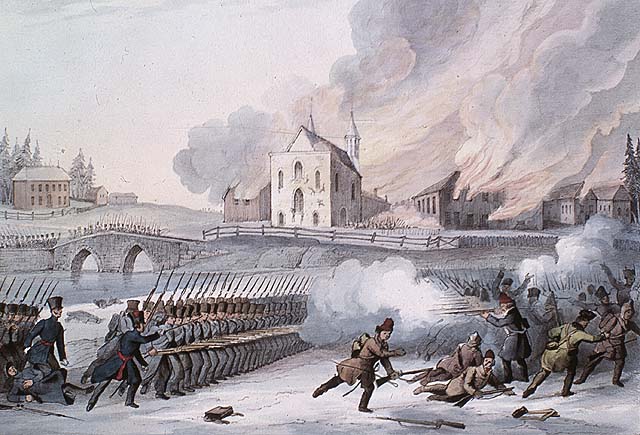
-
Timelines
Rebellion in Lower Canada
French Canadian militants in Lower Canada took up arms against the British Crown in a pair of insurrections in 1837 and 1838. The twin rebellions, which killed more than 300 people, followed years of tensions between the colony's anglophone minority and the growing, nationalistic aspirations of its francophone majority.
"https://d3d0lqu00lnqvz.cloudfront.net/media/media/37aadc48-3f88-4946-a9aa-0d2ad30495cd.jpg" // resources/views/front/categories/view.blade.php
https://d3d0lqu00lnqvz.cloudfront.net/media/media/37aadc48-3f88-4946-a9aa-0d2ad30495cd.jpg
-
Article
Rebellion in Upper Canada
The 1837 rebellion in Upper Canada was a less violent, more limited affair than the uprising earlier that year in Lower Canada. However, its leaders, including William Lyon Mackenzie, were equally serious in their demands. They wanted democratic reform and an end to the rule of a privileged oligarchy. The rebellion itself failed, but its very failure helped pave the way for moderate and careful political change in British North America. This included the union of Upper and Lower Canada into the Province of Canada and the eventual introduction of responsible government.
"https://d3d0lqu00lnqvz.cloudfront.net/media/media/ab6ffbc8-72e2-4fc1-9007-43a1b2c8948d.jpg" // resources/views/front/categories/view.blade.php
https://d3d0lqu00lnqvz.cloudfront.net/media/media/ab6ffbc8-72e2-4fc1-9007-43a1b2c8948d.jpg
-
Timelines
Rebellion in Upper Canada
The 1837 rebellion in Upper Canada was a less violent, more limited affair than the insurrection that same year in neighbouring Lower Canada, although its leaders, including William Lyon Mackenzie, were no less serious in their demands for democratic reform, and an end to the rule of a privileged oligarchy.
"https://d3d0lqu00lnqvz.cloudfront.net/media/media/397922a7-5fe3-4b4a-9a76-48f9660df33c.jpg" // resources/views/front/categories/view.blade.php
https://d3d0lqu00lnqvz.cloudfront.net/media/media/397922a7-5fe3-4b4a-9a76-48f9660df33c.jpg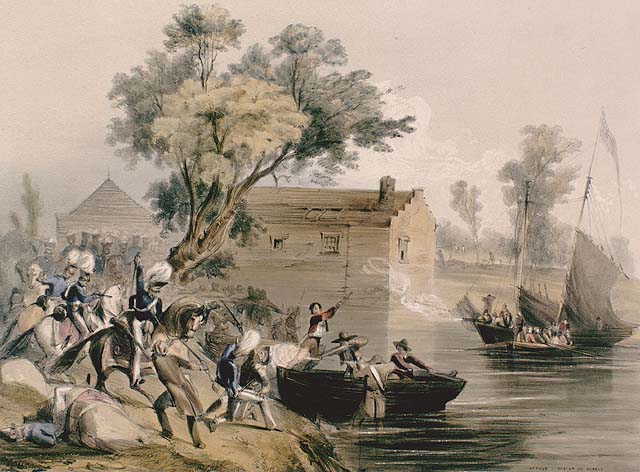
-
Article
Rebellion Losses Bill
Rebellion Losses Bill, modelled on Upper Canadian legislation, was introduced by Louis LaFontaine in Feb 1849 to compensate Lower Canadians whose property had been damaged during the Rebellions of 1837-38 (totalling approximately £100,000).
"https://thecanadianencyclopedia.ca/images/tce_placeholder.jpg?v=e9dca980c9bdb3aa11e832e7ea94f5d9" // resources/views/front/categories/view.blade.php
https://thecanadianencyclopedia.ca/images/tce_placeholder.jpg?v=e9dca980c9bdb3aa11e832e7ea94f5d9
-
Timelines
Rebellions of 1837
Upper and Lower Canada were thrown into turmoil from 1837–38, when insurgents mounted rebellions in each colony against the Crown and the political status quo. The revolt in Lower Canada was the more serious and violent of the two.
"https://d3d0lqu00lnqvz.cloudfront.net/media/media/60538dc0-6c34-4995-ac89-c46b4b5d2796.jpg" // resources/views/front/categories/view.blade.php
https://d3d0lqu00lnqvz.cloudfront.net/media/media/60538dc0-6c34-4995-ac89-c46b4b5d2796.jpg
-
Article
Rebellions of 1837–38 (Plain-Language Summary)
In 1837 and 1838, insurgents in Upper and Lower Canada led armed rebellions against the Crown. The two uprisings left 325 people dead. The revolt in Lower Canada was more serious and violent than the rebellion in Upper Canada. The events of 1837 led to the Durham Report (1839). It led to the Act of Union in 1841. The Act merged the two colonies into the Province of Canada. It also led to responsible government. These were important steps in Canada’s path to becoming a country. This article is a plain-language summary of the Rebellions of 1837–38. If you would like to read about this topic in more depth, please see our full-length entry: Rebellions of 1837–38.
"https://d3d0lqu00lnqvz.cloudfront.net/media/media/e6a801ef-a427-4be1-b758-2bd5f812d3b8.jpg" // resources/views/front/categories/view.blade.php
https://d3d0lqu00lnqvz.cloudfront.net/media/media/e6a801ef-a427-4be1-b758-2bd5f812d3b8.jpg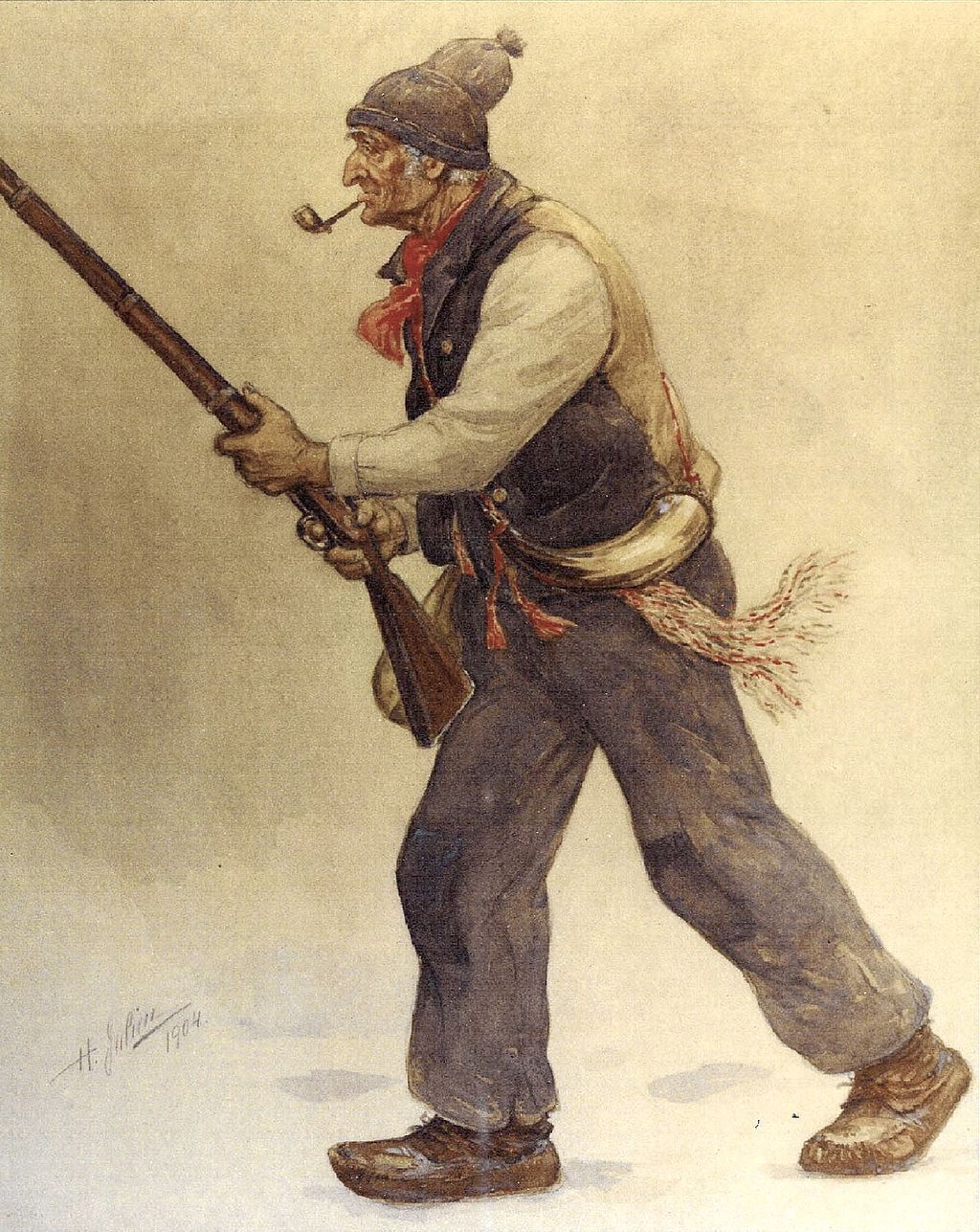
-
Article
Recession in Canada
A recession is a temporary period of time when the overall economy declines; it is an expected part of the business cycle. This period usually includes declines in industrial and agricultural production, trade, incomes, stock markets, consumer spending, and levels of employment. In purely technical terms, a recession occurs when two or more successive quarters (six months) show a drop in real gross domestic product (GDP), i.e., the measure of total economic output in the economy after accounting for inflation. In this sense, recessions are broad and can be particularly painful and challenging times for a country. This is the full-length entry about Recession in Canada. For a plain-language summary, please see Recession in Canada (Plain-Language Summary).
"https://d3d0lqu00lnqvz.cloudfront.net/media/media/df43d50d-712c-449e-9d95-d9b386ed67aa.jpg" // resources/views/front/categories/view.blade.php
https://d3d0lqu00lnqvz.cloudfront.net/media/media/df43d50d-712c-449e-9d95-d9b386ed67aa.jpg
-
Article
Recession in Canada (Plain-Language Summary)
A recession can mean “going down.” The word “recession” is often used when talking about the economy. An economic recession is a time when the economy is going down. Production goes down. Spending goes down. Stock markets go down. Overall, the gross domestic product (GDP) goes down. GDP is the amount of goods and services produced in a country. A recession happens when the economy goes down for more than a few months. Recessions occur often, and they cause many problems for individuals and businesses. This article is a plain-language summary of Recession in Canada. If you are interested in reading about this topic in more depth, please see our full-length entry, Recession in Canada.
"https://d3d0lqu00lnqvz.cloudfront.net/media/media/fe9a7876-aee1-4ecb-865f-03fa3233f06e.jpg" // resources/views/front/categories/view.blade.php
https://d3d0lqu00lnqvz.cloudfront.net/media/media/fe9a7876-aee1-4ecb-865f-03fa3233f06e.jpg
-
Article
Recession of 2008–09 in Canada
The global financial crisis that began in 2007 dragged much of the world economy into recession, and Canada was not spared. Although the effects on Canada were milder than on the United States and in Europe, the Canadian recession of 2008–09 was still severe enough to generate sharp declines in output and employment and to require significant responses by Canadian policy-makers.
"https://d3d0lqu00lnqvz.cloudfront.net/media/media/df43d50d-712c-449e-9d95-d9b386ed67aa.jpg" // resources/views/front/categories/view.blade.php
https://d3d0lqu00lnqvz.cloudfront.net/media/media/df43d50d-712c-449e-9d95-d9b386ed67aa.jpg