
Browse "Things"
-
Article
Psychedelic Research in 1950s Saskatchewan
In the 1950s, Saskatchewan was home to some of the most important psychedelic research in the world. Saskatchewan-based psychiatrist Humphry Osmond coined the word psychedelic in 1957. In the mental health field, therapies based on guided LSD and mescaline trips offered an alternative to long-stay care in asylums. They gave clinicians a deeper understanding of psychotic disorders and an effective tool for mental health and addictions research. Treating patients with a single dose of psychedelic was seen as an attractive, cost-effective approach. It fit with the goals of a new, publicly funded health-care system aimed at restoring health and autonomy to patients who had long been confined to asylums. Click here for definitions of key terms used in this article.
"https://d3d0lqu00lnqvz.cloudfront.net/media/home-page-images/Weyburn-postcard-LXX-1643.jpg" // resources/views/front/categories/view.blade.php
https://d3d0lqu00lnqvz.cloudfront.net/media/home-page-images/Weyburn-postcard-LXX-1643.jpg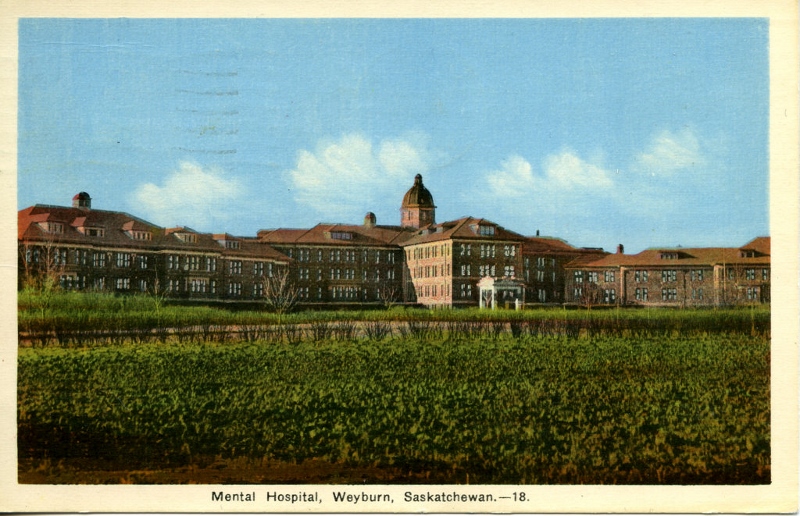
-
Article
Psychiatry
PsychiatryPsychiatry is the branch of medicine concerned with disorders of the mind (or mental illnesses) and a broad range of other disturbed behaviours, including behavioural and emotional reactions to physical disease, life stresses and personal crises; personality problems; and difficulties with coping, adjustments and achievement. Psychiatrists are physicians, and in Canada they need to have passed the fellowship examination of the Royal College of Physicians and Surgeons of Canada, or, in Québec, to have obtained...
"https://thecanadianencyclopedia.ca/images/tce_placeholder.jpg?v=e9dca980c9bdb3aa11e832e7ea94f5d9" // resources/views/front/categories/view.blade.php
https://thecanadianencyclopedia.ca/images/tce_placeholder.jpg?v=e9dca980c9bdb3aa11e832e7ea94f5d9
-
Article
Psychology
Psychology (from the Greek psyche, "spirit," and logos, "study") is literally "the study of the spirit or soul."
"https://thecanadianencyclopedia.ca/images/tce_placeholder.jpg?v=e9dca980c9bdb3aa11e832e7ea94f5d9" // resources/views/front/categories/view.blade.php
https://thecanadianencyclopedia.ca/images/tce_placeholder.jpg?v=e9dca980c9bdb3aa11e832e7ea94f5d9
-
Article
Ptarmigan in Canada
Ptarmigan are distinguished from other members of the grouse subfamily by their all-white wings. Like other grouse, they are well adapted to cold environments, e.g., nostrils are hidden by feathers, body feathers have a long, downy aftershaft that increases insulation, and toes are feathered. Ptarmigan are the only birds with snow-white winter plumage. Summer plumage is mottled brown. The ptarmigan is the provincial game bird of Newfoundland and Labrador, and the rock ptarmigan is the territorial bird of Nunavut.
"https://d3d0lqu00lnqvz.cloudfront.net/media/media/e17af2d1-1e7f-4962-aef2-a774309f6e3f.jpg" // resources/views/front/categories/view.blade.php
https://d3d0lqu00lnqvz.cloudfront.net/media/media/e17af2d1-1e7f-4962-aef2-a774309f6e3f.jpg
-
Article
Public Administration
Public administration has no generally accepted definition. The scope of the subject is so great and so debatable that it is easier to explain than define. Public administration is both a field of study, or a discipline, and a field of practice, or an occupation.
"https://thecanadianencyclopedia.ca/images/tce_placeholder.jpg?v=e9dca980c9bdb3aa11e832e7ea94f5d9" // resources/views/front/categories/view.blade.php
https://thecanadianencyclopedia.ca/images/tce_placeholder.jpg?v=e9dca980c9bdb3aa11e832e7ea94f5d9
-
Article
Public Debt
Public debt is any financial liability held by a government. Governments undertake these debts in any period when their spending exceeds their revenues. To make up the difference — or deficit — they will sell IOUs to the general public. These IOUs — or bonds — oblige the government to repay the loan with interest. In Canada, financial borrowing is a regular part of fiscal policy at the federal and provincial levels. Municipalities, however, are constitutionally bound to balance their budgets. They can only take on long-term debt for capital projects.
"https://d3d0lqu00lnqvz.cloudfront.net/Fig1.png" // resources/views/front/categories/view.blade.php
https://d3d0lqu00lnqvz.cloudfront.net/Fig1.png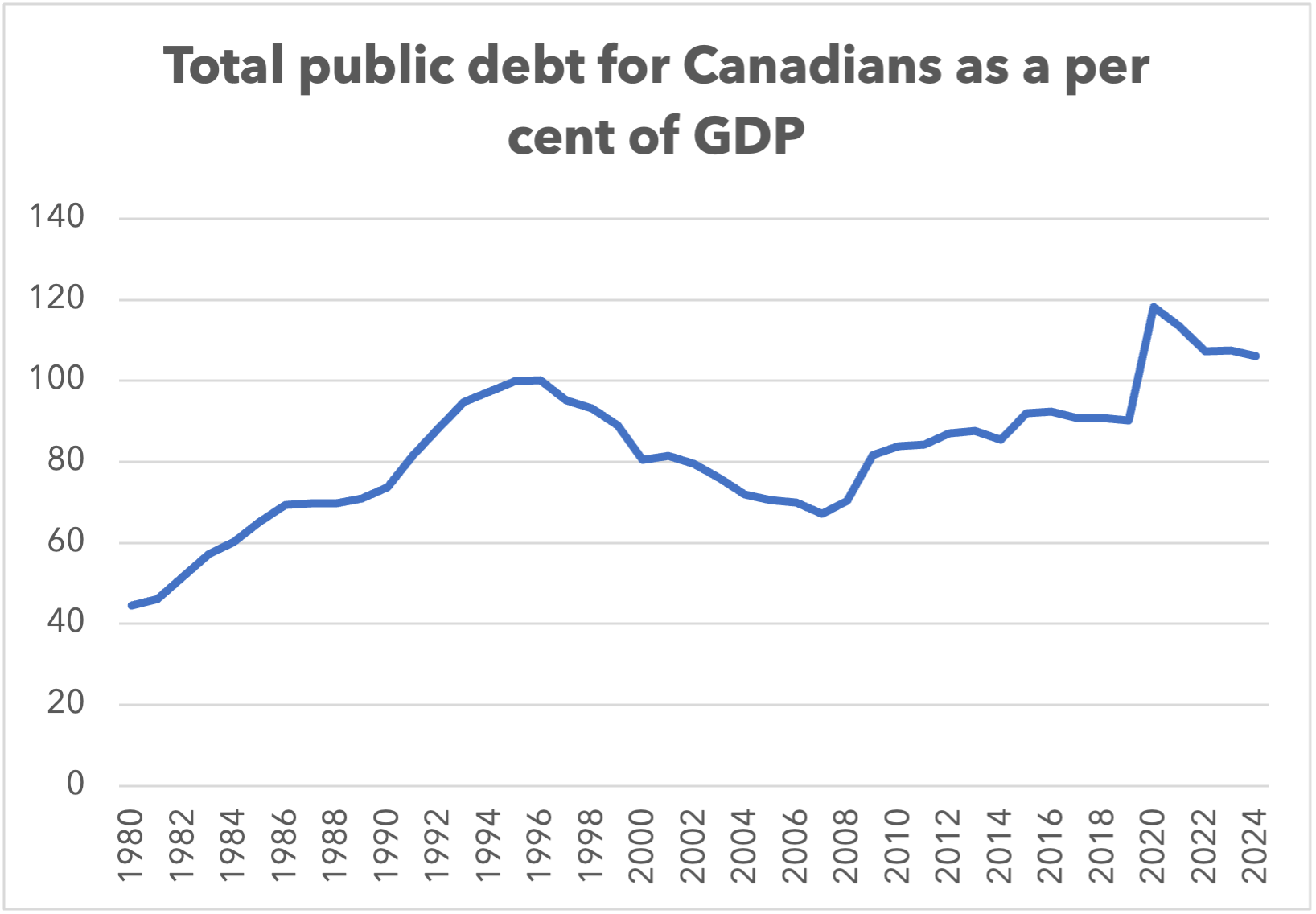
-
Article
Public Expenditure
For many economic purposes, however, the total size of government expenditures is less significant than the components of these expenditures.
"https://d3d0lqu00lnqvz.cloudfront.net/media/media/c824ad23-8456-4358-ab46-7ccd00b6d5c8.jpg" // resources/views/front/categories/view.blade.php
https://d3d0lqu00lnqvz.cloudfront.net/media/media/c824ad23-8456-4358-ab46-7ccd00b6d5c8.jpg
-
Article
Public Finance
The relative importance of government expenditures in the Canadian economy has risen dramatically over the past 70 years, from 15% of the Gross Domestic Product (GDP) in the late 1920s to 40% of GDP in 1980 and 50% in the early 1990s.
"https://d3d0lqu00lnqvz.cloudfront.net/media/media/9dd1c1a6-6a3d-438f-ae21-feb4a339a61b.jpg" // resources/views/front/categories/view.blade.php
https://d3d0lqu00lnqvz.cloudfront.net/media/media/9dd1c1a6-6a3d-438f-ae21-feb4a339a61b.jpg
-
Article
Public Health in Canada
Illness and disease are communal problems. While individual interventions can have an impact, they are less effective than measures that can be done at a community level. Preventing disease and promoting health among individuals and the population at large is the purpose of public health. Public health is managed by local, regional, national and international public health authorities. Public health interventions include research, prevention, education and emergency preparedness. The most important public health interventions for reducing mortality over the past 150 years have included cleaning the water and air, making roads safer and immunizing against infectious diseases. Ironically, as is often said by public health practitioners, success in public health is often invisible when measures are working. In Canada, the rapid emergence, urgency, severity, global scope and long persistence of the COVID-19 pandemic has put all aspects of public health in the public and political spotlight to a greater degree than ever before. For some Canadians, this has resulted in a loss of confidence in public health authorities, while others have realized the importance of maintaining and funding public health. This is the full-length entry about Public Health in Canada. For a plain-language summary, please see Public Health in Canada (Plain-Language Summary).
"https://d3d0lqu00lnqvz.cloudfront.net/e002504596.jpg" // resources/views/front/categories/view.blade.php
https://d3d0lqu00lnqvz.cloudfront.net/e002504596.jpg
-
Article
Public Health in Canada (Plain-Language Summary)
Illness and disease affect everyone. Individuals alone cannot prevent illness and disease. To do so it is important to focus on communities, not just individuals. The purpose of public health is to protect communities against illness and disease. This, in turn, helps individuals. This article is a plain-language summary of Public Health in Canada. If you are interested in reading about this topic in more depth, please see our full-length entry, Public Health in Canada.
"https://d3d0lqu00lnqvz.cloudfront.net/media/new_article_images/Theresa_Tam.jpg" // resources/views/front/categories/view.blade.php
https://d3d0lqu00lnqvz.cloudfront.net/media/new_article_images/Theresa_Tam.jpg
-
Article
Public Interest Advocacy Centre
The Public Interest Advocacy Centre, a non-profit Ottawa based organization, was founded in 1976. PIAC is primarily concerned with the delivery of important public utilities and services to Canadian consumers and, in particular, vulnerable consumers.
"https://thecanadianencyclopedia.ca/images/tce_placeholder.jpg?v=e9dca980c9bdb3aa11e832e7ea94f5d9" // resources/views/front/categories/view.blade.php
https://thecanadianencyclopedia.ca/images/tce_placeholder.jpg?v=e9dca980c9bdb3aa11e832e7ea94f5d9
-
Article
Public Ownership
Public ownership refers to government provision of goods and services; the commercial or business activities of the STATE.
"https://thecanadianencyclopedia.ca/images/tce_placeholder.jpg?v=e9dca980c9bdb3aa11e832e7ea94f5d9" // resources/views/front/categories/view.blade.php
https://thecanadianencyclopedia.ca/images/tce_placeholder.jpg?v=e9dca980c9bdb3aa11e832e7ea94f5d9
-
Article
Public Policy
Public Policy generally denotes both the general purpose of government action and the views on the best or preferred means of carrying it out; more specifically it refers to government actions designed to achieve one or more objectives.
"https://thecanadianencyclopedia.ca/images/tce_placeholder.jpg?v=e9dca980c9bdb3aa11e832e7ea94f5d9" // resources/views/front/categories/view.blade.php
https://thecanadianencyclopedia.ca/images/tce_placeholder.jpg?v=e9dca980c9bdb3aa11e832e7ea94f5d9
-
Article
Public School
Public school refers to provincially controlled, tax-supported schools which are normally available to school-age children who live within a school district.
"https://thecanadianencyclopedia.ca/images/tce_placeholder.jpg?v=e9dca980c9bdb3aa11e832e7ea94f5d9" // resources/views/front/categories/view.blade.php
https://thecanadianencyclopedia.ca/images/tce_placeholder.jpg?v=e9dca980c9bdb3aa11e832e7ea94f5d9
-
Macleans
Public School Shakeup
To some, it heralded a decisive victory for fiscal sensibility and grassroots democracy. To others, it was a crushing defeat.This article was originally published in Maclean's Magazine on February 3, 1997
"https://thecanadianencyclopedia.ca/images/tce_placeholder.jpg?v=e9dca980c9bdb3aa11e832e7ea94f5d9" // resources/views/front/categories/view.blade.php
https://thecanadianencyclopedia.ca/images/tce_placeholder.jpg?v=e9dca980c9bdb3aa11e832e7ea94f5d9