
Browse "Things"
-
Article
Mineral and Mining Engineering
Mineral engineering is that branch of ENGINEERING concerned with the application of scientific and technical knowledge to the search for and production of valuable MINERALS from naturally occurring surface, underground or below-water deposits.
"https://thecanadianencyclopedia.ca/images/tce_placeholder.jpg?v=e9dca980c9bdb3aa11e832e7ea94f5d9" // resources/views/front/categories/view.blade.php
https://thecanadianencyclopedia.ca/images/tce_placeholder.jpg?v=e9dca980c9bdb3aa11e832e7ea94f5d9
-
Article
Mineral Naming
Each mineral species is identified by its own appellation, and names have been assigned since antiquity. While there are only some 3000 valid mineral species, nearly 20 000 names occur in the literature. This is partly because researchers working independently have given different names to the same mineral, and partly because distinct names have been applied to minerals that later proved to be varieties or mixtures of already known species. Today a much better control is exercised by the Commission on New Minerals and New Mineral Names established in 1959 by the International Mineralogical Association.
"https://thecanadianencyclopedia.ca/images/tce_placeholder.jpg?v=e9dca980c9bdb3aa11e832e7ea94f5d9" // resources/views/front/categories/view.blade.php
https://thecanadianencyclopedia.ca/images/tce_placeholder.jpg?v=e9dca980c9bdb3aa11e832e7ea94f5d9
-
Article
Mineral Resources in Canada
Minerals are naturally occurring, homogeneous geological formations. Unlike fossil fuels, such as coal, oil and natural gas, minerals are inorganic compounds, meaning they are not formed of animal or plant matter. Canada is abundant in many mineral resources — mined in every province and territory — and a world leader in the production of potash, aluminum, cobalt, diamonds, gold platinum, uranium, among others. This article is a full-length entry about mineral resources in Canada. For a plain-language summary, please see Mineral Resources in Canada (Plain-Language Summary).
"https://d3d0lqu00lnqvz.cloudfront.net/minerals/norandamineworker.jpg" // resources/views/front/categories/view.blade.php
https://d3d0lqu00lnqvz.cloudfront.net/minerals/norandamineworker.jpg
-
Article
Mineral Resources in Canada (Plain-Language Summary)
Minerals are natural resources. They are different from fossil fuels like natural gas, oil and coal, though. Unlike fossil fuels, minerals are not made from plants or animals. Canada has a lot of minerals. They are mines everywhere in Canada. In fact, Canada is among the biggest producers of minerals in the world. Minerals found in Canada include gold, potash, uranium, diamonds and cobalt. This article is a plain-language summary of Mineral Resources in Canada. If you are interested in reading about this topic more in depth, please see our full-length entry, Mineral Resources in Canada.
"https://d3d0lqu00lnqvz.cloudfront.net/potash/potashmineral.jpg" // resources/views/front/categories/view.blade.php
https://d3d0lqu00lnqvz.cloudfront.net/potash/potashmineral.jpg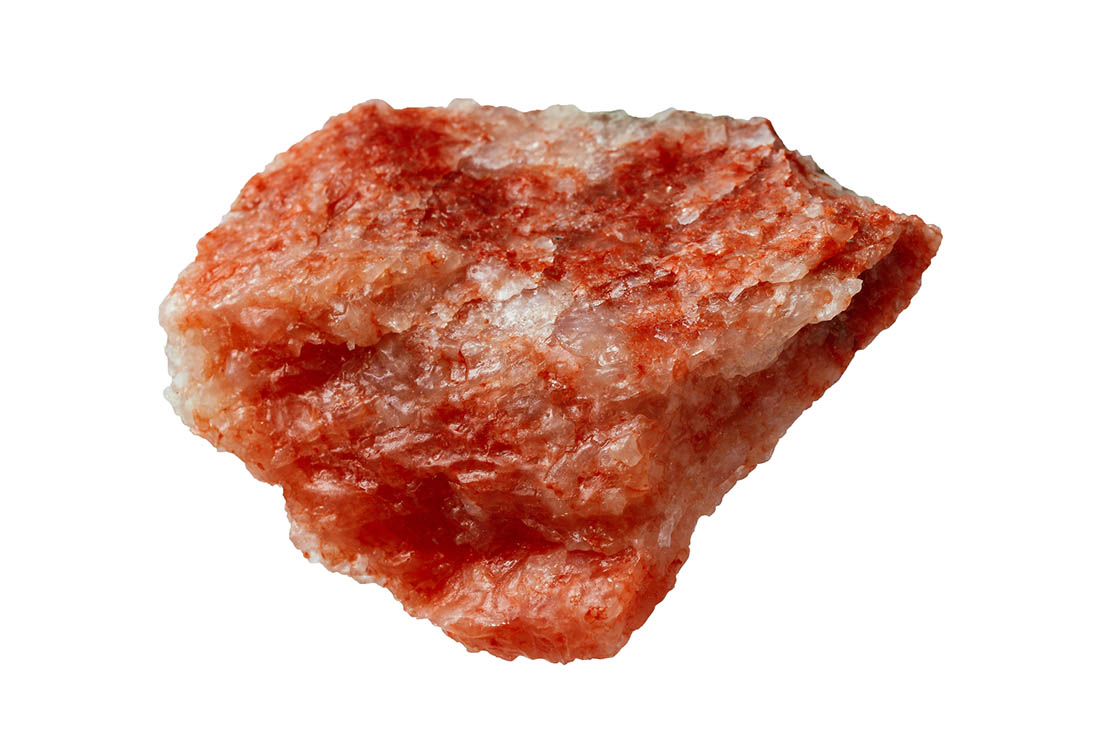
-
Article
Minimum Wage in Canada
Minimum wage is the lowest wage rate that an employer is legally permitted to pay to an employee. In Canada, provinces and territories regulate minimum wage (see Provincial Government in Canada; Territorial Government in Canada). The federal government also sets a minimum wage for employees covered by Part III of the Canada Labour Code. Minimum wage policy was originally established to protect vulnerable workers from exploitation, and it continues to be used by governments to safeguard non-unionized workers (see Labour Force; Unions).
"https://d3d0lqu00lnqvz.cloudfront.net/media/media/fe9a7876-aee1-4ecb-865f-03fa3233f06e.jpg" // resources/views/front/categories/view.blade.php
https://d3d0lqu00lnqvz.cloudfront.net/media/media/fe9a7876-aee1-4ecb-865f-03fa3233f06e.jpg
-
Article
Mining
Mining is one of Canada’s primary industries and involves the extraction, refining, and/or processing of economically valuable rocks and minerals. Mineral products (including gold, silver, iron, copper, zinc, nickel) are critical to modern industrial society. Although mining has been key to Canadian settlement and development, in recent decades the industry has also been criticized for its environmental and social impacts. Canada remains one of the world’s leading mining countries and has become a centre of global mining finance and expertise.
"https://d3d0lqu00lnqvz.cloudfront.net/media/media/1dc9dee2-2b24-4fa6-81c8-d73a66749b30.jpg" // resources/views/front/categories/view.blade.php
https://d3d0lqu00lnqvz.cloudfront.net/media/media/1dc9dee2-2b24-4fa6-81c8-d73a66749b30.jpg
-
Article
Mining Safety and Health
Like most industrial activities, mining involves risk. However, contemporary mining in Canada is much safer than it once was.
"https://d3d0lqu00lnqvz.cloudfront.net/media/media/10dac7dd-3569-432a-8cb3-c5ad5f082f3f.jpg" // resources/views/front/categories/view.blade.php
https://d3d0lqu00lnqvz.cloudfront.net/media/media/10dac7dd-3569-432a-8cb3-c5ad5f082f3f.jpg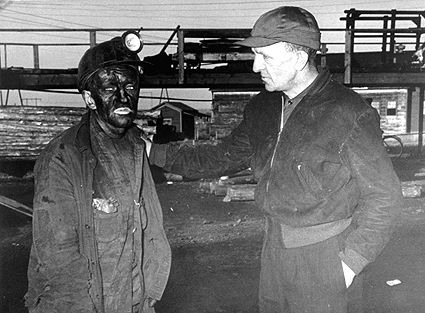
-
Article
Mining Work Force
Mechanization and new mining methods have diminished the mining work force since the mid-1970s. Additionally, depleted resources have forced the closure or suspension of some mines. New mines have opened but the number of openings has not kept pace with closures.
"https://d3d0lqu00lnqvz.cloudfront.net/media/media/1dc9dee2-2b24-4fa6-81c8-d73a66749b30.jpg" // resources/views/front/categories/view.blade.php
https://d3d0lqu00lnqvz.cloudfront.net/media/media/1dc9dee2-2b24-4fa6-81c8-d73a66749b30.jpg
-
Article
Ministère de la Marine
The Ministère de la Marine is the section of the French government that administered Canada during its last 100 years as a French colony. The Ministère de la Marine — variously described as a ministry, department, or secretariat of state — administered France’s navy, colonies and seaborne trade.
"https://d3d0lqu00lnqvz.cloudfront.net/media/media/c006216k.jpg" // resources/views/front/categories/view.blade.php
https://d3d0lqu00lnqvz.cloudfront.net/media/media/c006216k.jpg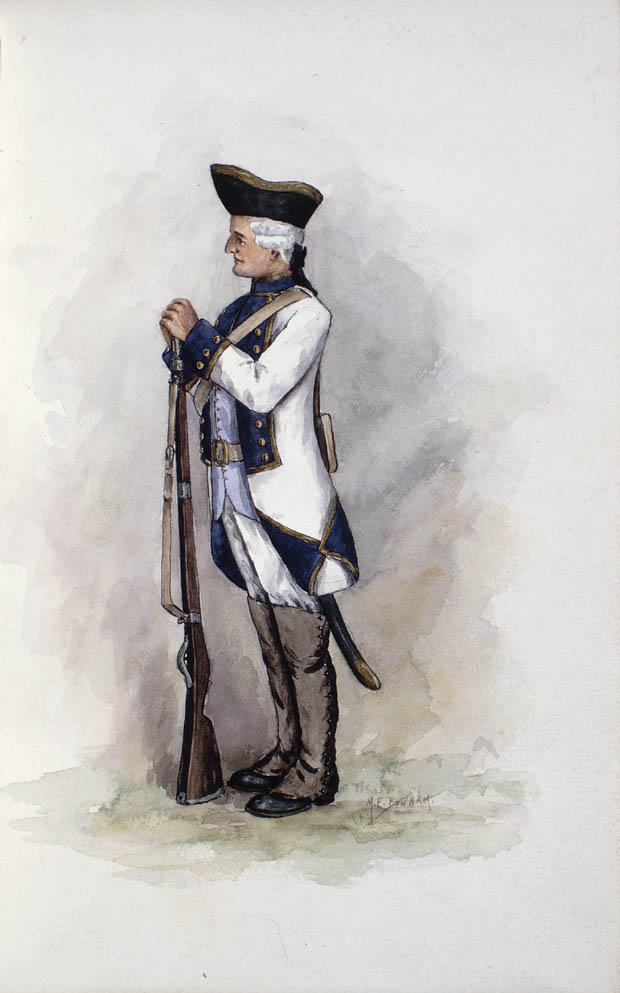
-
Article
Ministère des Affaires culturelles du Québec
Ministère des Affaires culturelles du Québec (MACQ). The Act creating the Quebec Ministry of Cultural Affairs to 'favour and promote the specific cultural character of Quebec in the fields of arts, letters, and heritage'.
"https://thecanadianencyclopedia.ca/images/tce_placeholder.jpg?v=e9dca980c9bdb3aa11e832e7ea94f5d9" // resources/views/front/categories/view.blade.php
https://thecanadianencyclopedia.ca/images/tce_placeholder.jpg?v=e9dca980c9bdb3aa11e832e7ea94f5d9
-
Article
Ministers Island Historic Site
In 1890 SIR WILLIAM VAN HORNE purchased Minister's Island on PASSAMAQUODDY BAY for his summer resort. Van Horne built a most impressive sandstone house there, which he called Covenhoven.
"https://thecanadianencyclopedia.ca/images/tce_placeholder.jpg?v=e9dca980c9bdb3aa11e832e7ea94f5d9" // resources/views/front/categories/view.blade.php
https://thecanadianencyclopedia.ca/images/tce_placeholder.jpg?v=e9dca980c9bdb3aa11e832e7ea94f5d9
-
Article
Ministry of Overseas Military Forces
The Ministry of Overseas Military Forces was established in November 1916 to administer Canadian forces in the UK, especially in the training of reinforcements, and to act as the communications channel between the Militia Department, the British War Office, and the Canadian Corps in France.
"https://thecanadianencyclopedia.ca/images/tce_placeholder.jpg?v=e9dca980c9bdb3aa11e832e7ea94f5d9" // resources/views/front/categories/view.blade.php
https://thecanadianencyclopedia.ca/images/tce_placeholder.jpg?v=e9dca980c9bdb3aa11e832e7ea94f5d9
-
Article
American Mink
The American mink (Neogale vison) is a small, amphibious weasel inhabiting wetlands throughout Canada, excluding the tundra, and is abundant along the British Columbia coastline. Part of the genus Neogale, the American mink is closely related to the long-tailed weasel (Neogale frenata) and now extinct sea mink (Neogale macrodon), among others.
"https://d3d0lqu00lnqvz.cloudfront.net/mink/american-mink.jpg" // resources/views/front/categories/view.blade.php
https://d3d0lqu00lnqvz.cloudfront.net/mink/american-mink.jpg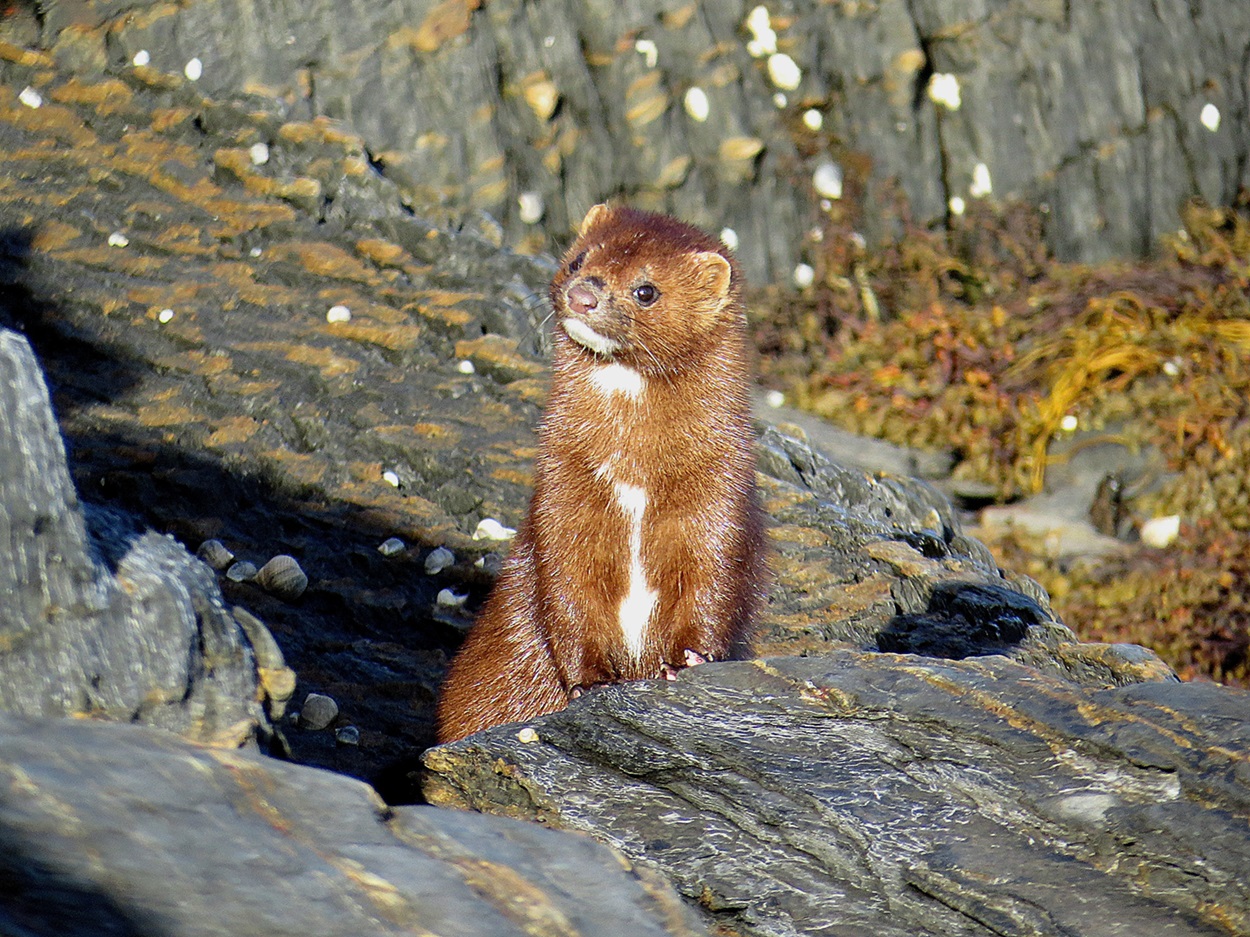
-
Article
Mink Frog
The mink frog (Lithobates septentrionalis) is a medium-sized frog native to eastern North America. It has a large distribution in eastern Canada that extends from southwestern Manitoba east to Nova Scotia and north around James Bay and into southern Labrador. Mink frogs are highly aquatic and are typically found in large, permanent water bodies.
"https://d3d0lqu00lnqvz.cloudfront.net/minkfrog/Crowley-Mink-Frog.jpg" // resources/views/front/categories/view.blade.php
https://d3d0lqu00lnqvz.cloudfront.net/minkfrog/Crowley-Mink-Frog.jpg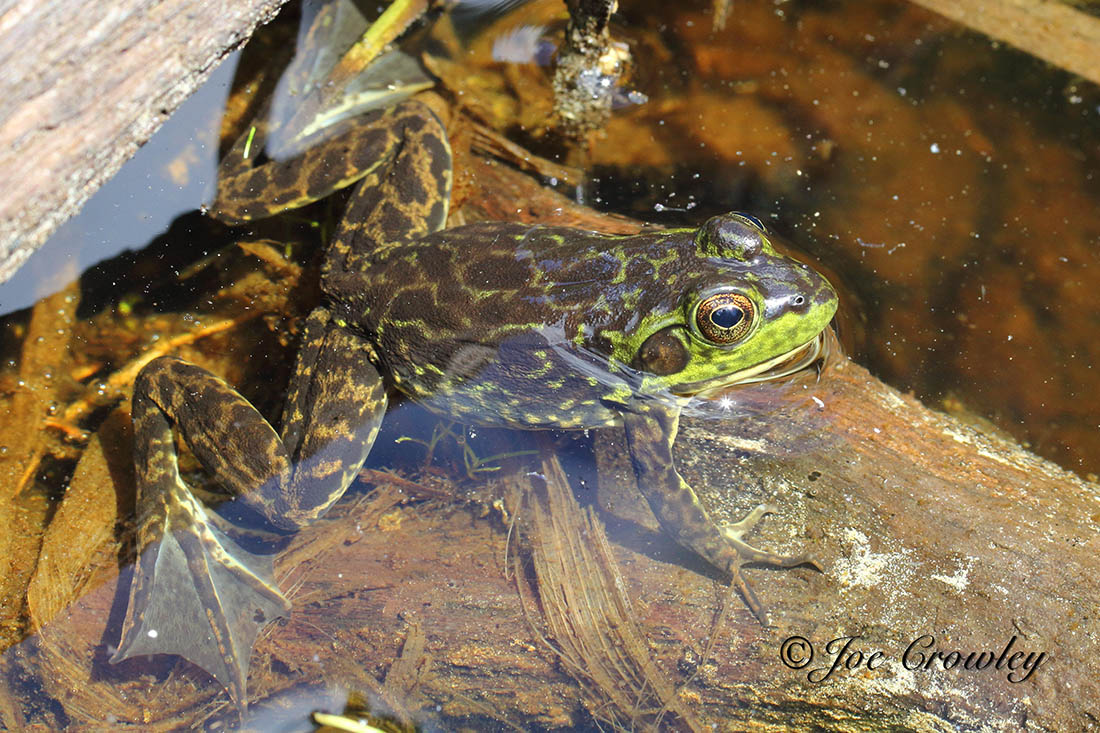
-
Article
Minnow
Many people refer wrongly to any small fish as a minnow. Properly, minnows are small to large freshwater fish of class Actinopterygii, order Cypriniformes, family Cyprinidae. The largest fish family, with over 1500 species (including carp, squawfish, dace, bream, etc), it is found worldwide, excluding South America, Australia and the far north. Fifty-three species occur in Canada. Some have restricted ranges (eg, redside dace, Clinostomus elongatus, of Lake Ontario drainages); others are found coast to coast. Carp (Cyprinus carpio) and goldfish (Carassius auratus) are familiar Asian minnows that have been introduced and become established in several provinces. Minnows inhabit waters from bogs to large lakes and rivers throughout Canada, except insular Newfoundland, and are often the most numerous fishes, both as species and individuals.
"https://d3d0lqu00lnqvz.cloudfront.net/media/media/310caf5d-4a5d-4276-b439-7f6aa2a2cfe0.jpg" // resources/views/front/categories/view.blade.php
https://d3d0lqu00lnqvz.cloudfront.net/media/media/310caf5d-4a5d-4276-b439-7f6aa2a2cfe0.jpg