
Browse "Things"
-
"https://thecanadianencyclopedia.ca/images/tce_placeholder.jpg?v=e9dca980c9bdb3aa11e832e7ea94f5d9" // resources/views/front/categories/view.blade.php
https://thecanadianencyclopedia.ca/images/tce_placeholder.jpg?v=e9dca980c9bdb3aa11e832e7ea94f5d9
-
Article
Military Recruiting
Military recruiting is the practice of enlisting people to serve in the armed forces.
"https://thecanadianencyclopedia.ca/images/tce_placeholder.jpg?v=e9dca980c9bdb3aa11e832e7ea94f5d9" // resources/views/front/categories/view.blade.php
https://thecanadianencyclopedia.ca/images/tce_placeholder.jpg?v=e9dca980c9bdb3aa11e832e7ea94f5d9
-
Macleans
Military Response to Rape Charges
This article was originally published in Maclean’s magazine on June 8, 1998. Partner content is not updated.Three young naval officers turned up for training at Canadian Forces Base Borden last week, the creases in their blue shirts knife sharp despite the hot sun. This article contains sensitive material that may not be suitable for all audiences.This article was originally published in Maclean's Magazine on June 8, 1998
"https://thecanadianencyclopedia.ca/images/tce_placeholder.jpg?v=e9dca980c9bdb3aa11e832e7ea94f5d9" // resources/views/front/categories/view.blade.php
https://thecanadianencyclopedia.ca/images/tce_placeholder.jpg?v=e9dca980c9bdb3aa11e832e7ea94f5d9
-
Article
Military Service Act
The Military Service Act became law on 29 August 1917. It was a politically explosive and controversial law that bitterly divided the country along French-English lines. It made all male citizens aged 20 to 45 subject to conscription for military service, through the end of the First World War. As such, the Act had significant political consequences. It led to the creation of Prime Minister Borden’s Union Government and drove most of his French-Canadian supporters into opposition.
"https://d3d0lqu00lnqvz.cloudfront.net/media/media/1a7b61ee-ed48-4f36-bedd-c816ea64a819.jpg" // resources/views/front/categories/view.blade.php
https://d3d0lqu00lnqvz.cloudfront.net/media/media/1a7b61ee-ed48-4f36-bedd-c816ea64a819.jpg
-
Macleans
Military to Investigate Illnesses
Everybody agrees it was a dirty job. When Canadian Peacekeepers arrived in Croatia in 1993, many had to work near abandoned industrial sites destroyed during the war that had torn apart the old Yugoslavia. Some got covered in reddish grit while filling sandbags.This article was originally published in Maclean's Magazine on August 9, 1999
"https://thecanadianencyclopedia.ca/images/tce_placeholder.jpg?v=e9dca980c9bdb3aa11e832e7ea94f5d9" // resources/views/front/categories/view.blade.php
https://thecanadianencyclopedia.ca/images/tce_placeholder.jpg?v=e9dca980c9bdb3aa11e832e7ea94f5d9
-
Article
Militia Acts
Militia Acts provided manpower for defence. Until the 1850s, such Acts in Upper and Lower Canada, Nova Scotia and New Brunswick usually imposed compulsory service on males between 16 and 50 or 60, with annual or more frequent enrolment musters.
"https://thecanadianencyclopedia.ca/images/tce_placeholder.jpg?v=e9dca980c9bdb3aa11e832e7ea94f5d9" // resources/views/front/categories/view.blade.php
https://thecanadianencyclopedia.ca/images/tce_placeholder.jpg?v=e9dca980c9bdb3aa11e832e7ea94f5d9
-
Article
Milk Bag
A milk bag is a soft plastic pouch used to package milk. It is a packaging method that is common in Canada. Milk bags are not exclusive to Canada, but the use of milk bags have become an emblematic aspect of Canadian culture. It is estimated that roughly half of Canadians purchase their milk from milk bags, and that rate rises to between 75 and 85 percent for Ontario residents. In parts of Canada—namely the Maritimes, Quebec, and Ontario—the largest volume of milk an individual can purchase at the grocery story is typically 4 litres, sold in a plastic bag that contains three 1 1/3-litre milk pouches. Milk bags are not the exclusive method by which milk is sold in Canada; as in other places, plastic jugs and cardboard cartons are also available. Moreover, milk bags are not common in Western Canada, the Northern territories, or in Newfoundland and Labrador. (See also Dairy Industry.)
"https://d3d0lqu00lnqvz.cloudfront.net/milkbag/dreamstime_304036371.jpg" // resources/views/front/categories/view.blade.php
https://d3d0lqu00lnqvz.cloudfront.net/milkbag/dreamstime_304036371.jpg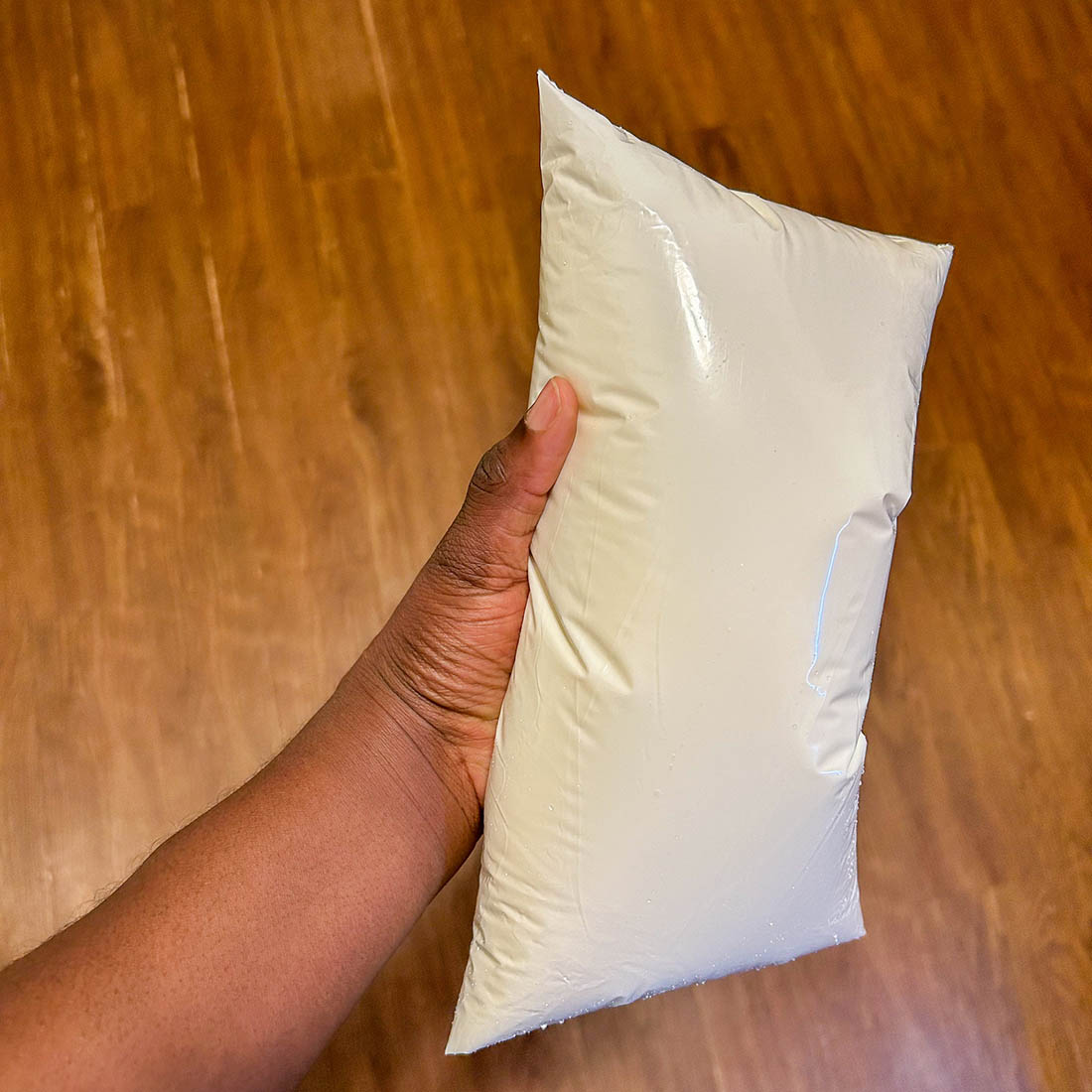
-
Article
Milkweed
Milkweed is the common name for perennial, herbaceous plants of genus Asclepias, family Asclepiadaceae (from Greek physician Asclepius).
"https://thecanadianencyclopedia.ca/images/tce_placeholder.jpg?v=e9dca980c9bdb3aa11e832e7ea94f5d9" // resources/views/front/categories/view.blade.php
https://thecanadianencyclopedia.ca/images/tce_placeholder.jpg?v=e9dca980c9bdb3aa11e832e7ea94f5d9
-
Article
Millenarianism
Millenarianism is the belief that a fundamental transformation of society is coming, one that will bring a golden age of peace and prosperity. Although millenarianism is a Judeo- Christian concept in origin, it has also been associated with other religious, political and social groups.
"https://d3d0lqu00lnqvz.cloudfront.net/media/media/69eb5724-3d71-4cca-857c-6656454c42d5.jpg" // resources/views/front/categories/view.blade.php
https://d3d0lqu00lnqvz.cloudfront.net/media/media/69eb5724-3d71-4cca-857c-6656454c42d5.jpg
-
Macleans
Millennium Preparations
Maj. Rod Babiuk picked up his brass abacus for a buck at a garage sale, while many of his colleagues at CFB Kingston hunted down wooden versions of the beaded counting machines. No, the army has not developed a sudden interest in ancient math.This article was originally published in Maclean's Magazine on December 20, 1999
"https://thecanadianencyclopedia.ca/images/tce_placeholder.jpg?v=e9dca980c9bdb3aa11e832e7ea94f5d9" // resources/views/front/categories/view.blade.php
https://thecanadianencyclopedia.ca/images/tce_placeholder.jpg?v=e9dca980c9bdb3aa11e832e7ea94f5d9
-
Article
Miller and Cockriell Case
In 1977, J.H. Miller and V.J.R. Cockriell, charged with the murder of a policeman, argued the incompatibility of the penalty imposed by law with the Canadian Bill of Rights 1960.
"https://thecanadianencyclopedia.ca/images/tce_placeholder.jpg?v=e9dca980c9bdb3aa11e832e7ea94f5d9" // resources/views/front/categories/view.blade.php
https://thecanadianencyclopedia.ca/images/tce_placeholder.jpg?v=e9dca980c9bdb3aa11e832e7ea94f5d9
-
Article
Millet
Millets are various, usually annual, grass (family Poaceae) crops that are often grown as cereals (ie, the seeds are harvested as grain for human consumption).
"https://d3d0lqu00lnqvz.cloudfront.net/media/media/551430a6-8d74-48fd-9f95-c75d3111ef4d.jpg" // resources/views/front/categories/view.blade.php
https://d3d0lqu00lnqvz.cloudfront.net/media/media/551430a6-8d74-48fd-9f95-c75d3111ef4d.jpg
-
Article
Millipede
Millipede (class Diplopoda), terrestrial, usually elongate arthropod with a small head and short antennae.
"https://thecanadianencyclopedia.ca/images/tce_placeholder.jpg?v=e9dca980c9bdb3aa11e832e7ea94f5d9" // resources/views/front/categories/view.blade.php
https://thecanadianencyclopedia.ca/images/tce_placeholder.jpg?v=e9dca980c9bdb3aa11e832e7ea94f5d9
-
Article
'Mimkwamlis Potlatch (Memkumlis Raid)
On 25 December 1921, a Potlatch ceremony was held in the Kwakwa̱ka̱’wakw village of ‘Mimkwamlis (also spelled Memkumlis, and also known as Village Island). The Potlatch ceremony was illegal at the time. Officers of the federal government’s Department of Indian Affairs (see Federal Departments of Indigenous and Northern Affairs), as well as the Royal Canadian Mounted Police and, according to some sources, the British Columbia provincial police learned of this Potlatch. They arrested 45 people for participating in the Potlatch. Approximately half of the people were sent to prison for periods ranging from two to three months. Hundreds of precious Kwakwa̱ka̱’wakw ceremonial objects were confiscated. Some of these items were sold to collectors and wound up in museums without the consent of the Kwakwa̱ka̱’wakw people. The arrests related to the ‘Mimkwamlis Potlatch of 1921 were an example of police and government abuse of Indigenous Peoples. It is a further example of the attempted cultural genocide of Indigenous Peoples in Canada (see Genocide and Indigenous Peoples in Canada).
"https://d3d0lqu00lnqvz.cloudfront.net/MimkwamlisPotlatch/umista_cultural_centre_web.jpg" // resources/views/front/categories/view.blade.php
https://d3d0lqu00lnqvz.cloudfront.net/MimkwamlisPotlatch/umista_cultural_centre_web.jpg
-
Article
Mineral
A mineral is an element or chemical compound formed in nature, usually by inorganic processes. Minerals may be composed of one element such as carbon (DIAMOND) or GOLD, or of several elements.
"https://d3d0lqu00lnqvz.cloudfront.net/media/media/c877e97e-4b7c-48c5-b937-a17b8f6fde9b.jpg" // resources/views/front/categories/view.blade.php
https://d3d0lqu00lnqvz.cloudfront.net/media/media/c877e97e-4b7c-48c5-b937-a17b8f6fde9b.jpg