
Browse "Things"
-
Article
Maisie Hurley
Maisie Hurley, née Maisie Amy Campbell-Johnston, Vancouver-area political activist, Indigenous ally (see Indigenous Peoples in Canada), newspaper founder and art collector (born 27 November 1887 in Swansea, Wales; died 3 October 1964 in North Vancouver, British Columbia). Although Hurley had no formal legal training or law degree (see Legal Education), she worked on several legal cases and advocated for Indigenous peoples’ basic human rights as well as for changes to the Indian Act. In 1946, Hurley started a newspaper called The Native Voice that aimed to bring attention to important issues concerning Indigenous communities across Canada (see Rights of Indigenous Peoples in Canada). In 2011, Hurley’s collection of Indigenous art was displayed at the North Vancouver Museum.
"https://d3d0lqu00lnqvz.cloudfront.net/Untitled-11.jpg" // resources/views/front/categories/view.blade.php
https://d3d0lqu00lnqvz.cloudfront.net/Untitled-11.jpg
-
Article
Maison Saint-Gabriel
Maison Saint-Gabriel is a museum and historic site that opened in 1966. This 300-year-old building, located in Montreal’s Pointe-Sainte-Charles district, is one of the finest examples of the traditional architecture of New France. It served, notably, as a home for the Filles du Roi.
"https://d3d0lqu00lnqvz.cloudfront.net/media/media/73821ef9-7927-4c50-87a8-505b99c36529.jpg" // resources/views/front/categories/view.blade.php
https://d3d0lqu00lnqvz.cloudfront.net/media/media/73821ef9-7927-4c50-87a8-505b99c36529.jpg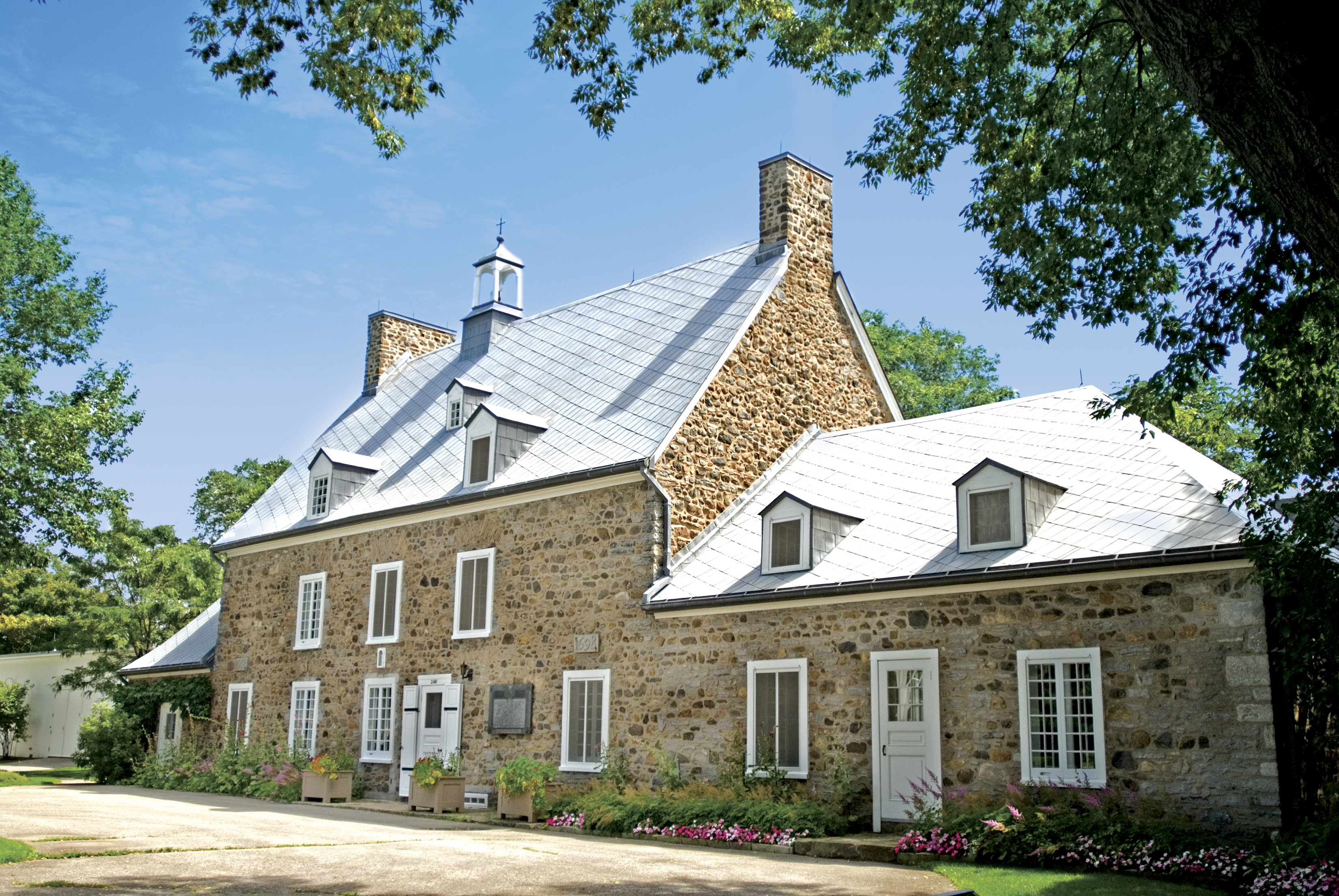
-
Article
Malaria
Early settlers in Ontario experienced a disease called "fever and ague," which ravaged the first European settlements such as Newark [Niagara-on-the-Lake] and Cataraqui [Kingston].
"https://thecanadianencyclopedia.ca/images/tce_placeholder.jpg?v=e9dca980c9bdb3aa11e832e7ea94f5d9" // resources/views/front/categories/view.blade.php
https://thecanadianencyclopedia.ca/images/tce_placeholder.jpg?v=e9dca980c9bdb3aa11e832e7ea94f5d9
-
Macleans
Male and Female Brains
It began almost by accident. In an effort to uncover the causes of dyslexia, psychologist Sandra Witelson decided in 1970 to conduct an experiment involving dyslexic and other children at a Hamilton grade school. Because dyslexia affects mostly males, Witelson planned to use boys only.This article was originally published in Maclean's Magazine on January 22, 1996
"https://thecanadianencyclopedia.ca/images/tce_placeholder.jpg?v=e9dca980c9bdb3aa11e832e7ea94f5d9" // resources/views/front/categories/view.blade.php
https://thecanadianencyclopedia.ca/images/tce_placeholder.jpg?v=e9dca980c9bdb3aa11e832e7ea94f5d9
-
Article
Malpractice
Malpractice is intentional or negligent failure by any professional, eg, doctor, lawyer, accountant, to meet the standards of reasonable competence in his field. These standards are set taking into account the circumstances in which the professional is acting.
"https://thecanadianencyclopedia.ca/images/tce_placeholder.jpg?v=e9dca980c9bdb3aa11e832e7ea94f5d9" // resources/views/front/categories/view.blade.php
https://thecanadianencyclopedia.ca/images/tce_placeholder.jpg?v=e9dca980c9bdb3aa11e832e7ea94f5d9
-
Article
Mammals in Canada
Mammals (class Mammalia) are typically furry, warm-blooded animals which can produce milk and give birth to live young. Mammals have existed on Earth in some capacity since the Jurassic but flourished into the diversity seen today after the extinction of dinosaurs 66 million years ago (see Geological History of Canada). Today, mammals include some of the most iconic species on earth, like whales, elephants and humans. Over 200 species can be found in Canada.
"https://d3d0lqu00lnqvz.cloudfront.net/media/media/897b2e5d-6d4c-40fa-bbe8-6829455747e2.jpg" // resources/views/front/categories/view.blade.php
https://d3d0lqu00lnqvz.cloudfront.net/media/media/897b2e5d-6d4c-40fa-bbe8-6829455747e2.jpg
-
Article
Mammoth
Mammuthus is an extinct genus of proboscideans closely related to living elephants. Two species of mammoth lived in Canada: the Columbian mammoth (Mammuthus columbi) and the woolly mammoth (M. primigenius). The earliest record of Mammuthus is from the Pliocene epoch (5.3–2.6 million years ago). Most mammoth populations were extinct by the end of the Pleistocene epoch (about 10,000 years ago). In Canada, mammoth fossils have been found in Yukon, the Northwest Territories, British Columbia, Alberta, Saskatchewan, Manitoba and Ontario. Later records of mammoths in Alberta overlap in time with archaeological records of Indigenous people. However, while there is evidence that people hunted mammoths elsewhere in North America, to date no similar evidence has been found in Canada.
"https://d3d0lqu00lnqvz.cloudfront.net/media/new_article_images/Mammoth/TwoMammothsFighting.jpg" // resources/views/front/categories/view.blade.php
https://d3d0lqu00lnqvz.cloudfront.net/media/new_article_images/Mammoth/TwoMammothsFighting.jpg
-
Macleans
Managing Health Care a Challenge
FROM THE OUTSET it has embodied all the elements of a fine spectator sport: adaptable principles, skilled deception, bullying and emotional blackmail. Little wonder Canadians love their medicare.This article was originally published in Maclean's Magazine on December 9, 2002
"https://thecanadianencyclopedia.ca/images/tce_placeholder.jpg?v=e9dca980c9bdb3aa11e832e7ea94f5d9" // resources/views/front/categories/view.blade.php
https://thecanadianencyclopedia.ca/images/tce_placeholder.jpg?v=e9dca980c9bdb3aa11e832e7ea94f5d9
-
Article
Manifest Destiny
The term Manifest Destiny was first used in 1845 by New York City journalist John Louis O’Sullivan. He used the term in the context of America’s annexation of the Republic of Texas. Manifest Destiny represented the idea that it was America’s right — its destiny, in fact — to expand across all of North America. Politicians and citizens in the United States called for the US to expand by claiming control of British territory. This included the Province of Canada (formerly Upper Canada and Lower Canada), New Brunswick and Nova Scotia.
"https://d3d0lqu00lnqvz.cloudfront.net/media/media/bde88e30-b162-4f6f-a6a1-79796c65a6e2.JPG" // resources/views/front/categories/view.blade.php
https://d3d0lqu00lnqvz.cloudfront.net/media/media/bde88e30-b162-4f6f-a6a1-79796c65a6e2.JPG
-
Article
Manitoba Act
The Manitoba Act provided for the admission of Manitoba as Canada’s fifth province. It received royal assent and became law on 12 May 1870. It marked the legal resolution of the struggle for self-determination between people of the Red River Colony and the federal government, which began with Canada’s purchase of Rupert’s Land in 1870. The Act contained protections for the region’s Métis. However, these protections were not fully realized. As a result, many Métis left the province for the North-West Territories.
"https://d3d0lqu00lnqvz.cloudfront.net/media/media/316b2dc2-7b32-4125-9417-bbecd843f730.jpg" // resources/views/front/categories/view.blade.php
https://d3d0lqu00lnqvz.cloudfront.net/media/media/316b2dc2-7b32-4125-9417-bbecd843f730.jpg
-
Article
Manitoba and Confederation
Canada’s fifth province, Manitoba entered Confederation with the passing of the Manitoba Act on 12 May 1870. The Assiniboine, Dakota, Cree and Dene peoples had occupied the land for up to 15,000 years. Since 1670, it was part of Rupert’s Land and was controlled by the Hudson’s Bay Company. The Canadian government purchased Rupert’s Land at the behest of William McDougall, Manitoba’s Father of Confederation. No residents of the area were consulted about the transfer; in response, Louis Riel and the Métis led the Red River Resistance. It resulted in an agreement to join Confederation. Ottawa agreed to help fund the new provincial government, give roughly 1.4 million acres of land to the Métis, and grant the province four seats in Parliament. However, Canada mismanaged its promise to guarantee the Métis their land rights. The resulting North-West Resistance in 1885 led to the execution of Riel. The creation of Manitoba — which, unlike the first four provinces, did not control its natural resources — revealed Ottawa’s desire to control western development.
"https://d3d0lqu00lnqvz.cloudfront.net/media/media/316b2dc2-7b32-4125-9417-bbecd843f730.jpg" // resources/views/front/categories/view.blade.php
https://d3d0lqu00lnqvz.cloudfront.net/media/media/316b2dc2-7b32-4125-9417-bbecd843f730.jpg
-
Article
Centennial Concert Hall
The Centennial Concert Hall is a performing arts centre located on Main Street in Winnipeg, Manitoba. It opened in in 1968 and is owned by the province and operated by the Manitoba Centennial Centre Corporation.
"https://d3d0lqu00lnqvz.cloudfront.net/centennialconcerthall/centennialconcerthall.jpg" // resources/views/front/categories/view.blade.php
https://d3d0lqu00lnqvz.cloudfront.net/centennialconcerthall/centennialconcerthall.jpg
-
Article
Manitoba Métis Federation
The Manitoba Métis Federation (MMF) was formed in 1967 to address the issues of land claims, political representation and cultural preservation. These issues have long been sources of tension between the Métis and the Canadian government. It is recognized as the official democratic government of the Red River Métis. The MMF provides a range of services and programs. It seeks to support cultural preservation, education, economic development, health, housing, and child and family services. As the government of the Red River Métis, the MMF adopts laws. It also represents its citizens in dealings with provincial, federal and international governments.
"https://thecanadianencyclopedia.ca/images/tce_placeholder.jpg?v=e9dca980c9bdb3aa11e832e7ea94f5d9" // resources/views/front/categories/view.blade.php
https://thecanadianencyclopedia.ca/images/tce_placeholder.jpg?v=e9dca980c9bdb3aa11e832e7ea94f5d9
-
Article
Manitoba Music Educators Association/Association manitobaine des éducateurs de musique
Manitoba Music Educators Association (MMEA) / Association manitobaine des éducateurs de musique (AMEM).
"https://thecanadianencyclopedia.ca/images/tce_placeholder.jpg?v=e9dca980c9bdb3aa11e832e7ea94f5d9" // resources/views/front/categories/view.blade.php
https://thecanadianencyclopedia.ca/images/tce_placeholder.jpg?v=e9dca980c9bdb3aa11e832e7ea94f5d9
-
Article
Manitoba Registered Music Teachers' Association
Manitoba Registered Music Teachers' Association (MRMTA). Founded in 1919 as the Winnipeg Music Teachers' Association by some 80 teachers brought together by Eva Clare and Mrs R.D. Fletcher, then the president of the Women's Musical Club of Winnipeg. Rhys Thomas was elected the first president.
"https://thecanadianencyclopedia.ca/images/tce_placeholder.jpg?v=e9dca980c9bdb3aa11e832e7ea94f5d9" // resources/views/front/categories/view.blade.php
https://thecanadianencyclopedia.ca/images/tce_placeholder.jpg?v=e9dca980c9bdb3aa11e832e7ea94f5d9