
Browse "Things"
-
Article
Loto-Canada Inc
Loto-Canada Inc, established May 1976 to be responsible for continued operation of the Olympic lottery. It was to turn over 82.
"https://thecanadianencyclopedia.ca/images/tce_placeholder.jpg?v=e9dca980c9bdb3aa11e832e7ea94f5d9" // resources/views/front/categories/view.blade.php
https://thecanadianencyclopedia.ca/images/tce_placeholder.jpg?v=e9dca980c9bdb3aa11e832e7ea94f5d9
-
Article
Lottery
Lottery a centuries-old concept, is an arrangement for distributing prizes by lot, chance or mixed chance and skill.
"https://thecanadianencyclopedia.ca/images/tce_placeholder.jpg?v=e9dca980c9bdb3aa11e832e7ea94f5d9" // resources/views/front/categories/view.blade.php
https://thecanadianencyclopedia.ca/images/tce_placeholder.jpg?v=e9dca980c9bdb3aa11e832e7ea94f5d9
-
Article
Northern Star Award
The Northern Star Award (formerly the Lou Marsh Trophy) is presented annually to Canada’s best athlete. It is decided by a committee of Canadian sports journalists convened by the Toronto Star. First awarded in 1936, the prize was originally named after sports journalist Lou Marsh. Calls to change the name of the award — due to Marsh’s long, documented history of racism and discrimination — led to it being renamed the Northern Star Award in November 2022. The trophy is made of black marble and stands about 75 cm high. It is kept on exhibit at Canada’s Sports Hall of Fame. The most recent winner is basketball player Shai Gilgeous-Alexander.
"https://d3d0lqu00lnqvz.cloudfront.net/1024px-2023-08-09_Deutschland_gegen_Kanada_Basketball-Landerspiel_by_Sandro_Halank-109.jpg" // resources/views/front/categories/view.blade.php
https://d3d0lqu00lnqvz.cloudfront.net/1024px-2023-08-09_Deutschland_gegen_Kanada_Basketball-Landerspiel_by_Sandro_Halank-109.jpg
-
Article
Loup-Garou
Traditional tales about the Loup-Garou are found in French Canadian and European folklore. The Loup-Garou is also called lycanthrope or werewolf. A Loup-Garou is generally believed to a person who can change into animal form, often as a wolf. In French Canadian folklore, the Loup-Garou is often a dog. It may also take the form of a calf or small ox, a pig, a cat or even an owl. See also Oral Literature in French.
"https://thecanadianencyclopedia.ca/images/tce_placeholder.jpg?v=e9dca980c9bdb3aa11e832e7ea94f5d9" // resources/views/front/categories/view.blade.php
https://thecanadianencyclopedia.ca/images/tce_placeholder.jpg?v=e9dca980c9bdb3aa11e832e7ea94f5d9
-
Article
Louse
Louse is the common term broadly used for certain insect pests of mammals, birds, plants (aphids), books (book lice), etc, and for crustaceans (sea lice), living commensally with aquatic mammals and fish.
"https://thecanadianencyclopedia.ca/images/tce_placeholder.jpg?v=e9dca980c9bdb3aa11e832e7ea94f5d9" // resources/views/front/categories/view.blade.php
https://thecanadianencyclopedia.ca/images/tce_placeholder.jpg?v=e9dca980c9bdb3aa11e832e7ea94f5d9
-
"https://thecanadianencyclopedia.ca/images/tce_placeholder.jpg?v=e9dca980c9bdb3aa11e832e7ea94f5d9" // resources/views/front/categories/view.blade.php
https://thecanadianencyclopedia.ca/images/tce_placeholder.jpg?v=e9dca980c9bdb3aa11e832e7ea94f5d9
-
Article
Lower Canada
Lower Canada was a British colony from 1791 to 1840. Its geographical boundaries comprised the southern portion of present-day Quebec. In 1791, Britain divided the Province of Quebec into Upper Canada and Lower Canada. (See: Constitutional Act 1791.) Britain had followed a similar policy of territorial division twice before. Prince Edward Island was detached from Nova Scotia in 1769. The provinces of Cape Breton and New Brunswick were created in 1784 in response to the wave of Loyalist immigration (which also occurred in Quebec). In 1841, Upper Canada and Lower Canada were renamed Canada West and Canada East, respectively. They were united as the single colony of the Province of Canada.
"https://d3d0lqu00lnqvz.cloudfront.net/media/media/0a40188b-4ef4-4e9e-90bb-ec21d39c1c45.jpg" // resources/views/front/categories/view.blade.php
https://d3d0lqu00lnqvz.cloudfront.net/media/media/0a40188b-4ef4-4e9e-90bb-ec21d39c1c45.jpg
-
Article
Newcombe Piano Co., Ltd.
Newcombe Piano Co., Ltd. was founded in Toronto by Octavius Newcombe in 1878. The quality of Newcombe pianos were recognized at several international exhibitions. Following a factory fire in 1926, the Newcombe name was purchased by the Montreal piano retailer and manufacturer Willis & Company Ltd.
"https://thecanadianencyclopedia.ca/images/tce_placeholder.jpg?v=e9dca980c9bdb3aa11e832e7ea94f5d9" // resources/views/front/categories/view.blade.php
https://thecanadianencyclopedia.ca/images/tce_placeholder.jpg?v=e9dca980c9bdb3aa11e832e7ea94f5d9
-
Macleans
Ludwig Farm Shooting
This article was originally published in Maclean’s magazine on July 5, 1999. Partner content is not updated. On a brilliant summer's evening last week, two children's teams played soccer outside the Beaverlodge Community Centre. Another group of youngsters splashed with glee in an adjacent outdoor swimming pool. Inside the town hall, though, the mood was ugly.
"https://thecanadianencyclopedia.ca/images/tce_placeholder.jpg?v=e9dca980c9bdb3aa11e832e7ea94f5d9" // resources/views/front/categories/view.blade.php
https://thecanadianencyclopedia.ca/images/tce_placeholder.jpg?v=e9dca980c9bdb3aa11e832e7ea94f5d9
-
Article
Luge and Skeleton Bobsledding
Tobogganing developed independently in eastern Canada among native tribes who used their transportation sleighs for occasional fun. It was refined by groups such as the Montreal Tobogganing Club, the first such club in Canada, formed in 1881.
"https://d3d0lqu00lnqvz.cloudfront.net/media/media/a60d0cf9-b2c8-4223-a154-72ed9c6ef620.jpg" // resources/views/front/categories/view.blade.php
https://d3d0lqu00lnqvz.cloudfront.net/media/media/a60d0cf9-b2c8-4223-a154-72ed9c6ef620.jpg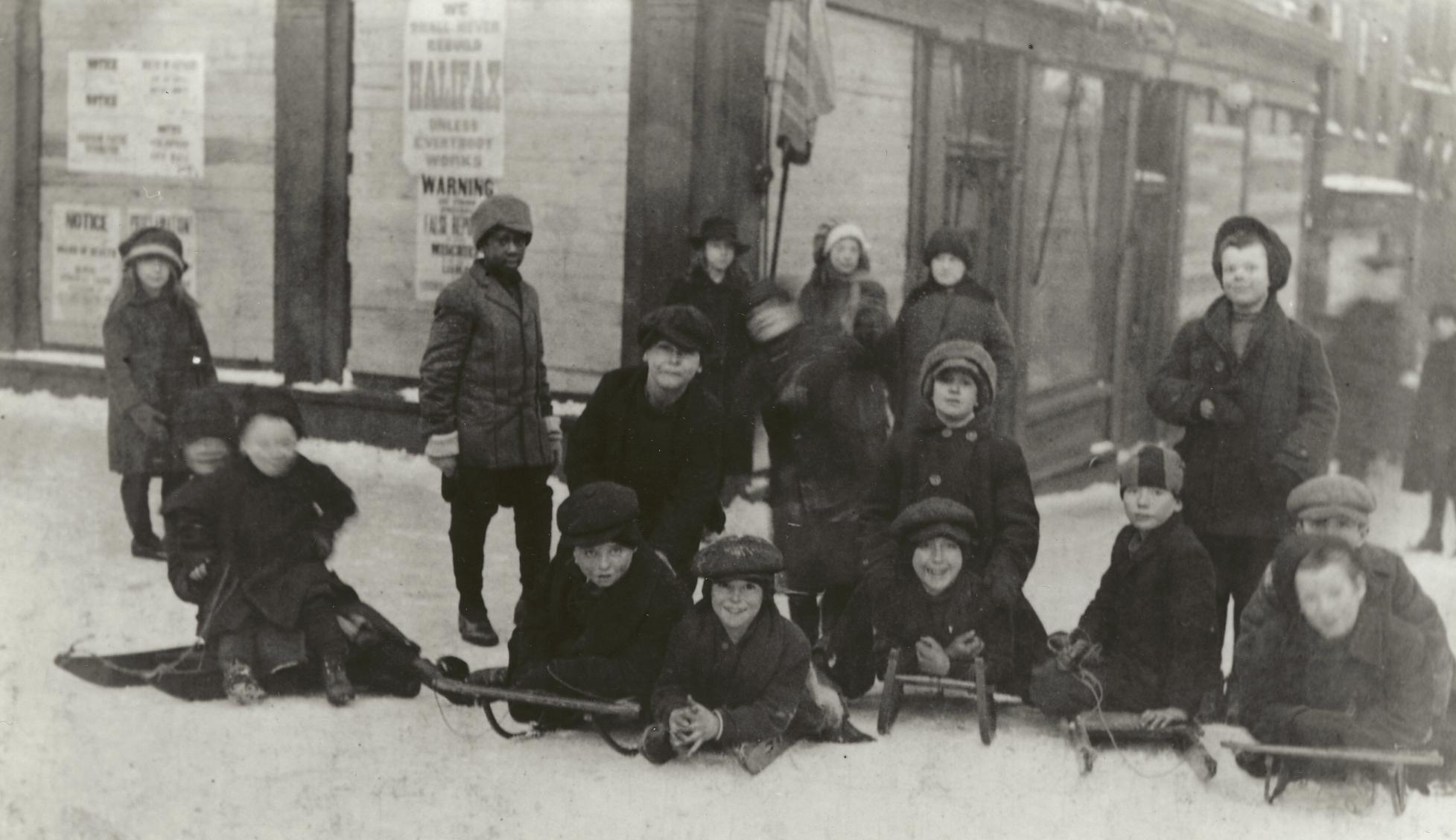
-
Article
Lumber and Wood Industries
Canada’s lumber and wood industries convert logs into various products, from lumber to wood chips. Softwood, derived from coniferous trees, supplies most of the manufacturers in these industries and is cut primarily in British Columbia. The remainder of the industry is supplied by hardwood (from deciduous trees, e.g., birch, maple, oak) found mainly in southern Ontario and Quebec and the Maritimes. Though technically not hardwood, Alberta produces large volumes of aspen and poplar. According to Natural Resources Canada, the forest sector contributed $33.4 billion to Canada’s nominal gross domestic product and employed 212,660 people in 2022. (See also Pulp and Paper Industry; Forest Harvesting; Timber Trade History; Forestry.)
"https://d3d0lqu00lnqvz.cloudfront.net/media/media/c1513b07-b36d-4c5c-8ff0-1b063bb48745.jpg" // resources/views/front/categories/view.blade.php
https://d3d0lqu00lnqvz.cloudfront.net/media/media/c1513b07-b36d-4c5c-8ff0-1b063bb48745.jpg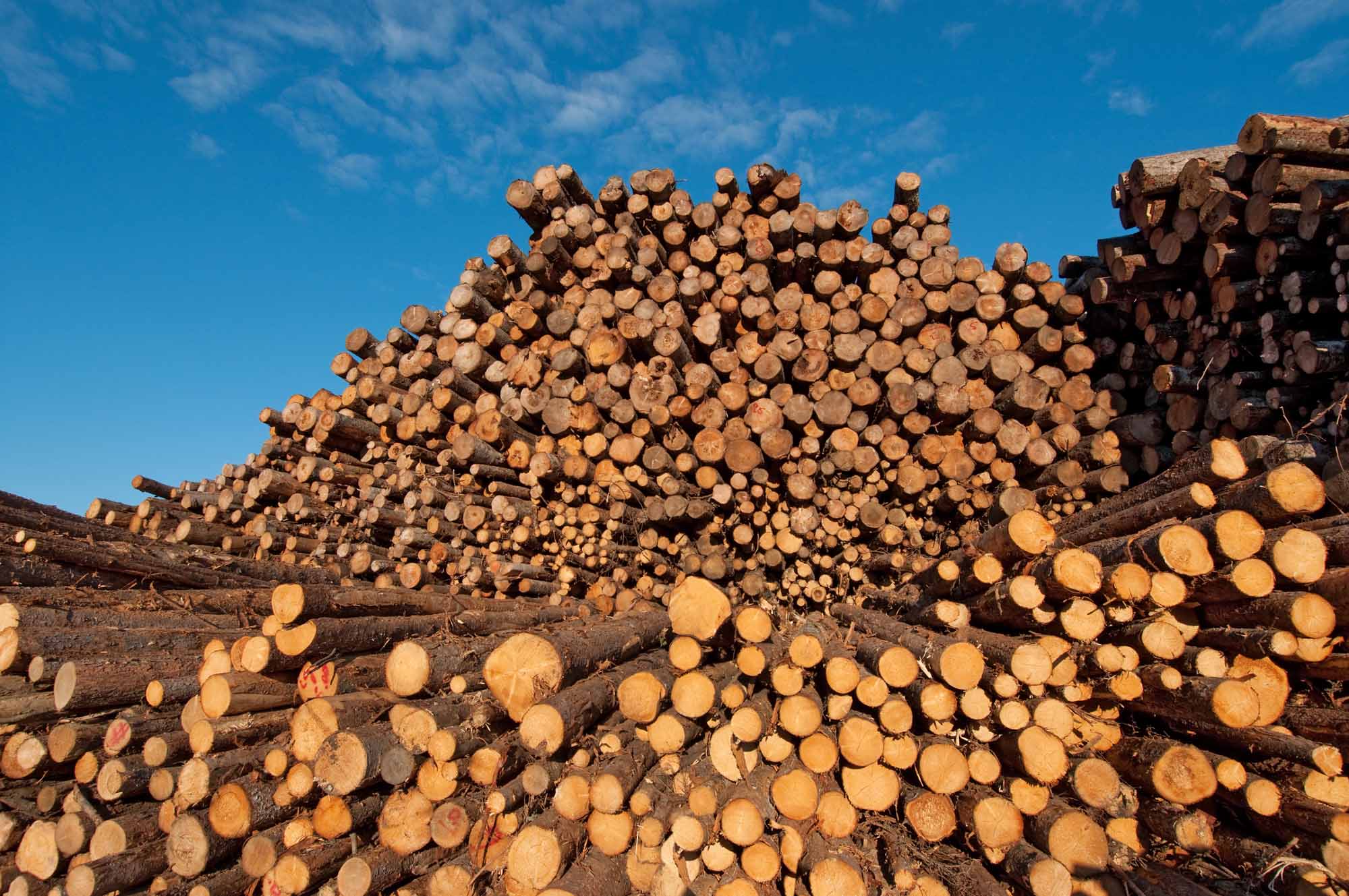
-
"https://thecanadianencyclopedia.ca/images/tce_placeholder.jpg?v=e9dca980c9bdb3aa11e832e7ea94f5d9" // resources/views/front/categories/view.blade.php
https://thecanadianencyclopedia.ca/images/tce_placeholder.jpg?v=e9dca980c9bdb3aa11e832e7ea94f5d9
-
Article
Lupine
Lupine (Latin lupus, "wolf," from the belief that it robs the soil) is the common name for several annual or perennial herbaceous plant species in the pea family (Leguminosae or Fabaceae; see legume) genus Lupinus. Lupines are characterized by palmately compound leaves (i.e., leaflets that radiate from a central point) and showy flower spikes. These traits make lupines admirable ornamentals (e.g., "Russell Hybrid" lupines).
"https://d3d0lqu00lnqvz.cloudfront.net/media/media/bcc8ac7a-55fd-420d-99e4-9d9b9be43912.jpg" // resources/views/front/categories/view.blade.php
https://d3d0lqu00lnqvz.cloudfront.net/media/media/bcc8ac7a-55fd-420d-99e4-9d9b9be43912.jpg
-
Article
Music of the Lutherans
In 1980, Canada's fifth-largest Christian denomination, numbering approximately 716,000 persons, of whom 302,736 were members of congregations.
"https://thecanadianencyclopedia.ca/images/tce_placeholder.jpg?v=e9dca980c9bdb3aa11e832e7ea94f5d9" // resources/views/front/categories/view.blade.php
https://thecanadianencyclopedia.ca/images/tce_placeholder.jpg?v=e9dca980c9bdb3aa11e832e7ea94f5d9
-
Article
Lye Organ Company
Lye Organ Company. Edward Lye (b Somerset, England, 1828 or 1829, d Toronto, 9 Nov 1919) became a cabinetmaker in England, and this training appears to have led naturally to the construction of organs.
"https://thecanadianencyclopedia.ca/images/tce_placeholder.jpg?v=e9dca980c9bdb3aa11e832e7ea94f5d9" // resources/views/front/categories/view.blade.php
https://thecanadianencyclopedia.ca/images/tce_placeholder.jpg?v=e9dca980c9bdb3aa11e832e7ea94f5d9