
Browse "Things"
-
Article
London and Bristol Company
London and Bristol Company, est 1610, the first formal attempt to colonize NEWFOUNDLAND. A group of merchant "adventurers" from London and Bristol, Eng, obtained a royal charter giving them title to Newfoundland's east coast.
"https://thecanadianencyclopedia.ca/images/tce_placeholder.jpg?v=e9dca980c9bdb3aa11e832e7ea94f5d9" // resources/views/front/categories/view.blade.php
https://thecanadianencyclopedia.ca/images/tce_placeholder.jpg?v=e9dca980c9bdb3aa11e832e7ea94f5d9
-
Article
London Conference
From 4 December 1866 to March 1867, politicians from the Province of Canada, Nova Scotia and New Brunswick met with delegates of the British government in London. This was the last of three conferences — after the Charlottetown Conference and Quebec Conference in 1864 — that were held to determine the constitutional details of Confederation. The Quebec Resolutions — 72 points that had been agreed upon in Quebec City — were reviewed and amended. They formed the basis of the British North America Act (now the Constitution Act, 1867). It was passed by the British Parliament and received Queen Victoria’s Royal Assent on 29 March 1867.
"https://d3d0lqu00lnqvz.cloudfront.net/media/media/9a650dcd-e8ad-4685-8baf-c4bba9cae8e7.jpg" // resources/views/front/categories/view.blade.php
https://d3d0lqu00lnqvz.cloudfront.net/media/media/9a650dcd-e8ad-4685-8baf-c4bba9cae8e7.jpg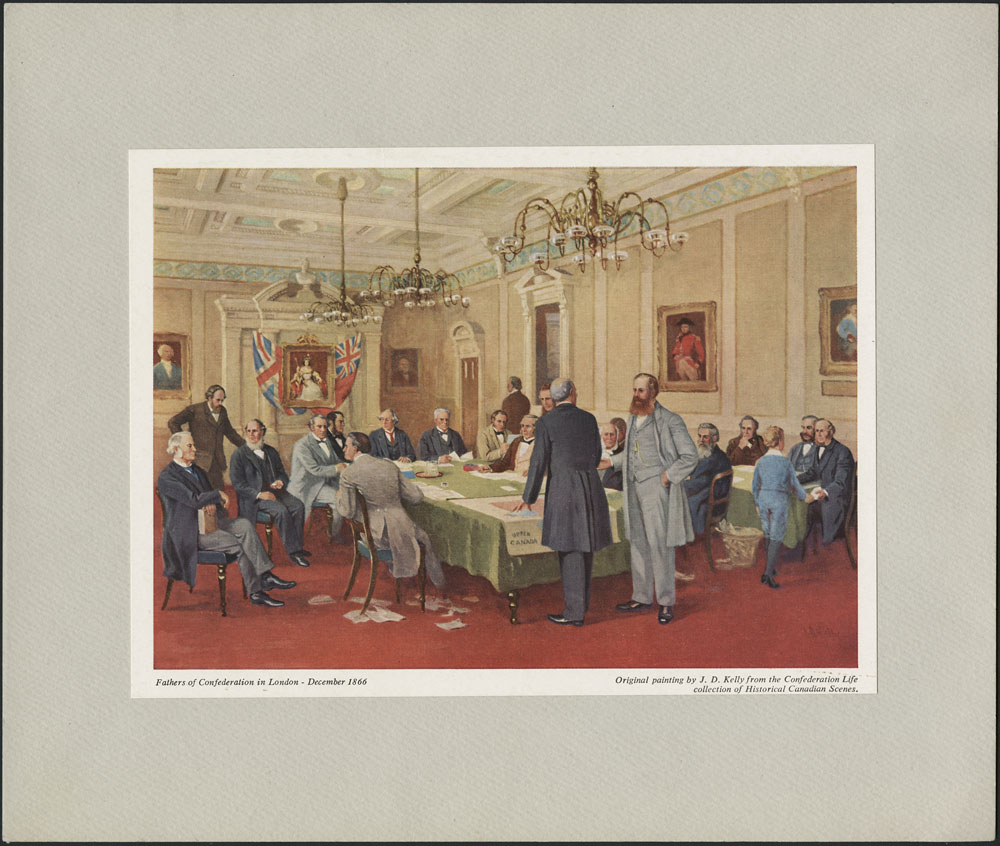
-
Article
London Conference (Plain-Language Summary)
The London Conference took place in London, England, from 4 December 1866 to March 1867. Politicians from British North America met with members of the British government. This was the last of three conferences that were held to work out the legal details of Confederation. The first two were the Charlottetown Conference and Quebec Conference. They were both held in 1864. The Quebec Resolutions were agreed upon in Quebec City. They were reviewed and updated in London. They formed the basis of the British North America Act (now the Constitution Act, 1867). It is the foundation of Canada’s Constitution. It was passed by the British Parliament. It received Queen Victoria’s Royal Assent on 29 March 1867. This article is a plain-language summary of the London Conference. If you would like to read about this topic in more depth, please see our full-length entry: London Conference.
"https://d3d0lqu00lnqvz.cloudfront.net/media/media/9a650dcd-e8ad-4685-8baf-c4bba9cae8e7.jpg" // resources/views/front/categories/view.blade.php
https://d3d0lqu00lnqvz.cloudfront.net/media/media/9a650dcd-e8ad-4685-8baf-c4bba9cae8e7.jpg
-
Article
London Township Treaty (No. 6)
The London Township Treaty of 1796 (also known as Treaty 6 in the Upper Canada treaties numbering system) was an early land agreement between First Nations and British authorities in Upper Canada (later Ontario). It was one of a series of Upper Canada Land Surrenders. The London Township Treaty encompassed a tract of land 12 miles square (about 31 kilometres square) in the southwestern part of the colony. The British originally purchased it as the location to establish the capital of the colony, but York (modern Toronto) became the capital instead. (See also Treaties with Indigenous Peoples in Canada.)
"https://d3d0lqu00lnqvz.cloudfront.net/DundasLondonON.jpg" // resources/views/front/categories/view.blade.php
https://d3d0lqu00lnqvz.cloudfront.net/DundasLondonON.jpg
-
Article
Long-Distance Running
The marathon commemorates an event in ancient Greece; Pheidippides' run from the battlefield at Marathon to Athens (c 35 km) to announce victory.
"https://d3d0lqu00lnqvz.cloudfront.net/media/media/16a4e9f7-d172-4886-a633-bfbc2b78864d.jpg" // resources/views/front/categories/view.blade.php
https://d3d0lqu00lnqvz.cloudfront.net/media/media/16a4e9f7-d172-4886-a633-bfbc2b78864d.jpg
-
List
Longest Rivers in Canada
Canada’s rivers have played a vital role in the country’s history and cultural heritage. As transportation routes for Indigenous people and early settlers, they connected the country before railways and other modes of transportation. They have also been a source of water, food and recreation for thousands of years. Below is a list of Canada’s 10 longest rivers. The list is ordered by the river’s total length, not just the portions within Canadian borders. Similarly, the length cited is the length of the river’s main stem and does not include tributaries.
"https://d3d0lqu00lnqvz.cloudfront.net/media/media/4f133fe0-0529-435c-859e-7fc144a682c6.jpg" // resources/views/front/categories/view.blade.php
https://d3d0lqu00lnqvz.cloudfront.net/media/media/4f133fe0-0529-435c-859e-7fc144a682c6.jpg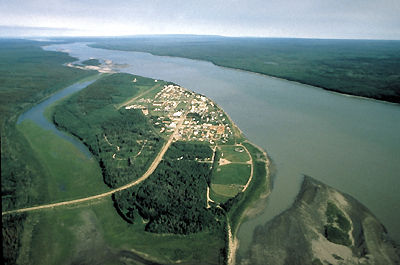
-
Article
Longhouse
A longhouse was the basic house type of pre-contact northern Iroquoian-speaking peoples, such as the Huron-Wendat, Haudenosaunee, Petun and Neutral. The longhouse sheltered a number of families related through the female line. In the 1700s, European-style single-family houses gradually replaced longhouses as primary residences. However, longhouses still function as important facilities in which some Indigenous peoples conduct ceremonies, political meetings and various community gatherings. (See also Architectural History of Indigenous Peoples in Canada.)
"https://d3d0lqu00lnqvz.cloudfront.net/media/media/c78ecb73-d7ac-4834-bc1e-a6d6bf206331.jpg" // resources/views/front/categories/view.blade.php
https://d3d0lqu00lnqvz.cloudfront.net/media/media/c78ecb73-d7ac-4834-bc1e-a6d6bf206331.jpg
-
Editorial
A Place to Happen
The following article is an editorial written by The Canadian Encyclopedia staff. Editorials are not usually updated.It has been said that Canadians don’t tell our own stories or celebrate our own myths. Our history is full of epics considered “too small to be tragic,” as The Tragically Hip’s Gord Downie once sang.
"https://d3d0lqu00lnqvz.cloudfront.net/media/Twitter_Cards/The hip 2.jpg" // resources/views/front/categories/view.blade.php
https://d3d0lqu00lnqvz.cloudfront.net/media/Twitter_Cards/The hip 2.jpg
-
Article
Loons in Canada
Loon (family Gaviidae) is a common name for a distinctive group of five large, swimming birds, all confined to the Northern Hemisphere and all occurring in North America. Loons nest on inland lakes and rivers, migrating to the sea for winter. The common loon is the provincial bird of Ontario.
"https://d3d0lqu00lnqvz.cloudfront.net/media/media/11b636e6-b2ad-4c58-bbfc-b7291fc0109f.jpg" // resources/views/front/categories/view.blade.php
https://d3d0lqu00lnqvz.cloudfront.net/media/media/11b636e6-b2ad-4c58-bbfc-b7291fc0109f.jpg
-
Macleans
Looted Art Controversy
This article was originally published in Maclean’s magazine on July 27, 1998. Partner content is not updated.
"https://thecanadianencyclopedia.ca/images/tce_placeholder.jpg?v=e9dca980c9bdb3aa11e832e7ea94f5d9" // resources/views/front/categories/view.blade.php
https://thecanadianencyclopedia.ca/images/tce_placeholder.jpg?v=e9dca980c9bdb3aa11e832e7ea94f5d9
-
Macleans
Lord Encouraged to Lead Tories
It takes a political animal to know one.This article was originally published in Maclean's Magazine on October 7, 2002
"https://thecanadianencyclopedia.ca/images/tce_placeholder.jpg?v=e9dca980c9bdb3aa11e832e7ea94f5d9" // resources/views/front/categories/view.blade.php
https://thecanadianencyclopedia.ca/images/tce_placeholder.jpg?v=e9dca980c9bdb3aa11e832e7ea94f5d9
-
Article
Lord Strathcona’s Horse (Royal Canadians)
Lord Strathcona’s Horse (Royal Canadians) (LdSH (RC)) is one of three regular armoured regiments in the Canadian Army. The regiment was established in 1900 during the Boer War and has fought in all the country’s wars since then. The Strathconas have also participated in several peace support operations. The regiment has been based in Alberta since 1970 and is part of 1st Canadian Mechanized Brigade Group, 3rd Canadian Division.
"https://d3d0lqu00lnqvz.cloudfront.net/LdSH/Tanks-arr-KAF-btm.jpeg" // resources/views/front/categories/view.blade.php
https://d3d0lqu00lnqvz.cloudfront.net/LdSH/Tanks-arr-KAF-btm.jpeg
-
Macleans
Lord's First 200 Days
His absence was, in reality, due to a bout of flu. But many nights, Lord's tan minivan is the last vehicle in the parking lot behind the government buildings. His heavy workload has even reduced the premier to working out at home, instead of his usual fitness regimen of ball hockey and racquetball.This article was originally published in Maclean's Magazine on January 17, 2000
"https://d3d0lqu00lnqvz.cloudfront.net/media/media/2154bcd0-2e92-4fbf-ae63-3342734f8489.jpg" // resources/views/front/categories/view.blade.php
https://d3d0lqu00lnqvz.cloudfront.net/media/media/2154bcd0-2e92-4fbf-ae63-3342734f8489.jpg
-
Macleans
Lortie Released
Denis Lortie, the former army corporal who murdered three people and injured 13 others after storming the Quebec National Assembly in May, 1984, was released on day parole to a halfway house in Hull, Quebec.This article was originally published in Maclean's Magazine on January 16, 1995
"https://thecanadianencyclopedia.ca/images/tce_placeholder.jpg?v=e9dca980c9bdb3aa11e832e7ea94f5d9" // resources/views/front/categories/view.blade.php
https://thecanadianencyclopedia.ca/images/tce_placeholder.jpg?v=e9dca980c9bdb3aa11e832e7ea94f5d9
-
Article
Lost Lemon Mine
Lost Lemon Mine, a legendary gold deposit reputedly somewhere between the Crowsnest Pass and the Highwood River in southwestern Alberta, discovered about 1870 by prospectors Frank Lemon and "Blackjack."
"https://thecanadianencyclopedia.ca/images/tce_placeholder.jpg?v=e9dca980c9bdb3aa11e832e7ea94f5d9" // resources/views/front/categories/view.blade.php
https://thecanadianencyclopedia.ca/images/tce_placeholder.jpg?v=e9dca980c9bdb3aa11e832e7ea94f5d9