
Browse "Things"
-
Macleans
Littleton Massacre
At first they thought it was a prank, the kind of crazy thing that students just a month from graduation might pull.This article was originally published in Maclean's Magazine on May 3, 1999
"https://thecanadianencyclopedia.ca/images/tce_placeholder.jpg?v=e9dca980c9bdb3aa11e832e7ea94f5d9" // resources/views/front/categories/view.blade.php
https://thecanadianencyclopedia.ca/images/tce_placeholder.jpg?v=e9dca980c9bdb3aa11e832e7ea94f5d9
-
Article
Liverwort
Liverwort, small terrestrial plant belonging, with mosses and hornworts, to division Bryophyta.
"https://d3d0lqu00lnqvz.cloudfront.net/media/media/687f71e6-ded3-41e0-82fa-ffe7b94cf180.jpg" // resources/views/front/categories/view.blade.php
https://d3d0lqu00lnqvz.cloudfront.net/media/media/687f71e6-ded3-41e0-82fa-ffe7b94cf180.jpg
-
Article
Lizard Species in Canada
Lizards are reptiles that belong to several suborders within the order Squamata (which also includes snakes). They are the most diverse group of living reptiles and are found on all continents except Antarctica. There are six species of lizard currently found in Canada. In addition, one species, the pygmy short-horned lizard, is extirpated. This means that, while it continues to live in other parts of its range, it is no longer found in Canada. Five of the six lizard species in Canada are native, while the sixth, the common wall lizard, is introduced from Europe.
"https://d3d0lqu00lnqvz.cloudfront.net/media/new_article_images/GreaterShortHornedLizard/GreaterShortHornedLizard2.jpg" // resources/views/front/categories/view.blade.php
https://d3d0lqu00lnqvz.cloudfront.net/media/new_article_images/GreaterShortHornedLizard/GreaterShortHornedLizard2.jpg
-
Article
Lobbying in Canada
Lobbying is the process through which individuals and groups articulate their interests to federal, provincial or municipal governments to influence public policy or government decision-making. Lobbyists may be paid third parties who communicate on behalf of their clients; or they may be employees of a corporation or organization seeking to influence the government. Because of the possibility for conflict of interest, lobbying is the subject of much public scrutiny. At the federal level, lobbying activities are governed by the Lobbying Act. Provinces and municipalities have their own lobbying laws and by-laws.
"https://d3d0lqu00lnqvz.cloudfront.net/media/media/11551bec-a5f6-4e78-b101-265ddf7610cb.jpg" // resources/views/front/categories/view.blade.php
https://d3d0lqu00lnqvz.cloudfront.net/media/media/11551bec-a5f6-4e78-b101-265ddf7610cb.jpg
-
Article
Loblaw Companies Limited
Loblaw Companies Limited is a subsidiary of George Weston Limited. It operates supermarkets, drug stores, liquor stores and clothing stores. In 2023, Loblaw Companies Ltd. reported $59.53 billion in revenue and operated more than 2,500 stores, making it Canada’s largest food and drug retailer. It is a public company headquartered in Brampton, Ontario. It trades on the Toronto Stock Exchange under the symbol L.
"https://d3d0lqu00lnqvz.cloudfront.net/media/new_article_images/Loblaw/Loblaw_Groceterias_Limited_Store_No_1_Toronto_ca_1919.jpg" // resources/views/front/categories/view.blade.php
https://d3d0lqu00lnqvz.cloudfront.net/media/new_article_images/Loblaw/Loblaw_Groceterias_Limited_Store_No_1_Toronto_ca_1919.jpg
-
Article
Lobster
Lobster is a term applied to four groups of decapod ("10-footed") crustaceans: the coral, slipper, spiny and clawed lobsters. They comprise 163 species. The American lobster (Homarus americanus), found along the Atlantic coastline and Continental Shelf from Labrador to North Carolina, is the only species occurring in Canadian waters. It attains the greatest weight of any living arthropod: the largest male H. americanus on record weighed over 19 kg.
"https://d3d0lqu00lnqvz.cloudfront.net/media/media/cd7b212f-c69d-49e1-a587-e8910ed185c8.jpg" // resources/views/front/categories/view.blade.php
https://d3d0lqu00lnqvz.cloudfront.net/media/media/cd7b212f-c69d-49e1-a587-e8910ed185c8.jpg
-
Article
Lobstick
Lobstick (or lopstick) is a tall, conspicuously situated spruce or pine tree with all but its topmost branches stripped or lopped off. This was done by northern Aboriginal people, and later by voyageurs, to turn trees into talismans, landmarks or memorials.
"https://thecanadianencyclopedia.ca/images/tce_placeholder.jpg?v=e9dca980c9bdb3aa11e832e7ea94f5d9" // resources/views/front/categories/view.blade.php
https://thecanadianencyclopedia.ca/images/tce_placeholder.jpg?v=e9dca980c9bdb3aa11e832e7ea94f5d9
-
Article
Local Elections
Local elections are the procedures by which citizens in a community choose the MUNICIPAL GOVERNMENT.
"https://thecanadianencyclopedia.ca/images/tce_placeholder.jpg?v=e9dca980c9bdb3aa11e832e7ea94f5d9" // resources/views/front/categories/view.blade.php
https://thecanadianencyclopedia.ca/images/tce_placeholder.jpg?v=e9dca980c9bdb3aa11e832e7ea94f5d9
-
Article
Local Government
Local government is the level of government below the provinces. The most important local governments are the MUNICIPAL GOVERNMENTS. Under the constitution, the provinces have exclusive jurisdiction over municipal affairs (see MUNICIPAL-PROVINCIAL RELATIONS).
"https://thecanadianencyclopedia.ca/images/tce_placeholder.jpg?v=e9dca980c9bdb3aa11e832e7ea94f5d9" // resources/views/front/categories/view.blade.php
https://thecanadianencyclopedia.ca/images/tce_placeholder.jpg?v=e9dca980c9bdb3aa11e832e7ea94f5d9
-
Macleans
Locked up, locked out
The chief behind Canada’s first jail on reserve land pushes for more jobs training for Aboriginal inmatesThis article was originally published in Maclean's Magazine on September 23, 2013
"https://thecanadianencyclopedia.ca/images/tce_placeholder.jpg?v=e9dca980c9bdb3aa11e832e7ea94f5d9" // resources/views/front/categories/view.blade.php
https://thecanadianencyclopedia.ca/images/tce_placeholder.jpg?v=e9dca980c9bdb3aa11e832e7ea94f5d9
-
Article
Locoweed
Locoweed is the common name for plants of the genera Astragalus and Oxytropis in the pea family.
"https://d3d0lqu00lnqvz.cloudfront.net/media/media/392cbba3-2e8f-4a88-8a1a-95df502ee427.jpg" // resources/views/front/categories/view.blade.php
https://d3d0lqu00lnqvz.cloudfront.net/media/media/392cbba3-2e8f-4a88-8a1a-95df502ee427.jpg
-
Article
Lodgepole Blowout
The Lodgepole Blowout was an industrial disaster that occurred from October to December 1982 in Alberta. The sour gas well blew out and released an estimated 5.66 million cubic meters per day of poisonous and carcinogenic hydrogen sulfide sour gas, along with other toxins, for 68 days. Contamination spread as far as Saskatchewan. It is considered the worst sour gas blowout in Alberta’s history and one of the worst industrial accidents in Canadian history. The blowout was determined to be the consequence of poor regulation of the fossil fuel industry. Two people were killed trying to cap the blowout, 16 others were hospitalized and thousands more became ill.
"https://d3d0lqu00lnqvz.cloudfront.net/lodgepoleblowout/lodgepole-blowout-good.jpg" // resources/views/front/categories/view.blade.php
https://d3d0lqu00lnqvz.cloudfront.net/lodgepoleblowout/lodgepole-blowout-good.jpg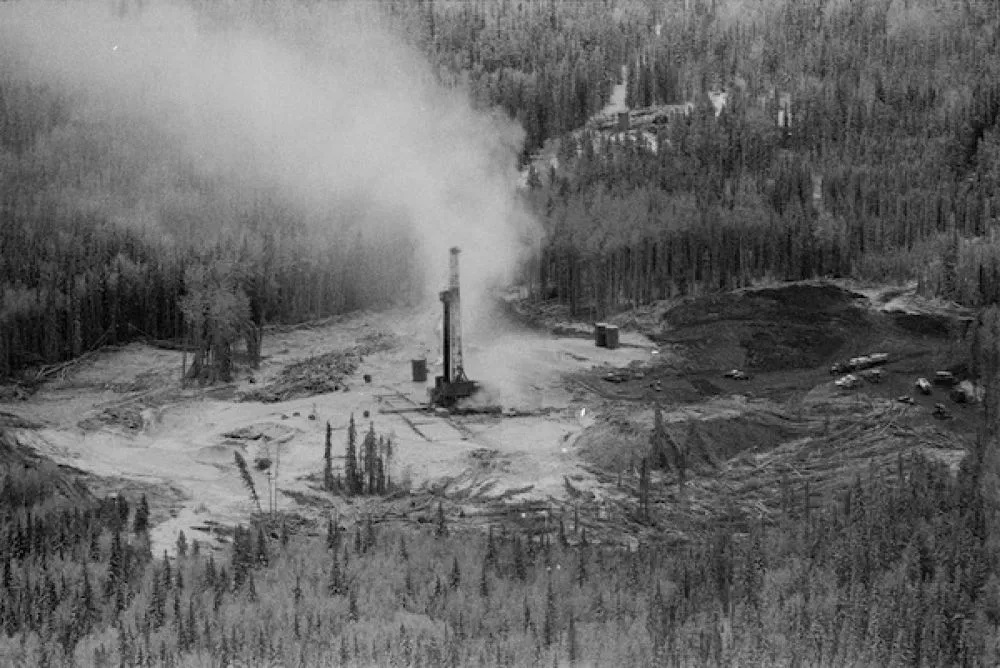
-
Article
Log Houses
Log Houses are a form of housing structure has been used in some forms by both Indigenous peoples and earlier settlers. While some Northwest Coast Indigenous peoples used log frames for their large plank houses before European settlers arrived, log houses have long been associated with pioneer settlement, past and present (see also Architectural History of Indigenous Peoples in Canada). Canada's forests provided ready building material.
"https://d3d0lqu00lnqvz.cloudfront.net/media/media/d722a2ab-c736-4842-b454-e665edd09d59.jpg" // resources/views/front/categories/view.blade.php
https://d3d0lqu00lnqvz.cloudfront.net/media/media/d722a2ab-c736-4842-b454-e665edd09d59.jpg
-
Article
Logic, Epistemology, Philosophy of Science
Philosophy: Logic, Epistemology, Philosophy of Science Logic, Epistemology, and Philosophy of Science cover a wide range of topics and issues including, epistemology, metaphysics, scientific method, science and values, and even the history of science, since there are inevitably many philosophical and conceptual issues present in the development of new ideas. The particular sciences included in this are everything from mathematics, to the natural sciences (biology, chemistry, and physics) to the social sciences (anthropology, economics, and...
"https://thecanadianencyclopedia.ca/images/tce_placeholder.jpg?v=e9dca980c9bdb3aa11e832e7ea94f5d9" // resources/views/front/categories/view.blade.php
https://thecanadianencyclopedia.ca/images/tce_placeholder.jpg?v=e9dca980c9bdb3aa11e832e7ea94f5d9
-
Article
Logo
Logo, a symbol, mark or word used by a corporation or other organization to distinguish its products, services or identity from those of anyone else. First used in 1937, the term was originally an abbreviation for "logogram" or "logotype" (both derived in part from Greek logos, "word"). It came into general use in Canada among marketers and designers in the 1960s, and by the mid-1970s it had become, to the layman, a synonym for "trademark."
"https://thecanadianencyclopedia.ca/images/tce_placeholder.jpg?v=e9dca980c9bdb3aa11e832e7ea94f5d9" // resources/views/front/categories/view.blade.php
https://thecanadianencyclopedia.ca/images/tce_placeholder.jpg?v=e9dca980c9bdb3aa11e832e7ea94f5d9