
Browse "Things"
-
Editorial
Invention of Standard Time
The following article is an editorial written by The Canadian Encyclopedia staff. Editorials are not usually updated.
"https://thecanadianencyclopedia.ca/images/tce_placeholder.jpg?v=e9dca980c9bdb3aa11e832e7ea94f5d9" // resources/views/front/categories/view.blade.php
https://thecanadianencyclopedia.ca/images/tce_placeholder.jpg?v=e9dca980c9bdb3aa11e832e7ea94f5d9
-
Article
Inventions and Devices
Instruments, Invented And ImprovedAmong 19th-century Canadian inventors were James P.
"https://thecanadianencyclopedia.ca/images/tce_placeholder.jpg?v=e9dca980c9bdb3aa11e832e7ea94f5d9" // resources/views/front/categories/view.blade.php
https://thecanadianencyclopedia.ca/images/tce_placeholder.jpg?v=e9dca980c9bdb3aa11e832e7ea94f5d9
-
Article
Inventors, Inventions and Innovations
Whether they remained in Canada or pursued careers abroad, Canadians have invented or innovated devices, products or processes in various fields, such as medicine, technology and agriculture. In some cases, the government and agencies, like the National Research Council Canada (NRC), have funded research and development. Economic investment and the promotion of science, technology, engineering and mathematics (STEM) skills have been identified as key factors for building Canada’s innovation future.
"https://d3d0lqu00lnqvz.cloudfront.net/inventorsandinnovations/Klien.jpg" // resources/views/front/categories/view.blade.php
https://d3d0lqu00lnqvz.cloudfront.net/inventorsandinnovations/Klien.jpg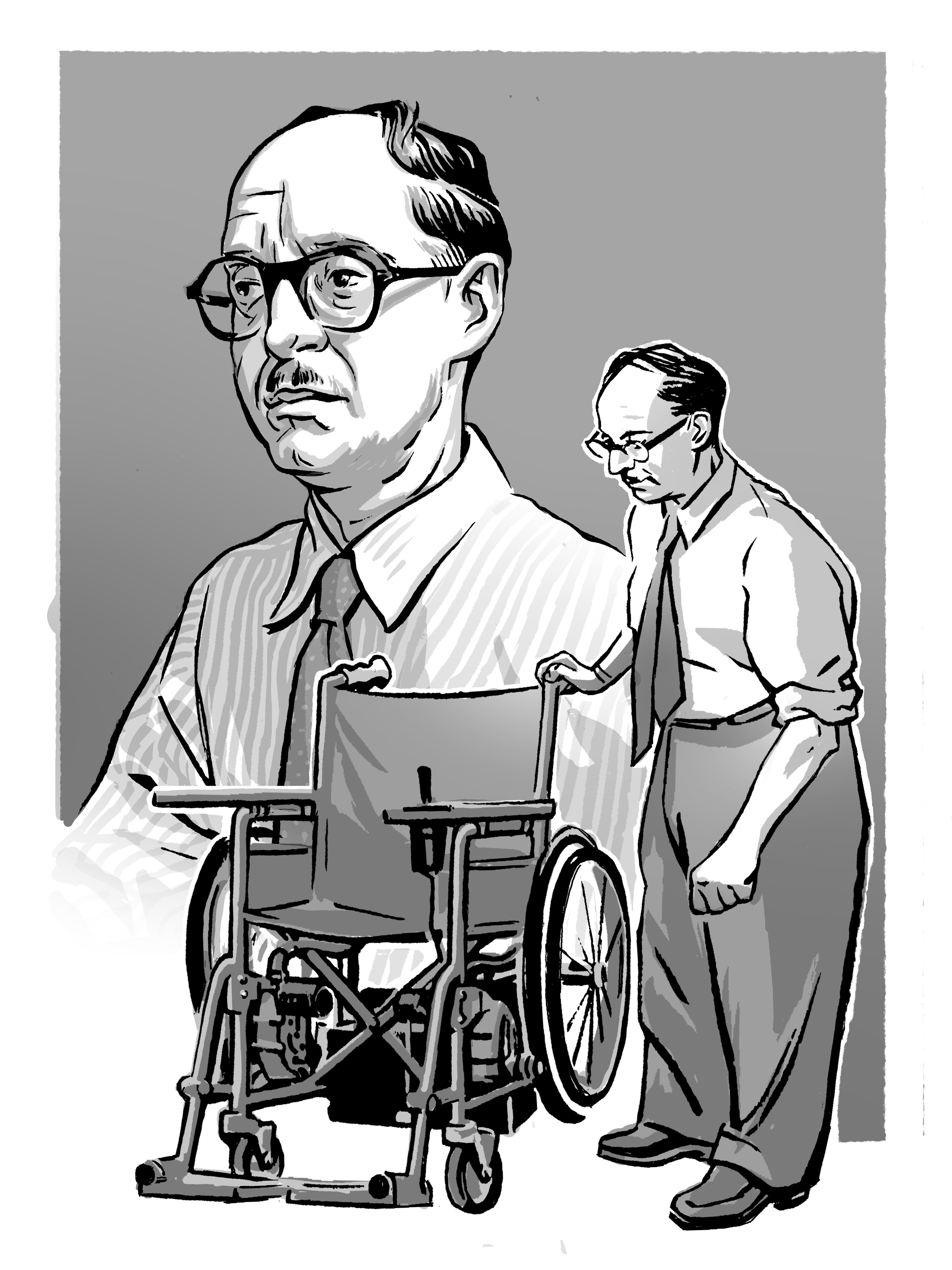
-
Article
Invertebrate
Invertebrates are animals without a vertebral column (backbone). As a group, invertebrates are extremely diverse.
"https://d3d0lqu00lnqvz.cloudfront.net/media/media/4815042e-4596-4981-bf6f-7f7c000bdc53.jpg" // resources/views/front/categories/view.blade.php
https://d3d0lqu00lnqvz.cloudfront.net/media/media/4815042e-4596-4981-bf6f-7f7c000bdc53.jpg
-
Macleans
IOC Promises Reforms
The bar at the Palace Hotel in Lausanne breathes old money, of the sort expected in a sedate but five-star Swiss lodging where the price of a room starts at $400 a night and spirals upward. The walls are red velvet, the ceiling wood-panelled, the seats dark leather.This article was originally published in Maclean's Magazine on March 29, 1999
"https://thecanadianencyclopedia.ca/images/tce_placeholder.jpg?v=e9dca980c9bdb3aa11e832e7ea94f5d9" // resources/views/front/categories/view.blade.php
https://thecanadianencyclopedia.ca/images/tce_placeholder.jpg?v=e9dca980c9bdb3aa11e832e7ea94f5d9
-
Article
Ipperwash Crisis
The Ipperwash Crisis took place in 1995 on land in and around Ontario’s Ipperwash Provincial Park, which was claimed by the Kettle and Stony Point First Nation. The underlying cause of the crisis was the appropriation of the Stoney Point Reserve in 1942 by the federal government for use as a military camp. After repeated requests for the land to be returned, members of the Stony Point First Nation occupied the camp in 1993 and in 1995. On 4 September 1995 protesters also occupied Ipperwash Provincial Park nearby. Tension between the protesters and the OPP increased, resulting in a confrontation on 6 September 1995 during which Dudley George, an Ojibwa protestor, was killed.
"https://d3d0lqu00lnqvz.cloudfront.net/media/media/bcf04d96-a331-4532-bed5-98ee62f4034e.jpg" // resources/views/front/categories/view.blade.php
https://d3d0lqu00lnqvz.cloudfront.net/media/media/bcf04d96-a331-4532-bed5-98ee62f4034e.jpg
-
Macleans
IRA Bomb Shatters the Peace
The modernistic landscape that has sprouted over London's once-derelict Docklands since the 1980s is the kind of target the Irish Republican Army loved to hit. Its centrepiece is Canary Wharf, the sometimes-maligned 52-storey office tower that is the tallest building in Britain.This article was originally published in Maclean's Magazine on February 19, 1996
"https://thecanadianencyclopedia.ca/images/tce_placeholder.jpg?v=e9dca980c9bdb3aa11e832e7ea94f5d9" // resources/views/front/categories/view.blade.php
https://thecanadianencyclopedia.ca/images/tce_placeholder.jpg?v=e9dca980c9bdb3aa11e832e7ea94f5d9
-
Article
Irish Music in Canada
The Irish component in the population of Canada is the fourth largest (after English, French, and Scottish) and one of the oldest. Irish fishermen settled in Newfoundland in the early 17th century. By the mid-18th century that island had some 5000 Roman Catholic Irish inhabitants - about one-third of its population. There were Irish among those who founded Halifax in 1749. The United Empire Loyalists who moved to Nova Scotia and New Brunswick after 1776 included many of Irish descent. The famine in Ireland during the early 19th century sent thousands of Irish farmers to Upper Canada (Ontario). By 1871 the Irish were the second largest ethnic group in Canada (after the French); in 1950 there were 1,500,000 Irish, catholic and protestant. In the 1986 census there were 699,685 Canadians of single Irish descent and a further 2,922,605 with some Irish ancestry.
"https://d3d0lqu00lnqvz.cloudfront.net/dreamstime_xxl_22459850.jpg" // resources/views/front/categories/view.blade.php
https://d3d0lqu00lnqvz.cloudfront.net/dreamstime_xxl_22459850.jpg
-
Macleans
Ireland Votes for Peace
Even before the polls opened, the telltale signs of seismic change began to drift across Northern Ireland's rolling green hills.This article was originally published in Maclean's Magazine on June 1, 1998
"https://thecanadianencyclopedia.ca/images/tce_placeholder.jpg?v=e9dca980c9bdb3aa11e832e7ea94f5d9" // resources/views/front/categories/view.blade.php
https://thecanadianencyclopedia.ca/images/tce_placeholder.jpg?v=e9dca980c9bdb3aa11e832e7ea94f5d9
-
Article
Irish Famine Orphans in Canada
Thousands of children became orphans during the 1847 Irish famine migration to British North America. Public authorities, private charities and religious officials all played a part in addressing this crisis. Many orphans were placed with relatives or with Irish families. A considerable number were also taken in by Francophone Catholics in Canada East, and by English-speaking Protestants in New Brunswick. Although many families took in orphans for charitable reasons, most people were motivated by the pragmatic value of an extra pair of hands on the farm or in the household.
"https://d3d0lqu00lnqvz.cloudfront.net/media/media/fd704360-23a5-4333-9dc4-fed52fcc81b8.jpg" // resources/views/front/categories/view.blade.php
https://d3d0lqu00lnqvz.cloudfront.net/media/media/fd704360-23a5-4333-9dc4-fed52fcc81b8.jpg
-
Article
Irish Moss
Irish moss is a type of seaweed that is commercially harvested in Canada’s Maritime provinces. It is mainly composed of carrageenan, a gelatinous substance. Carrageenan extracted from Irish moss is used as a thickening and gelling agent in foods and other products. It is also used to clarify beverages such as beer.
"https://d3d0lqu00lnqvz.cloudfront.net/media/new_article_images/IrishMoss/Irish_moss.jpg" // resources/views/front/categories/view.blade.php
https://d3d0lqu00lnqvz.cloudfront.net/media/new_article_images/IrishMoss/Irish_moss.jpg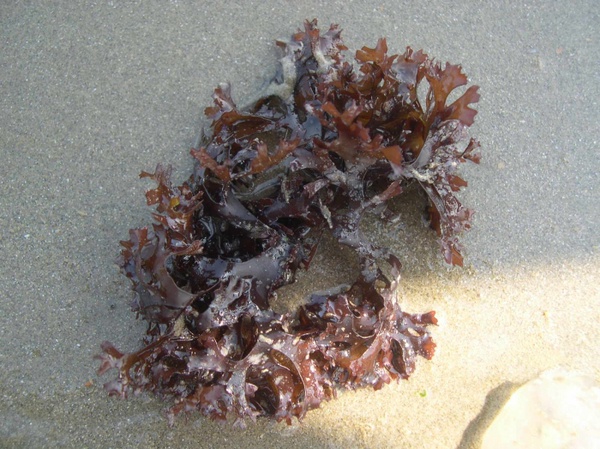
-
Macleans
Irish Peace Accord
For 30 years, it had been an unwinnable religious war of endless reprisals, fuelled by hate and hopelessness.This article was originally published in Maclean's Magazine on April 20, 1998
"https://thecanadianencyclopedia.ca/images/tce_placeholder.jpg?v=e9dca980c9bdb3aa11e832e7ea94f5d9" // resources/views/front/categories/view.blade.php
https://thecanadianencyclopedia.ca/images/tce_placeholder.jpg?v=e9dca980c9bdb3aa11e832e7ea94f5d9
-
Macleans
Irish Referendum Campaign
On the Falls Road in the western precincts of Belfast, right in the heart of the city's Roman Catholic strongholds, there is an exclusive watering hole with a singularly appropriate name. They call the place the Felons' Club.This article was originally published in Maclean's Magazine on May 25, 1998
"https://thecanadianencyclopedia.ca/images/tce_placeholder.jpg?v=e9dca980c9bdb3aa11e832e7ea94f5d9" // resources/views/front/categories/view.blade.php
https://thecanadianencyclopedia.ca/images/tce_placeholder.jpg?v=e9dca980c9bdb3aa11e832e7ea94f5d9
-
Article
Iron and Steel Industry
Iron is the primary raw material used to produce steel — itself an alloy of concentrated iron with a minute amount of carbon. (See also Mineral Resources in Canada.) Globally, steel production drives 98 per cent of the demand for iron, while electronics and non-metallurgical uses drive the remaining 2 per cent. Iron extraction and steel production have historically constituted major industries in Canada, especially in the industrial zones of Ontario and Quebec.
"https://d3d0lqu00lnqvz.cloudfront.net/ironandsteelindustry/workmenstelcosteelcompany.jpg" // resources/views/front/categories/view.blade.php
https://d3d0lqu00lnqvz.cloudfront.net/ironandsteelindustry/workmenstelcosteelcompany.jpg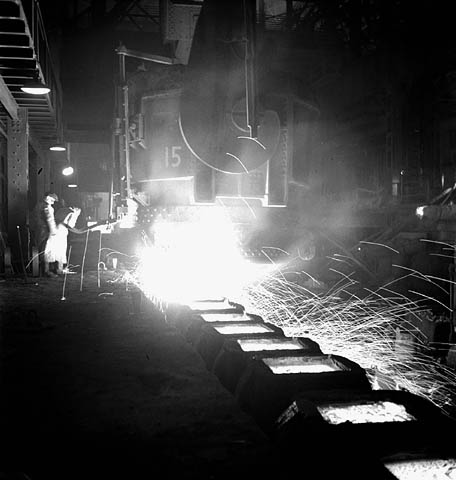
-
Article
Iron Ore
Its most important mineral forms are magnetite (Fe3O4, 72.4% Fe), hematite (Fe2O3, 69.9% Fe) and siderite (FeCO3, 48.29% Fe). In Brazil, some ore that contains practically no other minerals can grade as high as 68% Fe, but the crude ore mined in Canada grades between 30 and 44% Fe.
"https://d3d0lqu00lnqvz.cloudfront.net/media/media/0fa44cb9-3338-463a-ad5c-498dbf2d0950.jpg" // resources/views/front/categories/view.blade.php
https://d3d0lqu00lnqvz.cloudfront.net/media/media/0fa44cb9-3338-463a-ad5c-498dbf2d0950.jpg