
Browse "Things"
-
Article
British Home Children in Canada
More than 100,000 boys and girls immigrated to Canada from the United Kingdom between the 1860s and the 1940s. Known as the “British Home Children,” these young people were orphans or came from poor families. Charitable organizations like The Salvation Army believed that these children would have greater opportunities in British dominions and colonies than in the United Kingdom. Many ended up working on farms or in domestic service. While some were treated well, others were abused or neglected. It is estimated that over 10 per cent of the Canadian population is descended from the British Home Children.
"https://d3d0lqu00lnqvz.cloudfront.net/media/media/3f5cab82-83b8-449c-a7f1-2bfff8549915.jpg" // resources/views/front/categories/view.blade.php
https://d3d0lqu00lnqvz.cloudfront.net/media/media/3f5cab82-83b8-449c-a7f1-2bfff8549915.jpg
-
Article
Economic Immigration to Canada
Canada’s current and future prosperity depends on recruiting immigrants. Newcomers fill gaps in the Canadian workforce, build or start businesses and invest in the Canadian economy. Economic immigrants include employees as well as employers. They mostly become permanent residents when they immigrate to Canada. Not included in this class are the many temporary foreign workers who contribute to Canada’s economy. (See also Immigration to Canada.) Economic immigrants bring talent, innovation, family members and financial investments to Canada. They also enrich the country’s culture, heritage and opportunities. Technological progress, productivity and economic growth all benefit from these newcomers. Studies show that they have little to no negative impacts on wages for other workers in the country. According to the 2021 census, 1.3 million immigrants settled in Canada between 2016 and 2021. The census identified 748,120 of the total 1.3 million living in Canada as economic immigrants.
"https://d3d0lqu00lnqvz.cloudfront.net/media/new_article_images/EconomicImmigration/permanent_residence.jpg" // resources/views/front/categories/view.blade.php
https://d3d0lqu00lnqvz.cloudfront.net/media/new_article_images/EconomicImmigration/permanent_residence.jpg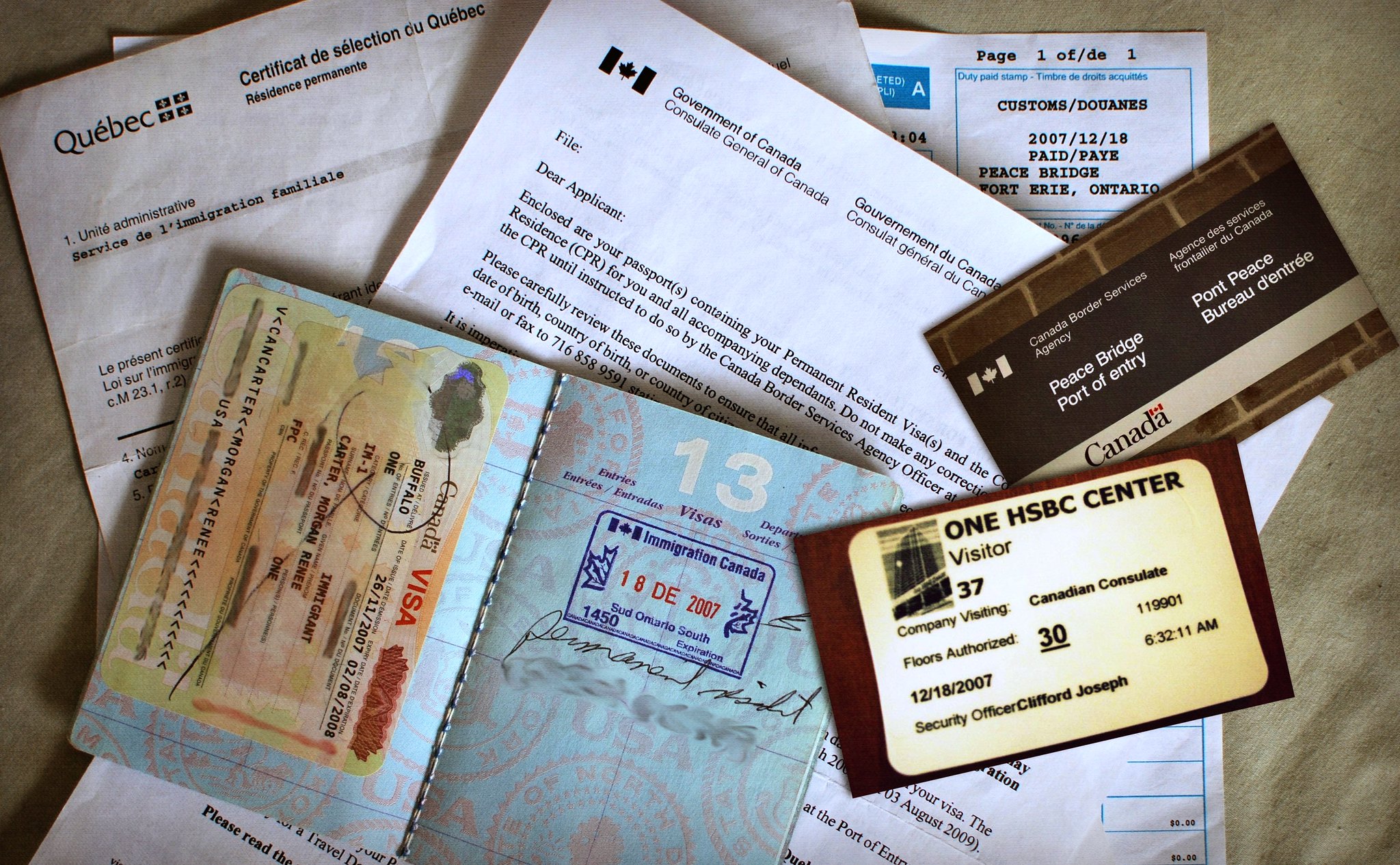
-
Article
Immigration to Canada
The movement of individuals of one country into another for the purpose of resettlement is central to Canadian history. The story of Canadian immigration is not one of orderly population growth; instead, it has been — and remains one — about economic development as well as Canadian attitudes and values. It has often been unashamedly economically self-serving and ethnically or racially discriminatory despite contributing to creating a multicultural society (see Immigration Policy in Canada; Refugees to Canada). Immigration has also contributed to dispossessing Indigenous peoples of their ancestral lands. This article is a full-length entry about immigration to Canada. For a plain-language summary, please see Immigration to Canada (Plain-Language Summary).
"https://d3d0lqu00lnqvz.cloudfront.net/media/media/f3255eef-1ce7-4d5e-a9b7-052f4e35aad9.jpg" // resources/views/front/categories/view.blade.php
https://d3d0lqu00lnqvz.cloudfront.net/media/media/f3255eef-1ce7-4d5e-a9b7-052f4e35aad9.jpg
-
Timelines
Immigration
The movement of nationals of one country into another for the purpose of resettlement is central to Canadian history. This timeline charts significant migrations that have shaped our nation.
"https://d3d0lqu00lnqvz.cloudfront.net/media/media/fd704360-23a5-4333-9dc4-fed52fcc81b8.jpg" // resources/views/front/categories/view.blade.php
https://d3d0lqu00lnqvz.cloudfront.net/media/media/fd704360-23a5-4333-9dc4-fed52fcc81b8.jpg
-
Article
Immigration Detention in Canada
The federal government detains immigrants for administrative immigration reasons even if they have not committed a crime under the Criminal Code. The detention of migrants was not a highly publicized issue in Canada until deaths occurred in the Vancouver and Toronto immigration facilities in 2013 and 2016. The issue brought to light the conditions of thousands of people currently being detained. Immigration detainees are often isolated from community support and are unable to access doctors and lawyers. The prolonged periods of detention exacerbate existing mental health issues such as Post-Traumatic Stress Disorder (PTSD), which impacts many migrants coming to Canada from war-torn countries. Advocates argue that Canada's immigration detention system contravenes international human rights law (see International Law) and that more oversight is necessary to prevent further deaths in the future and to reform the system as a whole. (This version is the full-length article on immigration detention in Canada. If you wish to read a plain-language summary, please see Immigration Detention in Canada (Plain-Language Summary).)
"https://d3d0lqu00lnqvz.cloudfront.net/media/media/ImmigrationDetention/CP2564755_.jpg" // resources/views/front/categories/view.blade.php
https://d3d0lqu00lnqvz.cloudfront.net/media/media/ImmigrationDetention/CP2564755_.jpg
-
Article
Immigration Policy in Canada
Immigration policy is the way the government controls via laws and regulations who gets to come and settle in Canada. Since Confederation, immigration policy has been tailored to grow the population, settle the land, and provide labour and financial capital for the economy. Immigration policy also tends to reflect the racial attitudes or national security concerns of the time which has also led to discriminatory restrictions on certain migrant groups. (See also Canadian Refugee Policy.) (This is the full-length article on immigration policy in Canada. If you wish to read a plain-language summary, please see Immigration Policy in Canada (Plain-Language Summary).)
"https://d3d0lqu00lnqvz.cloudfront.net/media/media/81825b51-3f5c-4e72-bede-2c04ad6326b1.jpg" // resources/views/front/categories/view.blade.php
https://d3d0lqu00lnqvz.cloudfront.net/media/media/81825b51-3f5c-4e72-bede-2c04ad6326b1.jpg
-
Article
Immigration to Canada (Plain-Language Summary)
Aside from Indigenous peoples, everyone living in Canada has ancestors who arrived in Canada during the past 400 years. The first Europeans to permanently settle in Canada were from France. Then, people from the United States, Britain and Ireland came to Canada. Black people also came from the United States to escape enslavement. After this, people from Continental Europe and China arrived. Now, people from all over the world come to Canada. (See Multiculturalism.) A large percentage of Canadians alive today are first-generation Canadians who immigrated. Many are second-generation Canadians — children of immigrants. Without immigration, Canada would not be what it is today. This article is a plain-language summary of immigration to Canada. If you are interested in reading about this topic more in depth, please see our full-length entry, Immigration to Canada.
"https://d3d0lqu00lnqvz.cloudfront.net/media/media/fd704360-23a5-4333-9dc4-fed52fcc81b8.jpg" // resources/views/front/categories/view.blade.php
https://d3d0lqu00lnqvz.cloudfront.net/media/media/fd704360-23a5-4333-9dc4-fed52fcc81b8.jpg
-
Article
Immunology
Immunology is a branch of MEDICINE that studies the body's ability to defend itself from foreign substances, cells and tissues, especially DISEASE-causing organisms, and seeks means of controlling that ability.
"https://thecanadianencyclopedia.ca/images/tce_placeholder.jpg?v=e9dca980c9bdb3aa11e832e7ea94f5d9" // resources/views/front/categories/view.blade.php
https://thecanadianencyclopedia.ca/images/tce_placeholder.jpg?v=e9dca980c9bdb3aa11e832e7ea94f5d9
-
Article
Meteors, Meteorites and Impact Craters
The solar system contains many objects smaller than the planets (or their satellites) travelling in individual orbits about the sun; space between the planets also contains myriad dust grains in the micron size range. Near Earth, dust concentrations are only a few hundred particles per cubic kilometre, but 35,000 to 100,000 tonnes of extraterrestrial material enters the atmosphere annually, swept up by our planet from debris that is in its path or crosses its path.
"https://d3d0lqu00lnqvz.cloudfront.net/lakesincanada/Manicouagan-Reservoir.jpg" // resources/views/front/categories/view.blade.php
https://d3d0lqu00lnqvz.cloudfront.net/lakesincanada/Manicouagan-Reservoir.jpg
-
Article
Club de Foot Montréal
Club de Foot Montréal (also CF Montréal, CFM or CFMTL) is a men’s professional soccer team that plays in Major League Soccer (MLS). The club was founded as L’Impact de Montréal or the Montreal Impact in 1992. It changed its name and brand identity on 14 January 2020. The team plays at Stade Saputo in Montreal and is operated by the Saputo family (see Lino Saputo). L’Impact played in various professional soccer leagues before joining MLS for the 2012 season. L’Impact won the Voyageurs Cup six times (2002–07) and the Canadian Championship three times (2008, 2013, 2014). The club has made it to MLS playoffs three times (2013, 2015, 2016), getting as far as the Eastern Conference finals in 2016. In 2015, they became the first Canadian club to reach the CONCACAF Champions League final. Club de Foot Montréal is one of three MLS franchises in Canada, including Toronto FC and Vancouver Whitecaps FC.
"https://d3d0lqu00lnqvz.cloudfront.net/media/media/bfea6620-b13a-4ea9-ba30-ae2d3d85ff96.jpg" // resources/views/front/categories/view.blade.php
https://d3d0lqu00lnqvz.cloudfront.net/media/media/bfea6620-b13a-4ea9-ba30-ae2d3d85ff96.jpg
-
Article
Impact of COVID-19 on Remote Work at Canadian Businesses
During the COVID-19 pandemic, many Canadians have worked from home. This shift to remote work has aimed to slow the spread of the coronavirus by reducing contact between people. To gauge the impact of the pandemic on remote work at Canadian businesses, Statistics Canada conducted a nationwide survey in 2020. The graphs below show some of its findings. The first graph shows the percentage of businesses, in each province and the three territories, that had more than half of their workforce working remotely a) before the pandemic and b) on 29 May 2020, during the pandemic. The second graph shows the percentage of businesses which expected that more than half their workforce would continue to work remotely after COVID-19.
"https://d3d0lqu00lnqvz.cloudfront.net/media/Twitter_Cards/remote_work_thumb.JPG" // resources/views/front/categories/view.blade.php
https://d3d0lqu00lnqvz.cloudfront.net/media/Twitter_Cards/remote_work_thumb.JPG
-
Article
Impaired Driving
Impaired driving, also known as drunken driving, driving while impaired (DWI) and driving under the influence (DUI), has been a serious social problem as far back as the beginning of this century, when social scientists took note of the often deadly combination of alcohol and motor vehicles.
"https://thecanadianencyclopedia.ca/images/tce_placeholder.jpg?v=e9dca980c9bdb3aa11e832e7ea94f5d9" // resources/views/front/categories/view.blade.php
https://thecanadianencyclopedia.ca/images/tce_placeholder.jpg?v=e9dca980c9bdb3aa11e832e7ea94f5d9
-
Macleans
Impending Same-Sex Marriage Legislation
IT'S NOT THE kind of crowd given to chants, placards, or burning brands. Greying, neatly pressed, well-mannered, they line up patiently at the open microphone.
"https://thecanadianencyclopedia.ca/images/tce_placeholder.jpg?v=e9dca980c9bdb3aa11e832e7ea94f5d9" // resources/views/front/categories/view.blade.php
https://thecanadianencyclopedia.ca/images/tce_placeholder.jpg?v=e9dca980c9bdb3aa11e832e7ea94f5d9
-
Article
Imperial Munitions Board
Imperial Munitions Board, established November 1915 in Canada by the British Ministry of Munitions, with Canadian government approval. Headed by J.W. Flavelle, a prominent Toronto businessman, the board was responsible for letting contracts on behalf of the British government for the construction of war materials in Canada.
"https://d3d0lqu00lnqvz.cloudfront.net/media/media/6d4e231e-f064-4897-b648-57e415ca7a8c.jpg" // resources/views/front/categories/view.blade.php
https://d3d0lqu00lnqvz.cloudfront.net/media/media/6d4e231e-f064-4897-b648-57e415ca7a8c.jpg
-
Article
Imperial Oil Limited
In 1995 it had sales or operating revenues of $9.28 billion, assets of $12.0 billion and 7800 employees. In 1987 Imperial bought Sulpetro, a Calgary-based natural gas producer, and in 1990 it completed its merger with Texaco Canada.
"https://d3d0lqu00lnqvz.cloudfront.net/media/media/87a23012-97b0-4fe6-ab3f-236c1704ea9e.jpg" // resources/views/front/categories/view.blade.php
https://d3d0lqu00lnqvz.cloudfront.net/media/media/87a23012-97b0-4fe6-ab3f-236c1704ea9e.jpg