Browse "Things"
-
Macleans
Hurricane Juan Hits Halifax
NOTHING, it seems, happens without a reason. A butterfly flaps its wings off the coast of Bermuda and the next thing you know you're cowering in bed at 1 a.m. with only two panes of glass between you and winds screaming like the apocalypse as they slam into Halifax.This article was originally published in Maclean's Magazine on October 13, 2003
"https://thecanadianencyclopedia.ca/images/tce_placeholder.jpg?v=e9dca980c9bdb3aa11e832e7ea94f5d9" // resources/views/front/categories/view.blade.php
https://thecanadianencyclopedia.ca/images/tce_placeholder.jpg?v=e9dca980c9bdb3aa11e832e7ea94f5d9
-
Macleans
Hurricane Mitch
Time after time, Digna Arguello folded her hands in prayer and asked God to put an end to the tempest. But Hurricane Mitch just raged on, tearing at her tiny home in the remote Nicaraguan village of Chinandega, and dumping nearly a metre of rain a day on a broad swath of Central America.This article was originally published in Maclean's Magazine on November 16, 1998
"https://thecanadianencyclopedia.ca/images/tce_placeholder.jpg?v=e9dca980c9bdb3aa11e832e7ea94f5d9" // resources/views/front/categories/view.blade.php
https://thecanadianencyclopedia.ca/images/tce_placeholder.jpg?v=e9dca980c9bdb3aa11e832e7ea94f5d9
-
Article
Music of the Hutterites
Named after Jakob Hutter, they were Anabaptists from Austria and south Germany who began to live communally in Moravia in 1529. After much persecution they emigrated to Russia in 1770 and thence to the USA ca 1870.
"https://thecanadianencyclopedia.ca/images/tce_placeholder.jpg?v=e9dca980c9bdb3aa11e832e7ea94f5d9" // resources/views/front/categories/view.blade.php
https://thecanadianencyclopedia.ca/images/tce_placeholder.jpg?v=e9dca980c9bdb3aa11e832e7ea94f5d9
-
Article
Hydro-Québec
Hydro-Québec, a provincially owned corporation based in Montréal, is Canada's largest electric utility and, judged by assets ($30.6 billion in 1986), Canada's second largest corporation.
"https://d3d0lqu00lnqvz.cloudfront.net/media/media/6be9c93a-1849-439f-b16a-f87c91691760.jpg" // resources/views/front/categories/view.blade.php
https://d3d0lqu00lnqvz.cloudfront.net/media/media/6be9c93a-1849-439f-b16a-f87c91691760.jpg
-
Article
Hydroelectricity in Canada
Hydroelectricity is energy produced from flowing water. The amount of energy produced depends on volume and speed: the more water moving at a fast rate, the more energy produced. For this reason, many hydroelectric stations are built near waterfalls. To produce energy, water is directed toward turbines — sometimes with the help of a dam — causing them to spin. In turn, the turbines make electrical generators spin and electricity is produced. It is a renewable, comparatively nonpolluting energy source and Canada’s largest source of electric-power generation. According to the Canada Energy Regulator, Canada is the third largest producer of hydroelectricity in the world.
"https://d3d0lqu00lnqvz.cloudfront.net/hydroelectricity/beauharnoisgeneratingstation_b.jpg" // resources/views/front/categories/view.blade.php
https://d3d0lqu00lnqvz.cloudfront.net/hydroelectricity/beauharnoisgeneratingstation_b.jpg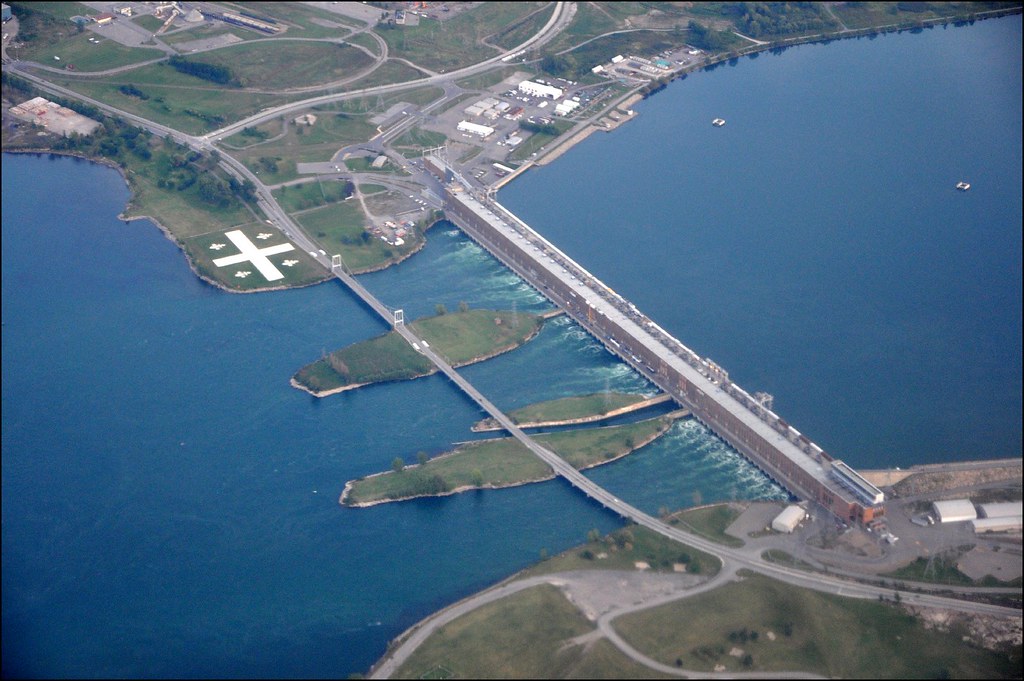
-
Article
Hydrofoil
Attempts to create a hydrofoil were made in England as early as 1861. A hydrofoil sustains its motion by the lift achieved by hydrofoil-plates that function in the water as airplane wings do in the air.
"https://d3d0lqu00lnqvz.cloudfront.net/media/media/6cecea23-75d7-45b5-b758-2f53a1b5bce7.jpg" // resources/views/front/categories/view.blade.php
https://d3d0lqu00lnqvz.cloudfront.net/media/media/6cecea23-75d7-45b5-b758-2f53a1b5bce7.jpg
-
Article
Hydrogen
Hydrogen (H), the simplest, lightest and most abundant chemical element, is the main fuel for the nuclear fusion reactions which power the sun.
"https://thecanadianencyclopedia.ca/images/tce_placeholder.jpg?v=e9dca980c9bdb3aa11e832e7ea94f5d9" // resources/views/front/categories/view.blade.php
https://thecanadianencyclopedia.ca/images/tce_placeholder.jpg?v=e9dca980c9bdb3aa11e832e7ea94f5d9
-
Article
Hydrography
Hydrography is the science of surveying, charting and describing physical features of Oceans, seas, Rivers and Lakes.
"https://d3d0lqu00lnqvz.cloudfront.net/media/media/4aad02e3-72bd-400c-87ab-d1380ccad4dc.jpg" // resources/views/front/categories/view.blade.php
https://d3d0lqu00lnqvz.cloudfront.net/media/media/4aad02e3-72bd-400c-87ab-d1380ccad4dc.jpg
-
Article
Hydrology
Hydrology studies the behaviour of water: its origin, distribution and circulation; its physical and chemical properties; and its interaction with the physical and living environment. Applied hydrology is primarily concerned with precipitation, with the occurrence and movement of frozen, impounded or flowing water (on or below Earth's surface) and with evaporation. More specifically, hydrology generally refers to the study of water on or over land rather than in the ocean. Hydrology is concerned with gathering information to determine quantities and rates of movement of water.
"https://d3d0lqu00lnqvz.cloudfront.net/media/media/92685b7d-13c5-4eb5-9286-12f499300daf.jpg" // resources/views/front/categories/view.blade.php
https://d3d0lqu00lnqvz.cloudfront.net/media/media/92685b7d-13c5-4eb5-9286-12f499300daf.jpg
-
Article
Hypo Helmet
The Hypo Helmet (or “Smoke Helmet”) was an early gas mask developed by Newfoundland doctor Captain Cluny Macpherson during the First World War. Macpherson began working on the Hypo Helmet after the Germany army launched its first chlorine gas attack at the Second Battle of Ypres in April 1915. The British army began issuing the Hypo Helmet to Canadian and British soldiers in May 1915. The design was soon modified, resulting in the P, PH and PHG Helmets. By war’s end, 2.5 million Hypo Helmets had been issued. The gas mask was one of the most important innovations of the First World War.
"https://d3d0lqu00lnqvz.cloudfront.net/GasMask/HypoHelmet.jpg" // resources/views/front/categories/view.blade.php
https://d3d0lqu00lnqvz.cloudfront.net/GasMask/HypoHelmet.jpg
-
Article
I. Suckling & Sons
I. Suckling & Sons. Music publishers and retailers in Toronto ca 1875-ca 1894. Isaac Suckling was a retired English bandmaster and music teacher; his son George H.
"https://thecanadianencyclopedia.ca/images/tce_placeholder.jpg?v=e9dca980c9bdb3aa11e832e7ea94f5d9" // resources/views/front/categories/view.blade.php
https://thecanadianencyclopedia.ca/images/tce_placeholder.jpg?v=e9dca980c9bdb3aa11e832e7ea94f5d9
-
Article
Ice
Ice, including snow, is the solid phase of water. It is useful to think of it this way rather than as "frozen water" because water can achieve the solid phase through the freezing of liquid water or by direct deposition (sublimation) of water vapour, its gaseous phase. These different processes can produce distinct ice forms in the atmosphere or on or below the Earth's surface. The form taken by the solid phase of water is often important in determining its environmental and other roles. Snow is one distinctive form of ice; others include glacier ice, river ice, lake ice, sea ice, ground ice of various types, hail, cloud crystals, hoar and rime. Ice crystals are typically hexagonal, a direct result of an internal symmetry produced by the orderly packing of the 3-atom water molecules (H2O) of which each crystal is composed. This crystal form is found in cloud crystals of a size considerably under 1 mm in diameter to crystals of over 10 cm diameter found in some glaciers.
"https://d3d0lqu00lnqvz.cloudfront.net/ice/Ice-on-puddle-bridgewater-duck-pond.jpg" // resources/views/front/categories/view.blade.php
https://d3d0lqu00lnqvz.cloudfront.net/ice/Ice-on-puddle-bridgewater-duck-pond.jpg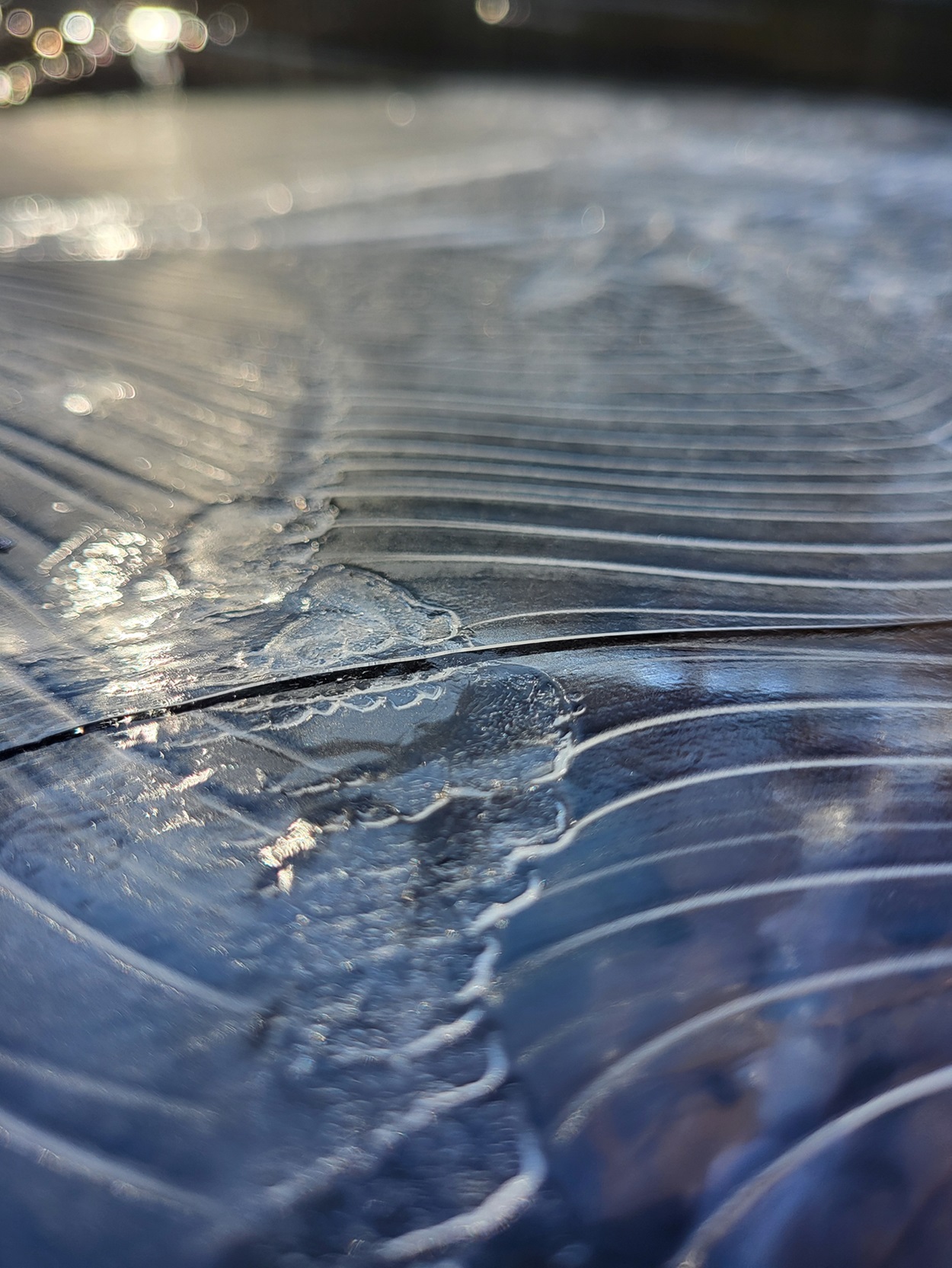
-
Article
Ice Age
Ice Age, the Pleistocene epoch of geologic time, during which periodic, extensive glacial activity occurred in many parts of the world.
"https://d3d0lqu00lnqvz.cloudfront.net/media/new_article_images/Mammoth/TwoMammothsFighting.jpg" // resources/views/front/categories/view.blade.php
https://d3d0lqu00lnqvz.cloudfront.net/media/new_article_images/Mammoth/TwoMammothsFighting.jpg
-
Article
Ice Cap
Ice caps are large masses of ice that rest on land and cover most of the underlying landscape. If bedrock appears in the central region of a large ice mass, then the region is instead called an icefield. When an ice cap is greater than 50,000 km 2 in size, it’s called an ice sheet. In Canada, the largest ice caps are found in the Arctic Archipelago ; the Agassiz Ice Cap on Ellesmere Island is an example. Ice caps are increasingly affected by climate change, as warmer temperatures are causing them to shrink at historically fast rates.
"https://d3d0lqu00lnqvz.cloudfront.net/media/media/fdbe5752-a4d0-4da9-be3e-9c5be7b6f625.jpg" // resources/views/front/categories/view.blade.php
https://d3d0lqu00lnqvz.cloudfront.net/media/media/fdbe5752-a4d0-4da9-be3e-9c5be7b6f625.jpg
-
Article
Ice Hockey in Canada
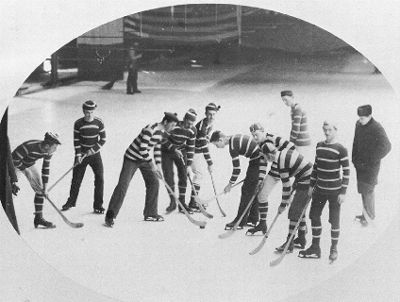
Hockey is Canada's official national winter sport and perhaps its greatest contribution to world sport. Canada is considered the birthplace of ice hockey, and Canadians generally regard the sport as their own.
"https://d3d0lqu00lnqvz.cloudfront.net/media/media/2c6ca9b6-8fde-48d1-9535-dca0795b7eda.jpg" // resources/views/front/categories/view.blade.php
https://d3d0lqu00lnqvz.cloudfront.net/media/media/2c6ca9b6-8fde-48d1-9535-dca0795b7eda.jpg