
Browse "Things"
-
Article
Heraldry Society of Canada
The Royal Heraldry Society of Canada, headquartered in Ottawa, was established in 1966 as the Heraldry Society of Canada to encourage interest in the history and practice of HERALDRY in Canada.
"https://thecanadianencyclopedia.ca/images/tce_placeholder.jpg?v=e9dca980c9bdb3aa11e832e7ea94f5d9" // resources/views/front/categories/view.blade.php
https://thecanadianencyclopedia.ca/images/tce_placeholder.jpg?v=e9dca980c9bdb3aa11e832e7ea94f5d9
-
Article
Herbarium
A herbarium (Lat herba, "herb," formerly any medicinal plant) is a collection of dried specimens of plants mounted on sheets of heavy paper and stored in cabinets or bound in book form, as well as the building that houses such a collection.
"https://thecanadianencyclopedia.ca/images/tce_placeholder.jpg?v=e9dca980c9bdb3aa11e832e7ea94f5d9" // resources/views/front/categories/view.blade.php
https://thecanadianencyclopedia.ca/images/tce_placeholder.jpg?v=e9dca980c9bdb3aa11e832e7ea94f5d9
-
Article
Herbs
Herbs and spices differ largely by usage. Spices are normally more aromatic than herbs, and are often of tropical origin. They may consist of seeds, bark, flower buds, fruits, etc. Herbs are usually leafy and locally grown, and their use extends far back into history.
"https://d3d0lqu00lnqvz.cloudfront.net/media/media/7d61da90-15cd-45d3-9a94-3dca721463a5.jpg" // resources/views/front/categories/view.blade.php
https://d3d0lqu00lnqvz.cloudfront.net/media/media/7d61da90-15cd-45d3-9a94-3dca721463a5.jpg
-
Article
Heritage Canada Foundation
The Heritage Canada Foundationwas established in 1973 under Executive Director R.A.J. Phillips and chairman Hartland M.
"https://thecanadianencyclopedia.ca/images/tce_placeholder.jpg?v=e9dca980c9bdb3aa11e832e7ea94f5d9" // resources/views/front/categories/view.blade.php
https://thecanadianencyclopedia.ca/images/tce_placeholder.jpg?v=e9dca980c9bdb3aa11e832e7ea94f5d9
-
Article
Heritage Conservation
Heritage conservation has assumed a place in contemporary Canadian society because it addresses certain desires, notably for tangible connections to our historical roots and a "sense of place" for those who despair the "anyplace" character of many communities.
"https://d3d0lqu00lnqvz.cloudfront.net/media/media/1ba0fe33-33a6-47ce-af79-eec3df963b06.jpg" // resources/views/front/categories/view.blade.php
https://d3d0lqu00lnqvz.cloudfront.net/media/media/1ba0fe33-33a6-47ce-af79-eec3df963b06.jpg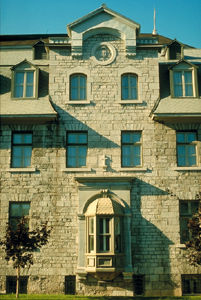
-
Article
Heritage Minutes
The Heritage Minutes collection is a bilingual series of history-focused public service announcements. Each 60-second short film depicts a significant person, event or story in Canadian history. They are produced by Historica Canada, the not-for-profit organization that also publishes this encyclopedia. First released in 1991, the Heritage Minutes have been shown on television, in cinemas and online. They have become a recognizable part of Canadian culture. The collection currently includes 108 episodes.
"https://d3d0lqu00lnqvz.cloudfront.net/media/media/75606249-629a-4735-a453-f33a5684d0d1.jpg" // resources/views/front/categories/view.blade.php
https://d3d0lqu00lnqvz.cloudfront.net/media/media/75606249-629a-4735-a453-f33a5684d0d1.jpg
-
Collection
Heritage Minutes
The Heritage Minutes collection is a bilingual series of history-focused public service announcements. Each 60-second short film depicts a significant person, event or story in Canadian history. They are produced by Historica Canada, the not-for-profit organization that also publishes this encyclopedia. First released in 1991, the Heritage Minutes have been shown on television, in cinemas and online. They have become a recognizable part of Canadian culture. The collection currently includes 108 episodes.
"https://d3d0lqu00lnqvz.cloudfront.net/media/media/1bfa3d45-2952-4f79-b7d4-4c6cb6601164.jpg" // resources/views/front/categories/view.blade.php
https://d3d0lqu00lnqvz.cloudfront.net/media/media/1bfa3d45-2952-4f79-b7d4-4c6cb6601164.jpg
-
Article
Heron
The heron (Ardeidae) family of birds comprises 60 species worldwide, 12 in Canada (including true herons, egrets, night herons and bitterns). Most herons are long-legged, long-necked wading birds which look for food (tiny fish, crustaceans, insects, amphibians and reptiles) in shallow fresh or salt water. They have long, rounded, rather broad wings and relatively short tails. They are distinguished from cranes by their position in flight, necks bent and heads supported between their shoulders. All have straight, rather long bills that distinguish them from ibises, which are similar in appearance but have long, curved bills.
"https://d3d0lqu00lnqvz.cloudfront.net/birdclassification/great-blue-heron.jpg" // resources/views/front/categories/view.blade.php
https://d3d0lqu00lnqvz.cloudfront.net/birdclassification/great-blue-heron.jpg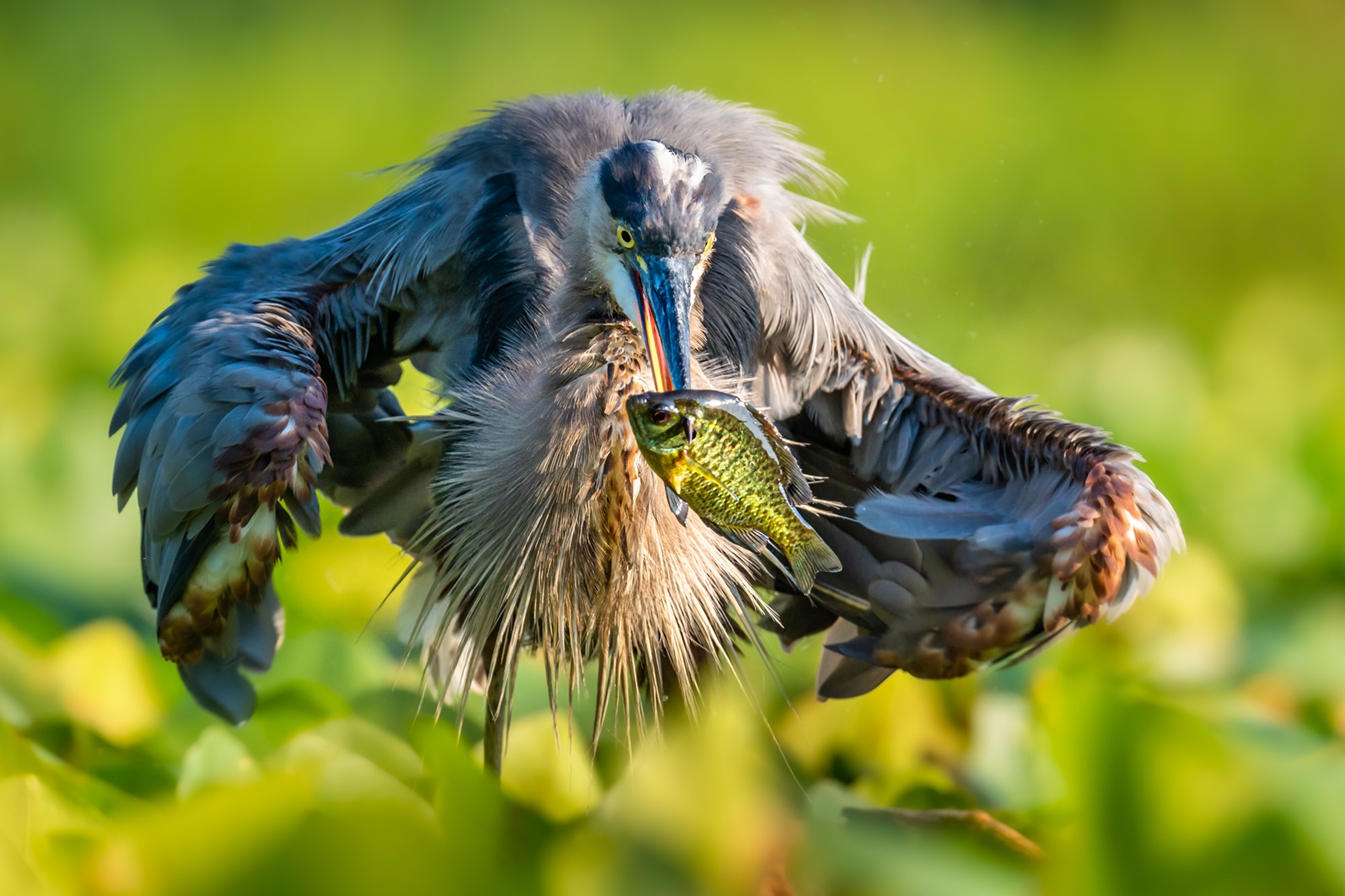
-
"https://d3d0lqu00lnqvz.cloudfront.net/media/media/2280041c-0f68-4bff-b9af-57d165727396.jpg" // resources/views/front/categories/view.blade.php
https://d3d0lqu00lnqvz.cloudfront.net/media/media/2280041c-0f68-4bff-b9af-57d165727396.jpg
-
Macleans
Hi-Tech Education Controversy
The handsome redbrick building, its flag snapping in the breeze, looks every bit the traditional schoolhouse.This article was originally published in Maclean's Magazine on August 26, 1996
"https://thecanadianencyclopedia.ca/images/tce_placeholder.jpg?v=e9dca980c9bdb3aa11e832e7ea94f5d9" // resources/views/front/categories/view.blade.php
https://thecanadianencyclopedia.ca/images/tce_placeholder.jpg?v=e9dca980c9bdb3aa11e832e7ea94f5d9
-
Article
Hiawatha Play
In 1900, the first performance of the Hiawatha Play was undertaken at Kensington Point in Desbarats, Ontario by members of Garden River First Nation. The play was developed by the Canadian Pacific Railway’s colonization agent Louis Olivier Armstrong and Anishinaabe leader George Kaboosa. The Hiawatha Play was performed seasonally in Desbarats from 1900 to 1905. It was relocated to Wayagamug, Michigan, where it was performed from 1905 to 1917 by Anishinaabe, Haudenosaunee and Odawa actors. It also toured, taking the performers to various locales in Canada, the United States, Great Britain and the Netherlands. Performances of the original play by Garden River actors occurred periodically in Sault Ste Marie and at Garden River until at least 1966. Contemporary interpretations of the Hiawatha Play were performed in 2006, 2007 and 2008 at Garden River.
"https://d3d0lqu00lnqvz.cloudfront.net/LOArmstrong/c002685.jpg" // resources/views/front/categories/view.blade.php
https://d3d0lqu00lnqvz.cloudfront.net/LOArmstrong/c002685.jpg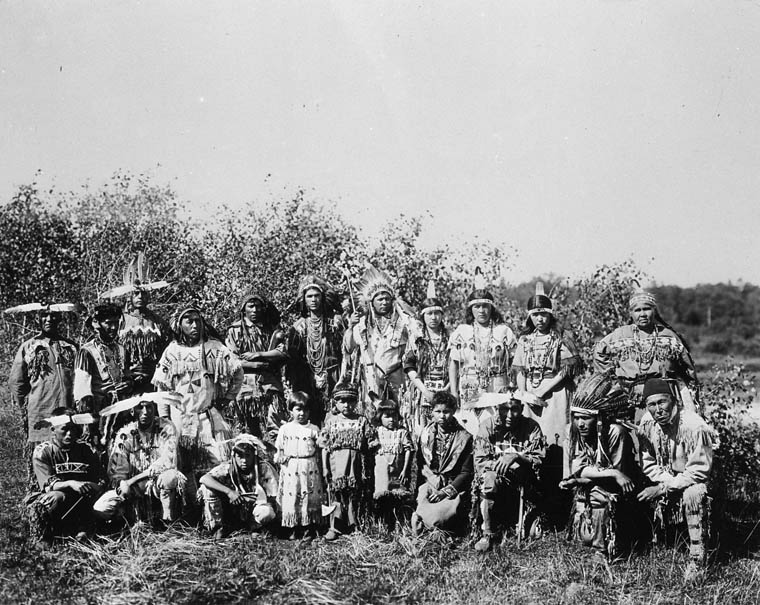
-
Article
Hibernia Case
On 19 May 1982 the governor-in-council asked the Supreme Court of Canada whether Canada (the federal government) or Newfoundland has the right to explore and exploit the mineral and other natural resources of the seabed and
"https://d3d0lqu00lnqvz.cloudfront.net/media/media/907d5cb9-10e4-4167-afe3-4f97dc6b39b2.jpg" // resources/views/front/categories/view.blade.php
https://d3d0lqu00lnqvz.cloudfront.net/media/media/907d5cb9-10e4-4167-afe3-4f97dc6b39b2.jpg
-
Macleans
Hibernia Rig Prepares to Drill
John Cabot could never have imagined anything like this. When the Anglo-Italian explorer arrived at the Grand Banks in 1497, the schools of codfish were so thick, they literally stopped his ships in the water.This article was originally published in Maclean's Magazine on March 3, 1997
"https://thecanadianencyclopedia.ca/images/tce_placeholder.jpg?v=e9dca980c9bdb3aa11e832e7ea94f5d9" // resources/views/front/categories/view.blade.php
https://thecanadianencyclopedia.ca/images/tce_placeholder.jpg?v=e9dca980c9bdb3aa11e832e7ea94f5d9
-
Article
High Arctic Weather Stations
High Arctic Weather Stations, managed by the Monitoring and Science Division, Prairie and Northern Region of Environment Canada, began as the Joint Arctic Weather Stations. The plan for a network of Arctic weather bases was approved by the US on 12 February 1946, and on 28 January 1947 Cabinet formally agreed to participate. Between 1947 and 1950, five sites were selected and built jointly by Canada and the US (at Eureka, Isachsen, Mould Bay, Resolute and Alert) to provide the data required for the understanding and prediction of meteorological phenomena on a hemispheric scale and, more specifically, to improve weather predictions for North America. The meteorological data collected is also used by forecasting offices, airlines, northern shipping, climatology studies and research.
"https://d3d0lqu00lnqvz.cloudfront.net/media/media/7d9ae9bd-0e9d-4d89-b8aa-b9c3b6f79d0c.jpg" // resources/views/front/categories/view.blade.php
https://d3d0lqu00lnqvz.cloudfront.net/media/media/7d9ae9bd-0e9d-4d89-b8aa-b9c3b6f79d0c.jpg
-
Macleans
High Cost of Healing
Despite how it may seem some days as the public tunes into the debate over health-care funding, governments in Canada have not turned off the tap. Canadians spent an estimated $76.6 billion on health care in 1997, up from $75.This article was originally published in Maclean's Magazine on June 15, 1998
"https://thecanadianencyclopedia.ca/images/tce_placeholder.jpg?v=e9dca980c9bdb3aa11e832e7ea94f5d9" // resources/views/front/categories/view.blade.php
https://thecanadianencyclopedia.ca/images/tce_placeholder.jpg?v=e9dca980c9bdb3aa11e832e7ea94f5d9