
Browse "Things"
-
Article
Garrison Mentality
Garrison mentality is a concept in Canadian literary theory and criticism. It was first put forth by critic and scholar Northrop Frye in the mid-1960s. It argues that early Canadian identity was shaped by the fear of a hostile landscape. Communities had to defend themselves from overwhelming forces. Frye believed that the threat of Canada’s wilderness — a “huge, unthinking, menacing, and formidable physical setting” — led to a desire among Canadians to retreat into safety. This in turn shaped their values as a group. Frye argued that the environment’s impact on Canada’s national psyche was revealed through recurring themes in Canadian art and culture. As a literary theory, the garrison mentality has inspired both supporters and detractors. Frye argued that it could be a limiting factor in the development of the arts in Canada. Others have argued that the mentality has merit, and that it resists the hyper-individualism of modern life.
"https://d3d0lqu00lnqvz.cloudfront.net/media/media/b92b7c2b-030a-4e8b-a2d8-11b69cff66a6.jpg" // resources/views/front/categories/view.blade.php
https://d3d0lqu00lnqvz.cloudfront.net/media/media/b92b7c2b-030a-4e8b-a2d8-11b69cff66a6.jpg
-
Article
Garrison Towns
In 1662 Placentia had a garrison of 25 French soldiers. Its growing importance as the centre of the French fishing fleet meant an increase of its garrison to about 150 by 1704. It was fear of this garrison town that provoked the first British garrison at St John's in 1696.
"https://thecanadianencyclopedia.ca/images/tce_placeholder.jpg?v=e9dca980c9bdb3aa11e832e7ea94f5d9" // resources/views/front/categories/view.blade.php
https://thecanadianencyclopedia.ca/images/tce_placeholder.jpg?v=e9dca980c9bdb3aa11e832e7ea94f5d9
-
Article
Common Gartersnake
The common gartersnake (Thamnophis sirtalis) is a relatively small, striped, non-venomous snake. It is one of the most widespread snake species in North America, and its range extends farther north than that of any other North American snake. In Canada, it is found in every province, as far north as James Bay and into the southernmost Northwest Territories. The common gartersnake is broken into five subspecies across Canada: the Maritime gartersnake (Thamnophis s. pallidulus; PEI, NS, NB, QC), the Eastern gartersnake (Thamnophis s. sirtalis; QC, ON), the red-sided gartersnake (Thamnophis s. parietalis; ON, MB, SK, AB, BC, NWT), the valley gartersnake (Thamnophis s. fitchi; BC), and the Puget Sound gartersnake (Thamnophis s. pickeringii; BC).
"https://d3d0lqu00lnqvz.cloudfront.net/Gartersnake/RedSidedGartersnake.jpg" // resources/views/front/categories/view.blade.php
https://d3d0lqu00lnqvz.cloudfront.net/Gartersnake/RedSidedGartersnake.jpg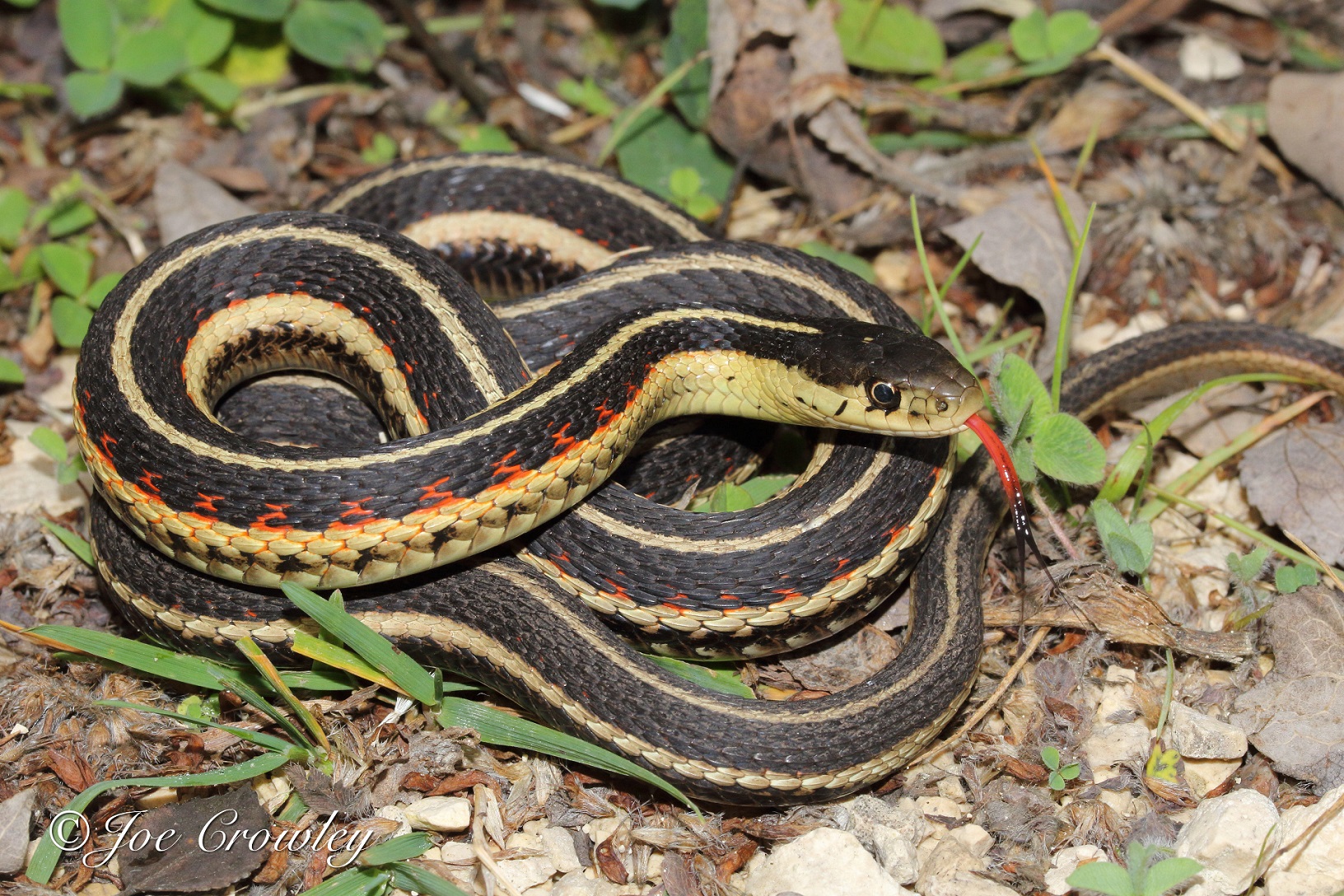
-
Article
Gasoline Stations
Motor vehicle registration figures appear for the first time in The Canada Year Book for 1916-17. It was in this year that the Year Book accorded motor vehicles a new status as the most important means of transportation in Canada.
"https://d3d0lqu00lnqvz.cloudfront.net/media/media/0bfb66f1-3552-4566-a144-166cd2aa4d1e.jpg" // resources/views/front/categories/view.blade.php
https://d3d0lqu00lnqvz.cloudfront.net/media/media/0bfb66f1-3552-4566-a144-166cd2aa4d1e.jpg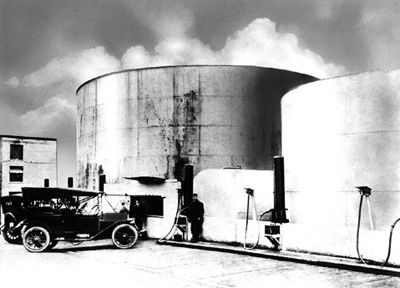
-
Macleans
Gates Under Siege
They came by the thousands last week, a ragtag army of pasty-faced computer geeks in sandals and T-shirts, streaming into the San Jose Convention Center in California's Silicon Valley to honour the 29-year-old hacker from Helsinki who might just be the one to dethrone Bill Gates.This article was originally published in Maclean's Magazine on March 15, 1999
"https://thecanadianencyclopedia.ca/images/tce_placeholder.jpg?v=e9dca980c9bdb3aa11e832e7ea94f5d9" // resources/views/front/categories/view.blade.php
https://thecanadianencyclopedia.ca/images/tce_placeholder.jpg?v=e9dca980c9bdb3aa11e832e7ea94f5d9
-
Article
Gavazzi Riots
The Gavazzi Riots were two major disturbances that occurred in Canada East in 1853. Alessandro Gavazzi, a former Catholic priest and Italian patriot, had embarked on a speaking tour of North America. He scheduled stops in Québec City and Montreal for June. Both of these events were violently disturbed by angry mobs. In each case, soldiers intervened to restore order. In Montreal, on 9 June 1853, soldiers opened fire on the mob that tried to stop Gavazzi’s speech. Ten were killed and many more were wounded. The riots were a major confrontation between the city’s Catholic and Protestant communities. The events highlighted a period of increased religious tension in Canada.
"https://d3d0lqu00lnqvz.cloudfront.net/TCE_placeholder.png" // resources/views/front/categories/view.blade.php
https://d3d0lqu00lnqvz.cloudfront.net/TCE_placeholder.png
-
Macleans
Gay Rights Bill Passes
This article was originally published in Maclean’s magazine on May 13, 1996. Partner content is not updated. One year ago this week, Chris Phibbs and Chris Higgins, lesbian partners for seven years, hosted a celebration at their Toronto home. "There were flowers, telegrams, balloons," recalls Phibbs. "It was as much fun as a family has ever had.
"https://thecanadianencyclopedia.ca/images/tce_placeholder.jpg?v=e9dca980c9bdb3aa11e832e7ea94f5d9" // resources/views/front/categories/view.blade.php
https://thecanadianencyclopedia.ca/images/tce_placeholder.jpg?v=e9dca980c9bdb3aa11e832e7ea94f5d9
-
Macleans
Gay Rights Upheld in Alberta
This article was originally published in Maclean’s magazine on April 13, 1998. Partner content is not updated. Delwin Vriend never set out to be a gay-rights poster boy. Last week, the 32-year-old computer technologist at the University of Alberta in Edmonton sounded drained by his seven-year battle with the Alberta government over its unwillingness to provide equal rights to gays and lesbians.
"https://thecanadianencyclopedia.ca/images/tce_placeholder.jpg?v=e9dca980c9bdb3aa11e832e7ea94f5d9" // resources/views/front/categories/view.blade.php
https://thecanadianencyclopedia.ca/images/tce_placeholder.jpg?v=e9dca980c9bdb3aa11e832e7ea94f5d9
-
Article
Gemstone
Canada's first DIAMOND mine - the Ekati mine near Lac de Gras, NWT - began production in 1998. Most of the diamond production is exported, but a small percentage is reserved for cutting in Canada.
"https://d3d0lqu00lnqvz.cloudfront.net/media/media/5a4c4cc1-df46-4365-8480-fa8562884413.jpg" // resources/views/front/categories/view.blade.php
https://d3d0lqu00lnqvz.cloudfront.net/media/media/5a4c4cc1-df46-4365-8480-fa8562884413.jpg
-
Article
Gender Equality
Gender equality is the belief that all individuals deserve the same rights and privileges, regardless of their gender.
"https://d3d0lqu00lnqvz.cloudfront.net/media/new_article_images/Gender/GenderEquality.png" // resources/views/front/categories/view.blade.php
https://d3d0lqu00lnqvz.cloudfront.net/media/new_article_images/Gender/GenderEquality.png
-
Article
Gender Equity
The term “gender equity” refers to the belief that individuals of different genders require different levels of support to achieve true equality.
"https://d3d0lqu00lnqvz.cloudfront.net/media/new_article_images/Gender/IISC_EqualityEquity.png" // resources/views/front/categories/view.blade.php
https://d3d0lqu00lnqvz.cloudfront.net/media/new_article_images/Gender/IISC_EqualityEquity.png
-
Article
Gender Identity
The term “gender identity” refers to an individual’s sense of their own gender, or the gender they feel is most in keeping with how they see themselves.
"https://d3d0lqu00lnqvz.cloudfront.net/media/media/46a3c4ec-a503-4e72-bba8-c78f5fcd885a.jpg" // resources/views/front/categories/view.blade.php
https://d3d0lqu00lnqvz.cloudfront.net/media/media/46a3c4ec-a503-4e72-bba8-c78f5fcd885a.jpg
-
Article
Gender in Canada
This article is an overview of contemporary issues related to gender in Canada. Gender refers to the characteristics associated with women/girls and men/boys. These include norms, behaviours and roles. This article explores change and continuity in gender norms and roles in Canada since 1960. It also addresses current challenges and issues related to gender in Canada. Demographic changes, the women’s liberation movement and the sexual revolution caused and reflected major social changes in gender norms for women and men. While gender roles have become more flexible since the 1960s, the power of older norms and roles continues, as does the belief in a gender binary (the idea that there are only two genders: women and men). Contemporary issues around gender include pay equity; the “boy crisis”; the rights of trans, gender-diverse, non-binary and Two-Spirit persons; and the impact of colonial systems on traditional Indigenous gender roles.
"https://d3d0lqu00lnqvz.cloudfront.net/media/new_article_images/Gender/GenderEquality.png" // resources/views/front/categories/view.blade.php
https://d3d0lqu00lnqvz.cloudfront.net/media/new_article_images/Gender/GenderEquality.png
-
Article
Genealogy
A genealogical study begins with the researcher recording everything one knows about one's immediate family. This information can be supplemented by oral tradition from elderly relatives. Family papers such as letters, deeds and diaries can help verify these recollections, as can old photographs.
"https://d3d0lqu00lnqvz.cloudfront.net/media/media/f8abaee9-7276-4b05-b8b2-a49c6c246b8f.jpg" // resources/views/front/categories/view.blade.php
https://d3d0lqu00lnqvz.cloudfront.net/media/media/f8abaee9-7276-4b05-b8b2-a49c6c246b8f.jpg
-
Article
General Agreement on Tariffs and Trade (GATT)
The General Agreement on Tariffs and Trade (GATT) was an international trade agreement. It was signed by 23 nations, including Canada, in 1947 and came into effect on 1 January 1948. It was refined over eight rounds of negotiations, which led to the creation of the World Trade Organization (WTO). It replaced the GATT on 1 January 1995. The GATT was focused on trade in goods. It aimed to liberalize trade by reducing tariffs and removing quotas among member countries. Each member of the GATT was expected to open its markets equally to other member nations, removing trade discrimination. The agreements negotiated through GATT reduced average tariffs on industrial goods from 40 per cent (1947) to less than five per cent (1993). It was an early step towards economic globalization. This is the full-length entry about the General Agreement on Tariffs and Trade (GATT). For a plain-language summary, please see General Agreement on Tariffs and Trade (GATT) (Plain-Language Summary).
"https://d3d0lqu00lnqvz.cloudfront.net/TCE_placeholder.png" // resources/views/front/categories/view.blade.php
https://d3d0lqu00lnqvz.cloudfront.net/TCE_placeholder.png