
Browse "Things"
-
Article
Floods in Canada
Floods are primarily caused by naturally occurring changes in the height of rivers, lakes and oceans. According to Public Safety Canada, floods are the most common natural hazard in the country and among the costliest. Historic floods have occurred across Canada, with many of the worst happening on major river systems that pass through populated areas. Scientists predict that flooding linked to the impacts of climate change will increase as the 21st century progresses, particularly in coastal areas of the country. This article is a full-length entry about floods in Canada. For a plain-language summary, please see Floods in Canada (Plain-Language Summary).
"https://d3d0lqu00lnqvz.cloudfront.net/media/media/86edab5a-1476-4145-911f-6e0a94bb25cc.jpg" // resources/views/front/categories/view.blade.php
https://d3d0lqu00lnqvz.cloudfront.net/media/media/86edab5a-1476-4145-911f-6e0a94bb25cc.jpg
-
Article
Floods in Canada (Plain-Language Summary)
Floods occur when water levels rise in rivers, lakes and oceans. Floods are the most common natural hazard in the country and among the most expensive. Canada has had many historic floods. Many of the worst floods are on major rivers that pass through populated areas. Climate change increases the risk of flooding, especially near coasts. This article is a plain-language summary of floods in Canada. If you are interested in reading about this topic more in depth, please see our full-length entry, Floods in Canada.
"https://d3d0lqu00lnqvz.cloudfront.net/media/media/c61bdc21-634f-4316-9ab1-acb89adc0cdf.jpg" // resources/views/front/categories/view.blade.php
https://d3d0lqu00lnqvz.cloudfront.net/media/media/c61bdc21-634f-4316-9ab1-acb89adc0cdf.jpg
-
Article
Floras and Botanical Journals
Before 1900 a published "flora" was, loosely defined, a comprehensive, itemized description of the plants of a specific geographical region. Usually more than a mere list, it should have been an analytical description, discussing habitats and distribution and citing previous authorities.
"https://d3d0lqu00lnqvz.cloudfront.net/media/media/51ac5d7f-0f57-4858-b967-2b6ee584bfc5.jpg" // resources/views/front/categories/view.blade.php
https://d3d0lqu00lnqvz.cloudfront.net/media/media/51ac5d7f-0f57-4858-b967-2b6ee584bfc5.jpg
-
Article
Flour Milling
In North America in precontact times, Indigenous people hand-ground corn and other substances (eg, acorns) into flour used in porridge, flat cakes, etc. By the middle of the 16th century, the first European settlers had arrived in New France, bringing with them their flour milling technology.
"https://d3d0lqu00lnqvz.cloudfront.net/media/media/7bd60d6b-69f6-4c5a-8511-05e7168b0127.jpg" // resources/views/front/categories/view.blade.php
https://d3d0lqu00lnqvz.cloudfront.net/media/media/7bd60d6b-69f6-4c5a-8511-05e7168b0127.jpg
-
Article
Fly
Adult flies have sucking or piercing mouth parts and lack the mandibles with which other insects bite food. Many so called "biting flies" (eg, horseflies, mosquitoes, no-see-ums, black flies, stable flies, tse-tse flies) feed on VERTEBRATE blood.
"https://d3d0lqu00lnqvz.cloudfront.net/media/media/1411b444-a35b-4113-8841-686fbe20b642.jpg" // resources/views/front/categories/view.blade.php
https://d3d0lqu00lnqvz.cloudfront.net/media/media/1411b444-a35b-4113-8841-686fbe20b642.jpg
-
Article
FN C1 Self-Loading Rifle
The FN C1 7.62 mm self-loading rifle is the Canadian version of the FN FAL ― a gas-operated, magazine-fed weapon produced by Belgian armaments manufacturer Fabrique Nationale (FN) Herstal. It was the first semi-automatic rifle adopted by the Canadian Army and saw service from 1955 to 1985. Canada was also the first NATO country to use the rifle, which was later used by many militaries around the world. Replacing the Lee-Enfield, the C1 was itself later replaced by the C7 and C8.
"https://d3d0lqu00lnqvz.cloudfront.net/media/media/FN_C1/FN_C1.jpg" // resources/views/front/categories/view.blade.php
https://d3d0lqu00lnqvz.cloudfront.net/media/media/FN_C1/FN_C1.jpg
-
Article
Fog
Fog is a concentration of atmospheric particles (usually minute water droplets or ice crystals) of sufficient density to reduce visibility. For practical purposes, in Canada, a reduction of visibility to 1,000–9,600 m is arbitrarily called mist; a reduction to under 1,000 m is called fog. In contrast, haze is a condition where such dry atmospheric particles as dust, ocean salt, natural oils from forest vegetation or forest-fire smoke are present in sufficient quantity to obscure vision. Near or downwind from industrial centres, combustion products such as smoke, soot, sulphuric and nitric oxides can combine with and acidify fog (see Acid Rain). The major centres in Canada that experience the most fog are St. John's, Nfld, with fog reported on an average of 126 days per year; Halifax, NS, with 74 days; and Vancouver, BC, with 62 days. Penticton, BC, receives the least fog, an average of 4 days per year. Argentia, Newfoundland, has the most fog of any place in Canada, with an average of 206 days per year.
"https://d3d0lqu00lnqvz.cloudfront.net/fog/fog-1.jpg" // resources/views/front/categories/view.blade.php
https://d3d0lqu00lnqvz.cloudfront.net/fog/fog-1.jpg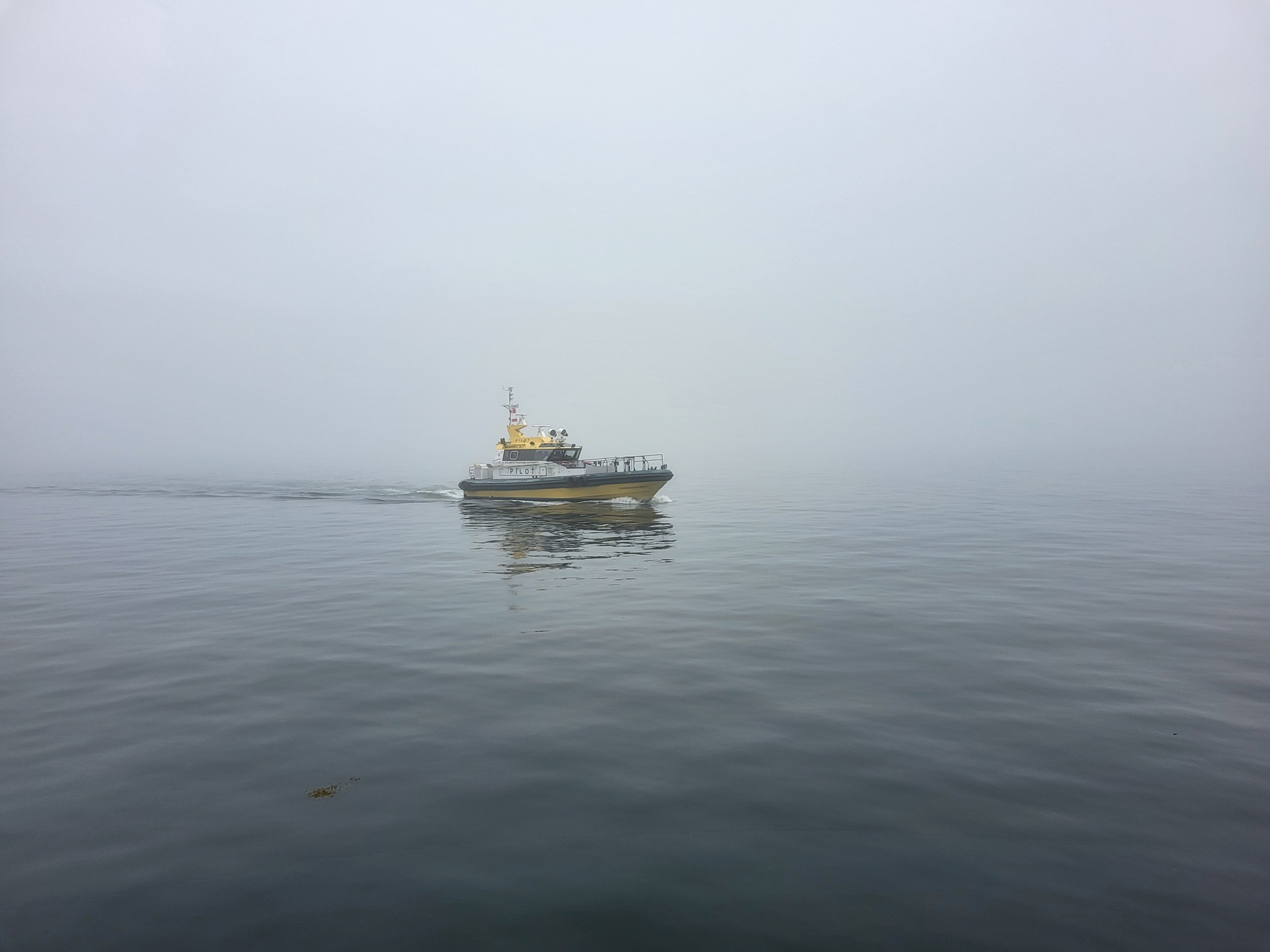
-
Editorial
Fog Bowl: The 1962 Grey Cup
The following article is an editorial written by The Canadian Encyclopedia staff. Editorials are not usually updated. The Grey Cup was donated by Albert Henry George Grey, yet another of those governors general who have left their monikers on our sporting life.
"https://thecanadianencyclopedia.ca/images/tce_placeholder.jpg?v=e9dca980c9bdb3aa11e832e7ea94f5d9" // resources/views/front/categories/view.blade.php
https://thecanadianencyclopedia.ca/images/tce_placeholder.jpg?v=e9dca980c9bdb3aa11e832e7ea94f5d9
-
Article
Folk Music
Few countries possess a folk music as rich and culturally varied as Canada's. Traditional folk music of European origin has been present in Canada since the arrival of the first French and British settlers in the 16th and 17th centuries (see Folk Music, Anglo-Canadian; Folk music, Franco-Canadian).
"https://thecanadianencyclopedia.ca/images/tce_placeholder.jpg?v=e9dca980c9bdb3aa11e832e7ea94f5d9" // resources/views/front/categories/view.blade.php
https://thecanadianencyclopedia.ca/images/tce_placeholder.jpg?v=e9dca980c9bdb3aa11e832e7ea94f5d9
-
Article
Folklore
Folklore was first introduced as a term in England in 1846 and today refers to information, wisdom and human expression that is passed on, usually anonymously, from generation to generation or transmitted and circulated as traditional cultural behaviour. Folkloric materials can be found anywhere and in any form, although past scholarship has favoured verbal folklore or oral literature: folk songs, folktales, epic, myth, legend, folk drama, riddles, proverbs, sayings and a variety of verses. Nonverbal folklore includes material culture such as folk architecture, folk art and crafts, dance, music, custom, ritual and belief, traditional folkways and amusements.
"https://d3d0lqu00lnqvz.cloudfront.net/media/media/49b9afe1-8c02-45cb-a6d3-75b557d095a4.jpg" // resources/views/front/categories/view.blade.php
https://d3d0lqu00lnqvz.cloudfront.net/media/media/49b9afe1-8c02-45cb-a6d3-75b557d095a4.jpg
-
Article
Food Additives
Consumers normally consider that the term "food additive" refers to almost all substances, primarily chemical in nature, added to foods during production, manufacture, packaging or storage.
"https://thecanadianencyclopedia.ca/images/tce_placeholder.jpg?v=e9dca980c9bdb3aa11e832e7ea94f5d9" // resources/views/front/categories/view.blade.php
https://thecanadianencyclopedia.ca/images/tce_placeholder.jpg?v=e9dca980c9bdb3aa11e832e7ea94f5d9
-
Article
Food and Beverage Industries
Food and beverage processing or manufacturing is one of Canada's major secondary industries and a vital component of the nation's overall AGRIBUSINESS system.
"https://d3d0lqu00lnqvz.cloudfront.net/media/media/39964bb9-1238-4a9b-bb81-ffdfe5205639.jpg" // resources/views/front/categories/view.blade.php
https://d3d0lqu00lnqvz.cloudfront.net/media/media/39964bb9-1238-4a9b-bb81-ffdfe5205639.jpg
-
Article
Food Banks
In Canada, the term "food bank" is often used to describe any cache of food designated for charitable purposes.
"https://thecanadianencyclopedia.ca/images/tce_placeholder.jpg?v=e9dca980c9bdb3aa11e832e7ea94f5d9" // resources/views/front/categories/view.blade.php
https://thecanadianencyclopedia.ca/images/tce_placeholder.jpg?v=e9dca980c9bdb3aa11e832e7ea94f5d9
-
Collection
Food in Canada
Canada is home to countless culinary traditions which reflect its diversity of people and the land. From Indigenous food practices to the multitude of settler cuisines, people have created dishes adapted to their tastes and realities. This collection gathers a snapshot of popular dishes and cuisines found in Canada.
"https://d3d0lqu00lnqvz.cloudfront.net/media/media/e77e4db9-8a70-4f2a-a3a4-bbc0e1649014.jpg" // resources/views/front/categories/view.blade.php
https://d3d0lqu00lnqvz.cloudfront.net/media/media/e77e4db9-8a70-4f2a-a3a4-bbc0e1649014.jpg
-
Article
Food Insecurity in Canada
Household food insecurity— the inadequate or insecure access to food due to financial constraints — is a serious public health problem in Canada. In 2017–18, 1 in 8 households were food insecure. This amounted to over 4.4 million Canadians. Of that number, 1.2 million were children under 18 years. While food banks are a well-known public response to food insecurity, most food insecure households do not use food banks and there is no evidence that food charity is a durable solution. There is wide consensus that governments need to act on food insecurity through income-based interventions.
"https://d3d0lqu00lnqvz.cloudfront.net/media/new_article_images/FoodInsecurityCanada/food-insecurity-map.jpg" // resources/views/front/categories/view.blade.php
https://d3d0lqu00lnqvz.cloudfront.net/media/new_article_images/FoodInsecurityCanada/food-insecurity-map.jpg