
Browse "Things"
-
Article
Disability Rights Movement in Canada
The Canadian disability rights movement arose in the latter half of the 20th century. It includes multiple social movements that take a similar but distinct approach advocating civil rights for almost four million people with physical, sensory and cognitive impairments — nearly 14 per cent of the Canadian population.
"https://thecanadianencyclopedia.ca/images/tce_placeholder.jpg?v=e9dca980c9bdb3aa11e832e7ea94f5d9" // resources/views/front/categories/view.blade.php
https://thecanadianencyclopedia.ca/images/tce_placeholder.jpg?v=e9dca980c9bdb3aa11e832e7ea94f5d9
-
Article
Disallowance
The CONSTITUTION ACT of 1867 provides that any ACT of a provincial legislature must be promptly sent to the GOVERNOR GENERAL and that the governor general-in-council (federal CABINET) may disallow any such Act (wipe it off the statute book) within one year.
"https://thecanadianencyclopedia.ca/images/tce_placeholder.jpg?v=e9dca980c9bdb3aa11e832e7ea94f5d9" // resources/views/front/categories/view.blade.php
https://thecanadianencyclopedia.ca/images/tce_placeholder.jpg?v=e9dca980c9bdb3aa11e832e7ea94f5d9
-
Article
Arms Control and Disarmament
Since the 19th century, world powers have discussed arms control and disarmament — that is, reducing, limiting or abolishing certain weapons. They believe that to avoid war, weapons should be reduced in number or eliminated. Countries have sought to ban particularly destructive and inhumane weapons. These include weapons of mass destruction, like chemical, biological and nuclear weapons. (See Canada and Gas Warfare; Canada and Nuclear Weapons.) Conventional arms, like anti-personnel land mines or cluster munitions, have also been controlled. Canada notably led talks on banning the use of land mines. (See Ottawa Treaty.) Canada is a signatory of multiple other arms control treaties, like the Nuclear Non-Proliferation Treaty, the Biological and Toxin Weapons Convention, and the Chemical Weapons Convention.
"https://d3d0lqu00lnqvz.cloudfront.net/media/media/b22534e5-e1ea-4072-ac0e-5d1c3f107433.jpg" // resources/views/front/categories/view.blade.php
https://d3d0lqu00lnqvz.cloudfront.net/media/media/b22534e5-e1ea-4072-ac0e-5d1c3f107433.jpg
-
Collection
Disasters
Historic Canadian disasters include those caused by both humans and nature. Some, such as the Halifax Explosion, are rare, tragic accidents now etched in the country’s history. Others, such as forest fires and avalanches, are annual, natural occurrences that sometimes wreak havoc. This collection gathers survey articles on different types of disasters, as well as content on individual, historic events.
"https://d3d0lqu00lnqvz.cloudfront.net/media/media/f1b3faef-e78e-49ab-8b0e-e0aa1a121f26.jpg" // resources/views/front/categories/view.blade.php
https://d3d0lqu00lnqvz.cloudfront.net/media/media/f1b3faef-e78e-49ab-8b0e-e0aa1a121f26.jpg
-
"https://d3d0lqu00lnqvz.cloudfront.net/media/media/86edab5a-1476-4145-911f-6e0a94bb25cc.jpg" // resources/views/front/categories/view.blade.php
https://d3d0lqu00lnqvz.cloudfront.net/media/media/86edab5a-1476-4145-911f-6e0a94bb25cc.jpg
-
Article
Discovery
Discovery, famous ship belonging to the East India Company, which first sailed into the Arctic under the command of George Weymouth in 1602. The same ship was used by Henry HUDSON to explore Hudson Bay in 1610. Hudson was cut
"https://d3d0lqu00lnqvz.cloudfront.net/media/media/344ffe0e-7fa5-42be-8a1c-93c8ffd5ecb6.jpg" // resources/views/front/categories/view.blade.php
https://d3d0lqu00lnqvz.cloudfront.net/media/media/344ffe0e-7fa5-42be-8a1c-93c8ffd5ecb6.jpg
-
Article
Discovery Day
Discovery Day is a statutory holiday in Yukon commemorating the discovery of gold that set off the Klondike Gold Rush and led to the formation of the territory.
"https://d3d0lqu00lnqvz.cloudfront.net/media/media/aac924b3-ed98-4165-8ab5-4c8b2702cad6.jpg" // resources/views/front/categories/view.blade.php
https://d3d0lqu00lnqvz.cloudfront.net/media/media/aac924b3-ed98-4165-8ab5-4c8b2702cad6.jpg
-
Article
Disease
In recent years genetic diseases have become better understood since they are dependent on a fault in the normal gene sequence that controls body activities.
"https://d3d0lqu00lnqvz.cloudfront.net/media/Twitter_Cards/SARS_twitter_card.jpg" // resources/views/front/categories/view.blade.php
https://d3d0lqu00lnqvz.cloudfront.net/media/Twitter_Cards/SARS_twitter_card.jpg
-
Article
Distance Learning
Distance education or distance learning commonly refers to formal education offerings where instructor and learner are physically separated and where learners can study appropriately designed materials at a place, time and pace of their own choosing.
"https://thecanadianencyclopedia.ca/images/tce_placeholder.jpg?v=e9dca980c9bdb3aa11e832e7ea94f5d9" // resources/views/front/categories/view.blade.php
https://thecanadianencyclopedia.ca/images/tce_placeholder.jpg?v=e9dca980c9bdb3aa11e832e7ea94f5d9
-
Article
Distant Early Warning Radar Line (DEW Line)
The DEW Line was a network of radar stations in the Yukon, Northwest Territories, Nunavut (as of 1999), the coast of Northern Alaska, Greenland and Iceland. Built by the United States and Canada, it was constructed in the early years of the Cold War. In the event of a hot war, the line could provide early warning of incoming nuclear-armed Soviet bombers so that they could be intercepted. However, in later years the Soviet nuclear threat shifted from manned bombers to Intercontinental Ballistic Missiles (ICBMS) and submarine-launched missiles. The DEW Line became less significant for North American air defence with the development of satellites and the Ballistic Missile Early Warning System (BMEWS). The DEW Line was decommissioned in 1993 and replaced with the North Warning System (NWS), a chain of unmanned stations. (See also Early Warning Radar and Arctic Sovereignty.)
"https://d3d0lqu00lnqvz.cloudfront.net/DEWLine/dye-main.jpg" // resources/views/front/categories/view.blade.php
https://d3d0lqu00lnqvz.cloudfront.net/DEWLine/dye-main.jpg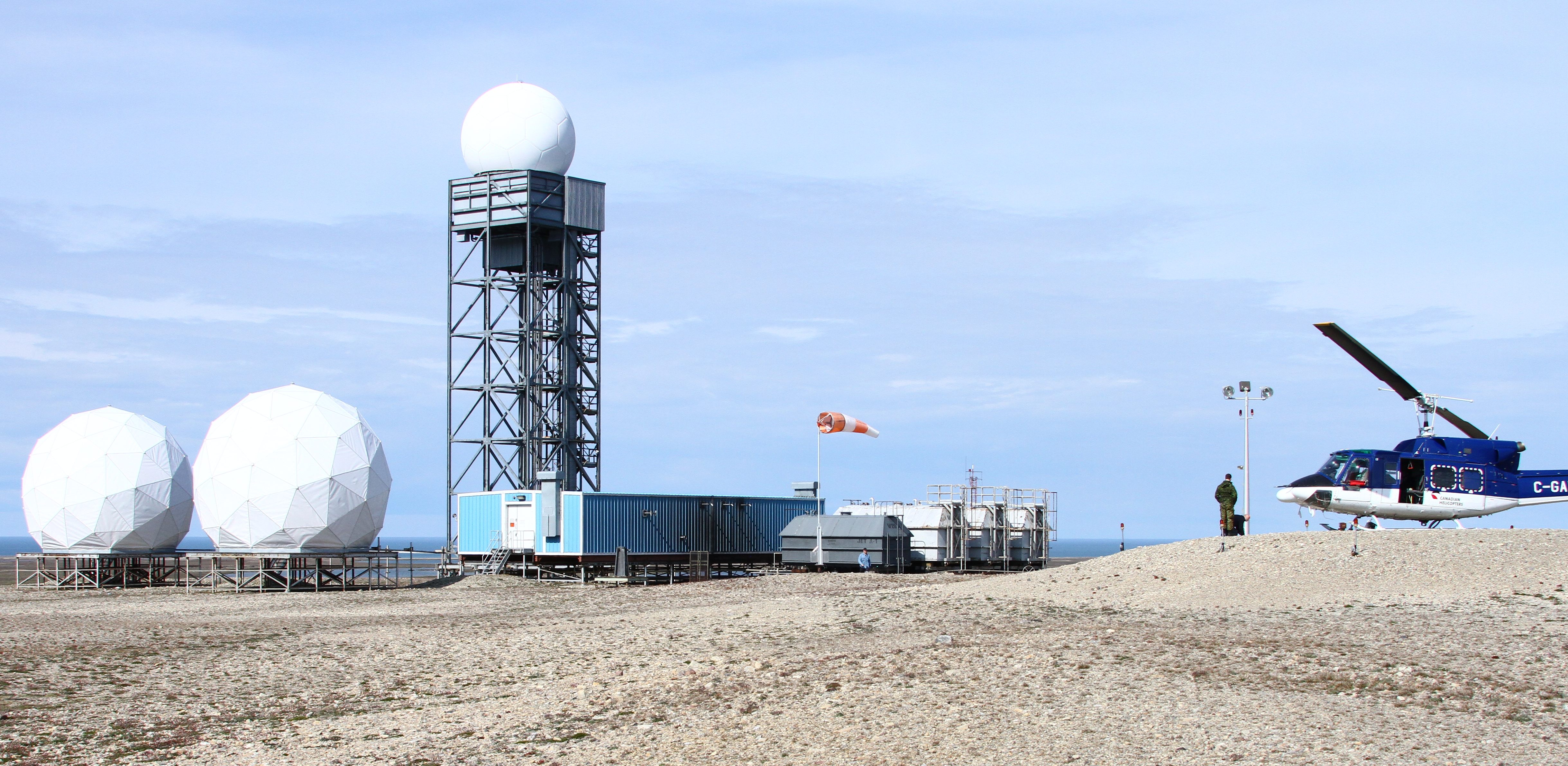
-
Article
Distilling Industry
The distilling industry is that part of the food and beverage industries engaged in clarifying, flavouring, blending and aging alcohol to make potable spirits (eg, brandies, grain spirits, rum) and establishments which manufacture ethyl alcohol, whether they are or are not used in potable spirits.
"https://thecanadianencyclopedia.ca/images/tce_placeholder.jpg?v=e9dca980c9bdb3aa11e832e7ea94f5d9" // resources/views/front/categories/view.blade.php
https://thecanadianencyclopedia.ca/images/tce_placeholder.jpg?v=e9dca980c9bdb3aa11e832e7ea94f5d9
-
Macleans
Distinctive Brains of Psychopaths
This article was originally published in Maclean’s magazine on January 22, 1996. Partner content is not updated. In British author Philip Kerr's futuristic novel, A Philosophical Investigation, scientists can determine whether a man is prone to violent criminal behavior by administering a brain scan to detect an abnormality.
"https://thecanadianencyclopedia.ca/images/tce_placeholder.jpg?v=e9dca980c9bdb3aa11e832e7ea94f5d9" // resources/views/front/categories/view.blade.php
https://thecanadianencyclopedia.ca/images/tce_placeholder.jpg?v=e9dca980c9bdb3aa11e832e7ea94f5d9
-
Article
Distribution of Powers
Canada is a federal state. This means that the powers and duties of government are split between two levels. There is one national (central, or federal) government and many smaller regional (provincial) ones. The areas of jurisdiction for each level were first outlined at the Quebec Conference in 1864. (See Quebec Resolutions.) They are enshrined in the Constitution Act, 1867. They have been a source of debate and tension between the provinces and the federal government since Confederation. (See Federal-Provincial Relations.) Despite that, this part of the Constitution has remained largely unchanged since then.
"https://d3d0lqu00lnqvz.cloudfront.net/media/media/dbd84edd-1c5c-4e10-ba3f-8b0c546b08c7.jpg" // resources/views/front/categories/view.blade.php
https://d3d0lqu00lnqvz.cloudfront.net/media/media/dbd84edd-1c5c-4e10-ba3f-8b0c546b08c7.jpg
-
Article
Diving
The sport of diving can be traced back to 400 BC through pictures on Egyptian and Roman vases. Plain diving was practised from cliffs to the oceans during the 8th to 10th centuries by Vikings in Sweden and later in the 1770s by Indians in Acapulco, Mexico.
"https://d3d0lqu00lnqvz.cloudfront.net/media/media/755f0b85-942e-4d31-9cc1-16a2c637ffb9.jpg" // resources/views/front/categories/view.blade.php
https://d3d0lqu00lnqvz.cloudfront.net/media/media/755f0b85-942e-4d31-9cc1-16a2c637ffb9.jpg
-
Article
Divorce in Canada
Marriages in Canada can be dissolved through annulment or divorce, both of which involve a judicial decree.
"https://d3d0lqu00lnqvz.cloudfront.net/media/media/18e234be-ab36-4e5d-aae3-beb23bb8d8b7.jpg" // resources/views/front/categories/view.blade.php
https://d3d0lqu00lnqvz.cloudfront.net/media/media/18e234be-ab36-4e5d-aae3-beb23bb8d8b7.jpg