Browse "Nature & Geography"
-
Article
Salmon
The salmon is a family of fish, Salmonidae [Lat salire, "to leap"], with soft fin rays, a short dorsal fin, an adipose (fatty) fin, and teeth in the jaws. The family includes salmon, trout and char of the subfamily Salmoninae, the graylings of the subfamily Thymallinae and the whitefishes of the subfamily Coregoninae. Salmonids are native to north temperate and subarctic waters. However, because of their tremendous sportfishing appeal, they have been introduced to all continents except Antarctica. Five genera of Salmoninae are recognized. Two are Eurasian, Brachymystax and Hucho. Three are found in both hemispheres, including Canada: Salmo, the trouts and the Atlantic salmon; Oncorhynchus, the Pacific salmon; and Salvelinus, the chars.
"https://d3d0lqu00lnqvz.cloudfront.net/media/media/e9b9b391-1dc4-48d3-bdb1-36e27a35cf6d.jpg" // resources/views/front/categories/view.blade.php
https://d3d0lqu00lnqvz.cloudfront.net/media/media/e9b9b391-1dc4-48d3-bdb1-36e27a35cf6d.jpg
-
Article
Salt
Sodium chloride (NaCl), or common salt, is ubiquitous in the environment. In its solid form, salt crystallizes as colourless cubes and is called rock salt. Salt is also known to geologists as halite. Its crystal structure was the first to be determined by X-rays.
"https://thecanadianencyclopedia.ca/images/tce_placeholder.jpg?v=e9dca980c9bdb3aa11e832e7ea94f5d9" // resources/views/front/categories/view.blade.php
https://thecanadianencyclopedia.ca/images/tce_placeholder.jpg?v=e9dca980c9bdb3aa11e832e7ea94f5d9
-
Article
Sand and Gravel
Sand and gravel are unconsolidated, granular mineral materials produced by the natural disintegration of rock caused by weathering. The terms sand, gravel, clay and silt relate to grain size rather than composition. Sand is material passing through a number 4 (4.
"https://thecanadianencyclopedia.ca/images/tce_placeholder.jpg?v=e9dca980c9bdb3aa11e832e7ea94f5d9" // resources/views/front/categories/view.blade.php
https://thecanadianencyclopedia.ca/images/tce_placeholder.jpg?v=e9dca980c9bdb3aa11e832e7ea94f5d9
-
"https://d3d0lqu00lnqvz.cloudfront.net/media/media/db84b082-87bb-42fd-9a57-f102344d71fe.jpg" // resources/views/front/categories/view.blade.php
https://d3d0lqu00lnqvz.cloudfront.net/media/media/db84b082-87bb-42fd-9a57-f102344d71fe.jpg
-
"https://d3d0lqu00lnqvz.cloudfront.net/media/media/8a982aaa-04b3-4292-a95d-8eb1cfc8f79c.jpg" // resources/views/front/categories/view.blade.php
https://d3d0lqu00lnqvz.cloudfront.net/media/media/8a982aaa-04b3-4292-a95d-8eb1cfc8f79c.jpg
-
Article
Saskatoon Berry
Saskatoon berry (Amelanchier alnifolia) is a deciduous native shrub that grows from western Ontario to British Columbia and the Yukon. The city of Saskatoon takes its name from a Cree word for the sweet, fleshy fruits, which were of prime importance to Indigenous peoples and early settlers. On the prairies, saskatoons were a major ingredient in pemmican. Saskatoons are very hardy plants that can survive winter temperatures of -50 to -60º Celsius with a lifespan of 30 to 50 years. Plant size ranges from a small to large shrub or tree 4 to 6 m high. The Saskatoon berry is the provincial fruit of Saskatchewan. (See also Provincial and Territorial Emblems; Provincial Floral Emblems.)
"https://d3d0lqu00lnqvz.cloudfront.net/media/media/6daeece7-6958-48e5-a9d8-409ea86607f0.jpg" // resources/views/front/categories/view.blade.php
https://d3d0lqu00lnqvz.cloudfront.net/media/media/6daeece7-6958-48e5-a9d8-409ea86607f0.jpg
-
Article
Sawfly
Sawfly, common name for members of insect order Hymenoptera, which resemble wasps and are characterized by the lack of a marked constriction between the first and second abdominal segments.
"https://thecanadianencyclopedia.ca/images/tce_placeholder.jpg?v=e9dca980c9bdb3aa11e832e7ea94f5d9" // resources/views/front/categories/view.blade.php
https://thecanadianencyclopedia.ca/images/tce_placeholder.jpg?v=e9dca980c9bdb3aa11e832e7ea94f5d9
-
Article
Saxifrage
Flowers, mostly small, commonly white or yellow, are borne as terminal clusters on hairy stalks. Plants form tufted, spreading cushions, frequently giving striking patches of colour. S.
"https://thecanadianencyclopedia.ca/images/tce_placeholder.jpg?v=e9dca980c9bdb3aa11e832e7ea94f5d9" // resources/views/front/categories/view.blade.php
https://thecanadianencyclopedia.ca/images/tce_placeholder.jpg?v=e9dca980c9bdb3aa11e832e7ea94f5d9
-
Article
Scallop
Scallop is a bivalve (hinged shell) mollusc of suborder Pectinina. Scallops are found in all seas.
"https://d3d0lqu00lnqvz.cloudfront.net/media/media/cd549afe-419a-4907-88e2-c009fcbc4fa7.jpg" // resources/views/front/categories/view.blade.php
https://d3d0lqu00lnqvz.cloudfront.net/media/media/cd549afe-419a-4907-88e2-c009fcbc4fa7.jpg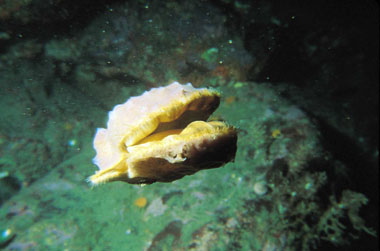
-
Article
Scorpion
A scorpion is a carnivorous and venomous arthropod of the class Arachnida, order Scorpiones. Known from fossils 425-450 million years old, scorpions are among the oldest terrestrial animals.
"https://d3d0lqu00lnqvz.cloudfront.net/media/Twitter_Cards/scorpion.jpg" // resources/views/front/categories/view.blade.php
https://d3d0lqu00lnqvz.cloudfront.net/media/Twitter_Cards/scorpion.jpg
-
Article
Scotian Shelf
Scotian Shelf, a 700 km section of the Continental Shelf off Nova Scotia. Bounded by the Laurentian Channel on the NE, and Northeast Channel and the Gulf of Maine on the SW, it varies in width from 120 to 240 km; the average depth is 90 m.
"https://thecanadianencyclopedia.ca/images/tce_placeholder.jpg?v=e9dca980c9bdb3aa11e832e7ea94f5d9" // resources/views/front/categories/view.blade.php
https://thecanadianencyclopedia.ca/images/tce_placeholder.jpg?v=e9dca980c9bdb3aa11e832e7ea94f5d9
-
Article
Sculpin
Sculpin is one of the many common names given to the fish family Cottidae and its close relatives. The group, comprising over 300 species, is one of the dominant faunal components of the North Pacific Ocean, where it is believed to have evolved. Sculpins also occur in the Arctic and North Atlantic oceans; a few have penetrated to the southwest Pacific, South American and southern African waters. Freshwater forms occur in temperate and arctic waters of North America, Europe and Asia. Marine sculpins are found from intertidal waters to depths of several hundred metres; most inhabit relatively shallow waters (100 m or less). Freshwater forms generally live in shallow water. Most sculpins are bottom-living; a few occupy pelagic or mid-water habitats. About 63 species occur in Canadian waters, mostly on the west coast; a few in rivers and lakes throughout the country.
"https://d3d0lqu00lnqvz.cloudfront.net/media/media/0d8ca8c3-9e31-4dc8-b621-73792b3c7ec3.jpg" // resources/views/front/categories/view.blade.php
https://d3d0lqu00lnqvz.cloudfront.net/media/media/0d8ca8c3-9e31-4dc8-b621-73792b3c7ec3.jpg
-
Article
Sea Lion
The northern sea lion, also called the Steller sea lion (Eumetopias jubatus), is the largest of the eared SEALS.
"https://d3d0lqu00lnqvz.cloudfront.net/media/media/440414f5-caff-4536-9eac-90dceba5603d.jpg" // resources/views/front/categories/view.blade.php
https://d3d0lqu00lnqvz.cloudfront.net/media/media/440414f5-caff-4536-9eac-90dceba5603d.jpg
-
Article
Sea Urchin
Sea Urchin, radially symmetrical marine invertebrate. Sea urchins and near relatives, the sand dollars and heart urchins, belong to class Echinoidea of phylum Echinodermata.
"https://d3d0lqu00lnqvz.cloudfront.net/media/media/13013e6e-ff67-461b-a42c-416983fc0e43.jpg" // resources/views/front/categories/view.blade.php
https://d3d0lqu00lnqvz.cloudfront.net/media/media/13013e6e-ff67-461b-a42c-416983fc0e43.jpg
-
Article
Seabird
Seabirds are those bird species which spend long periods away from land and obtain all or most of their food from the sea while flying, swimming or diving, and occupy all of the world's oceans.
"https://d3d0lqu00lnqvz.cloudfront.net/media/media/74b6b3be-a60f-4ceb-91d9-cad952152631.jpg" // resources/views/front/categories/view.blade.php
https://d3d0lqu00lnqvz.cloudfront.net/media/media/74b6b3be-a60f-4ceb-91d9-cad952152631.jpg