
Browse "Nature & Geography"
-
Article
Planet and Satellite
The diameter of a world is a significant value because, given the same densities, the surface gravity will vary roughly with the diameter. A diameter of 350 km is the approximate dividing line between the larger, near-spherical bodies and the smaller objects of irregular shape.
"https://d3d0lqu00lnqvz.cloudfront.net/media/media/4c1c6f4c-e6fb-43ec-a6ab-1611826eba6d.jpg" // resources/views/front/categories/view.blade.php
https://d3d0lqu00lnqvz.cloudfront.net/media/media/4c1c6f4c-e6fb-43ec-a6ab-1611826eba6d.jpg
-
Article
Plankton
Plankton [Gk planktos, "drifting"], plants and animals , phytoplankton and zooplankton, respectively, that float freely or drift with currents in oceans , freshwater ponds and lakes.
"https://thecanadianencyclopedia.ca/images/tce_placeholder.jpg?v=e9dca980c9bdb3aa11e832e7ea94f5d9" // resources/views/front/categories/view.blade.php
https://thecanadianencyclopedia.ca/images/tce_placeholder.jpg?v=e9dca980c9bdb3aa11e832e7ea94f5d9
-
Article
Plant Breeding
Plant breeding is an applied science, in which knowledge of genetics, pathology, plant physiology, statistics, and molecular biology are used to modify plant species for human needs or preferences.
"https://thecanadianencyclopedia.ca/images/tce_placeholder.jpg?v=e9dca980c9bdb3aa11e832e7ea94f5d9" // resources/views/front/categories/view.blade.php
https://thecanadianencyclopedia.ca/images/tce_placeholder.jpg?v=e9dca980c9bdb3aa11e832e7ea94f5d9
-
Article
Plant Classification
Popular classification usually divides living beings into plants and animals and, sometimes, microbes. Scientific classification long followed a similar system, with 2 principal kingdoms: the animal order and the vegetable order.
"https://d3d0lqu00lnqvz.cloudfront.net/media/media/edce9657-3d08-4b7c-b369-aa52cc7f8d79.jpg" // resources/views/front/categories/view.blade.php
https://d3d0lqu00lnqvz.cloudfront.net/media/media/edce9657-3d08-4b7c-b369-aa52cc7f8d79.jpg
-
Article
Plant Disease
Plant disease can decrease the economic, aesthetic and biological value of all kinds of plants. Plant pathology (phytopathology) is the study of the nature, causes, prevention and socioeconomic aspects of plant diseases. Plant diseases are recognized by symptoms such as necrosis (death of cells or tissues), chlorosis (yellowing), wilting (shoot and leaf drooping), rot, dwarfing, tumefaction (formation of gall or localized swelling), bronzing or damping-off (plant toppling), etc.
"https://d3d0lqu00lnqvz.cloudfront.net/insectpestsofforests/beech-bark-disease.jpg" // resources/views/front/categories/view.blade.php
https://d3d0lqu00lnqvz.cloudfront.net/insectpestsofforests/beech-bark-disease.jpg
-
Article
Platinum
Platinum (Pt) is the best known of the 6 greyish-white, metallic, platinum group elements, which also include palladium (Pd), iridium (Ir), rhodium (Rh), osmium (Os) and ruthenium (Ru). Platinum and palladium are more commonly used than the other elements in the group.
"https://thecanadianencyclopedia.ca/images/tce_placeholder.jpg?v=e9dca980c9bdb3aa11e832e7ea94f5d9" // resources/views/front/categories/view.blade.php
https://thecanadianencyclopedia.ca/images/tce_placeholder.jpg?v=e9dca980c9bdb3aa11e832e7ea94f5d9
-
Article
Plover
Plover is the common name for a family (Charadriidae) of shorebirds with 2 subfamilies: Charadriinae, including true plovers; and Vanellinae, including lapwings.
"https://d3d0lqu00lnqvz.cloudfront.net/media/media/54ed14de-ebc8-46ba-80f7-c4f5bbef4130.jpg" // resources/views/front/categories/view.blade.php
https://d3d0lqu00lnqvz.cloudfront.net/media/media/54ed14de-ebc8-46ba-80f7-c4f5bbef4130.jpg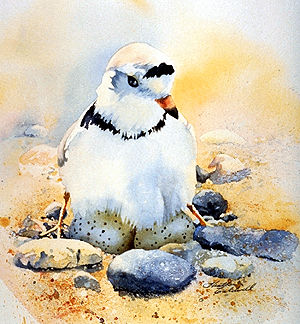
-
Article
Plum
Plum is a common name for certain members of genus Prunus of the rose family, which produce a smooth-skinned, elliptical, heart-shaped, oblong, ovate or round fruit with a flat seed. About 18 plum species are horticulturally important, including the European plum (P. domestica), which probably originated in the Caspian Sea area; Japanese plum (P. salicina), of Chinese origin; cherry plum (P. ceracifera), native to southeast Europe or southwest Asia; and P. nigra and P. americana, of Canadian and American origin respectively.
"https://d3d0lqu00lnqvz.cloudfront.net/media/media/a7b2bcfe-316e-4c50-b69e-69d4fc395472.jpg" // resources/views/front/categories/view.blade.php
https://d3d0lqu00lnqvz.cloudfront.net/media/media/a7b2bcfe-316e-4c50-b69e-69d4fc395472.jpg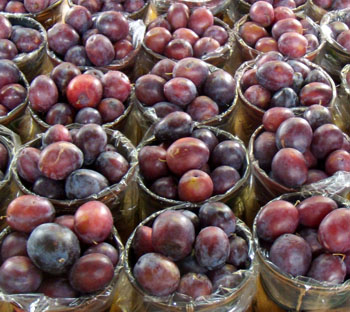
-
Article
Poison Ivy
Poison ivy is the common name collectively referring to a small genus (Toxicodendron) of woody perennial plants of the cashew family (Anacardiaceae). Poison ivy is closely related to and sometimes classified with the Sumacs in the genus Rhus.
"https://thecanadianencyclopedia.ca/images/tce_placeholder.jpg?v=e9dca980c9bdb3aa11e832e7ea94f5d9" // resources/views/front/categories/view.blade.php
https://thecanadianencyclopedia.ca/images/tce_placeholder.jpg?v=e9dca980c9bdb3aa11e832e7ea94f5d9
-
Article
Pondweed
Pondweed is a common name for members of the family Potamogetonaceae [Gk potamos, "river"], which consists of the genus Potamogeton.
"https://thecanadianencyclopedia.ca/images/tce_placeholder.jpg?v=e9dca980c9bdb3aa11e832e7ea94f5d9" // resources/views/front/categories/view.blade.php
https://thecanadianencyclopedia.ca/images/tce_placeholder.jpg?v=e9dca980c9bdb3aa11e832e7ea94f5d9
-
Article
Poplar
The poplar is a short-lived, deciduous, hardwood tree of genus Populus of the willow family, widely distributed in the northern temperate zone.
"https://d3d0lqu00lnqvz.cloudfront.net/media/media/62bf6280-e044-4789-abc5-84a773ec839d.jpg" // resources/views/front/categories/view.blade.php
https://d3d0lqu00lnqvz.cloudfront.net/media/media/62bf6280-e044-4789-abc5-84a773ec839d.jpg
-
Article
Potato
The potato (Solanum tuberosum) is a herbaceous annual of the nightshade family, which produces tubers at the end of underground branches called stolons. The principal cultivars (cultivated varieties) grown in Canada for table stock and processing are Superior (early), Norchip (mid-season), Kennebec (main crop) and Russet Burbank (late). Tubers are about 75–80 per cent water; the remainder contains useful amounts of minerals, vitamins B6 and C, carbohydrates, protein, potassium and dietary fibre. A 150 g baked potato contains only 100 calories and 0 fat. Potatoes comprise 52 per cent of all fresh vegetables consumed in Canada.
"https://d3d0lqu00lnqvz.cloudfront.net/media/media/7b83d57e-9794-41ff-99cc-34ba45f21bba.jpg" // resources/views/front/categories/view.blade.php
https://d3d0lqu00lnqvz.cloudfront.net/media/media/7b83d57e-9794-41ff-99cc-34ba45f21bba.jpg
-
Article
Potato Wart Disease
Potato wart disease, also called potato canker, is a fungal disease of potato sprouts, eyes and stolons. The disease is caused by the soil-borne fungus, Synchytrium endobioticum. Potato wart disease poses no danger to human health or food safety, but it can impact local economies as the disease can reduce yield and effect economic regulations, such as potato exports. (See also Agricultural Economics.)
"https://thecanadianencyclopedia.ca/images/tce_placeholder.jpg?v=e9dca980c9bdb3aa11e832e7ea94f5d9" // resources/views/front/categories/view.blade.php
https://thecanadianencyclopedia.ca/images/tce_placeholder.jpg?v=e9dca980c9bdb3aa11e832e7ea94f5d9
-
Article
History of Settlement in the Canadian Prairies
The Canadian Prairies were peopled in six great waves of migration, spanning from prehistory to the present. The migration from Asia, about 13,300 years ago, produced an Indigenous population of 20,000 to 50,000 by about 1640. Between 1640 and 1840, several thousand European and Canadian fur traders arrived, followed by several hundred British immigrants. They created dozens of small outposts and a settlement in the Red River Colony, where the Métis became the largest part of the population. The third wave, from the 1840s to the 1890s, consisted mainly but not solely of Canadians of British heritage. The fourth and by far the largest wave was drawn from many nations, mostly European. It occurred from 1897 to 1929, with a pause (1914–22) during and after the First World War. The fifth wave, drawn from other Canadian provinces and from Europe and elsewhere, commenced in the late 1940s. It lasted through the 1960s. The sixth wave, beginning in the 1970s, drew especially upon peoples of the southern hemisphere. It has continued, with fluctuations, to the present. Throughout the last century, the region has also steadily lost residents, as a result of migration to other parts of Canada, to the United States, and elsewhere.
"https://d3d0lqu00lnqvz.cloudfront.net/media/media/e1c671ab-3dcf-459c-b108-0bc6e4a86b99.jpg" // resources/views/front/categories/view.blade.php
https://d3d0lqu00lnqvz.cloudfront.net/media/media/e1c671ab-3dcf-459c-b108-0bc6e4a86b99.jpg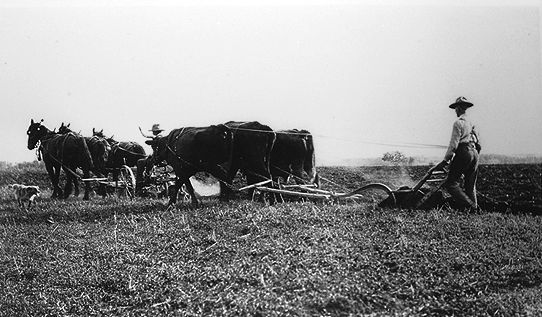
-
Article
Pronghorn
The pronghorn (Antilocapra americana) is a small, very fleet ungulate of the order Artiodactyla. It is the last surviving species of a once abundant and diverse North American family of ruminants, known as Antilocapridae. Although sometimes called pronghorn antelope, it is not a true antelope.
"https://d3d0lqu00lnqvz.cloudfront.net/media/media/3993ea60-8103-42ca-ab0e-377311c98d8f.jpg" // resources/views/front/categories/view.blade.php
https://d3d0lqu00lnqvz.cloudfront.net/media/media/3993ea60-8103-42ca-ab0e-377311c98d8f.jpg