
Browse "Nature & Geography"
-
Macleans
Our Dying Seas
This article was originally published in Maclean’s magazine on October 5, 1998. Partner content is not updated.
"https://thecanadianencyclopedia.ca/images/tce_placeholder.jpg?v=e9dca980c9bdb3aa11e832e7ea94f5d9" // resources/views/front/categories/view.blade.php
https://thecanadianencyclopedia.ca/images/tce_placeholder.jpg?v=e9dca980c9bdb3aa11e832e7ea94f5d9
-
Article
Owl Species in Canada
The owl (order Strigiformes) is an efficient, carnivorous, nocturnal bird of prey. Owls' eerie hoots and calls at night often make them seem mysterious. Sixteen of the world's 146 species reside in Canada. Owls are also culturally important in Canada, with several species being designated as the official bird emblem of provinces or territories (see Symbols and Emblems of Canada).
"https://d3d0lqu00lnqvz.cloudfront.net/media/media/3b8732d2-85fe-4a68-a92b-a6b0f4e83560.jpg" // resources/views/front/categories/view.blade.php
https://d3d0lqu00lnqvz.cloudfront.net/media/media/3b8732d2-85fe-4a68-a92b-a6b0f4e83560.jpg
-
Article
Oyster
Oyster is a common name for bivalve (hinged shell) molluscs, including true oysters (order Ostreoida) and tropical pearl oysters (order Pterioida), found chiefly in temperate and warm shallow waters.
"https://d3d0lqu00lnqvz.cloudfront.net/media/media/6a58f82b-ba7c-49c1-aa61-19d39fc58887.jpg" // resources/views/front/categories/view.blade.php
https://d3d0lqu00lnqvz.cloudfront.net/media/media/6a58f82b-ba7c-49c1-aa61-19d39fc58887.jpg
-
Article
Ozone Depletion
Ozone depletion is a chemical thinning of the OZONE LAYER in the stratosphere or upper atmosphere. Scientists determined in the 1970s that it is caused by ozone depleting substances (ODSs), particularly by the use of chlorofluorocarbons (CFCs).
"https://thecanadianencyclopedia.ca/images/tce_placeholder.jpg?v=e9dca980c9bdb3aa11e832e7ea94f5d9" // resources/views/front/categories/view.blade.php
https://thecanadianencyclopedia.ca/images/tce_placeholder.jpg?v=e9dca980c9bdb3aa11e832e7ea94f5d9
-
Article
Ozone Layer
The development of the ozone layer is thought to have been a significant factor permitting the evolution of life on Earth. Ozone is the main atmospheric gas that absorbs the biologically damaging part of the sun's ultraviolet radiation (UV radiation), known as UV-B (ultraviolet-biologically active).
"https://d3d0lqu00lnqvz.cloudfront.net/media/media/26ba232c-8118-479b-90f7-3cbcfb5175fe.jpg" // resources/views/front/categories/view.blade.php
https://d3d0lqu00lnqvz.cloudfront.net/media/media/26ba232c-8118-479b-90f7-3cbcfb5175fe.jpg
-
Article
Pacific Salmon
Pacific salmon include seven species of fish belonging to the genus Oncorhynchus, family Salmonidae. Two are native to Japan (O. masou and O. rhodurus); five to Canada, pink (O. gorbuscha), chum (O. keta), sockeye ( O. nerka), coho (O. kisutch) and chinook (O. tshawytscha). The genus name refers to the hooked snout characteristic of most spawning males. The native range of Pacific salmon includes the north Pacific Ocean, Bering Strait, southwestern Beaufort Sea and surrounding fresh waters. They occur in an estimated 1,300–1,500 rivers and streams in BC, notably the Skeena River and Nass River in the north; the Fraser River in the south accounts for about 75 per cent of the total salmon numbers. Pacific salmon are distinguished from other salmonids by their large number of anal fin rays (13–19). The Pacific salmon is the provincial fish of British Columbia.
"https://d3d0lqu00lnqvz.cloudfront.net/media/media/e9b9b391-1dc4-48d3-bdb1-36e27a35cf6d.jpg" // resources/views/front/categories/view.blade.php
https://d3d0lqu00lnqvz.cloudfront.net/media/media/e9b9b391-1dc4-48d3-bdb1-36e27a35cf6d.jpg
-
Article
Paintbrush
The paintbrush is a herbaceous plant of genus Castilleja , figwort family, Scrophulariaceae. Most are perennial. The common name, Indian paintbrush, is applied to several species. About 200 species occur worldwide, mostly in
"https://d3d0lqu00lnqvz.cloudfront.net/media/media/e956cb56-7b37-403b-b2fd-5534ec2bfade.jpg" // resources/views/front/categories/view.blade.php
https://d3d0lqu00lnqvz.cloudfront.net/media/media/e956cb56-7b37-403b-b2fd-5534ec2bfade.jpg
-
Article
Painted Turtle
The painted turtle (Chrysemys picta) is the most widespread native freshwater turtle species in North America. In Canada, it is found in all Canadian provinces except Prince Edward Island and Newfoundland and Labrador. It is abundant throughout much of its Canadian range and can be found in various aquatic habitats, including lakes, slow-flowing rivers and wetlands. The painted turtle is broken into three subspecies across Canada: the western painted turtle (Chrysemys picta bellii; BC, AB, SK, MB and ON), the midland painted turtle (Chrysemys picta marginata; ON and QC) and the eastern painted turtle (Chrysemys picta picta; NB and NS).
"https://d3d0lqu00lnqvz.cloudfront.net/paintedturtle/Crowley-Eastern-Painted-Turtle-Chrysemys-picta-picta-1.jpg" // resources/views/front/categories/view.blade.php
https://d3d0lqu00lnqvz.cloudfront.net/paintedturtle/Crowley-Eastern-Painted-Turtle-Chrysemys-picta-picta-1.jpg
-
Collection
Paleontology
Paleontology is the study of ancient life, often through the examination of fossils. Canada is home to numerous paleontological sites — such as in Joggins, Miguasha and the Badlands — that reveal the lifeforms that inhabited what is now Canada thousands, if not millions, of years ago. From one of the largest Tyrannosaurus rex fossils ever found, “Scotty,” to Tiktaalik, a key evolutionary step in the journey of animals onto land, Canada has been the...
"https://d3d0lqu00lnqvz.cloudfront.net/media/new_article_images/Thanatotheristes/ThanatotheristesKuether.jpg" // resources/views/front/categories/view.blade.php
https://d3d0lqu00lnqvz.cloudfront.net/media/new_article_images/Thanatotheristes/ThanatotheristesKuether.jpg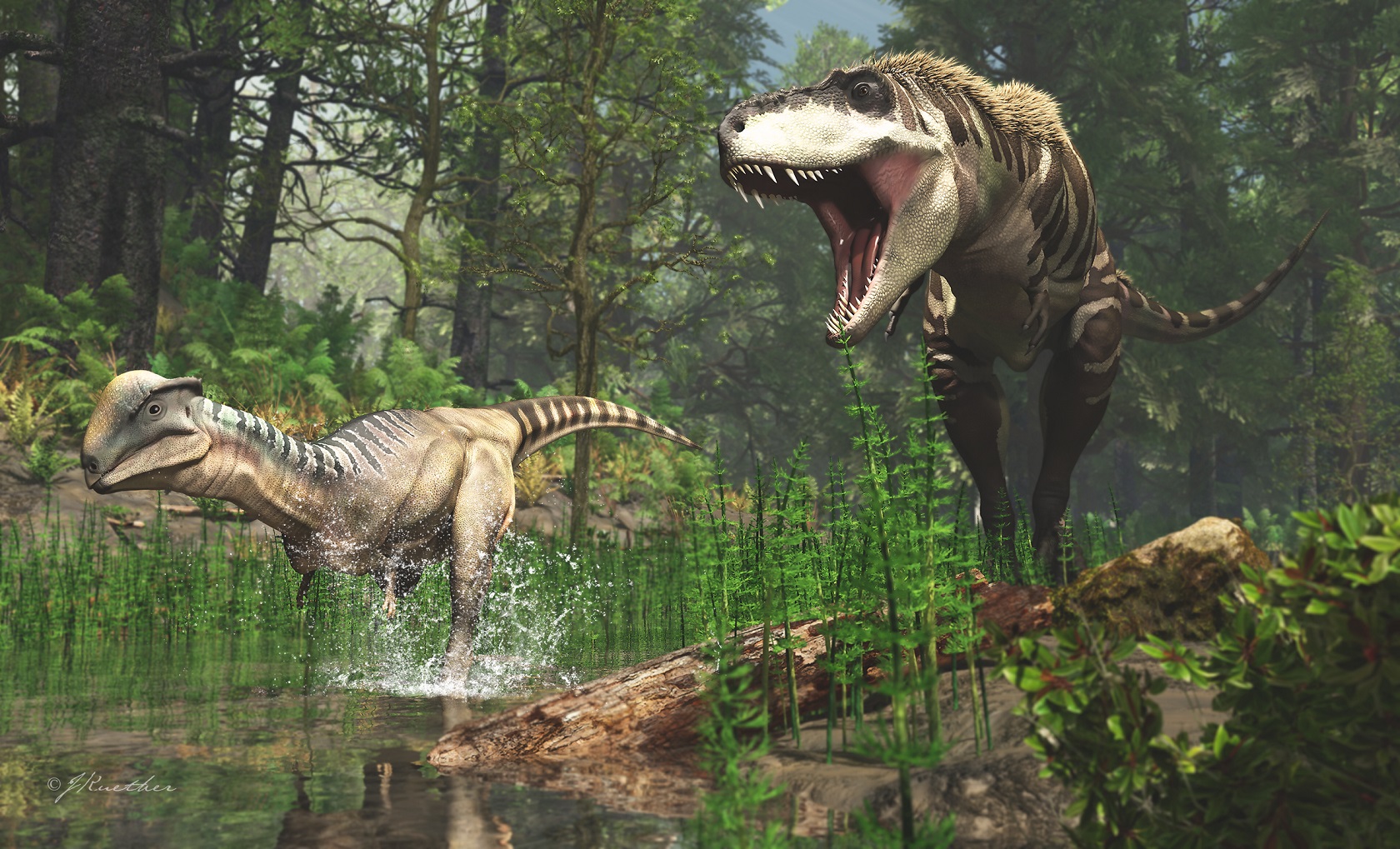
-
Article
Parsnip
The parsnip (Pastinaca sativa) is a perennial plant grown as an annual vegetable crop and belonging to the Umbelliferae family.
"https://d3d0lqu00lnqvz.cloudfront.net/media/media/b268a50c-de8b-4e74-a99a-6c6090c85126.jpg" // resources/views/front/categories/view.blade.php
https://d3d0lqu00lnqvz.cloudfront.net/media/media/b268a50c-de8b-4e74-a99a-6c6090c85126.jpg
-
Article
Pawpaw
The pawpaw (Asimina triloba) is a shrub or small tree of the Annonaceae, or custard-apple, family. It is the only member of the custard-apple family that grows in Canada. Sometimes called dog-banana, the pawpaw’s fruit is edible. It is believed that Indigenous people, including the Erie and Onondaga, introduced the tree to Southern Ontario from the United States. The plant is a beautiful ornamental shrub due to its large leaves and red-purplish flowers. Recently, this small tree has attracted the attention of researchers as a potential anticancer drug alternative.
"https://d3d0lqu00lnqvz.cloudfront.net/Asimina_triloba_-_October_2023_-_Sarah_Stierch_03.jpg" // resources/views/front/categories/view.blade.php
https://d3d0lqu00lnqvz.cloudfront.net/Asimina_triloba_-_October_2023_-_Sarah_Stierch_03.jpg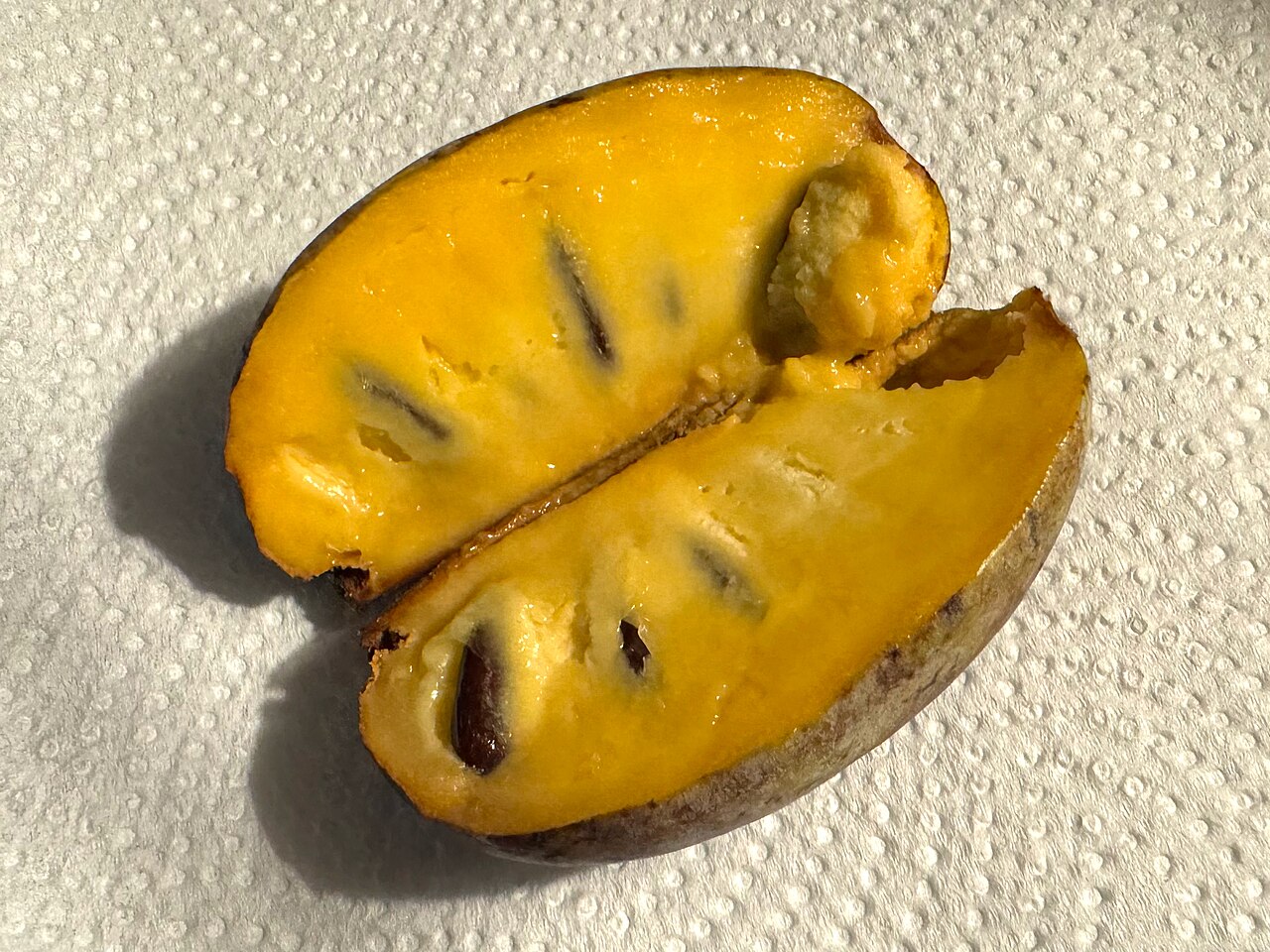
-
Article
Pea
Some pea cultivars are grown in gardens for their tender green pods as VEGETABLES, which are harvested at their early stage of development, and eaten raw or cooked. They are known as snowpeas, sugar peas or snap peas. In parts of Asia and Africa, tender pea foliage is harvested as vegetable.
"https://d3d0lqu00lnqvz.cloudfront.net/media/media/c93aa17c-6f82-4a85-a663-e17d602ee501.jpg" // resources/views/front/categories/view.blade.php
https://d3d0lqu00lnqvz.cloudfront.net/media/media/c93aa17c-6f82-4a85-a663-e17d602ee501.jpg
-
Article
Peach
The peach (Prunus persica) is the most widely grown stone fruit. It is native to China and was introduced to Europe 2,000 years ago. Peaches are now grown in temperate zones, worldwide. They were an important crop in Ontario by the 1880s and in British Columbia by the 1890s. Peach trees are 3–5 m tall with long, narrow, pointed leaves; single, pink flowers; and fruits (5–8 cm in diameter) with light fuzz. Peaches without fuzz are called nectarines. When ripe, varieties grown for the fresh market (in Canada, 80 per cent) have sweet, juicy flesh; those for processing (20 per cent) have firm, almost rubbery flesh adapted to mechanical handling.
"https://d3d0lqu00lnqvz.cloudfront.net/media/media/fb8c1081-f2fa-4a00-848f-89df93bd69cd.jpg" // resources/views/front/categories/view.blade.php
https://d3d0lqu00lnqvz.cloudfront.net/media/media/fb8c1081-f2fa-4a00-848f-89df93bd69cd.jpg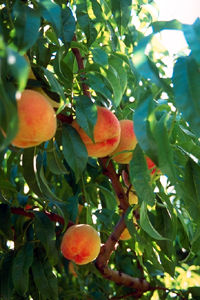
-
Article
Pear
The pear (genus Pyrus) is a common name for over 20 species of fruit-bearing and ornamental trees of the rose family. The genus is indigenous to Europe and Asia. The European pear (P. communis), which produces buttery, juicy and aromatic fruit, is the most widely grown.
"https://d3d0lqu00lnqvz.cloudfront.net/media/media/29c4a5d6-f618-422d-97c3-1365275f42e2.jpg" // resources/views/front/categories/view.blade.php
https://d3d0lqu00lnqvz.cloudfront.net/media/media/29c4a5d6-f618-422d-97c3-1365275f42e2.jpg
-
Article
Pepper
Pepper (Capsicum annuum) is a perennial plant, cultivated as an annual and belonging to the nightshade family. Native to tropical America, peppers were widely disseminated after Columbus's discovery of America; some botanists now claim that certain species are native to southern Asia. Some botanical varieties crossbreed naturally and many cultivars (commercial varieties) exist.
"https://d3d0lqu00lnqvz.cloudfront.net/media/media/63e5fe3e-d018-4a90-bfa7-b4e1e6fd7997.jpg" // resources/views/front/categories/view.blade.php
https://d3d0lqu00lnqvz.cloudfront.net/media/media/63e5fe3e-d018-4a90-bfa7-b4e1e6fd7997.jpg